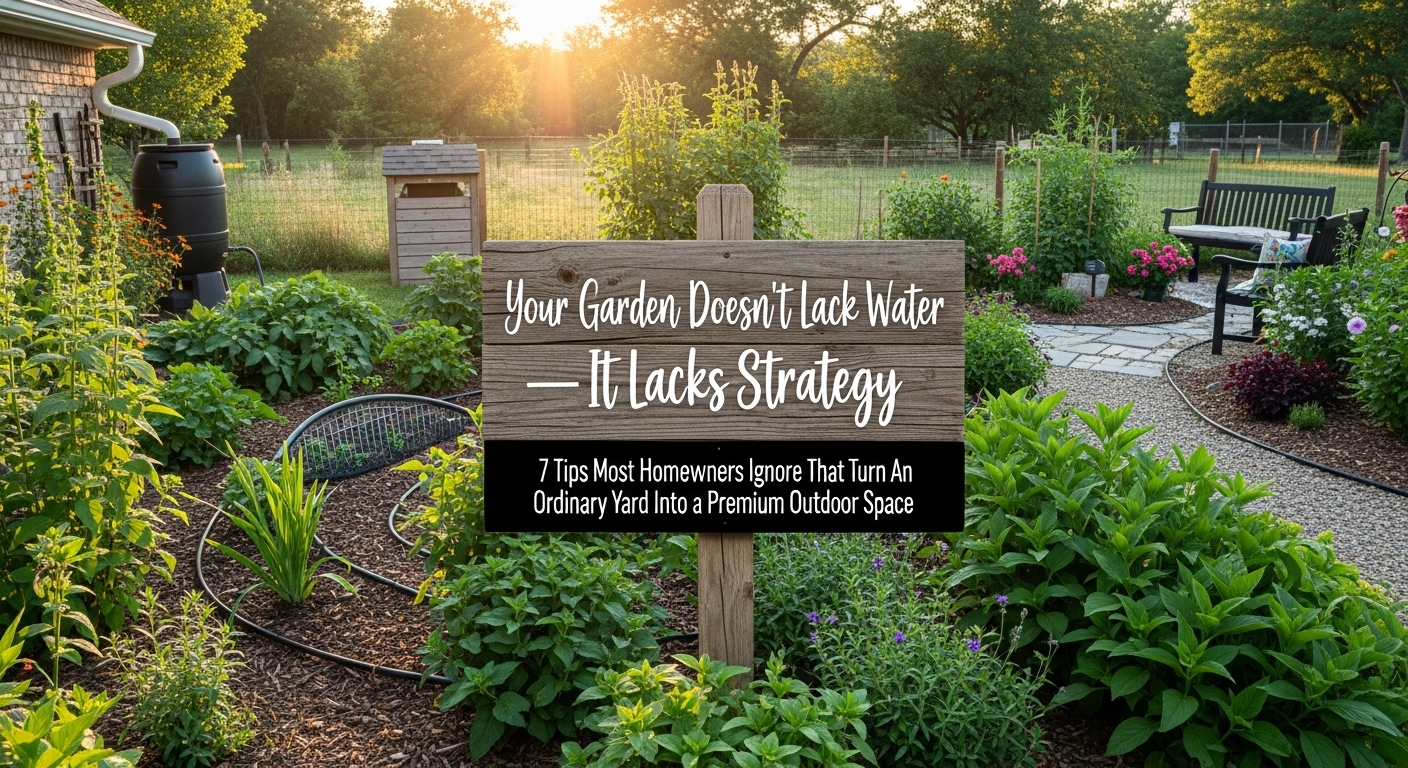
“Your Garden Doesn’t Lack Water — It Lacks Strategy”: 7 Tips Most Homeowners Ignore That Turn an Ordinary Yard Into a Premium Outdoor Space
You’ve been out there with the hose. You’ve run the sprinklers. You’ve watered until the soil squished underfoot and the flowerbeds looked like they were floating. And the next morning, the lawn still looked tired. The roses still drooped.
Here’s what most homeowners never hear: your garden probably doesn’t need more water. It needs a smarter plan.
The difference between an average yard and one that looks genuinely premium isn’t a bigger budget. It’s seven simple habits that 8 out of 10 homeowners skip entirely — then blame on bad soil or bad weather.
The Real Problem: You’re Watering Plants, Not a System
Walk outside and look at your yard differently. Not as a collection of plants and patches of lawn, but as a living system. Notice where the ground stays damp near the downspout. Where the soil bakes dry along the driveway. Where shade holds moisture and where sun strips it away.
Most people water by feel. The lawn looks dry, so they drench it. The hydrangeas droop, so on goes the hose. It’s reactive, not strategic. And reactive watering wastes money, stresses plants, and produces exactly the kind of yard that always seems to need rescuing.
Here are the seven shifts that change everything.
Tip 1: Water When Plants Can Actually Use It
Watering at midday in summer is one of the most common and costly mistakes in the garden. The soil surface is hot, the air is dry, and a shocking amount of water simply evaporates before it reaches any roots.
The fix is simple: water early in the morning, ideally between 4am and 9am. The air is cooler, the wind is usually calmer, and the soil is ready to absorb. Plants have time to dry out during the day, which also reduces disease. If mornings aren’t possible, early evening is your next best option.
Before you water at all, push two fingers into the soil about 5cm down. If it feels cool and damp, step away from the hose. Plants sometimes droop from heat, not thirst. Learning that difference saves water and saves plants.
Tip 2: Add Mulch — The Cheapest Upgrade With the Biggest Return
Bare soil bleeds water. Sun and wind strip moisture out of exposed ground constantly, meaning every watering you do is a short-lived event.
A 5 to 8cm layer of organic mulch — shredded bark, wood chips, compost, or even chopped leaves — changes everything. It slows evaporation, keeps roots cooler in summer, softens heavy rain so it soaks in rather than running off, and suppresses the weeds that compete for moisture.
A mulched garden bed can need 25 to 50 percent less water than a bare one. It also simply looks richer and more finished. This is the closest thing gardening has to a free upgrade.
Tip 3: Water Deeply and Less Often
A light daily sprinkle keeps moisture in the top few centimetres of soil, which is exactly where you don’t want roots to live. Shallow roots mean plants that wilt quickly in heat and struggle through dry spells.
Deep watering means applying enough water to reach 15 to 20cm down for garden beds and 20 to 25cm for lawns. Roots follow moisture downward, anchoring themselves where the soil stays cooler and more stable.
In practice, this means watering less frequently but for longer. Most lawns do better with one or two deep soaks per week than with a light daily sprinkle. After watering, check your work by digging a small hole an hour later. Moisture should be well down into the soil, not just sitting on the surface.
Tip 4: Match Plants to the Right Spots in Your Yard
Most homeowners choose plants with their eyes and then use the hose as a life-support machine to keep them alive in the wrong conditions. This is expensive and exhausting.
Every yard has microclimates — the damp shady corner near the fence, the hot dry strip along the driveway, the sheltered spot by the patio that barely gets frost. These aren’t problems to solve. They’re guides for what to plant where.
Moisture-loving plants like hostas, ferns, hydrangeas, and astilbe belong in the cooler, shadier, naturally damper spots. Drought-tolerant plants like lavender, rosemary, ornamental grasses, sedums, and coneflowers belong in the hot dry zones where constant irrigation would be a losing battle.
When plants are in the right place, they look relaxed, full, and intentional — with far less effort from you.
Tip 5: Use Drip Irrigation Instead of Spray
Watch a traditional sprinkler closely and you’ll see water blowing sideways in the breeze, splashing onto paths and fences, and misting away into the air on warm days. It feels like something is happening, but a lot of what you’re paying for never reaches plant roots.
Drip irrigation and soaker hoses deliver water low and slow, right at soil level where it’s actually needed. They can snake through shrub borders, wind between perennials, or circle the base of trees and rose bushes. Add a simple timer to your outdoor tap and the system runs early in the morning without you lifting a finger.
You don’t need to remodel your entire garden. Start with one bed, one soaker hose, one timer. The results are immediate — less water used, healthier plants, and a garden that looks calmer and more cared-for without the constant hose clutter.
Tip 6: Capture the Water You’re Already Losing
The next time it rains, watch your gutters and downspouts. All of that water rushing off your roof and down your driveway toward the storm drain is water your garden could have used for free.
A simple rain barrel connected to a downspout captures that runoff and stores it for dry spells. Rainwater is soft, free of the salts and treatments in tap water, and plants love it.
Inside the house, there are smaller opportunities too. The cold water you run while waiting for the shower to heat up can go into a bucket and straight onto a thirsty pot outside. The water you rinse vegetables in can do the same.
None of this requires turning your life into a complicated water audit. It just takes a small shift in mindset — from “I need more water” to “how do I use what I already have more wisely?”
Tip 7: Design Your Garden to Be Less Thirsty
Stand back and look at your yard as a whole. Is your lawn covering areas you never actually use — awkward strips along the fence, the narrow gap between the driveway and the path, the shaded side of the house where grass barely survives? These are areas that demand regular watering and give almost nothing back.
A premium outdoor space isn’t one with more plants. It’s one with better composition. Shrink the lawn to areas where it actually serves a purpose — play, gathering, visual breathing room. Convert the rest to mulched beds planted with climate-appropriate shrubs, ornamental grasses, and perennials grouped in generous drifts rather than scattered individually.
Five ornamental grasses planted together make a far stronger visual statement than five different plants scattered across a bed, each needing separate attention. This kind of editing reduces the overall water demand of your garden while making it look more intentional, more finished, and more like somewhere you’d see in a design magazine.
Frequently Asked Questions
How do I know if I’m overwatering or underwatering? Check the soil rather than the leaves. Push your finger 5cm into the ground. If it feels wet or soggy and your plant is wilting, you’re likely overwatering. If it’s dry and crumbly, the plant needs water. Yellowing leaves with soft stems often signal too much water. Crispy brown leaf edges usually mean too little.
Is mulch really necessary if I water regularly? It’s not mandatory, but it’s one of the best investments you can make. Mulch slows evaporation, stabilises soil temperature, and suppresses weeds. Over time, organic mulch breaks down and improves the soil’s ability to hold water, meaning you need to water less and less.
How long should I run my sprinklers for a deep watering? Place a few shallow containers in the watering zone and run the sprinkler until you collect about 1.5 to 2.5cm of water. Then check how deep that moisture has penetrated by digging a small hole. Adjust your run time based on how your soil absorbs and holds water.
Can I still have a lawn and use less water? Yes. Keep grass where it actually gets used and consider converting low-use sections to planted beds or groundcover. Mow slightly higher, water deeply but infrequently, and overseed with drought-tolerant grass varieties to reduce overall demand.
What is the easiest first step on a limited budget? Change when you water and add mulch to one key bed. Those two changes alone will reduce your water use, improve plant health, and give your garden a noticeably more finished, premium look — without touching anything else.