Why the Worm Moon Is More Than Just a Full Moon
March’s Full Moon Carries a Meaning That Goes Far Deeper Than Most People Realise
Every March, a full moon rises in the night sky that carries a name rooted in the earth itself. The worm moon is one of the most symbolically rich lunar events of the year, and its significance stretches well beyond simple stargazing.
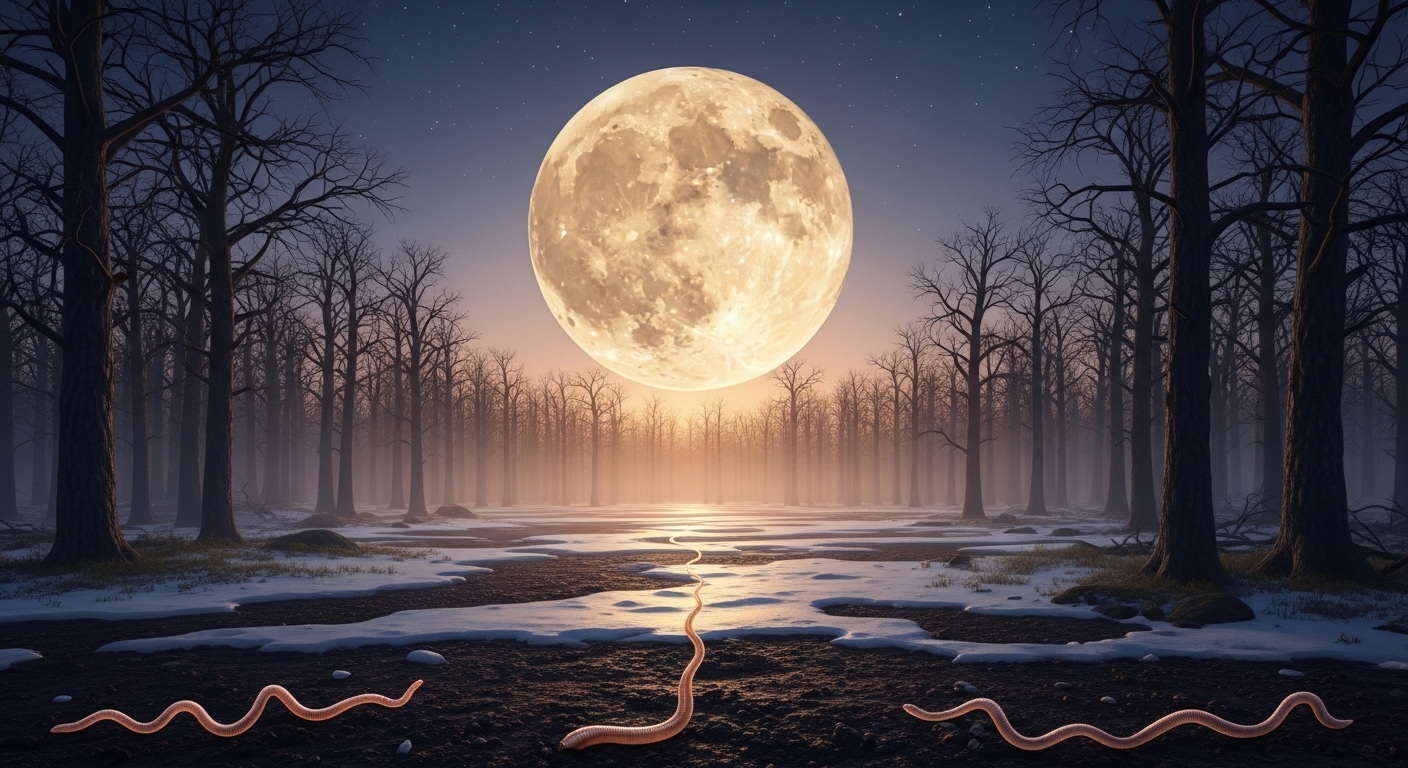
Named after the earthworms that begin to surface as frozen ground starts to thaw, this moon marks a real biological moment. It signals that winter is loosening its grip and that the natural world is beginning to stir back to life.
Where the Name Actually Comes From
The tradition of naming full moons comes largely from Native American and early colonial traditions in the Northern Hemisphere. Each moon was tied to something observable in nature, a way of tracking seasons without a printed calendar.
The March moon earned its name because earthworms emerging from thawing soil were one of the first visible signs of spring. It was a practical observation that became a cultural marker, passed down across generations as a way of reading the land.
What the Worm Moon Signals in the Natural World
When earthworms surface, they are not simply responding to warmer temperatures in isolation. Their emergence is part of a cascade of biological events that ripples through entire ecosystems almost simultaneously.
Birds return to feed, soil begins to aerate naturally, and plant roots find renewed pathways for growth and nutrient absorption. The worm moon essentially announces the beginning of this chain reaction in the natural world each year.
“The worm moon is a powerful reminder that we are part of a living, breathing ecosystem, one that is constantly in flux, responding to the dance of the heavens and the movements of the earth.” — Dr. Sarah Greenwood, Ecologist
The Seasonal Transition It Marks
The worm moon falls at a point in the year when the Northern Hemisphere begins tilting back toward the sun in a meaningful way. Daylight hours are increasing, temperatures are climbing, and the biological clock of countless species is responding in kind.
For those in the Southern Hemisphere, including Australia, the worm moon arrives as late summer begins transitioning toward autumn. The seasonal lens is different, but the moon’s role as a marker of natural change remains just as relevant and worth observing.
How Different Cultures Have Honoured This Moon
Long before modern astronomy gave people precise lunar calendars, communities built rituals and ceremonies around the March full moon. Across indigenous cultures worldwide, this moon was celebrated with gatherings that honoured the earth’s awakening and the return of abundance.
Pagan traditions marked it with fire ceremonies and the sharing of seasonal knowledge, reinforcing community bonds with the land. These were not superstitions but deeply practical acknowledgements of how the natural world operated and provided for human life.
“The worm moon is not just a full moon. It is a tangible reminder of the interconnectedness of all living things. When we witness this event, we are tapping into a universal language that transcends cultures and eras.” — Dr. Liam Avery, Anthropologist
Why Modern People Are Reconnecting With Lunar Events
There has been a noticeable cultural shift in recent years toward reconnecting with natural cycles and seasonal rhythms. People are increasingly drawn to lunar events not just as astronomy but as anchors for mindfulness, reflection, and a slower pace of life.
The worm moon offers a natural opportunity to pause the routine and observe something that has been unfolding above us for thousands of years. Stargazing gatherings, nature walks, and journalling practices tied to lunar phases have all grown considerably in popularity.
When and How to View the Worm Moon
The worm moon is best viewed from a location with minimal artificial light pollution and a clear view of the eastern horizon. It rises as the sun sets, making the early evening the ideal window for observation without needing any special equipment.
A simple tripod and a camera with manual settings can help capture the moon’s warm golden glow at the horizon. For those without a camera, simply stepping outside and watching it rise for a few minutes is a powerful and grounding experience.
What Makes the Worm Moon Different From a Supermoon
These two events are often confused but they refer to completely different lunar phenomena worth understanding clearly. A supermoon occurs when the moon is at its closest orbital point to Earth, making it appear visibly larger and brighter than usual.
The worm moon is defined purely by the time of year it appears, not by the moon’s distance or size in the sky. Any March full moon is a worm moon, whether it appears large or small, regardless of where the moon sits in its orbit.
The Deeper Invitation the Worm Moon Offers
Ecologists and anthropologists both point to the worm moon as more than a calendar curiosity or a social media moment. It represents an invitation to recognise that human life is embedded within natural cycles, not separate from them.
Acknowledging the worm moon, even briefly, cultivates what researchers describe as ecological awareness and seasonal attunement. These are qualities that have been linked to reduced stress, improved wellbeing, and a stronger sense of connection to place and community.
Frequently Asked Questions
What is the worm moon exactly? It is the full moon that occurs each March, named after the earthworms that emerge as frozen ground begins to thaw in spring.
Is the worm moon visible in Australia? Yes. While Australia experiences the opposite season, the worm moon is still visible in the evening sky after sunset from the Southern Hemisphere.
Is the worm moon the same as a supermoon? No. A supermoon relates to the moon’s orbital distance from Earth, while the worm moon is simply the name for the March full moon.
How can I celebrate the worm moon? Try a nature walk, a stargazing session, or a quiet moment of reflection outdoors. The goal is simply to connect with the seasonal shift it represents.
Does the worm moon have scientific significance? While the name is cultural, the timing does align with real biological events including earthworm emergence, bird migration returns, and early plant growth cycles.
Key Points to Remember
- The worm moon is the March full moon, named for earthworms surfacing as the ground thaws.
- It marks a genuine ecological turning point, triggering a cascade of natural biological activity.
- Cultures worldwide have honoured this moon for centuries through ceremony, ritual, and seasonal observance.
- It is distinct from a supermoon and is defined purely by time of year, not lunar distance.
- Observing the worm moon is a simple but meaningful way to reconnect with natural rhythms and the changing of seasons.
Conclusion
The worm moon is one of those rare moments where science, culture, and the natural world all align in a single visible event. It reminds us that the earth operates on rhythms far older and larger than our daily schedules ever account for.
Whether you step outside to watch it rise or simply pause to acknowledge what it represents, the worm moon offers something valuable. It offers a moment of genuine connection to the living, breathing world that continues turning with or without our attention.
Read more: https://wizemind.com.au