Thousands of Fish Nests Were Accidentally Found Beneath Antarctic Ice
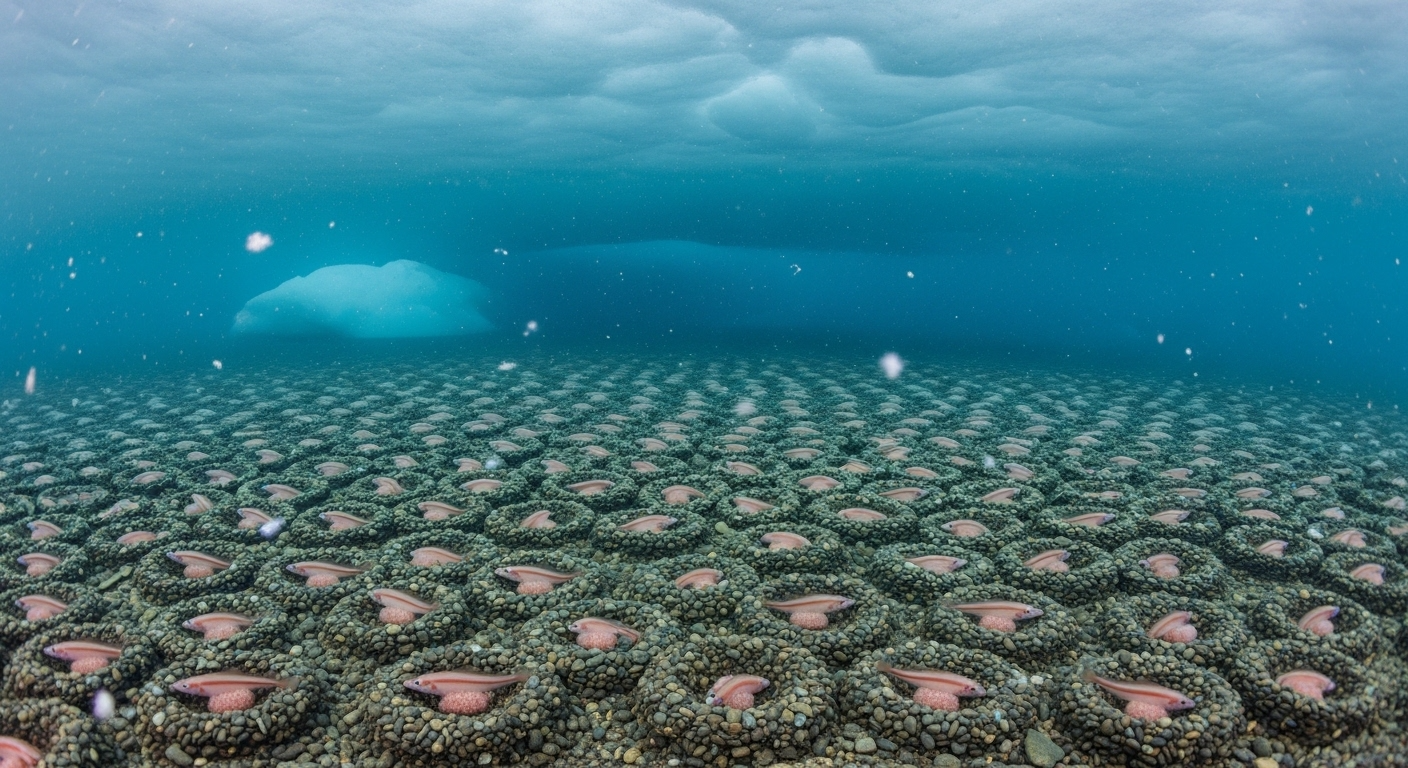
The first time someone peered under that particular slab of Antarctic sea ice, they were not expecting to find a city. They were there for currents and chemistry, not for miracles. The cameras drifted down through the black water, the light from the submersible glowing like a small, stubborn moon. Then the screen back on the research vessel filled with circles. Perfect, silvery circles on the seafloor, like craters on some distant planet. The room went quiet. One circle, then ten, then a hundred. And then the dawning realization: these were not random shapes. They were nests. Fish nests. Thousands of them.
A Hidden City Beneath the Ice
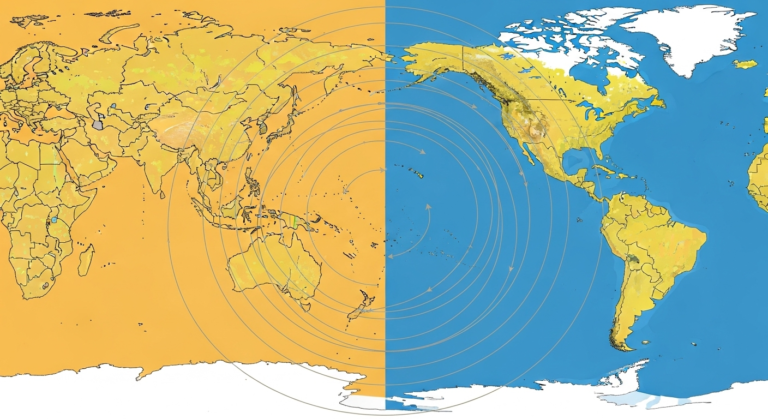
Antarctica does this often: waits until we are busy measuring something else, then quietly reveals a secret that rewrites how we think about the planet. On this day, in a remote patch of the Weddell Sea, scientists had lowered a camera system through a hole in the sea ice, expecting a sleepy, nearly empty seabed. Instead, they had stumbled into what is likely the world’s largest known fish breeding colony.
Picture it: a vast, cold plain more than 400 meters below the frozen surface, lit only by the harsh white glare of the camera. The seafloor is an expanse of soft, gray-brown sediment. And there, scooped neatly into the mud, are shallow round depressions, one every few meters. Many hold a single fish hovering protectively over a clutch of eggs. Others are ringed with pebbles and small stones, as if carefully landscaped. It looks almost intentional, like a neighborhood designed by an architect with a fondness for circles.
The fish are icefish, pale and almost ghostly creatures that have evolved to survive in water cold enough to freeze the blood of most other animals. Icefish do not have red blood at all. Instead of hemoglobin, their clear blood carries oxygen dissolved directly in the plasma. In the dark glow of the submersible’s lights, their bodies blend with the icy gloom, but the nests stand out: startling, geometric signs of life and care.
The team aboard the research ship watches in disbelief as the camera keeps moving forward, meter after meter, nest after nest. It is not the quiet, empty Antarctic deep they expected. It is a metropolis in full, silent bloom.
The Day Curiosity Fell Through the Ice
The discovery came almost by accident. The research expedition was primarily interested in ocean circulation and climate: how the deep waters of the Weddell Sea move, mix, and carry heat and carbon around the globe. Their instrument was a towed camera and sensor platform, a sort of underwater scout exploring beneath the ice.
Scientists knew that Antarctic icefish lived in these waters, but there was no reason to suspect anything on this scale. Individual nests had been seen before in other polar regions, a few here and there, like occasional cottages on an empty landscape. No one expected to find the equivalent of a sprawling city.
Yet as the video feed rolled on, the number of nests climbed. Hundreds. Thousands. The team did the kind of quick mental math researchers do in the field: area covered, nest density, estimated extent of the colony. The figures were almost absurd. They suggested well over 20,000 nests. Later, with more careful mapping and analysis, that number would surge into the hundreds of thousands, likely more than a million nests spread across hundreds of square kilometers of seafloor.
This is not just a lucky cluster. It is an ecosystem-scale phenomenon we somehow missed in one of the most studied oceans on Earth.
The Architecture of a Fish Nursery
Each nest is a small, deliberate act. A fish scoops out a shallow bowl in the sediment, about the width of a large dinner plate. Inside, it arranges and guards its eggs, scores of them, pale and translucent, clinging together like clusters of tiny planets.
Most extraordinary is the sheer density. In some areas, the nests are spaced just a body length or two apart, each with an adult fish resting on top or hovering just above the eggs. Imagine walking across a field and finding a bird’s nest at every step, each one occupied, each one fiercely invested in the fragile lives it shelters.
As the camera glides on, the repetition becomes hypnotic. Nest, fish, eggs. Nest, fish, eggs. It is easy to forget that every one of those tiny clusters is a gamble against the hazards of the Southern Ocean: predators, shifting currents, the harsh chemistry of cold, salty water. From above, the Antarctic ice looks like an unbroken expanse of white. Below, it is a tapestry of risk and persistence.
Life in a Place That Should Not Have Any
What draws so many icefish to this particular patch of seafloor? The clue lies not in what you can see, but in what you can measure.
When scientists examined the temperature data from the water bathing the nests, a subtle pattern appeared. The area of the colony sits within a slightly warmer patch of deep water, maybe just a fraction of a degree above the surrounding sea, fed by a recurring flow of nutrient-rich currents. In Antarctica, a fraction of a degree is everything. That tiny cushion of warmth might give the developing eggs just enough of an edge: faster development, better survival, a more predictable environment.
The region also appears to be a crossroads for currents that carry organic material, plankton remains, and small creatures drifting down from more productive surface waters. The nests themselves become small islands of structure in an otherwise open plain. Eggs attract microorganisms and small scavengers. Those, in turn, attract predators. The whole colony draws in a web of species: starfish, worms, crustaceans, and larger predators like seals that hunt icefish. The colony is not just a collection of nests. It is a seasonal engine for the broader ecosystem, a pulse of biomass that ripples outward through the food web.
How Many Fish Are We Actually Talking About?
Estimating numbers at this scale feels almost like counting stars. Yet the researchers did their best, combining the density of nests with the mapped area of the colony. The result was staggering: likely on the order of 60 million adult icefish involved in breeding across this hidden landscape.
To put that into perspective, imagine a city with 60 million inhabitants, more than the population of many countries, all gathered for a single purpose: to raise the next generation. Every nest holds hundreds, sometimes thousands, of eggs. Not all will survive. Many will be eaten. Many will fail to hatch. But the colony as a whole represents a vast biological investment, a gamble that at least some portion of these fragile lives will endure the gauntlet of the Southern Ocean.
It is one of the largest known aggregations of vertebrates on the planet, rivaling the great migrations of wildebeest on the African savannas, the swarms of seabirds nesting on sub-Antarctic cliffs, and the vast herds of caribou roaming the Arctic tundra. The difference is that this one happens almost entirely out of sight, beneath a ceiling of ice that, until very recently, no one had thought to look under in quite the right way.
| Key Facts | Details |
|---|---|
| Location | Weddell Sea, Antarctica, beneath seasonal sea ice |
| Depth of Colony | Approximately 400 to 500 meters below the surface |
| Estimated Area | Hundreds of square kilometers of seafloor |
| Number of Nests | Likely more than 1 million individual nests |
| Breeding Adults | On the order of 60 million icefish |
| Water Temperature | Slightly warmer than surrounding deep water, still near freezing |
| Discovery Method | Towed camera system deployed through sea ice |
A Colony in the Time of Rapid Change
Once the astonishment of discovery settles, another more sobering question emerges: what happens to this colony in a warming world?
Antarctica is changing, even if the transformation is less obvious than in other places. Ocean temperatures are creeping upward. Currents are shifting. The slightly warmer deep water that now makes this area ideal for egg development might, in the future, become too warm or too variable. The currents that deliver food and oxygen could weaken or reroute.
And then there are people. The Southern Ocean has long been attractive to industrial fishing. Icefish themselves are not currently a major commercial target in this region, but large aggregations of any species tend to attract interest. Discoveries like this are double-edged: what we know, we can try to protect, but what we know also becomes something that can, in theory, be exploited.
Already, this part of the Weddell Sea is being discussed as a candidate for strengthened protection under international agreements. Marine protected areas in Antarctica are among the most ambitious in the world, but they are also politically complex. Decisions about what is protected require rare global cooperation, and that cooperation is never guaranteed.
The Discovery We Almost Did Not Make
One quiet irony of this discovery is how long we managed not to see it. Humans have been exploring Antarctic waters for more than a century. We have mapped currents, tracked sea ice, studied penguins and seals and krill. And yet this enormous breeding colony remained unseen, not because it was hidden in some mysterious unreachable abyss, but simply because we had not looked at the right place, in the right way, for long enough.
The Antarctic seafloor, especially under sea ice, is notoriously difficult to study. Sea ice blocks ships from many areas. Even where ships can reach, thick ice prevents traditional methods that might reveal life below. Instruments have to be lowered through narrow holes cut into the ice and steered in darkness.
Technological patience made this discovery possible. The towed camera system recorded a continuous stream of images along a long path, allowing scientists to see patterns across space rather than isolated moments. Like stitching together thousands of aerial photos into a single map, they could finally see the big picture: a seafloor dominated by nests, not emptiness.
This raises an uncomfortable question. If something this large, this important, can still surprise us in a part of the world we consider studied, what else might be out there, hidden in the shadows of our assumptions?
Why One Fish Colony Matters to All of Us
At first glance, a million fish nests beneath Antarctic ice feels remote from human lives. And yet, in a deeper sense, they are connected. The Southern Ocean is one of the planet’s great climate engines. It absorbs huge amounts of heat and carbon dioxide, helping to slow the pace of warming. The creatures that live there are threads in a fabric of life and chemistry that stabilizes the world we depend on.
The discovery of the fish nests is a reminder that this engine is not just a physical machine of water and wind. It is alive. It is pulsing with migrations and breeding seasons and food webs we barely understand. To protect the climate system is also to protect the living parts of it, the species and communities that have evolved to thrive in these extreme, fragile conditions.
There is also something more intimate here. Finding that many nests in the dark is like walking into a cathedral just as a choir begins to sing. You feel, suddenly, that you are not alone. Life has been carrying on out of sight, quietly and with immense effort.
Each icefish tending its eggs does not know about climate models or fishing quotas or satellite observations. It only knows the contour of its nest, the feel of the passing current, the tug of instinct telling it to stay, to guard, to wait.
Somewhere right now, beneath a ceiling of Antarctic ice that glows blue-white in the polar summer sun, an icefish hovers over its nest. It flexes its fins, adjusts its position, fans a small current of oxygen-rich water over its eggs. Above it, the ice creaks and shifts. Far to the north, people move through streets and fields and forests, mostly unaware that this hidden city exists.
But each season, the fish return. Carving their shallow bowls into the seafloor. Staking everything on this patch of slightly warmer, slightly kinder ocean. They do not know they have been discovered. They just go on, in the dark, building the future one fragile egg at a time.
Frequently Asked Questions
What exactly did scientists find beneath the Antarctic ice?
They discovered an enormous breeding colony of Antarctic icefish on the seafloor of the Weddell Sea. The colony consists of more than a million circular nests, each containing eggs and usually a guarding adult fish. It is one of the largest known aggregations of fish nests on Earth.
How were the fish nests discovered?
The nests were found accidentally during an oceanographic expedition focused on currents and climate. Researchers used a towed camera system lowered through a hole in the sea ice. As the camera traveled along the seafloor, it recorded continuous images that revealed the vast field of fish nests.
Why do the icefish choose this specific area for nesting?
The nesting area lies within a slightly warmer patch of deep water, likely just a fraction of a degree warmer than the surroundings. This subtle difference, along with favorable currents that bring food and oxygen, appears to create ideal conditions for egg development and survival.
Are these icefish important to the Antarctic ecosystem?
Yes. The huge colony represents a significant source of biomass and likely supports a complex food web. Eggs, larvae, and adult fish provide food for predators such as seals and larger fish. The nesting area acts as a seasonal hotspot of life in the deep Southern Ocean.
Is climate change a threat to this fish colony?
Potentially. Warming oceans and shifting currents could alter the delicate conditions that make this nesting area suitable. Scientists are concerned that relatively small changes in deep-water conditions could have large impacts on the colony’s long-term stability.
Can this area be protected from human activities?
There are ongoing international discussions about expanding marine protected areas in the Southern Ocean, including parts of the Weddell Sea. Strong protection could help limit fishing and other disturbances near the colony, but such measures require agreement among multiple nations and can take time to implement.