The One-Pot Pasta Hack That Is Changing Weeknight Dinners
Most of us learned to cook pasta the same way. Boil a large pot of salted water, cook the pasta separately, warm the sauce in another pan, and combine them at the end. It works. It has always worked. But a growing number of home cooks are quietly abandoning this two-pot approach in favour of something simpler, and the results are genuinely better in ways that are easy to explain.
Cooking pasta directly in the sauce, with enough liquid added to allow the pasta to absorb and cook through, produces a dish with a richer texture, more integrated flavour, and significantly less washing up. It is not a complicated technique. But understanding why it works makes the difference between doing it confidently and guessing your way through it.
The Science Behind Why It Works
When pasta cooks in water, it releases starch into the surrounding liquid. In traditional cooking, that starchy water gets poured down the drain, and experienced cooks have always reserved a cup of it to add back into the sauce because they know it improves the final texture. In one-pot cooking, none of that starch goes anywhere.
The starch released by the pasta stays in the sauce the entire time, gradually thickening it and creating an emulsified, velvety consistency that clings to the pasta rather than pooling at the bottom of the bowl. This is the primary reason restaurant pasta often has a silkier, more cohesive quality than pasta made at home. Professional cooks finish pasta in the sauce for exactly this reason.
At the same time, simmering the pasta directly in the sauce means it is absorbing flavoured liquid throughout the cooking process rather than plain water. The result is pasta that tastes of the sauce all the way through rather than simply being coated on the outside.
The Right Way to Do It
The technique is straightforward, but a few details matter.
Choose the right pasta shape. Short, sturdy shapes work best. Penne, rigatoni, orecchiette, fusilli, and farfalle all handle this method well. They are robust enough to hold their structure while absorbing liquid and hold the sauce in their ridges and curves. Long, delicate pasta shapes like spaghetti and linguine tend to clump together and become uneven when cooked this way. Save those for the traditional method.
Get the liquid ratio right. This is the step that requires a little attention the first time. The pasta needs enough liquid to cook through and absorb flavour, but not so much that the sauce becomes watery. A general starting point is roughly 500ml of liquid for every 200 grams of pasta, with the understanding that you may need to add small amounts more as the pasta cooks. The sauce should be reducing and thickening as the pasta cooks, not thinning out.
Use a wide, large pot. Crowding the pasta in a small pot leads to uneven cooking and sticking. A wide base allows the pasta to move freely and cook more evenly as you stir it.
Stir regularly. This is more active than traditional pasta cooking. Stirring every two to three minutes prevents the pasta from sticking to the base and ensures even absorption.
Season generously. Since the pasta is absorbing the sauce liquid directly, it is absorbing the seasoning too. Make sure the sauce is properly salted and seasoned before the pasta goes in.
Common Mistakes and How to Avoid Them
| Mistake | What Happens | Simple Fix |
|---|---|---|
| Wrong pasta shape | Clumping, uneven texture | Use short sturdy shapes |
| Too little liquid | Dry, sticking pasta | Add warm water or stock as needed |
| Too much liquid | Watery, thin sauce | Simmer uncovered to reduce |
| Small pot | Uneven cooking, sticking | Use a wide, deep pan |
| Under-seasoning | Flat flavour | Season sauce before pasta goes in |
When One-Pot Pasta Shines and When to Stick with Tradition
This method is genuinely suited to some situations and less suited to others. Understanding the difference saves frustration.
One-pot pasta works best for weeknight dinners when time and washing up are factors. It suits tomato-based sauces, simple vegetable sauces, and lighter cream-based sauces. Dishes with sautéed garlic, onion, tinned tomatoes, stock, and herbs are ideal candidates. The technique also suits situations where you want maximum flavour integration, since the pasta and sauce cook together from the beginning.
Stick with the traditional method for dishes built around delicate long pasta like spaghetti or linguine, particularly classic recipes where the pasta’s texture is central to the dish. Very thick or chunky sauces, such as a rich Bolognese with large pieces of meat, also work better with separately cooked pasta that is then tossed through the sauce. And for special occasion cooking where precision matters, the traditional method gives you more control over each component.
Practical Variations Worth Trying
Once you are comfortable with the basic technique, a few additions take it further without adding complexity.
A splash of white wine added to the sauce before the pasta gives the dish a depth that stock or water alone does not provide. A parmesan rind simmered in the sauce throughout cooking adds a quiet savoury richness that is noticeable even if you cannot identify the source. A handful of cherry tomatoes added whole will break down during cooking and add natural sweetness without any extra preparation. Greens like baby spinach, kale, or frozen peas can be stirred through in the last two minutes of cooking without needing any separate preparation.
Proteins work well in this method too. Sautée chicken pieces, sausage slices, or prawns directly in the pot before adding the sauce and pasta, remove them briefly while the pasta cooks, and return them for the final two minutes to warm through. This keeps the protein from overcooking while the pasta finishes.
A Simple Weeknight Formula
For anyone wanting to try this without a specific recipe, here is a framework that works reliably.
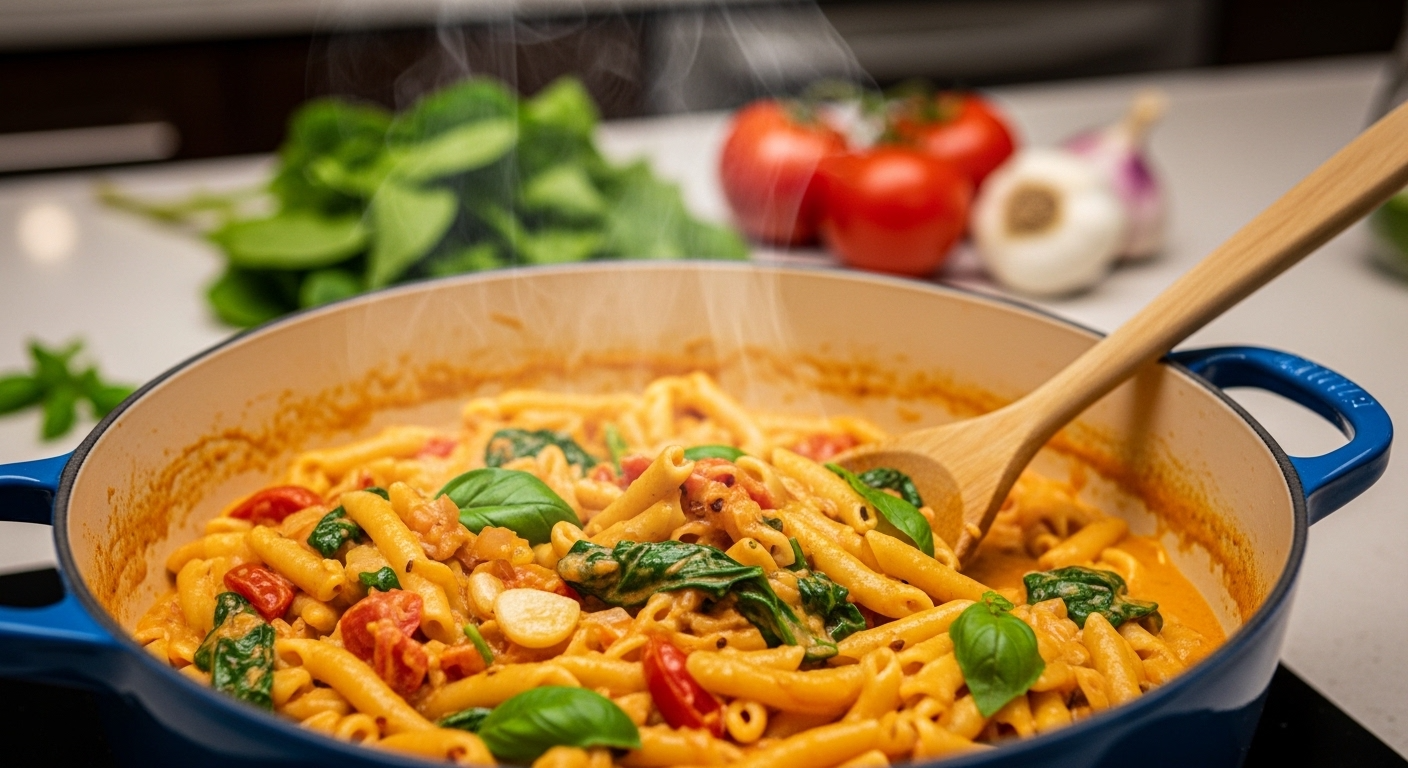
Heat olive oil in a wide, deep pan and sauté diced onion and garlic until soft. Add a tin of crushed tomatoes and approximately 400ml of chicken or vegetable stock. Season with salt, pepper, and whatever herbs suit the dish. Bring to a simmer, then add 200 grams of penne or rigatoni directly into the sauce. Stir, reduce the heat to a steady simmer, and cook for the time indicated on the pasta packet, stirring every few minutes and adding small amounts of water if the sauce looks too thick before the pasta is cooked through. Finish with parmesan and fresh basil.
From start to finish this takes around twenty-five minutes and produces one pan to clean.
The technique works because it is not actually a shortcut. It is a better method for certain dishes, one that professional cooks have used for a long time and that home cooking is now catching up to. The washing up reduction is a welcome side effect.
Frequently Asked Questions
What pasta shapes work best for one-pot cooking? Short, sturdy shapes like penne, rigatoni, fusilli, and orecchiette. Avoid long, delicate pasta.
How much liquid do I need per serving? Roughly 250ml per 100g of pasta as a starting point, adjusting as needed during cooking.
Why does my sauce become watery? Too much liquid was added or the heat was too low to allow proper reduction. Simmer uncovered and add liquid in small amounts.
Can I use gluten-free pasta? Yes, though gluten-free pasta releases less starch and may need adjustment in liquid quantity. Watch the texture carefully.
How do I stop the pasta sticking to the pan? Use a wide pan, stir regularly, and ensure there is enough liquid in the pot at all times.
Can I make this ahead of time? One-pot pasta is best served immediately. Reheating works but the texture softens. Add a splash of water when reheating.
Does this work with cream-based sauces? Yes, for lighter cream sauces. Add the cream toward the end of cooking to prevent it splitting under prolonged heat.
Is this method actually Italian? A version of it is. Finishing pasta in its sauce with starchy water is standard Italian technique. The one-pot approach is a simplified home adaptation of that principle.
Read More: For more recipes, kitchen tips, and food stories written for Australian readers, visit wizemind.com.au