The Future Fighter Jet Built by Italy, Japan and the UK Has Already Tripled in Cost — And Nobody Wants to Talk About It
When three of the world’s most technologically advanced nations announced they would build the next generation of fighter jets together, it sounded like a masterstroke of modern diplomacy. A shared vision, shared costs, shared glory. What nobody put in the press release was what would happen when the bills started coming in.
The Global Combat Air Programme — known as GCAP — was supposed to be the smarter, leaner alternative to going it alone. Italy, Japan, and the United Kingdom each brought something to the table: engineering heritage, defence budgets, and a mutual interest in not falling behind China and the United States in the skies. The original price tag sat at $65 billion. A serious number, but one that governments could defend to their taxpayers.
That number is now $200 billion. More than triple. And the jet hasn’t been built yet.
How Does a Budget Triple Before the Product Exists?
This is the question that defence analysts are quietly asking, and that politicians in all three countries are doing their best to avoid answering directly.
The honest answer is that it’s a combination of things, none of them surprising in isolation, but devastating when they pile up together. Merging the engineering standards of three different countries is harder than it sounds. Japan builds things one way. Britain builds things another way. Italy has its own approach. Getting those systems to talk to each other, let alone work seamlessly in a combat aircraft flying at supersonic speeds, requires an enormous amount of rework, compromise, and money.
Then there are the technology demands. When the programme was first drawn up, the specifications were ambitious. By the time engineers actually started solving problems, the requirements had grown even more ambitious. Stealth. Advanced avionics. Long-range strike capability. Integrated electronic warfare. Supercruise performance. Every one of those features costs more than the last estimate suggested.
And then there’s inflation, supply chain disruption, and the general reality that large government defence projects almost never come in on budget. The F-35 Joint Strike Fighter, which the UK is heavily invested in, ran famously over cost and over schedule. The Eurofighter Typhoon before it did the same. GCAP is following a well-worn path.
Three Governments, Three Sets of Voters
Beyond the engineering problems, there’s a political dimension that makes this programme uniquely complicated.
Each partner nation answers to its own parliament and its own public. In the United Kingdom, where the cost of living has been a dominant political issue for years, voters are increasingly sceptical about open-ended defence commitments. In Japan, where the constitution has historically limited military spending, committing to a programme that keeps getting more expensive requires ongoing political justification. In Italy, coalition governments come and go, and long-term defence commitments can become bargaining chips in domestic negotiations that have nothing to do with fighter jets.
What this means practically is that every major decision in the programme has to satisfy three different domestic audiences simultaneously. That slows everything down. It adds layers of negotiation. And in many cases, it leads to compromises that end up costing more money in the long run than simply making a clear decision early would have.
Defence experts have warned that if political tensions between the partners are not managed carefully, the programme risks delays, further budget blowouts, or worse — one country pulling out entirely, leaving the others to absorb the costs.
What the Programme Is Actually Trying to Build
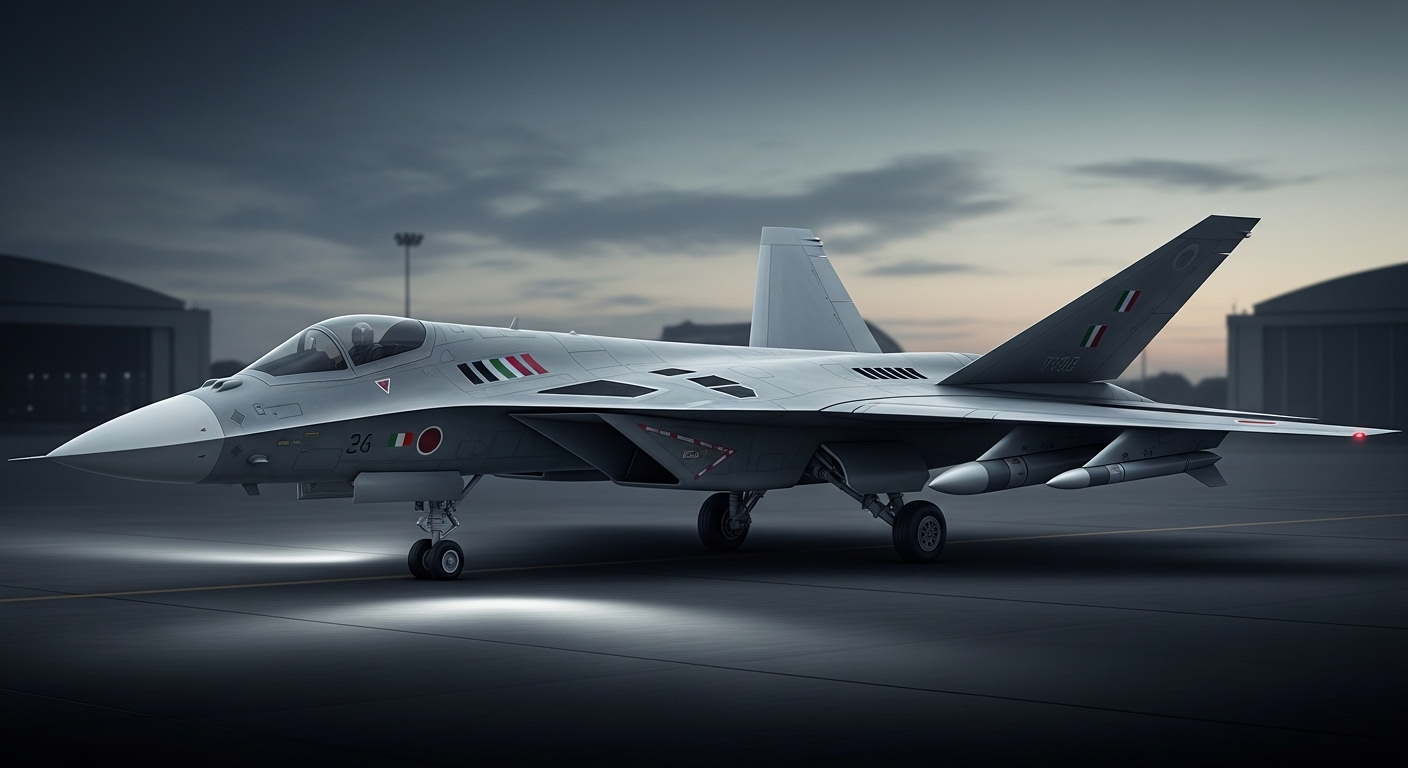
To be fair to the people working on GCAP, the aircraft they are designing is genuinely extraordinary on paper.
The jet is intended to operate in 2035 and beyond, in an environment that looks very different from today’s battlefields. It will need to evade radar systems that are improving every year. It will need to coordinate with unmanned wingman drones in real time. It will need to carry weapons that haven’t been fully developed yet, against threats that are still being defined.
That’s not an excuse for tripling the budget. But it does explain why the engineers keep asking for more money. They are not building a refinement of something that already exists. They are trying to build something the world has not seen before, on a fixed timeline, with three governments watching over their shoulders.
The stealth capabilities are being led primarily through British expertise. Japan is driving the sensor and long-range systems. Italy is contributing significantly to the airframe and manufacturing. In theory, this division of labour makes sense. In practice, it creates endless coordination overhead.
Lessons That Nobody Seems to Have Learned
The uncomfortable truth about GCAP’s cost blowout is that it was entirely predictable.
The Eurofighter Typhoon, which brought together Germany, Spain, Italy, and the UK, ran years behind schedule and hundreds of millions over budget. The F-35, despite being led by a single dominant partner in the United States, became one of the most expensive weapons programmes in human history. The pattern is consistent: announce an ambitious joint programme, underestimate the costs to get political approval, and then spend the following decades managing the gap between the promise and the reality.
What makes GCAP different is the geopolitical stakes. This isn’t just about having a capable aircraft. For the UK, it’s partly about demonstrating post-Brexit relevance as a global defence partner. For Japan, it represents a significant shift in how the country thinks about its own military capability. For Italy, it’s a statement of industrial ambition. Those motivations are real and legitimate. But they also mean that walking away from the programme — even as costs climb — becomes politically very difficult.
Nobody wants to be the country that pulled out. So the costs keep climbing, and the commitments keep being renewed.
The Bigger Question Nobody Wants to Answer
At $200 billion and rising, GCAP is forcing a question that governments would rather avoid: at what point does the cost of a weapons programme outweigh its strategic value?
Critics argue that the money being spent on this fighter jet could fund hospitals, schools, housing, or climate infrastructure. Supporters respond that national security is not optional, and that falling behind in air combat capability carries its own enormous costs. Both sides have a point, and neither is entirely wrong.
What is harder to defend is a programme that has tripled in cost before a single aircraft has entered service, with no clear accountability for how that happened and no guarantee it won’t happen again.
The jet may well be worth building. The technology may well be transformative. But the way this programme has been managed so far suggests that the three partner nations still haven’t figured out how to build something together without losing control of the bill.
The aircraft is scheduled to arrive in 2035. That’s nine years away. A lot can change. Costs can climb further. Partners can lose patience. Technology can shift in directions nobody predicted.
For now, Italy, Japan, and the United Kingdom are pressing forward. The question is whether their taxpayers — who will ultimately foot the $200 billion bill — will still be willing to do the same.
Quick Facts
| Original Budget | $65 billion |
| Current Budget | $200 billion |
| Cost Increase | Over 200% |
| Expected Delivery | 2035 |
| Partner Nations | Italy, Japan, United Kingdom |
Frequently Asked Questions
What is GCAP? GCAP stands for Global Combat Air Programme. It is a joint fighter jet development project between Italy, Japan, and the United Kingdom, aimed at producing a next-generation combat aircraft by 2035.
Why has the cost tripled? The cost has risen from $65 billion to $200 billion due to the complexity of merging three nations’ engineering systems, expanding technology requirements, political delays, and the general pattern of large defence programmes running over budget.
Is the programme at risk of being cancelled? No partner has indicated they plan to withdraw, but analysts warn that continued cost increases and political pressure could threaten the programme’s long-term stability.
When will the jet be ready? The current target delivery date is 2035, representing a roughly 20-year development timeline from the programme’s inception.
Has this happened with other fighter jet programmes? Yes. Both the Eurofighter Typhoon and the F-35 Joint Strike Fighter experienced significant cost overruns and delays, suggesting this is a recurring challenge in multinational defence projects.