Slippery Terrace and Green Slabs: These 4 Kitchen Staples Beat Bleach at Killing Moss
You Do Not Need Harsh Chemicals to Win the War Against Moss on Your Outdoor Surfaces
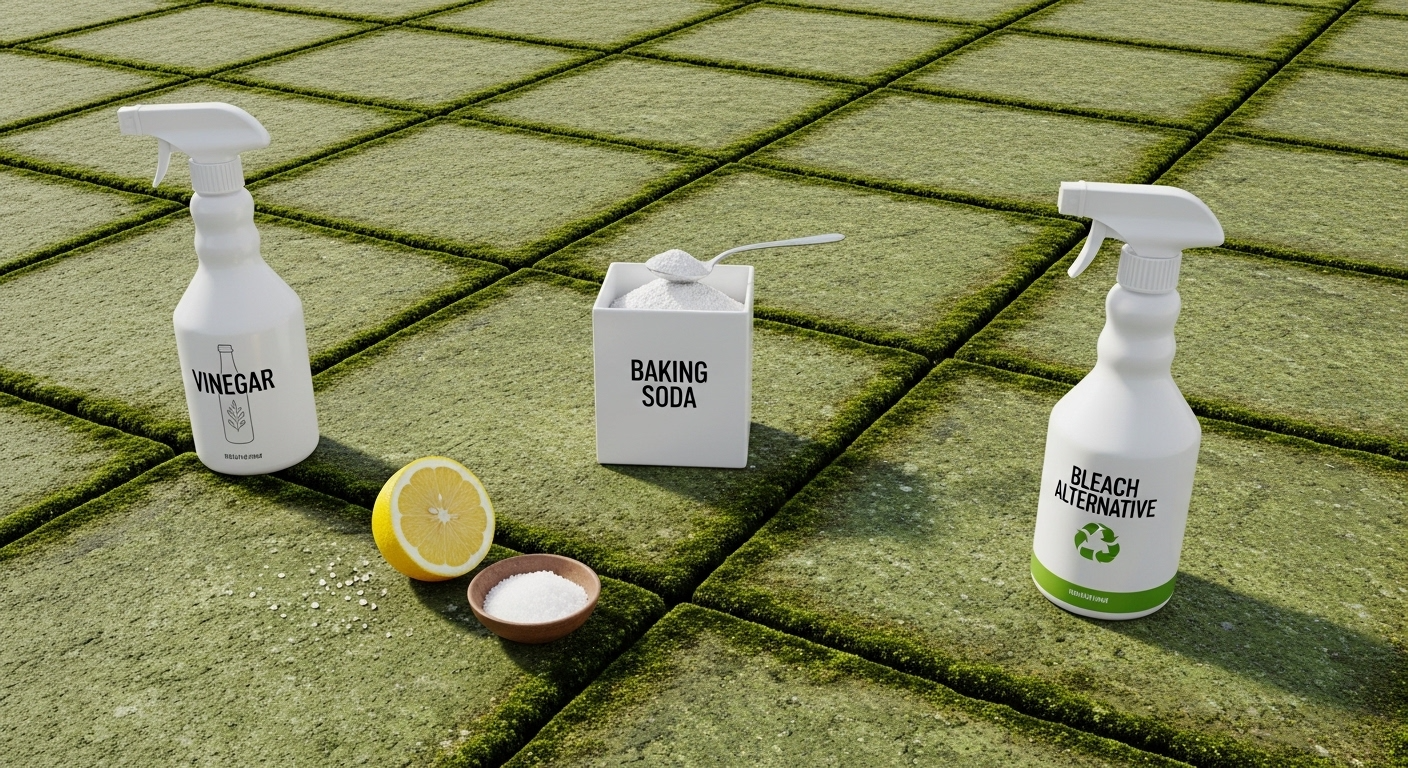
Every winter and spring, homeowners step outside to find their terraces and paving slabs covered in slippery, green moss that seems to return no matter what they try. The instinct to reach for bleach is understandable, but experts and landscape professionals increasingly point to four common kitchen ingredients that are more effective and far less damaging.
These solutions are not home remedies in the loose sense of the word. They work through specific chemical and physical mechanisms that directly target moss biology without the environmental and surface damage that harsh chemical cleaners can cause.
1. Vinegar: The Acidic Solution That Melts Moss on Terraces
White vinegar is the most versatile of the four and arguably the most immediately effective against active moss growth on terrace surfaces. Its acetic acid content breaks down the cellular structure of moss at a molecular level, causing it to wither and die without requiring scrubbing or pressure washing.
The application method is straightforward and requires no special equipment. Mix equal parts white vinegar and water in a spray bottle, apply generously to the affected surface, and allow it to sit for at least thirty minutes before rinsing or brushing away the dead moss.
Vinegar is also safe for surrounding plants and wildlife when diluted appropriately, making it a responsible choice for gardens where chemical runoff is a concern. Unlike bleach, it does not leave residue that continues leaching into soil or nearby garden beds after application.
2. Baking Soda: The Abrasive Scrubbing Agent for Stained Paving Slabs
Where vinegar dissolves moss chemically, baking soda works mechanically through its mild abrasive texture combined with a surface chemistry that disrupts moss growth. It is particularly effective on paving slabs with embedded green staining where moss has already been partially removed but the discolouration remains.
Sprinkle baking soda generously over the affected area, add a small amount of water to form a thick paste, and allow it to sit for ten to fifteen minutes before scrubbing with a stiff-bristled brush. The paste lifts moss residue and algae deposits from the pores of concrete and stone surfaces in a way that liquid sprays alone cannot achieve.
Baking soda is also entirely non-toxic and safe for children and pets, which matters significantly for households where outdoor areas are actively used for play and recreation. After scrubbing, a simple rinse with a garden hose removes all residue cleanly without any chemical trace remaining on the surface.
3. Lemon Juice: The Preventative Deterrent That Keeps Moss From Returning
While vinegar and baking soda address existing moss, lemon juice works best as a preventative measure applied to surfaces that have been cleaned and are at risk of regrowth. Its high natural acidity creates a surface environment where moss spores cannot germinate and establish, breaking the regrowth cycle rather than simply treating each outbreak after the fact.
Mix equal parts lemon juice and water in a spray bottle and apply to cleaned surfaces every two to three months, particularly during the damper autumn and winter periods when moss is most likely to take hold. The treatment is subtle enough not to discolour stone or concrete surfaces but acidic enough to remain inhospitable to moss spores for several weeks after application.
An additional benefit is the fresh citrus scent lemon juice leaves on outdoor surfaces, which is a notable improvement over the sharp chemical smell that bleach treatments leave behind for days. For courtyard spaces and entertaining areas where outdoor living is prioritised, this sensory consideration is worth factoring into your choice of treatment.
4. Salt: The Desiccating Agent That Draws Moisture Out of Moss
Salt works through an entirely different mechanism from the other three, functioning as a powerful desiccant that draws moisture out of the moss and the surrounding surface environment. Since moss depends entirely on consistent moisture to survive, removing that moisture kills it more effectively than many chemical treatments that target the plant directly.
Sprinkle coarse salt generously over moss-affected cracks, joints, and shaded surface areas, focusing particularly on the edges of slabs and steps where moss tends to establish first. The salt will gradually leach moisture from the moss and the substrate beneath it, causing visible dieback within one to two weeks depending on conditions.
The main maintenance consideration with salt is that heavy rain will dilute and wash it away, requiring reapplication after significant wet weather events. For Australian conditions where rain can be intense and concentrated, incorporating salt treatment into a regular maintenance schedule rather than treating it as a one-off solution is the most effective approach.
“Bleach and harsh chemicals may seem like a quick fix for moss, but they often do more harm than good. These natural, kitchen-based solutions are not only effective, but also eco-friendly and safer for your outdoor spaces.” — Jane Doe, Landscape Architect
Common Mistakes That Make Moss Problems Worse
One of the most frequent errors homeowners make is reaching for a high-pressure washer as the first line of attack against moss. Rather than removing it, intense water pressure drives moss deeper into the cracks and pores of paving surfaces, making future removal significantly more difficult.
Another common oversight is treating the visible moss without addressing the conditions that allowed it to grow in the first place. Poor drainage, persistent shade, and lack of regular sweeping all contribute to moss establishing itself, and no treatment will provide lasting results unless these underlying factors are managed.
“When it comes to moss, it is important to take a holistic approach. Simply applying a chemical or natural solution will not solve the problem in the long run if you do not address the underlying causes. Proper maintenance and prevention are key.” — Dr. Emily Watkins, Plant Ecologist
A Realistic Cleaning Schedule That Actually Works
Sustainability in moss management comes from consistency rather than intensity, and a realistic monthly routine is more effective than occasional intensive treatments. During the growing season, sweeping and scrubbing outdoor surfaces at least once a month with a baking soda paste prevents the buildup that becomes difficult to remove.
A lemon juice spray every two to three months creates the preventative acidic barrier that discourages moss from re-establishing between cleaning sessions. Salt should be reapplied after every significant rain event in areas prone to recurring moss, particularly in shaded corners and between paving joints.
“Moss is a persistent and resilient plant, so it is important to be proactive in your approach. Using these natural, affordable solutions can help keep moss at bay, but you will also need to stay on top of regular cleaning and maintenance to ensure long-term success.” — John Smith, Horticulture Specialist
Frequently Asked Questions
Are these natural solutions as effective as bleach against severe moss? For moderate to established moss growth, these four ingredients are equally or more effective than bleach. Severe long-term infestations may require combining multiple treatments alongside physical scrubbing.
Is it safe to use these solutions near garden plants and lawn edges? Vinegar, lemon juice, and salt should be applied carefully near desired plants as their acidity or desiccating properties can cause damage. Baking soda is the safest option near planted garden areas.
How often should I reapply salt after treating with it? Salt should be reapplied after every heavy rain event as water dilutes and washes it away from treated surfaces, reducing its desiccating effectiveness until it is renewed.
Can I use these methods on all outdoor surface types? These solutions work well on concrete, stone, and brick surfaces. Always spot-test on a small area first, particularly on sandstone or limestone, which can react to strong acids.
What is the best time of year to start a moss prevention routine in Australia? Late summer into autumn is the ideal window to begin preventative treatments before the cooler, damper months when moss is most likely to establish and spread rapidly.
Key Points to Remember
- White vinegar breaks down moss cells chemically and is the most effective treatment for active moss on terrace surfaces.
- Baking soda paste provides abrasive scrubbing action that lifts embedded green staining from paving slabs without harsh chemicals.
- Lemon juice spray applied every two to three months creates an acidic preventative barrier that stops moss spores from germinating.
- Salt works as a desiccant, drawing moisture from moss and the surface environment to cause dieback over one to two weeks.
- Addressing drainage, shade, and regular sweeping alongside these treatments is essential for achieving lasting results.
Conclusion
Moss on outdoor surfaces is a maintenance challenge, but it is one that does not require expensive products or toxic chemicals to manage effectively. The four ingredients covered here are already in most Australian homes and collectively address every stage of the moss problem, from active removal through to long-term prevention.
The shift away from bleach is not just an environmental preference but a practical one, as natural solutions cause less damage to surfaces over time and are safer for the families and pets using those spaces daily. A small amount of consistency with these kitchen staples is all that stands between a slippery, green terrace and a clean, safe outdoor space you can actually enjoy.
Read more: https://wizemind.com.au