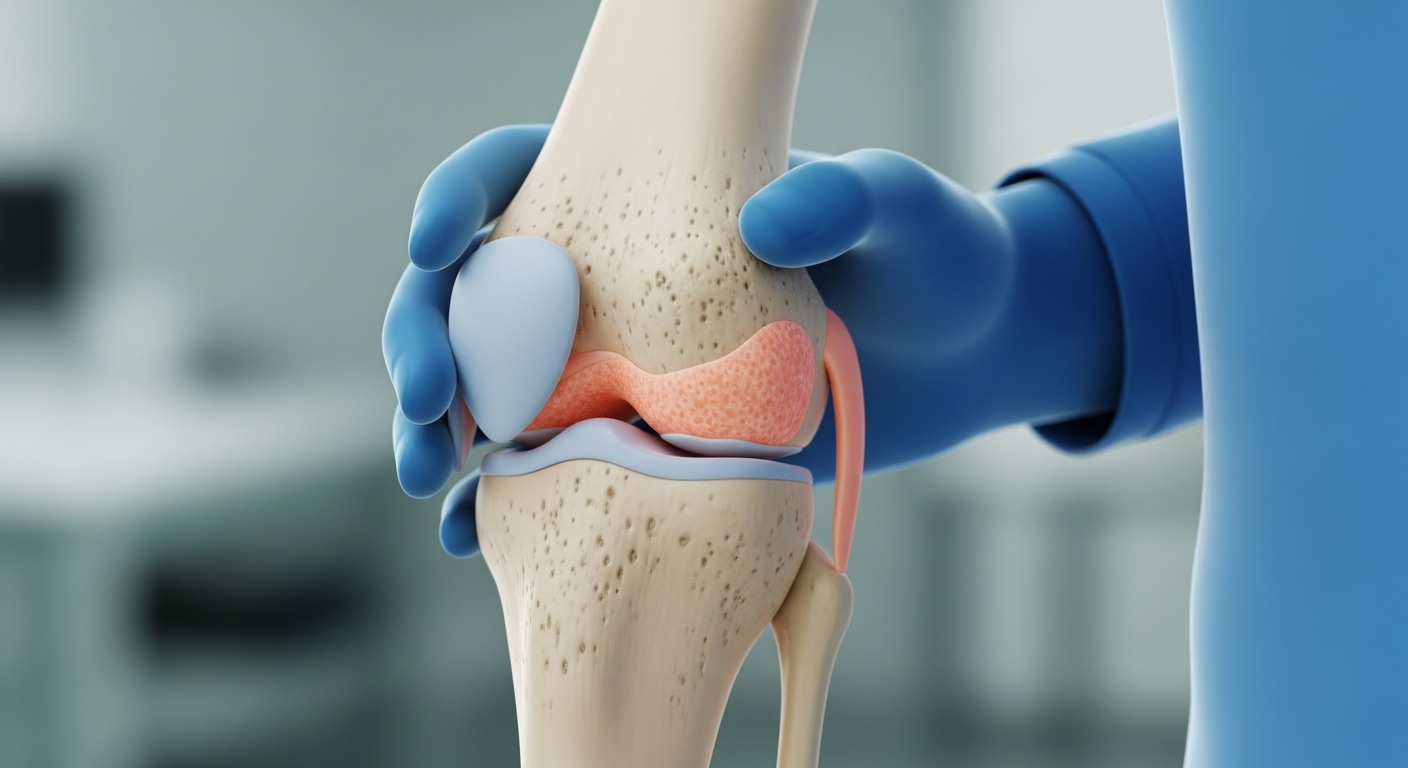
Semaglutide May Reverse Damage Caused by Osteoarthritis, New Study Suggests
A Common Weight-Loss Drug Could Be About to Change How We Treat Joint Disease
Osteoarthritis has long been treated as a condition with only one direction of travel. But a groundbreaking new study suggests that a widely used weight-loss medication may actually reverse the joint damage it causes.
The research, published in the journal Science Translational Medicine, points to semaglutide as a potential cartilage-regenerating treatment. This is the same drug already approved for managing type 2 diabetes and promoting weight loss in people with obesity.
What the Study Actually Found
Researchers at the University of Pennsylvania conducted experiments on mice with surgically induced osteoarthritis. They found that administering semaglutide not only slowed cartilage breakdown but also stimulated the regeneration of damaged tissue.
The drug appeared to trigger metabolic changes inside cartilage cells known as chondrocytes. These changes prompted the production of collagen and proteoglycans, two structural proteins essential for healthy and functional joint cartilage.
“This is a really exciting development. Osteoarthritis has been viewed as a one-way street for so long, so the idea that we could actually reverse the damage and restore cartilage function is truly groundbreaking.” — Dr. Sarah Westerman, Orthopedic Specialist, University of California San Francisco
Why This Discovery Matters So Much
Osteoarthritis is the most common form of joint disease in the world, affecting an estimated 32.5 million adults in the United States alone. In Australia, it is one of the leading causes of chronic pain and disability across the ageing population.
Until now, treatment options have been largely limited to pain relief, physiotherapy, and eventual joint replacement surgery. None of these approaches address the underlying cartilage damage, they only manage the symptoms that result from it.
How Semaglutide Works on Joints
Semaglutide is a synthetic version of a naturally occurring hormone called glucagon-like peptide-1, or GLP-1. Its primary role is regulating blood sugar and metabolism, which is why it became widely used for diabetes and weight management.
What surprised researchers was its additional effect on joint inflammation and cartilage cell behaviour. By reducing inflammatory activity in the joint while simultaneously stimulating structural repair, the drug appeared to work on two fronts at once.
“This study represents a paradigm shift in our understanding of osteoarthritis. Rather than just trying to alleviate pain, we may now have the opportunity to actually reverse the underlying damage and improve joint function.” — Dr. Emily Chen, Joint Biology Researcher, University of Chicago
The Significance of Targeting Inflammation
Inflammation is not just a symptom of osteoarthritis but one of its primary drivers of progressive damage. As cartilage breaks down, the immune system responds in ways that accelerate further deterioration in the affected joint.
Semaglutide’s ability to reduce joint inflammation while rebuilding cartilage structure is what makes the finding so unusual. Most existing treatments address one side of this equation, not both simultaneously.
What Experts Are Saying About the Research
The scientific community has responded to these findings with a mix of genuine excitement and measured caution. Researchers acknowledge the promise while emphasising that mouse studies do not automatically translate to human outcomes.
Dr. Robert Terkeltaub, a rheumatologist at the University of California San Diego, urges careful interpretation of the results. He points out that human clinical trials will be essential before any conclusions about real-world effectiveness can be drawn.
“We need to be mindful that these results were obtained in a mouse model, and the translation to human patients may not be straightforward. We will need to see how the drug performs in carefully designed clinical trials before we can draw any firm conclusions.” — Dr. Robert Terkeltaub, Rheumatologist, UC San Diego
What Still Needs to Be Answered
Several important questions remain before semaglutide could be approved as an osteoarthritis treatment in humans. Researchers need to determine the correct dosage, the optimal timing of treatment, and the long-term safety profile for joint-related use.
The drug is currently approved for diabetes and weight loss, meaning its use for cartilage regeneration would require a separate regulatory process. Side effects already known from existing uses will also need to be evaluated in the specific context of joint disease treatment.
A Potentially Faster Path Given Existing Approval
One factor that could accelerate progress is that semaglutide is already approved and widely prescribed across multiple countries. Its safety data from diabetes and obesity treatment is extensive, which may reduce some of the hurdles involved in testing it for a new indication.
Regulators in the United States, Europe, and Australia are generally more familiar with a drug’s profile when it seeks approval for additional uses. This does not guarantee a fast timeline, but it does mean the foundational safety work has already been done to a significant degree.
What Osteoarthritis Patients Should Know Right Now
For the millions of people currently living with osteoarthritis, the standard of care has not changed yet. Pain management, physical therapy, and joint replacement surgery remain the recommended treatment pathways at this stage.
However, patients and their healthcare providers can take note that regenerative approaches to joint disease are now being explored seriously at major research institutions. This study is part of a broader shift in the medical community toward treating the cause of osteoarthritis rather than only its symptoms.
Frequently Asked Questions
What is semaglutide and who currently uses it? Semaglutide is a GLP-1 receptor agonist currently approved for treating type 2 diabetes and promoting weight loss in people with obesity.
Does this mean semaglutide can now treat osteoarthritis? Not yet. The findings are from mouse studies only, and human clinical trials are needed before any treatment approval can be considered.
How does semaglutide potentially repair cartilage? It appears to trigger changes in cartilage cells that stimulate collagen and proteoglycan production while also reducing inflammation in the joint.
How long before it could become available as a joint treatment? Clinical trials, regulatory review, and approval processes typically take several years, though prior approval for other uses may help streamline some stages.
Who is most at risk from osteoarthritis? The condition is most common in older adults, people who are overweight, and those with a history of joint injuries, though it can affect people across a wide age range.
Key Points to Remember
- Semaglutide, already approved for diabetes and weight loss, has shown cartilage-regenerating properties in a new animal study.
- The drug works by stimulating structural protein production in cartilage cells while simultaneously reducing joint inflammation.
- Results were obtained in mouse models, meaning human clinical trials are the essential next step.
- Osteoarthritis affects millions of Australians and hundreds of millions globally, making this research highly significant.
- Current treatment options remain unchanged, but this study signals a potential turning point in regenerative joint medicine.
Conclusion
The idea that a drug already sitting in millions of medicine cabinets could one day reverse joint damage would have seemed far-fetched just a few years ago. This study does not confirm that outcome yet, but it opens a serious and credible scientific conversation about the possibility.
For a condition that has resisted every attempt at reversal for decades, that conversation alone represents meaningful progress. Researchers, clinicians, and patients all have reason to watch the next phase of this work very closely.
Read more: https://wizemind.com.au