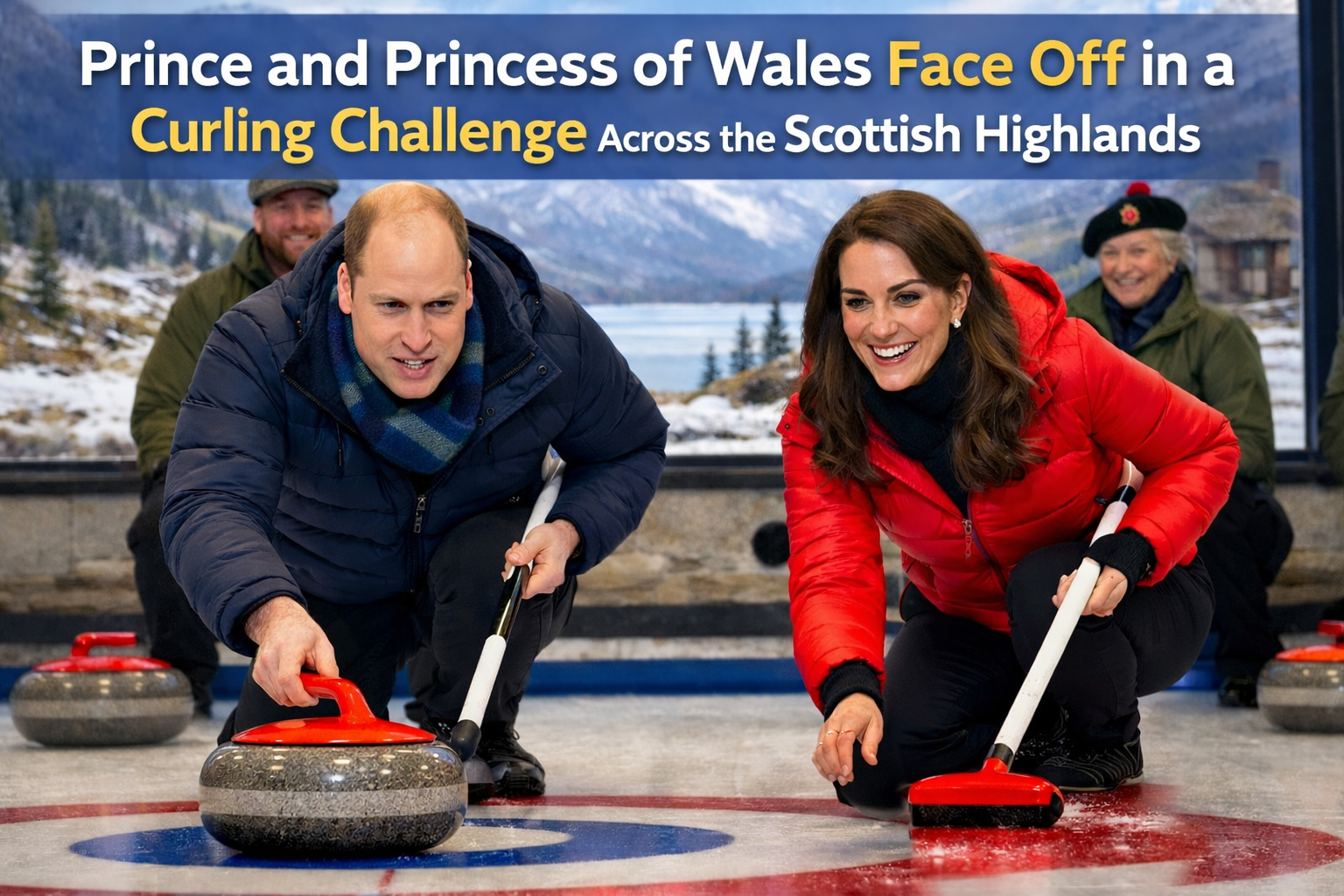
Prince and Princess of Wales Face Off in a Curling Challenge Across the Scottish Highlands
The Prince and Princess of Wales swapped palace duties for brooms and stones recently, stepping onto the ice for a curling challenge in the heart of the Scottish Highlands. It was an unexpected and warmly received moment that captured public attention around the world.
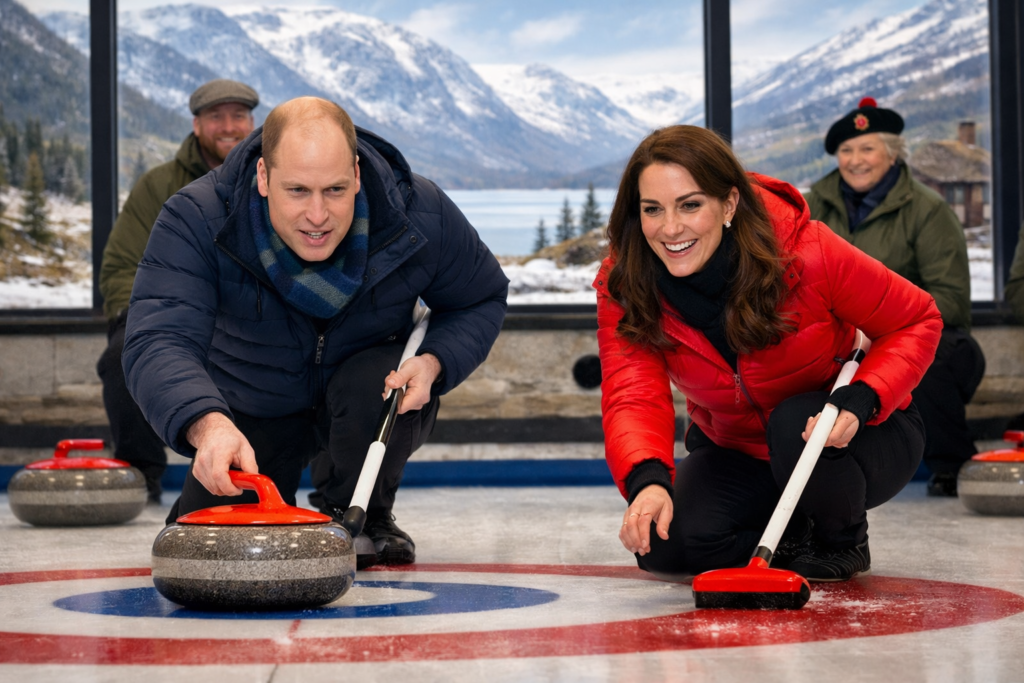
The event offered a rare and genuinely human glimpse into the lives of the future King and Queen, showing a side of royal life that official engagements rarely reveal.
A Scottish Tradition With Royal Significance
Curling has been played in Scotland for centuries, making it one of the country’s most deeply rooted cultural traditions. By choosing to participate, the Prince and Princess of Wales made a deliberate and meaningful gesture toward Scotland’s heritage and identity.
The setting in the Scottish Highlands added to the occasion’s resonance. Rolling hills, crisp Highland air, and a frozen sheet of ice created a backdrop that felt fitting for two figures who will one day represent the entire United Kingdom.
What Happened on the Ice
The match unfolded with genuine competitive energy, the kind that cannot be rehearsed. William and Catherine each took their turns delivering stones, sweeping with purpose, and tracking the progress of each shot with visible concentration.
The crowd gathered around the rink responded with enthusiasm, clearly delighted to see the royal couple engaged and fully committed to the game rather than simply going through the motions of a ceremonial appearance.
Curling: The Sport at the Centre of It All
For readers unfamiliar with the sport, curling involves sliding granite stones across a sheet of ice toward a circular target known as the house. Players use brooms to sweep the ice in front of the stone, controlling both its speed and direction.
It is a sport that rewards strategy, precision, and teamwork as much as physical skill. That combination makes it a natural fit for two people who clearly enjoy both competition and collaboration.
How the Match Compared: William vs Catherine
| Category | Prince William | Princess Catherine |
|---|---|---|
| Competitive Style | Focused, measured delivery | Precise and composed |
| Crowd Reaction | Strong enthusiasm and cheers | Warm applause throughout |
| Technique | Deliberate approach to each stone | Smooth and controlled release |
| Spirit of Play | Friendly rivalry, visibly competitive | Good-humoured and sharp |
| Outcome | Match result kept in good spirits | Both played to win |
The table reflects what observers on the day noted: both royals brought genuine effort to the match rather than treating it as a photo opportunity.
The Friendly Rivalry Between Two Competitors
What made the occasion stand out was the natural banter and competitive spirit between the couple. They traded good-natured comments, laughed at close calls, and clearly enjoyed pushing each other throughout the game.
That dynamic, visible and unforced, was a reminder that beneath the formal responsibilities of royal life there are two people with real personalities and a shared love of sport and competition.
Why This Moment Resonated With the Public
Royal public engagements can sometimes feel choreographed and distant. This one did not. The informality of a curling match created a setting where genuine reactions, real competitive tension, and honest laughter were all on display.
For many watching, it reinforced a sense that William and Catherine are accessible figures who understand the value of participating in the traditions and pastimes of the communities they visit, rather than simply observing from a respectful distance.
Scotland’s Connection to the Royal Family
Scotland holds a particular place in the hearts of the Royal Family. Balmoral Castle in Aberdeenshire has been a private retreat for successive monarchs, and the family’s ties to Scottish culture run deep across generations.
The decision to engage in curling specifically carries weight in that context. It is not a sport associated with the English establishment. It is distinctly, proudly Scottish, and choosing to play it seriously signals respect and genuine affection for the country.
What Events Like This Mean for the Monarchy
The British monarchy’s long-term strength rests partly on its ability to remain relevant and relatable across changing generations and shifting cultural expectations. Moments like the curling match contribute directly to that project.
When future royals are seen participating authentically in local traditions, it builds a sense of connection that formal speeches and ribbon-cutting ceremonies cannot easily replicate. The public remembers moments that feel real.
Frequently Asked Questions
Where did the curling match between William and Catherine take place? The match took place in the Scottish Highlands, a region with strong ties to the Royal Family and a deep history of curling as a local and national tradition. The setting added cultural significance to what was already a well-received public engagement.
Who won the curling challenge? The result of the match was not the focus of the occasion, and no official winner was declared in coverage of the event. Both the Prince and Princess approached it with genuine competitive spirit, but the emphasis was firmly on participation, connection, and enjoyment rather than the final score.
Why is curling significant in Scotland? Curling has been played in Scotland for at least five centuries, with the earliest written references dating to the early 1500s. It is considered a national sport and carries strong associations with Scottish community life, winter tradition, and national identity.
How did the local community respond to the royal visit? The response from those present was enthusiastic and warm. Seeing the Prince and Princess of Wales take an active and genuine interest in a beloved local sport, rather than simply attending as observers, clearly resonated with the crowd on the day.
What does this event reveal about William and Catherine as a couple? It showed a couple who are genuinely comfortable competing against each other and who bring authentic energy to activities they participate in publicly. Their banter and visible enjoyment of the match suggested a relationship grounded in mutual respect and shared interests.
How does participating in events like this benefit the Royal Family’s public image? Authenticity is increasingly valued by the public when it comes to royal engagement with communities. Events where royals are seen doing something genuinely enjoyable and participatory tend to generate warmth and positive media coverage in ways that more formal engagements often cannot match.
Is curling an Olympic sport? Yes. Curling has been a full Olympic sport since the 1998 Winter Games in Nagano, Japan. It has grown significantly in global popularity since then, with strong national programmes in Canada, Sweden, Switzerland, Scotland, and beyond.
Conclusion
A curling match in the Scottish Highlands might seem like a light entry in the diary of two future monarchs. But moments like this carry real weight in the broader story of how the Royal Family connects with the public.
By stepping onto the ice, trading competitive shots, and genuinely embracing a centuries-old Scottish tradition, the Prince and Princess of Wales demonstrated exactly the kind of accessible, grounded engagement that builds lasting public affection.
It was a reminder that sport has a unique ability to reveal character, and what was revealed in the Highlands was warmly received by everyone who watched.
Read more: https://wizemind.com.au