One Spoon Is Enough: Why More And More People Are Putting Coffee Grounds In The Toilet
The first time you stand over a toilet with a spoonful of coffee grounds in your hand, it feels a bit like breaking a rule. The air smells like a cafe. The porcelain bowl gleams with its usual sterile indifference. Your brain whispers that this is wrong, that coffee goes in mugs and not in toilets. And yet more and more people are doing exactly that: tipping a spoon or two of used coffee grounds into the bowl, watching the brown swirl, and flushing with a quiet satisfied sense that they have just done something oddly clever.
Key Points
- Used coffee grounds still carry enough aroma to temporarily mask bathroom odors with a soft cafe-like scent
- A single spoon once or twice a week is the limit most people recommend, as larger amounts can cause pipe buildup over time
- Coffee grounds do not dissolve in water, which means they pass through in small amounts but can clump with grease and debris in larger quantities
- The mild abrasiveness of grounds may help loosen very light surface residue in the bowl as they swirl around before flushing
- Most plumbers advise keeping coffee grounds out of toilets and sinks entirely, preferring compost or the bin instead
- People with septic tanks should avoid this habit as grounds are dense and slow to break down, potentially adding to sludge
- The better long-term use for coffee grounds is in the garden, in compost, or in a food-waste collection bin
The Quiet Revolution Happening In The Bathroom
You will not find a glossy ad campaign about this. No one is posting dramatic before-and-after plumbing shots online. It began in forums and hushed kitchen-table conversations: people complaining about sewer smells, hard-water stains, aging pipes, and septic tanks that needed a little extra love. And then someone’s grandmother’s trick surfaced. Just a spoon of coffee in the toilet now and then.
At first it sounded like one of those old household myths, somewhere between putting bread in the sugar jar and using onion slices to cure a cold. But the stories kept surfacing. A landlord who swore their building’s drains stayed clearer when tenants drank a lot of home-brewed coffee. A retired plumber who casually mentioned that households with heavy coffee habits rarely called him for minor clogs. A friend who laughed off limescale rings by saying she gave the bowl a coffee once a week.
Slowly an idea took root: maybe the morning ritual could have an afterlife beyond the compost bin. Maybe the dark gritty leftovers at the bottom of the filter had one more job to do.
The Spoon That Changed The Mood Of A Room
Imagine this. It is early morning, the house still wrapped in that fragile hush before alarms and emails begin. The kettle is screaming softly, the coffee dripper gurgling. You stand barefoot on cold kitchen tiles surrounded by the comforting bitterness of roasted beans. You pour, you sip, you breathe. Ritual complete.
And then you look down at what is left. Damp warm grounds clinging to the paper filter or the metal mesh of your French press, smelling like a gentler echo of your first sip. Once upon a time all of this went straight into the trash. But now you reach for a spoon.
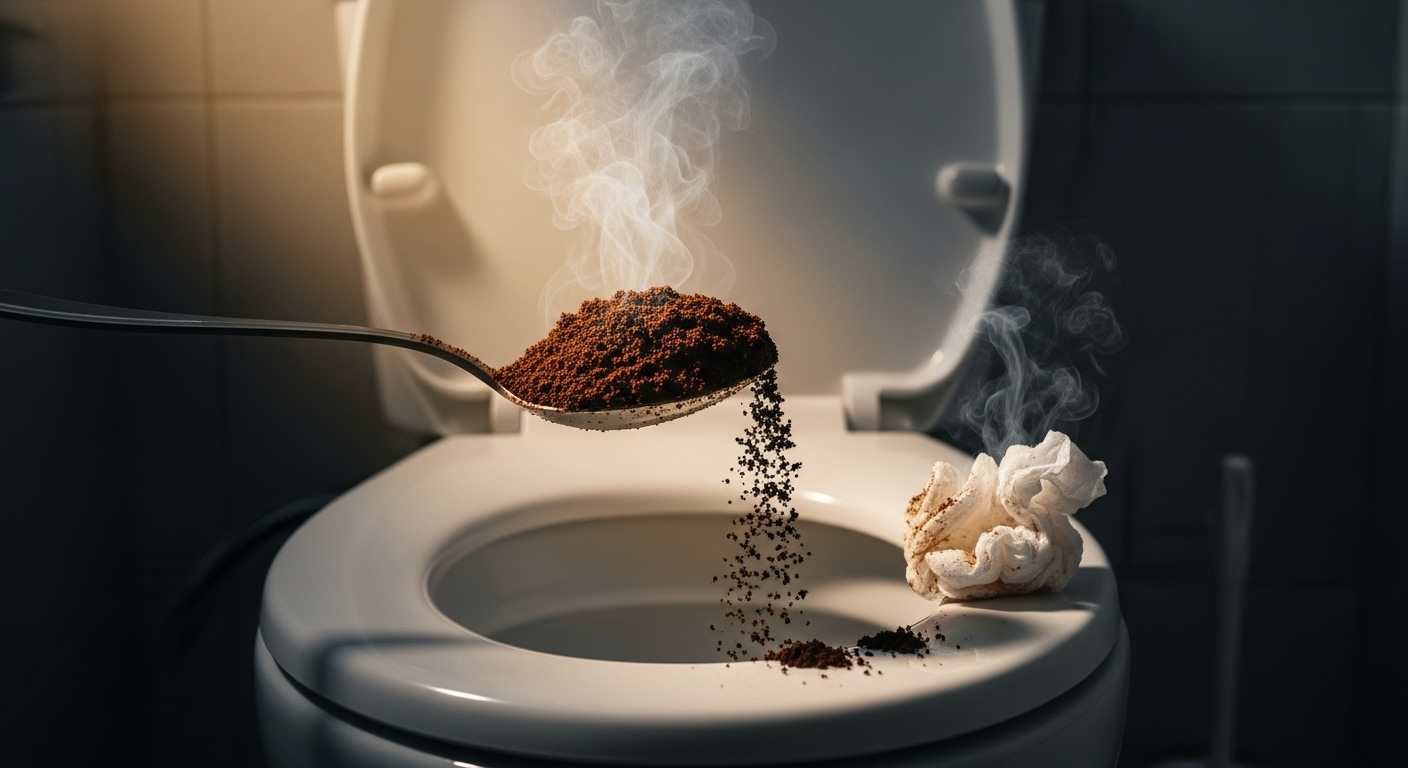
You carry that spoon down the hallway. The bathroom light is softer, reflecting off tiles that have seen toothpaste splatters, steamy showers, and late-night confessions. You tilt the spoon, tap, and the grounds fall into the bowl with a quiet plop, spreading out like a small brown galaxy. You watch them spin and bloom in the water when you flush. Gone, but somehow used well.
This is the small everyday theater that has turned an odd habit into a quiet movement.
What Coffee Grounds Actually Do In The Toilet
Coffee grounds are not magic. But they are interesting. They are coarse and heavy enough to behave differently from most things we send down our drains. And our noses, perhaps more than anything, are the reason this ritual has caught on.
Used coffee grounds still hold a surprising amount of aroma. Even after brewing they carry that warm roasty smell that turns kitchens into sanctuaries. When those grounds land in a toilet bowl they do not chemically neutralize odors the way a lab-made deodorizer would. Instead they overpower them, the way standing near a bakery briefly hides the smell of traffic outside.
For people with sensitive noses or small bathrooms that trap every whiff, that gentle coffee smell feels like a genuine relief. It is softer than synthetic floral sprays, less cloying than chemical cleaners. A single spoon can add a faint cafe-like note to an otherwise clinical space.
The Myth And The Mechanics Of Pipe Cleaning
Stories travel faster than facts. Somewhere along the way the idea spread that coffee grounds scrub pipes, that they act like a tiny plumbing exfoliant. It is a compelling image: small brown granules scraping away hidden grime. But that is not how pipes actually work.
Coffee grounds are not dissolvable. They do not melt, they do not become soap, and they certainly do not vanish. In small amounts, the fabled single spoon, they usually pass through carried by the rush of water and everything else in the flush. But in larger quantities they can clump, especially when they meet fats or other debris that are already lining the pipe.
So where does the idea that they clean pipes come from? Likely from contrast. People who use modest amounts of grounds, and who also avoid flushing things like wipes, floss, or kitchen grease, tend to have fewer plumbing problems. They credit the coffee when the real reason is broader good habits and decent plumbing design.
There is a small kernel of truth buried in the idea though. The mild abrasiveness of grounds may help scuff off superficial residue in the bowl as they swirl around, making light stains slightly less clingy. It is not deep cleaning by any stretch. It is more like giving the porcelain a gentle gritty rinse before the water carries everything away.
One Spoon Is Enough: The Fragile Line Between Clever And Careless
Everyone who swears by this habit repeats the same warning: not too much. One spoon. Maybe two at most. Once or twice a week. Their enthusiasm is always immediately followed by caution, because the shadow side of this gentle ritual is the very real risk of a clog.
In kitchen sinks, plumbers have long cursed coffee grounds for building up in U-bends and combining with oils to form sticky sludge. Toilets have wider pipes and a more forceful flush, but they are not invincible. The line between a quirky home trick and an expensive plumbing call is thin and easy to cross.
Think about a typical week for a heavy coffee drinker. Two to four brews a day, maybe more on weekends. That is a lot of grounds. If every serving ended up in the toilet, you would be sending a steady stream of dense gritty material down your pipes every single day. A spoon or two becomes a habit. The habit becomes a pattern. The pattern builds layers you cannot see until something stops flowing properly.
That is why moderation is the unspoken rule at the heart of this trend. A spoon is a nod to the idea, enough to give a hint of scent and the psychological comfort of doing something with the waste. But the coffee grounds’ main destination should still be the compost or the bin, not the toilet.
What Plumbers Actually Think
If you ask plumbers directly, you get a grounded picture. Many will tell you with the weary patience of people who have seen everything that they would prefer coffee grounds in the trash or the compost. Not in sinks. Not in toilets. They have pulled too many wet expanding clumps from pipes to feel romantic about coffee’s second life.
Some will shrug and admit that tiny amounts infrequently probably will not destroy a modern system, especially if the rest of the household is careful about what it flushes. The real problem, they say, is less about one person’s occasional spoon and more about accumulated habits. Grease in sinks, wipes in toilets, hair in drains. Each person adding just a little. The system collapses quietly and then all at once.
Where Coffee Grounds Really Belong
What is fascinating is that the coffee-in-toilet trend exists alongside another far older movement: using coffee grounds as a resource rather than just waste. In gardens, in compost bins, and in soil, coffee has already earned a kind of humble usefulness.
Spend a morning in a community garden and you will probably find someone scattering a thin dusting of coffee over the beds or mixing it into a compost heap. Coffee grounds add organic matter to soil, improving its structure and water retention over time. They are not a miracle fertilizer and they need balance with other materials, but the point is that soil knows what to do with coffee. Earthworms move through it, microbes work on it, and plants benefit slowly and indirectly.
The toilet, by contrast, is a fast and forgetful world. Once you flush, that spoonful is gone from your life but not from the system. It travels along pipes designed to move human waste and paper, through pumps and treatment facilities that never asked for extra grit. It becomes part of someone else’s problem, or the river’s, or eventually the sea’s.
So why do people still choose the toilet route? Because it is immediate, private, and oddly comforting. There is a small thrill in turning a waste product into a tiny ritual of cleanliness and scent, even if the better ecological story is happening quietly in compost heaps in gardens and behind apartment blocks.
How People Are Actually Doing It
Within this quiet trend a few patterns have emerged, refined by trial and error and shared between friends in comment threads and kitchen conversations.
People who use a single spoon once a week tend to notice a slight coffee scent and sometimes feel the bowl looks a little fresher. The risk to healthy pipes at that frequency is low.
People who use grounds daily report a stronger aroma and describe it as a mini ritual after their morning brew, but the increased frequency raises the clog risk meaningfully over time.
People who dump a whole filter at once find it convenient and mess-free, but this is where buildup becomes a real possibility, especially in older pipes.
Some people report that swirling the grounds around and letting them sit for a minute before flushing seems to ease light bowl stains. Others say the subtle aroma genuinely transforms their bathroom from sterile to lived-in and pleasant. And others, after a bout of slow flushing and a stern word from a plumber, abandon the experiment altogether and redirect their grounds to potted plants or the garden with quiet relief.
The Deeper Allure: Why This Tiny Act Feels So Satisfying
Underneath the practical questions lies something more emotional. The idea that one spoon is enough is part of a broader longing: to live with less waste, to stretch the life of everyday things, to find meaning in small repeated gestures.
Our days are filled with single-use moments. Takeaway cups, plastic wrappers, wipes that vanish with a flush. Coffee, however, stubbornly resists being purely disposable. It asks to be smelled, brewed, and savored. The grounds left behind are a physical reminder that something real happened. A tiny pile of evidence that time passed, water moved, aroma rose.
When we give those grounds a job beyond the bin, even if it is just scenting the air of a bathroom for a few minutes, it softens the edges of throwaway culture. We feel, however faintly, that we are caretakers rather than simply consumers. That nothing is entirely finished after its first use.
The spoon in the toilet is odd, yes. But it is also a small gesture of refusal: a refusal to accept that all leftovers are meaningless. It says that this has value, even if that value is small and symbolic.
Of course, symbolism does not clear pipes. The challenge and perhaps the beauty of this trend is in holding both truths at once. Small rituals matter. And systems, whether plumbing, sewage, or ecosystems, have limits that deserve respect.
Living With The Trend Without Becoming Its Cautionary Tale
Whether you ever tip a spoon of coffee into your toilet or not, the story behind this habit says something honest about how many of us live now. It speaks of people trying to reconnect their everyday routines in a world that often feels disconnected and wasteful.
If you are curious but cautious, keep the habit rare: a spoon occasionally rather than every day. Avoid flushing large clumps or whole filters at once. Pay attention to how your plumbing behaves because slow drains are an early sign to stop. And consider trying other uses for your grounds first: soil, compost, or even a small open bowl placed near the toilet to absorb odors passively without going near the pipes at all.
The deeper lesson may be less about coffee and toilets and more about the quiet pleasure of paying attention. To what we use, what we throw away, and what we send out of sight with the push of a handle. To the unassuming infrastructures under our feet and the small preferences of the homes we live in.
In the end the trend might fade as quickly as it rose, replaced by some new micro-ritual. Or it might settle quietly into the category of semi-secret household tricks passed along in conversation: you know, when my bathroom smells a bit off I just give the toilet a spoon of last night’s coffee. Said with a shrug and a smile, and that unmistakable morning scent hanging gently in the air.
One spoon is enough, the phrase goes: not just to scent a room, but to remind us that even the smallest everyday thing can carry a story, if we let it.
Frequently Asked Questions
Is it safe to put coffee grounds in the toilet?
In very small amounts and infrequently, most modern plumbing can probably handle an occasional spoon of coffee grounds. However, coffee grounds do not dissolve and can contribute to clogs over time, especially in older pipes or septic systems. From a plumbing perspective, the safest choice is to keep them out of toilets altogether.
Can coffee grounds really clean the toilet or pipes?
Coffee grounds may provide a slight abrasive effect inside the bowl, which can help loosen very light surface residue as they swirl. They do not clean pipes in any reliable way and do not remove serious buildup. For actual cleaning, regular scrubbing with appropriate products is still necessary.
Will coffee grounds make my bathroom smell better?
Yes, used coffee grounds still carry a mild pleasant aroma. A spoonful in the toilet can temporarily add a subtle coffee scent that may mask other odors. The effect is short-lived and is about masking rather than genuinely neutralizing smells.
Are coffee grounds bad for septic tanks?
Coffee grounds are organic but dense and slow to break down. In large or frequent amounts they can accumulate in septic systems and contribute to sludge, potentially shortening the time between pump-outs. If you have a septic tank, it is wisest to keep grounds out of toilets and sinks entirely.
What is the best way to dispose of coffee grounds?
Composting, adding small amounts to garden soil, or putting them in a food-waste collection bin are the most recommended options. If those are not available, the regular bin is still far safer for your plumbing than flushing grounds down the toilet or rinsing them into the sink.
How often can I safely put coffee grounds in the toilet?
If you choose to do it at all, keep it minimal: a single spoon occasionally rather than a daily habit. Watch for any signs of slow flushing or gurgling and stop the practice at the first sign of trouble.
Do plumbers recommend using coffee grounds this way?
Most plumbers do not encourage putting coffee grounds or any gritty non-dissolving material into toilets or drains. While tiny amounts may not cause immediate harm, their consistent advice is to keep all grounds in the compost or bin to avoid long-term buildup and the cost of repairs.
Read more health and wellness articles at wizemind.com.au