Moss and Weeds: This Kitchen Ingredient Wipes Them Out With Zero Effort
If you have ever spent a frustrated afternoon on your hands and knees pulling weeds from between paving stones or scrubbing green moss off a damp patio, you will appreciate how satisfying it would be to find something that handles the problem with almost no effort on your part. It turns out that something has been sitting in your kitchen cupboard the whole time.
Baking soda, the same humble white powder you use for baking and occasional fridge deodorizing, is one of the most effective and least talked-about solutions for moss and weed control in gardens and outdoor spaces. Landscapers have known about this trick for years. It is only recently that it has started spreading more widely among everyday gardeners who are looking for natural alternatives to harsh chemical herbicides.
Why Baking Soda Works on Moss and Weeds
The science behind this is straightforward. Baking soda, chemically known as sodium bicarbonate, works against moss and weeds through two primary mechanisms.
First, it is highly absorbent and draws moisture away from the plants it contacts. Moss and many common weeds depend on consistent moisture to survive, and disrupting that moisture balance weakens them significantly. Second, baking soda alters the pH of the immediate environment it is applied to, making conditions less hospitable for the growth of moss and broadleaf weeds.
The result is that plants treated with baking soda gradually weaken, yellow, and die without the need for the toxic chemistry that makes conventional herbicides problematic around children, pets, and beneficial garden insects.
Critically, baking soda achieves this without scorching or burning surrounding plants the way boiling water treatments do, and without the soil acidification concerns that vinegar-based approaches can create when used repeatedly. It is genuinely one of the gentler options available while still being meaningfully effective.
When to Apply It for the Best Results
Timing makes a significant difference with this method. Winter and early spring are the ideal periods for applying baking soda to moss and weed problems, and the reason comes down to the biology of the plants you are targeting.
During colder months, moss and weeds are in a dormant or semi-dormant state. Their growth is suppressed, their root systems are less active, and their ability to recover from environmental stress is significantly reduced. Applying baking soda during this vulnerable period means the plants have far less capacity to bounce back compared to the same treatment applied during their peak growing season in summer.
Think of it this way: treating a weed in summer is like fighting someone who is fully rested and alert. Treating that same weed in winter is catching it when it is already depleted and has limited reserves to fight back with. The baking soda does not need to work as hard to achieve a lasting result.
This seasonal timing also means less disruption to beneficial plants in your garden. In winter, most of the plants you want to keep are dormant or at least not in active growth, reducing the chance of accidental contact causing any unwanted damage.
How to Use It: Two Methods for Different Situations
The approach you use depends on whether you are dealing with fresh growth or established moss and weeds that have already taken hold.
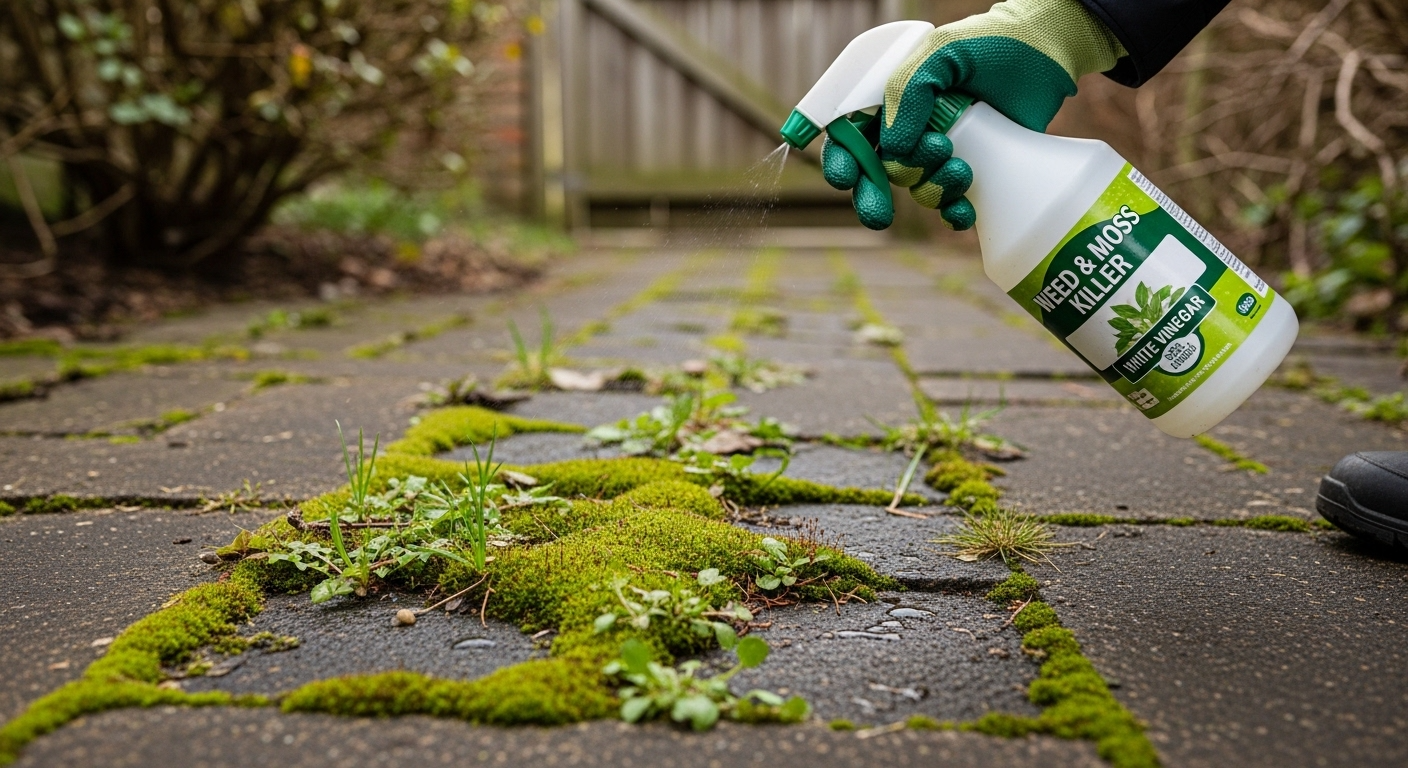
For prevention and light coverage, the dry method is the easiest approach you will ever try. Simply take your box of baking soda and sprinkle it generously over the affected area. Focus on the moss patches on your patio, the weeds pushing up between paving stones, or the green film spreading across a damp path. There is no mixing, no measuring, and no specialist equipment required. The baking soda sits on and around the plants and gradually does its work as moisture activates it. One application takes approximately two minutes.
For established moss and weeds that have been growing for some time, a liquid solution is more effective because it can penetrate into the root zone rather than just sitting on the surface. Mix two to three tablespoons of baking soda into a litre of water in a standard spray bottle, shake well, and apply directly to the moss and weed growth. The liquid carries the sodium bicarbonate deeper into the plant structure and surrounding soil, disrupting the root system more thoroughly than dry powder alone can achieve.
For particularly stubborn patches, using the liquid solution first and then following up with a dry powder application once the area dries out can deliver the most comprehensive results.
Where You Can and Cannot Use It
This is the part that matters most for avoiding unintended consequences. Baking soda is not a universal treatment that can be sprayed or scattered anywhere without thought.
It works extremely well on hard surfaces including driveways, patio slabs, pathways, steps, and any area where you want to clear moss or weeds without concern for surrounding plant life. On these surfaces it can be used generously without reservation.
It should be used carefully around garden beds containing plants you want to keep. Applied directly to soil in planted areas, baking soda can raise the pH and affect the nutrient availability in ways that stress or damage desirable plants. If you need to treat weeds growing in or near a planted bed, apply it precisely and only to the target weeds rather than broadcasting it broadly.
Lawns are not suitable areas for baking soda treatment. The grass in your lawn is susceptible to the same pH disruption and moisture competition effects that make baking soda effective against weeds. Applying it to a lawn can cause discoloration and patchy damage that is difficult to reverse quickly.
It is completely safe around children, pets, and wildlife when used as directed. There are no toxic residues, no harmful runoff, and no risk from accidental contact. This is one of its genuine advantages over chemical alternatives.
How It Compares to Other Natural Methods
Baking soda occupies a distinctive position among the natural weed and moss control options that gardeners commonly discuss.
Compared to boiling water, baking soda is significantly more practical for treating larger areas and poses no burn risk to the person applying it. Boiling water is effective but requires repeated kettle trips and cannot be safely used anywhere near plants you want to protect.
Compared to vinegar, baking soda is less immediately dramatic but more sustainable for long-term soil health. White vinegar can kill weeds quickly but repeated applications acidify the soil progressively, which eventually creates problems for any plants nearby, including desirable ones. Baking soda does not have the same cumulative acidification issue.
Compared to commercial herbicides, baking soda is slower to show results but leaves no toxic residues and does not create the ecological concerns associated with glyphosate-based products and similar chemicals. For areas where children play, pets roam, or wildlife visits, that difference matters considerably.
| Method | Effectiveness | Safety | Environmental Impact | Cost |
|---|---|---|---|---|
| Baking soda dry | Moderate | Very high | Minimal | Very low |
| Baking soda liquid | Good | Very high | Minimal | Very low |
| Boiling water | High immediate | Burn risk | Minimal | Low |
| White vinegar | High immediate | Good | Soil acidification concern | Low |
| Chemical herbicide | Very high | Moderate | Significant | Moderate |
Making It Part of Your Regular Garden Routine
The most effective approach to moss and weed management is not a single dramatic treatment but consistent light maintenance. Baking soda fits naturally into this kind of routine because the effort involved is genuinely minimal.
A light dusting of baking soda on your patio and pathways in late autumn, repeated in early winter, and again in late winter before the spring growing season begins can dramatically reduce the amount of moss and weed growth you need to deal with when warmer weather arrives. Three applications of five minutes each across the winter can save hours of scrubbing and weeding in spring.
If you use a liquid solution for more established growth, apply it on a dry day when no rain is forecast for at least 24 hours. Rain immediately after application simply washes the solution away before it has time to work.
After the plants have been treated and begin to die back, a quick brush or rinse of the surface removes the dead material and leaves your patio or pathway looking clean. The dead moss and weeds come away far more easily than living growth, which is another practical advantage of treating the problem during its dormant phase.
Frequently Asked Questions
How long does it take for baking soda to kill moss and weeds?
Results are not instant. You will typically start to see browning and weakening of treated plants within one to two weeks. Full die-back can take three to six weeks depending on how established the growth was and the weather conditions. The winter dormancy period means plants are less capable of recovering, so results tend to be more lasting than summer treatments.
Will baking soda permanently prevent moss and weeds from coming back?
No single treatment prevents regrowth permanently. Baking soda clears existing growth and creates less hospitable conditions temporarily, but spores and seeds will return over time, particularly in damp or shaded areas that naturally favour moss. Regular light reapplication is more effective than trying to find a permanent one-time solution.
Is it safe to use on a path where my dog walks regularly?
Yes. Baking soda is non-toxic to dogs and other pets. There is no chemical residue to absorb through paws or ingest, and no harmful vapour produced during or after application. It is one of the genuinely pet-safe options for garden maintenance.
Can I mix baking soda with other ingredients to make it stronger?
Some gardeners add a small amount of dish soap to the liquid solution to help it adhere better to waxy-leafed weeds. This can improve effectiveness on certain plant types. Avoid mixing it with vinegar, as the two neutralise each other chemically and you end up with something less effective than either ingredient used alone.
How much baking soda do I need for a standard patio?
For a dry application on a typical garden patio of around 20 square metres, a standard 500 gram box is sufficient for one treatment. The liquid solution method uses less per treatment but needs more precise targeting. Both approaches are extremely cost-effective given that baking soda costs very little and is widely available.