Marine Authorities Issue Warnings as Orca Groups Show Increasingly Aggressive Behaviour Toward Passing Vessels
The first sound that reaches you is not the engine, not the slap of waves against fibreglass, but the exhale. A sharp, misting whoosh that cuts through the salt-thick air. On the starboard side, a black-and-white shape rolls out of the sea as if the ocean itself were blinking. An orca, close enough that you can see the ragged edge of its dorsal fin and the dimple of its blowhole. For a heartbeat, everyone on board forgets the map, the route, the schedule. There is only that eye, glossy and unblinking, glancing back.
Then the boat shudders.
Someone curses. The captain yanks the throttle into neutral. Beneath your feet, something enormous pushes against the hull. Not quite a slam, not quite gentle. A second thud follows, then a scrape that makes every tooth in your head clench. The deck tilts a few degrees. A mug skitters across the floor and explodes against the rail. Someone laughs, high and nervous, the way people do when confronted with something they cannot explain or control.
And suddenly the ocean’s most charismatic predator does not seem harmless at all.
A New Story on the Water
The reports began the way most good sea stories do. Quietly. A sailing crew in the Strait of Gibraltar radios in about an orca pod circling too close, nudging their rudder. A week later another skipper reports something similar off the Portuguese coast. Odd, unusual, but not yet alarming. Just another strange entry in a logbook that has always contained strange entries.
Then the calls multiplied. Spain, Morocco, the Bay of Biscay, the North Atlantic off France’s western coastline. It was not one pod or one unlucky yacht. It was many boats, many hours at sea, many shaken voices describing almost the same sequence of events. Groups of orcas approaching without warning, crowding the stern, and then, in what felt to those watching like a methodical and almost coordinated choreography, striking the rudders of passing vessels repeatedly.
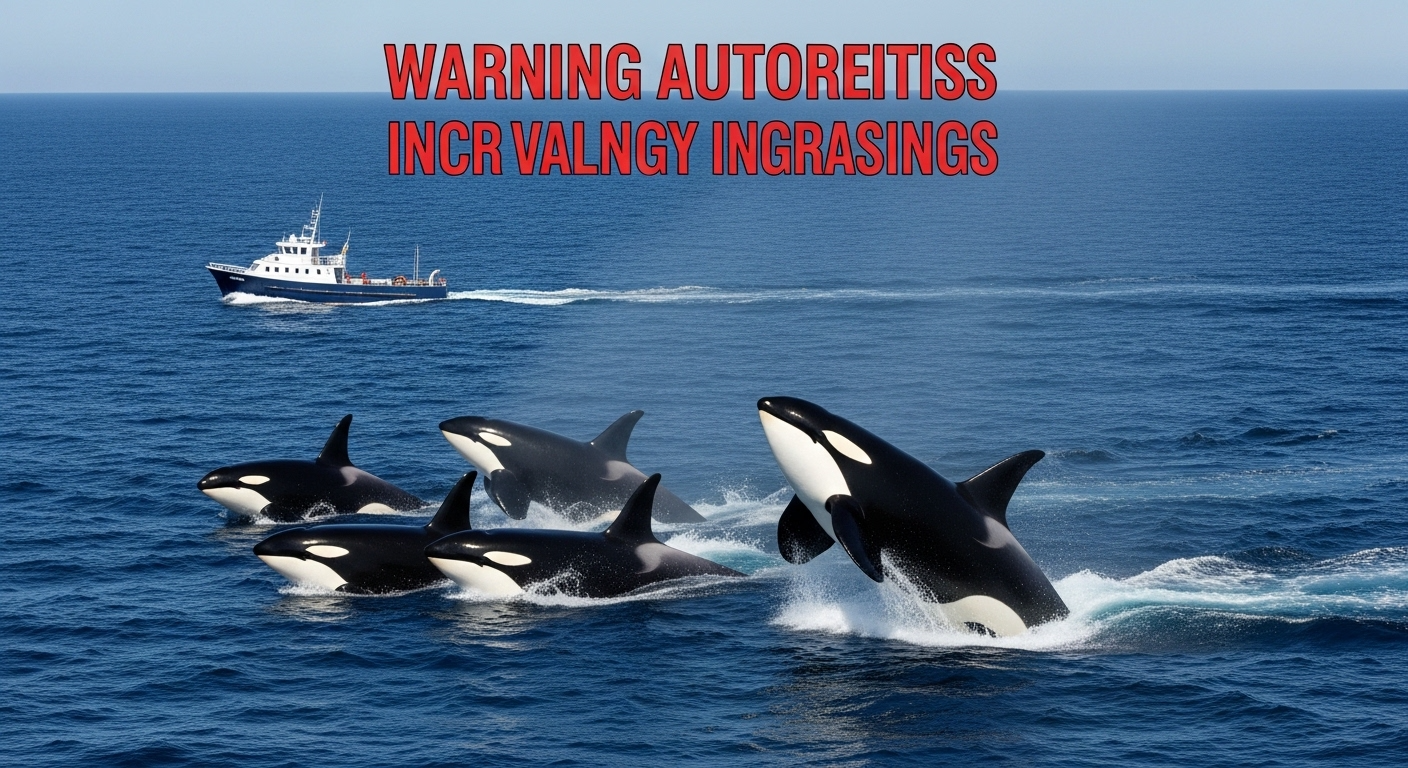
Marine authorities across several countries have moved from curiosity to active caution. Bulletins are issued. Radio alerts crackle across busy maritime channels. Harbours that once listed whale sightings as a bonus attraction for visiting sailors now carry printed warnings beside the tide charts. Orcas have been displaying behaviour that appears aggressive toward passing vessels. Mariners are advised to reduce speed, avoid interaction, and in some cases change their routes entirely.
The narrative among those who work and sail these waters has shifted in a way that feels significant. Instead of the familiar excitement of a sighting, skippers are saying something new. We hope we do not see them today.
What Exactly Are the Orcas Doing
The ocean rarely offers front-row seats to anything, but these encounters, often unfolding within a few metres of the stern, have given sailors a direct and sometimes terrifying view of the behaviour pattern that has authorities concerned.
In incident after incident, the sequence is strikingly consistent:
- A small group of orcas, sometimes two animals, often as many as half a dozen, approaches the stern of a sailboat or small motor vessel
- They focus their attention specifically on the rudder, the underwater fin that provides steering control
- They push against it, bite it, or ram it with enough force to cause serious structural damage, and in some documented cases enough force to snap the rudder clean away from the hull
- The encounters can last anywhere from a few minutes to more than an hour, with the animals returning repeatedly to the same point of focus
For the crews involved, the physical experience is one they describe as impossible to forget. The hollow boom of impact transmitted through fibreglass. The metallic groan of stressed fittings under load they were never designed for. The sudden sickening loosening of steering response. Divers sent overboard after encounters have found twisted rudders, visible teeth marks in composite materials, and shattered steering mechanisms. In a number of cases vessels have been left essentially adrift, dependent on current and wind while waiting for assistance in waters where rescue is never guaranteed to arrive quickly.
The Emotional Weather Onboard
The accounts filtering back to ports are not only about physical damage. They are about the atmosphere on board during and after these encounters, and what that does to people.
A family holiday passage becomes a tense and whispered vigil. A training voyage for new sailors becomes an unplanned lesson in managing fear in a confined space with nowhere to go. One skipper describes the sound of a young crew member’s breathing going thin and fast in the darkness as orcas continued to strike the hull through the small hours of the morning.
There is still awe, because how could there not be when an animal of this power and intelligence chooses to interact so directly with your small floating world? But that awe now carries a thread of genuine unease running through it, as though the unspoken rules governing the boundary between species have shifted, and no one managed to pass that information to the humans before they left port.
Are Orcas Really Attacking Boats
Language carries weight in situations like this. The word attack invites images of deliberate hostility, of calculated malice, of something that can be cleanly understood and cleanly responded to. Early headlines leaned into that framing, and on the docks rumours circulated faster than accurate information. Someone heard it was revenge for a wounded matriarch. Someone else had a theory about a single rogue individual teaching an entire generation of younger animals to target vessels. The ocean, it turns out, is not immune to the dynamics of urban legend.
Marine biologists have been considerably more careful with their language. They tend to describe these events as interactions or incidents rather than attacks, not because the damage is not serious or because the risk to human safety is not real, but because the honest scientific answer is that we do not yet know why the orcas are doing this. The current leading explanations feel less like a revenge narrative and more like a genuinely unresolved puzzle with several competing pieces.
Play behaviour is one possibility that researchers take seriously. Orcas are intensely curious animals and famously playful ones. They have been documented sliding down ice formations, tossing prey animals into the air without consuming them, and inventing apparent games using seaweed. Rudders move, vibrate, and provide resistance when pushed. They may represent the latest iteration of a category of interaction that orcas have always engaged in with novel objects in their environment.
Social learning and cultural transmission is another candidate. Some researchers suspect that one or a small number of individuals began interacting with rudders and others in their pod copied the behaviour, which then spread further. Orcas are recognised as cultural animals in a meaningful scientific sense. They pass behaviours between individuals and across generations in ways that have genuine parallels with how human communities transmit practices and preferences.
Changes in the wider environment affecting orca stress levels or resource availability may also be relevant. Shifts in prey populations, increased underwater noise from shipping, and other human pressures could be altering orca behaviour in ways that are not yet fully understood, with rudder interactions representing a form of displaced energy or heightened investigative behaviour in a changing world.
A negative past experience with a vessel, whether a collision, a net entanglement, or exposure to damaging sonar, could also explain why some individual animals show a defensive or agitated response to the silhouette and noise signature of passing boats.
The distinction between these explanations matters, because the stories we tell about animal behaviour shape the responses we consider appropriate. If orcas are framed as vengeful attackers, pressure to respond with force will grow. If they are understood as curious, culturally sophisticated animals potentially maladapting to a world that humans have significantly altered, the response looks quite different and leads to very different decisions about management and mitigation.
Numbers Behind the Narrative
As incidents have accumulated, marine authorities and researchers have been attempting to identify patterns across the data. What began as a handful of unusual reports has grown to dozens and then hundreds of documented interactions over recent years across affected regions of the North Atlantic. The types of encounter span a meaningful range:
Passing approaches, where orcas surface near a vessel and parallel its course briefly before moving on, typically result in no contact and no damage, and are often logged simply as a sighting worth noting. Investigative circling, where animals move around the stern and make light contact with the hull, typically produces minor impacts and heightened anxiety on board but little structural damage. Rudder targeting, the behaviour receiving the most attention, involves biting, pushing, or ramming the rudder repeatedly, sometimes in what appears to be coordinated activity between multiple animals, and can result in partial or total loss of steering requiring tow assistance. Prolonged interactions lasting thirty minutes or more allow for significant cumulative damage and place crews under sustained psychological strain in addition to physical danger. Some encounters involve orcas travelling alongside a vessel for extended distances without making any contact at all, an experience that crew members consistently describe as powerful and deeply unsettling despite the absence of physical threat.
Behind every category in that summary are specific people who will never quite hear the word orca the same way again.
How Authorities Are Responding
In harbour offices across affected regions a new kind of notice now sits beside the weather forecast and tidal charts. Guidelines on what to do if orcas appear astern. These documents are part cautionary instruction and part triage plan, assembled by marine authorities trying to balance two responsibilities that do not always sit easily together. Protecting people at sea and protecting a vulnerable, highly intelligent, and legally protected species.
The consistent core advice across most advisories includes:
- Slow down or stop the vessel if it is safe to do so, as reducing speed and noise may lower the level of interest the animals show in the boat
- Avoid sudden course changes, as sharp evasive turns may actually encourage pursuit behaviour rather than discouraging interaction
- Do not attempt to touch, feed, or harass the animals under any circumstances, both because it is dangerous and because it is illegal across most of the affected jurisdictions
- Keep crew away from the stern area when orcas are actively interacting with the rudder, as a sudden impact can throw someone off balance or into the water
- Alert the coastguard or local maritime authority and provide a detailed log of the time, position, and nature of the interaction to assist researchers in understanding patterns
In some areas authorities have introduced suggested route modifications during peak seasons, creating informal marine detours that guide smaller vessels away from known interaction hotspots. Sailing schools are adding dedicated modules to their training programmes, not only covering storm preparation and man-overboard procedures but also covering what to do when a pod of orcas decides that your steering equipment is worth investigating for an extended period.
The Legal and Ethical Tightrope
Layered across all of this is the legal reality that in most of the affected regions orcas are strictly protected animals. Harassing them can attract substantial fines. Intentionally harming them can result in serious criminal charges. Yet on a rolling deck with a disabled rudder far from shore, the line between reasonable self-protective action and illegal harassment can become genuinely blurred in ways that legal frameworks struggle to address cleanly.
Conversations on the docks about deterrents tend to happen in quieter voices, with the recognition that any move toward active measures designed to drive orcas away risks transforming humans from surprised and largely passive bystanders into active participants in a conflict that would be very difficult to manage or contain. Physical modifications to protect rudders from impact are attracting engineering interest, but represent a design challenge given the forces involved.
For authorities the core challenge is reducing immediate risk to mariners without establishing precedents or dynamics that entrench a longer-term adversarial relationship between human maritime activity and one of the ocean’s most ecologically significant species.
What It Feels Like to Be There
Reading reports and examining data is one way to understand what is happening out on the water. Another is to try to inhabit the specific moment when the sea goes strange.
The sky is overcast, a soft lid pressing down on a matte slate-coloured ocean. You are three days out from your last port and two from the next. The routine is its own kind of comfort. Trim the sail, check the GPS, log the position, make poor coffee on a gimballed stove. The rhythm is known and manageable.
Then someone at the rail spots the first dorsal fin.
Excitement comes first, as it always does. Cameras appear from pockets. Voices rise. The fin is taller than a standing person, black as spilled ink, cutting cleanly through the chop. You feel small, but in the good way, the way that reminds you that the planet is still larger and stranger than the portions of it you normally inhabit.
More fins appear. Closer this time. A younger animal rolls slightly, showing the white underside flash that is one of the most striking things you can see at sea. Its eye is clearly visible and clearly directed at the boat. At the bright jacket. At the flapping halyard. At you.
When the first impact arrives it defies every expectation you had of what this would feel like. You imagined chaos. Instead the movement is controlled and deliberate, like a firm shoulder check from an opponent who knows exactly how strong they are. The helm fights you briefly and then goes disturbingly loose. The boat slews off its heading. Another impact follows. The mast hums with transmitted vibration.
Your senses become very specific. The smell of diesel and cold seawater. The irregular slap of an unsecured line against the aluminium mast. The particular quality of adrenaline making your mouth dry and your hands too careful. A crew member’s face looks somehow older than it did ten minutes ago.
Time stops behaving normally. Five minutes stretch in both directions. There is a feeling not only of physical danger but of being observed by something that operates entirely outside the frameworks your training and experience have given you. You cannot explain your presence or your intentions. You cannot negotiate. Every tool you ordinarily rely on, language, logic, authority, is completely irrelevant to what is happening beneath your hull.
When the pod finally loses interest and drifts away, the silence on deck is its own kind of noise. Someone laughs the fragile kind of laughter that is really a question. Someone else inspects the steering quadrant and says something quietly and with feeling that you choose not to log. You add a new story to the long catalogue of sea stories, still uncertain whether it belongs in the category of warning or wonder.
Living with Giants in a Changing Sea
Beneath the immediate drama of broken rudders and rescue operations is a quieter and older question about what it means to share an ocean with minds that are not human.
Orcas live in tight-knit family groups, each with their own repertoire of calls, their own learned hunting techniques, their own culturally transmitted preferences and practices. Some populations specialise entirely in fish. Others target marine mammals. They teach their young to navigate specific coastlines, to recognise particular prey, to avoid identified dangers. In a meaningful sense they have cultures, and like human cultures, those cultures adapt when the world beneath them shifts.
Human influence on the contemporary ocean is extensive and pervasive. Declining fish stocks, persistent shipping noise, chemical contamination, plastic accumulation across every depth and region. From an orca’s perspective, boats are not anomalies or intrusions into pristine wilderness. They are simply part of the seascape as it currently exists, as constant as weather systems. Humanity has progressively converted the ocean into a heavily trafficked industrial corridor, and it perhaps should not be entirely surprising when the animals who have inhabited it for millions of years respond in ways that do not conform to our preferences or expectations.
When marine authorities issue their advisories, they are in a quiet but important sense also issuing a caution about the cumulative effects of human presence. The orcas are not new to these waters. Our density and our noise are new.
To sail today in these regions is to enter a living conversation with the ocean and everything that moves through it, even when you cannot follow the language being used. Sometimes that conversation is a dorsal fin cutting through pink evening water at a respectful distance. Sometimes it is the deafening thud of a rudder impact that leaves an entire crew trembling in the dark.
Somewhere out on the water right now, another pod is learning something new and passing it along through a process that has been operating across orca generations for far longer than human maritime history. What they are learning, and what it will mean for the next season of encounters between their culture and ours, remains one of the genuinely open questions of life on a shared and increasingly crowded planet.
Read More: For more wildlife, science, and natural world stories written for Australian readers, visit wizemind.com.au