In Finland They Heat Their Homes Without Radiators, Using an Everyday Object You Already Own
She steps through the front door on a January evening, cheeks stung red from the cold outside. Without thinking, she kicks off her boots and stands for a moment in the hallway in just her socks. She waits for the familiar cold bite of tiles against her feet. It never comes. Instead, a gentle warmth travels up from the floor, steady and quiet, wrapping around her toes and spreading slowly upward through her whole body. She looks around the room. No radiators on the walls. No heaters humming in the corner. Just warm floors and calm air and the soft sound of snow settling against the window.
This is how millions of Finnish homes feel in the depths of winter. And the secret behind it is something sitting in your bathroom right now.
Key Points
- Finland heats most modern homes using warm water pipes laid beneath the floor rather than wall radiators
- The principle is identical to a bathtub full of hot water — a vessel stores heat and releases it slowly and evenly
- The floor temperature is only slightly above room temperature, making it comfortable for bare feet
- Water-based underfloor heating uses far lower temperatures than radiators, making it more energy efficient
- It works silently with no hissing, clicking, or drafts from vents
- The system pairs well with heat pumps, district heating, and other low-carbon energy sources
- Wooden floors, commonly used in Finland, work perfectly with this type of heating when installed correctly
The Country That Takes Winter Seriously
Finland does not experience winter the way most countries do. It does not arrive for a few grey weeks and then soften. It settles in from November and stays, heavy and committed, sometimes past April. Lakes freeze solid. Roads disappear under packed snow. The sun makes brief, apologetic appearances low on the horizon before retreating again. Temperatures stay below freezing for weeks at a stretch, sometimes dropping into the kind of cold that makes your breath crystallize before it leaves your lips.
In a place like this, heating is not a comfort. It is a necessity as basic as food and water. And over generations, Finns developed an approach to indoor warmth that is methodical, efficient, and quietly brilliant — one built around a principle you already understand every time you run a hot bath.
The Bathtub Principle That Changed Home Heating
Think about what happens when you fill a bathtub with hot water. The porcelain or acrylic shell slowly absorbs the heat. You slide in and feel not just the water but the tub itself holding warmth against your back and sides. Even after the water cools slightly, the tub stays warm. The heat has moved into the material and is releasing itself gradually back to you.
Now imagine that bathtub tipped upside down, stretched flat, and laid beneath your entire living room floor.
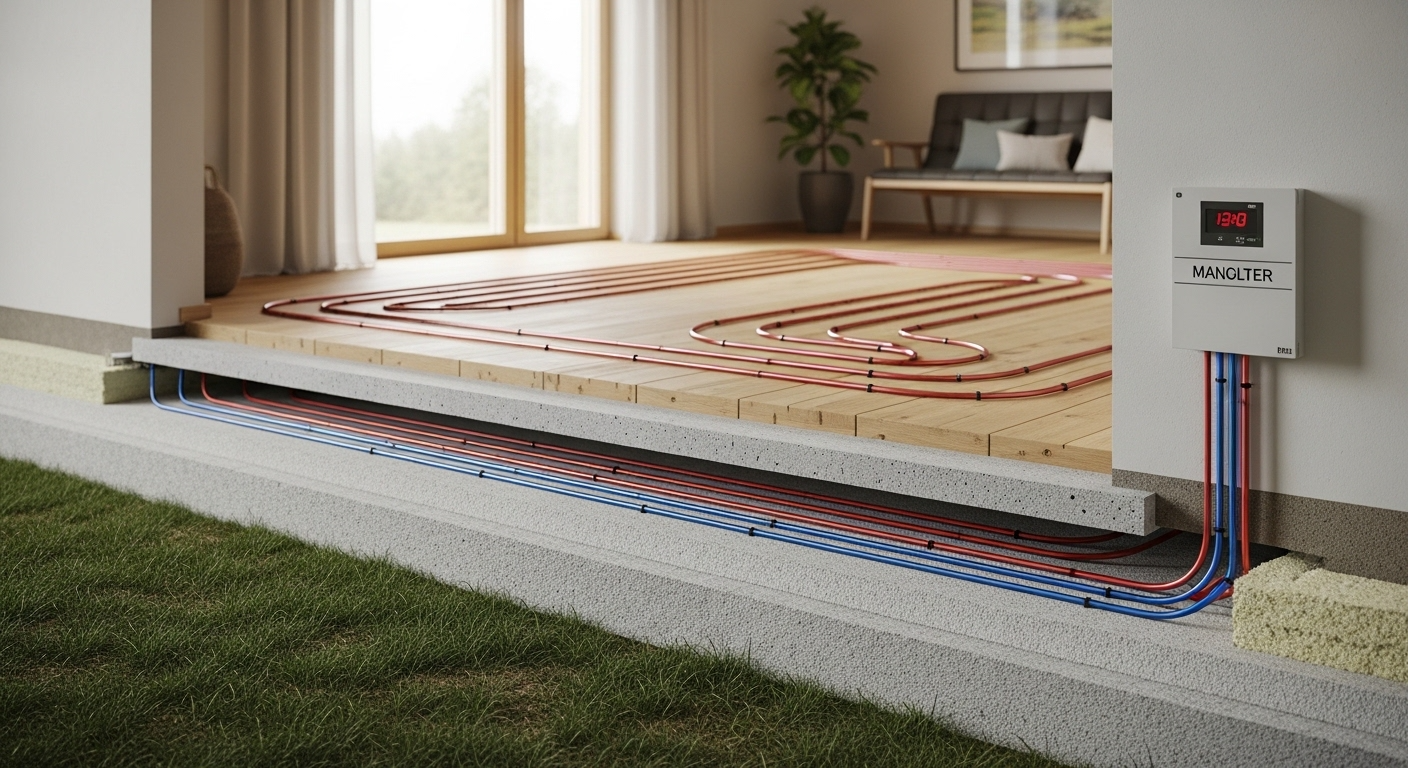
That is essentially what Finnish underfloor heating does. A network of pipes loops back and forth beneath the floor surface, carrying warm water at a temperature not much hotter than a comfortable bath — usually between 30 and 40 degrees Celsius. The floor absorbs that warmth and radiates it upward into the room slowly, steadily, and evenly. Every square metre of floor becomes part of one large, invisible heating surface.
Water is the key to why this works so well. It stores an enormous amount of heat compared to air and releases it gradually over time. A room heated by blasting hot air warms quickly but cools just as fast the moment the heat source stops. A floor full of gently warmed water keeps giving heat back for hours. Finland simply took that everyday truth and built it into the foundations of their homes.
What It Actually Feels Like to Live This Way
The first thing you notice is your feet. In most homes, the floor is the coldest surface in the room. In a Finnish home with underfloor heating, it is the warmest. You land on it in the morning and there is no hesitation, no instinct to pull your feet back. The warmth is there waiting — not hot enough to be unusual, just comfortable enough to feel completely right.
Children lie flat on the floor to draw or read. Adults sit cross-legged on warm boards without reaching for a blanket. Dogs find their favourite spots and stay there, melted into rugs that are gently heated from below. There is no cold side of the sofa, no drafty corner near the window, no single radiator that everyone quietly shuffles toward.
The air in the room sits a little cooler than you might expect. But because your feet and lower body are warm, your brain registers comfort even though the air temperature is modest. This is radiant heat doing what it does naturally — warming bodies and surfaces rather than just heating the air above them, which rises and escapes anyway.
And the silence. This is one of the things that strikes visitors most. No radiators ticking as they heat up. No fan heater droning in the background. No pipes clunking in the walls. The house is simply warm and completely quiet, the heating happening somewhere beneath your feet without announcing itself at all.
How the System Works
Behind the stillness, there is a practical system doing quiet, reliable work.
Somewhere in the home — a utility room, a basement cupboard, a small technical space — a heat source warms the water. Depending on the house and its location, this might be a connection to a district heating network that runs beneath the town’s streets, a ground-source heat pump drawing warmth from the earth, or a wood-pellet boiler in a shed at the side of the house. The water is heated to a gentle temperature and pumped through the pipe network under the floors, with each room zoned separately so the temperature can be adjusted individually.
The pipes sit embedded in a layer of concrete or screed beneath the floor surface. That mass of concrete acts like a thermal battery. It absorbs heat during the warmer parts of the day and releases it slowly overnight. The system does not react quickly to sudden changes, but it does not need to. It keeps the temperature so consistent that sudden changes rarely happen.
Because the water temperature is so low compared to traditional radiators, the system works well with modern heat sources that produce low-grade heat efficiently. Heat pumps in particular are well suited to underfloor systems, making the combination of the two one of the most energy-efficient approaches to home heating currently available.
Why Finland Chose Gentle Heat Over Powerful Heat
It might seem counterintuitive. The coldest country chooses the gentlest form of heating. But the logic is straightforward once you understand how heat and human comfort actually interact.
Aggressive heat creates a cycle of discomfort. A radiator blasting in the corner heats the air nearest to it, that warm air rises to the ceiling, and the floor stays cold. You adjust the thermostat up to compensate, the room feels stuffy, you open a window, and the cycle starts again. You are essentially fighting your own heating system.
Underfloor heating breaks that cycle entirely. Because the warmth comes from below and spreads evenly across the whole floor, there are no hot spots or cold spots. The air temperature can sit slightly lower than you might normally choose and yet the room feels warmer because your body is receiving gentle radiant heat directly from the surface beneath you.
There is also a deeper cultural reason Finland gravitates toward this approach. The Finnish sauna, one of the most central elements of the national identity, is built on the same idea — surrounding the body with even, radiant warmth rather than directing a blast of hot air at it. Underfloor heating is a domestic, everyday version of that same philosophy. Heat the body from all sides, gently and consistently, and comfort follows naturally.
Wooden Floors, Warm Underfoot
Walk through most Finnish homes and the floor beneath your feet is wood. Pale birch planks, warm pine boards, smooth engineered panels. The combination of wood and underfloor heating is not accidental — it is one of the most refined expressions of how Finnish homes are designed to feel.
Wood is a natural insulator but it also conducts gentle warmth beautifully when the temperature change is gradual. The boards are selected and installed with the heating system in mind, chosen for their ability to flex slightly with temperature without cracking or warping. When the floor is warm enough to feel comfortable but not hot enough to cause damage, wood rewards you with a kind of living warmth — solid and natural and completely unlike the cold hardness of unheated stone or tile.
Walking barefoot on a warm wooden floor on a dark February morning is one of those small, specific pleasures that Finnish life has elevated to an art form. It costs nothing. It requires no thought. It is simply the way the house is built to feel.
From Beneath City Streets to Village Wells
The way the water gets heated varies from one home to the next, but the underlying system remains the same everywhere.
In cities and larger towns, many buildings connect to district heating networks — vast systems of insulated pipes carrying hot water from central plants, running beneath streets and squares to warm entire neighbourhoods at once. These plants are increasingly powered by biomass, recovered waste heat, or other low-carbon sources, making them both efficient and relatively clean.
In rural areas and smaller villages, individual houses rely on heat pumps, wood-burning boilers, or pellet systems to produce their own hot water. The water then moves through the same underfloor pipes, doing the same job, just on a smaller and more independent scale.
The chain from energy source to warm floor is longer or shorter depending on where you live. But the final link is always the same — warm water moving through pipes beneath your feet, storing heat in the floor, releasing it upward into the room where you are living your life.
Could You Live Like This?
Picture your own home on a cold morning. Your heating system clicks on and warm air pushes through vents or radiators begin to tick. Your face feels faintly dry. The floor under your feet is still cold. You shuffle toward the warmest corner of the room and wish the whole thing worked differently.
Now imagine swinging your legs out of bed and landing on a floor that is already waiting with warmth. The room air is cool and fresh, the kind of air that makes you feel alert rather than groggy. Your feet are comfortable. Your whole body settles into the temperature without negotiating with it.
Underfloor heating is no longer a peculiarity limited to Scandinavian new builds. Architects and builders around the world are incorporating it into homes and renovations, typically paired with heat pumps to make the combination as efficient as possible. It works best when designed into a building from the start and when paired with good insulation, but retrofits during major renovations are increasingly common.
It does ask for patience. The system heats slowly and responds slowly. You cannot blast a cold room warm in ten minutes the way a portable heater can. But in exchange, you gain something that portable heaters and wall radiators have never been able to offer — a home that simply feels warm everywhere, all the time, without effort or noise or the constant adjusting of controls.
The Quiet Luxury of an Ordinary Idea
What makes Finland’s approach so quietly remarkable is that it is not built on complicated technology or expensive innovation. It is built on a truth that everyone already knows: water holds heat, water moves heat, and water gives heat back slowly and generously.
You have understood this your whole life. Every hot shower, every bath drawn on a cold evening, every sink of steaming water has been teaching you the same lesson. Finland simply decided to take that lesson seriously and build it into the floors of their homes.
The result is warmth that never announces itself, never breaks down with a dramatic clank, never blasts you in the face when you walk past it. It is warmth that simply exists, dependable and invisible, beneath tile and wood and wool socks and ordinary morning life.
And somewhere to the north, on the darkest days of the year, that quiet miracle is happening under millions of floors while people eat breakfast, read books, and let their children lie flat on the warm ground without a single thought about how any of it works.
Frequently Asked Questions
Do Finnish homes really not use radiators?
Most newer Finnish homes and renovated buildings rely primarily on hydronic underfloor heating rather than wall radiators. Older buildings may still have radiators, but underfloor systems are the standard in modern construction and increasingly common in renovations.
Is underfloor heating more efficient than radiators?
Generally yes, especially when paired with good insulation and low-temperature heat sources like heat pumps or district heating. Because it uses lower water temperatures and distributes heat across a much larger surface, it achieves the same comfort level with less energy.
Does the floor get uncomfortably hot?
No. In a well-designed system the floor surface sits only a few degrees above room temperature — warm enough to feel pleasant underfoot but nowhere near hot enough to be uncomfortable or damaging.
Can it work with wooden floors?
Yes, and it does throughout Finland. The key is using timber or engineered wood products designed for use with underfloor heating, installed in a way that accommodates gentle expansion and contraction as the temperature shifts.
Can it be added to an existing home?
It is easiest to install during new construction or major renovation, particularly when floors are being replaced. Retrofitting into an existing home is possible in some cases but depends on floor height, structural conditions, and insulation beneath the pipes.
Why is this approach so common in Finland specifically?
Finland faces extremely long and cold winters, making efficient and consistent heating a practical necessity rather than a luxury. The approach also aligns with a cultural preference, rooted in sauna tradition, for surrounding the body with even, radiant warmth rather than blasting it with hot air.
Read more health and wellness articles at wizemind.com.au