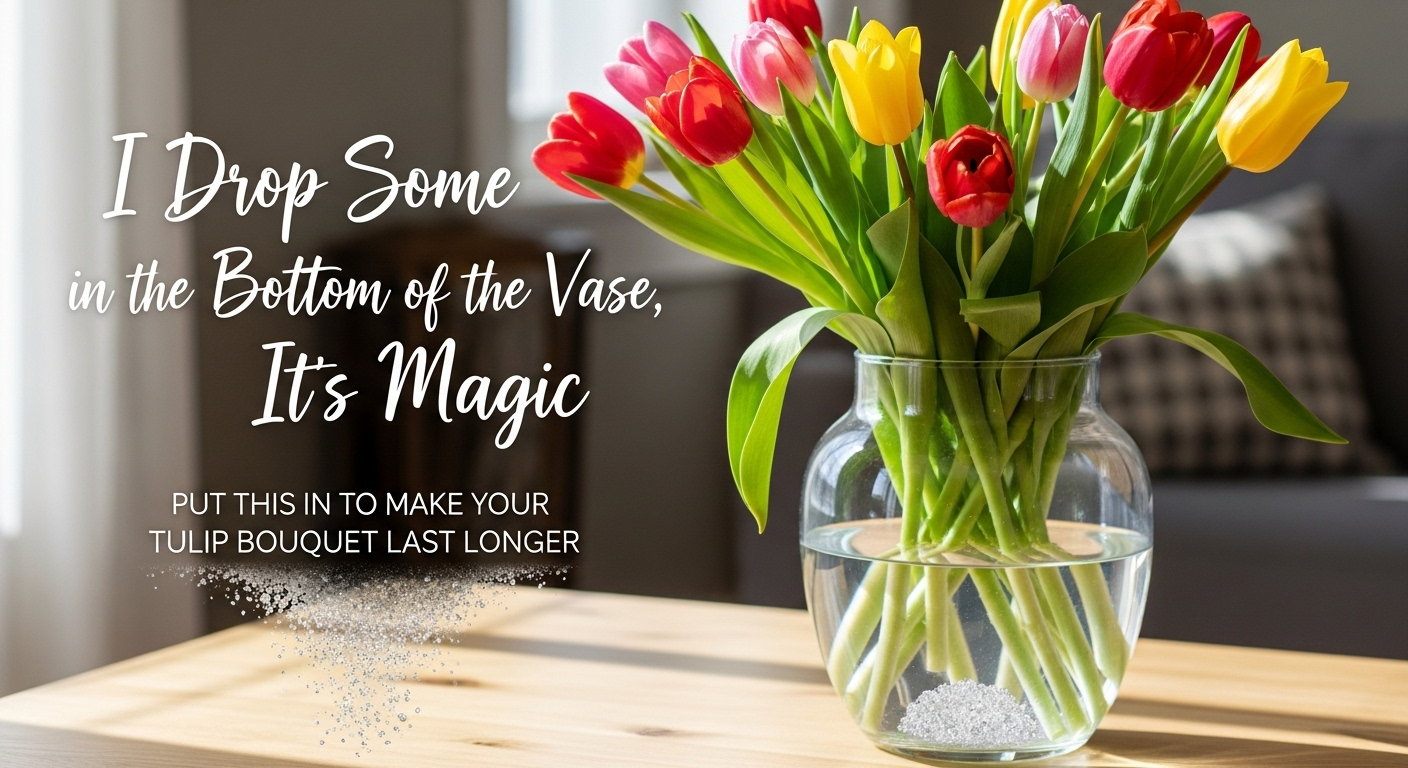
“I Drop Some in the Bottom of the Vase, It’s Magic”: Put This in to Make Your Tulip Bouquet Last Longer
Tulips are one of the most cheerful flowers you can bring into a home. Those bold colours, that clean upright stem, the way they slowly open toward the light — there’s nothing quite like a fresh bunch sitting on a kitchen table in spring. The frustrating part is how quickly they can go from vibrant to drooping if you don’t know what you’re doing.
Professional florists, however, have a few quiet tricks that make a real difference. One of the simplest involves something most people already have under the kitchen sink.
The Bleach Trick That Changes Everything
Samantha Jennings, a professional florist and owner of Blooming Designs, swears by it: a small amount of household bleach added to the vase water.
“Tulips are particularly prone to bacterial growth, which can cause them to wilt and discolour prematurely,” she explains. “The bleach helps to inhibit that bacterial buildup, keeping the water clean and the flowers fresh for days longer.”
The amount matters. Too much and you’ll damage the stems. The right quantity is approximately one teaspoon of bleach per litre of water. That’s enough to slow bacterial growth without harming the flowers. Jennings describes the effect simply: “I drop some in the bottom of the vase — it’s magic.”
The same trick works for other cut flowers too. Roses, lilies, and mixed arrangements all benefit from cleaner water, and a small amount of bleach achieves exactly that.
Keep the Water Topped Up
Tulips drink a surprising amount of water for their size. Horticulture expert Dr. Emily Gardiner from the University of California, Davis, recommends checking the water level every single day and topping it up as needed. A tulip that can’t access enough water will droop far faster than one that’s kept well hydrated, regardless of what else you add to the vase.
Changing the water entirely every two to three days is even better. Fresh water combined with a new small dose of bleach gives the flowers the cleanest possible environment to draw from.
Trim the Stems Regularly
Every two to three days, take the tulips out of the vase and trim the bottom of each stem by about a centimetre. Use clean, sharp scissors rather than blunt ones, which can crush the stem tissue and make it harder for the flower to absorb water.
A fresh cut reopens the channels through which water travels up the stem. Over time those channels can become blocked or sluggish, and regular trimming keeps the whole system working efficiently. It takes about thirty seconds and makes a noticeable difference to how long the flowers last.
Choose the Right Spot in Your Home
Where you put your tulips matters almost as much as how you care for the water. Tulips prefer cool conditions. Direct sunlight, radiators, and warm spots near the cooker or television will cause them to open and age much faster than they otherwise would.
Floral designer Sarah Lowe, author of The Flower Arranger’s Bible, advises keeping tulip bouquets in a cool, shaded location away from heat sources. She also flags something many people don’t consider: keep tulips away from bowls of ripe fruit. Ripening fruit releases ethylene gas, which accelerates the ageing process in cut flowers. A fruit bowl on the kitchen counter and a vase of tulips nearby is a combination that shortens the life of your bouquet faster than almost anything else.
How Long Can You Expect Them to Last?
With these four steps in place — a small amount of bleach in the water, daily top-ups, regular stem trimming, and a cool spot away from fruit and heat — a tulip bouquet can realistically last well over a week. Without any of these measures, the same flowers might look tired within three or four days.
The effort involved is minimal. A quick check of the water each morning, a trim every couple of days, and a tiny measure of bleach when you change the water. That’s genuinely all it takes to keep a spring bouquet looking its best from the first day to the last.
Frequently Asked Questions
How much bleach should I add to the water? Start with approximately one teaspoon of bleach per litre of water and adjust slightly depending on the size of your bouquet. The goal is a small enough amount to inhibit bacteria without damaging the stems.
How often should I trim the tulip stems? Trim them every two to three days. Use clean, sharp scissors and cut at a slight angle to maximise the surface area available for water absorption.
Can I use this bleach trick for other types of flowers? Yes. The principle applies to most cut flowers including roses, lilies, and mixed arrangements. Keeping the water clean and free of bacteria benefits virtually any bouquet.
What is the best spot to display tulip bouquets? A cool, shaded location away from direct sunlight, radiators, and ripe fruit. The cooler the environment, the slower the flowers will mature and the longer they will stay fresh.
How long can I expect my tulip bouquet to last? With proper care including the bleach trick, daily water checks, and regular stem trimming, a well-maintained tulip bouquet can stay fresh and vibrant for over a week.
Can I reuse the same water? It is better to change the water every two to three days to keep it clean and bacteria-free. Each time you change it, add a fresh small measure of bleach.
Do tulips continue to grow after being cut? Yes. Tulips will continue to grow and open up slightly even after being cut and placed in a vase, which is part of what makes them so appealing to watch over several days.
How do I know when my tulips are past their prime? Look for wilting, drooping stems, or petals that are beginning to discolour or fall. At that point it is time to replace the bouquet rather than trying to revive it further.
The pillowcase fabric that dermatologists unanimously recommend for reducing sleep creases acne breakouts and hair breakage overnight By yourfix / March 19, 2026 The pillowcase fabric that dermatologists unanimously recommend for reducing sleep creases acne breakouts and hair breakage overnight.