How to Remove Yellow Stains from Your Mattress with a Home Hack Without Damaging It
There is a particular quality to the light on a bright summer morning that reveals everything you had been successfully not thinking about. Yellow stains on a mattress, visible through stripped bedding or in the glare of a sunny room, fall firmly into this category. They are extremely common, caused by the most ordinary aspects of sleeping, and entirely addressable with ingredients most Australian households already have sitting in the kitchen.
Why Mattresses Turn Yellow
Before tackling the stains it helps to understand what is causing them, partly because it removes any embarrassment and partly because it informs the right approach to both removal and prevention.
The primary culprits are sweat, body oils, and to a lesser extent certain skincare products applied before bed. These are absorbed into mattress fabric over time through sheets and mattress protectors, particularly around areas of sustained body contact. As these organic compounds oxidise with exposure to air and heat, they produce the characteristic yellow or amber discolouration. Humid climates and warmer sleeping environments accelerate the process. The staining does not indicate poor hygiene in any meaningful sense. It is simply what happens when a mattress absorbs moisture from a human body over months and years of use.
The Three-Ingredient Cleaning Solution
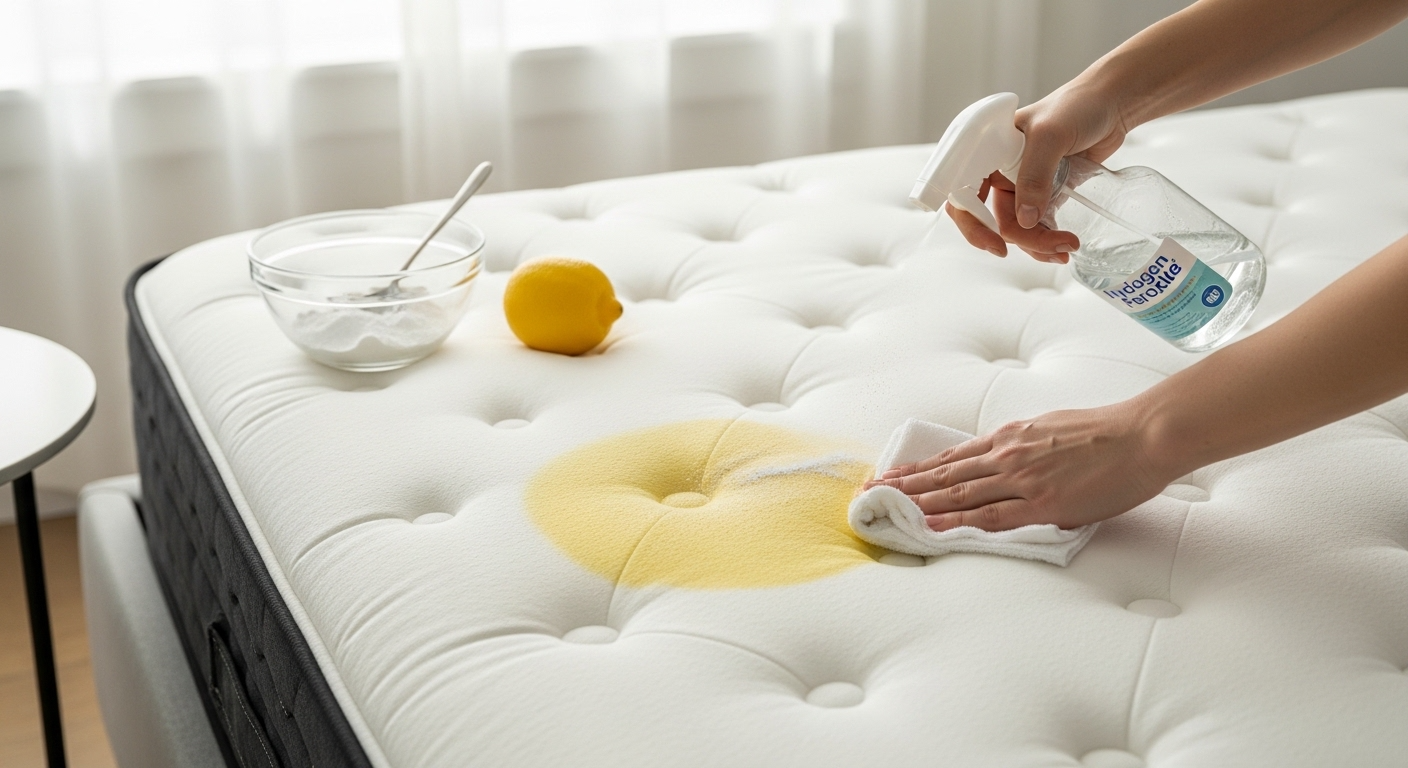
The most effective home approach for tackling these stains combines three ingredients you almost certainly already own. Baking soda, hydrogen peroxide at the standard 3% concentration available from any chemist, and a small amount of liquid dish soap.
Each ingredient earns its place in the combination. Baking soda is a mild natural abrasive that also absorbs odour-causing compounds, lifting surface residue and neutralising the smells that accumulate in fabric over time. Hydrogen peroxide is an oxidising agent that breaks down the organic compounds responsible for the yellow discolouration, essentially reversing the chemical process that created the stain. Dish soap acts as a surfactant, reducing the surface tension of the liquid so it can penetrate fabric fibres and lift the loosened residue away from the mattress.
To make the mixture, combine equal parts baking soda and hydrogen peroxide in a spray bottle and add three to four drops of dish soap. Secure the lid and gently invert the bottle a few times to combine the ingredients without creating excessive foam. The solution works best when used fresh, as the hydrogen peroxide begins to lose its potency relatively quickly once mixed.
How to Apply It Without Damaging the Mattress
Moisture is the primary risk with any mattress cleaning method. Mattresses are not designed to be saturated with liquid, and excess moisture that penetrates deep into the layers can encourage mould growth, damage internal components, and significantly reduce the lifespan of the mattress. The goal is to use enough solution to treat the stain without soaking the material.
Before applying the solution to any visible stain, test it on a small inconspicuous area, such as a corner of the mattress near the base. Allow it to dry and check for any discolouration or fabric damage before proceeding. This step takes only a few minutes and prevents the possibility of a larger problem.
Once you have confirmed the solution is safe for your mattress, apply it in a light spray directly over the stained area. You are aiming to dampen the stain rather than drench it. Allow the solution to sit for ten to fifteen minutes. During this time the hydrogen peroxide is actively working on the discolouration and the baking soda is beginning to absorb odour compounds.
After the waiting period, use a clean cloth to gently blot the area. Work from the outer edge of the stain inward to avoid spreading it. Avoid rubbing or scrubbing aggressively, as this can damage the surface fibres and push the stain deeper rather than lifting it. For more stubborn discolouration you can apply a second round of the solution and repeat the process, rinsing your cloth regularly between blotting to ensure you are removing rather than redistributing the material.
Once the stain has been lifted, blot the area with a clean damp cloth to remove any remaining solution residue. Then allow the mattress to dry completely before replacing any bedding. This is not optional. A partially dry mattress covered with sheets is a hospitable environment for mould and bacteria. Open windows to encourage airflow, position a fan nearby if available, and ideally leave the mattress several hours to dry fully. On a warm day you can lean it against a wall near an open window to speed the process.
Material-Specific Considerations
Different mattress constructions require slightly different care.
Memory foam is particularly sensitive to moisture. The solution should be applied sparingly, with particular care taken to keep the surface only lightly damp. Blot gently and prioritise thorough drying above all else. Avoid pressing liquid into the foam.
Innerspring mattresses are generally more tolerant of the cleaning process, but you should still avoid saturating the surface. The primary concern is keeping the internal components dry.
Latex mattresses are naturally more resistant to bacterial growth and staining but respond well to this cleaning approach. As with memory foam, avoid oversaturation.
Pillowtop and plush mattresses have additional surface layers that require gentle handling. Use a lighter touch when blotting and allow extra drying time to ensure moisture does not penetrate to the underlying layers.
If your mattress has a removable fabric cover, check the care label. Many removable covers can be laundered separately, which is both more effective and simpler than spot treating in place.
When to Call a Professional
For stains that have been set for an extended period, cover a large area of the mattress, or do not respond to two or three applications of this method, professional mattress cleaning is worth considering. Cleaning services have access to equipment that extracts moisture during the cleaning process, which addresses the primary risk of DIY approaches. They can also treat odour at a deeper level than surface methods allow.
If a mattress is showing signs of age beyond staining, including visible sagging, broken internal support, or persistent musty odour that does not respond to treatment, replacement rather than continued cleaning is the more honest assessment of the situation. Most mattresses reach the end of their effective lifespan somewhere between seven and ten years of regular use.
Preventing Future Staining
A waterproof or water-resistant mattress protector is the single most effective measure available for preventing yellow staining. It creates a barrier between body moisture and the mattress fabric, and it can be removed and laundered regularly in a way that the mattress itself cannot. Good quality mattress protectors are available across a wide price range and represent a small ongoing investment compared to the cost of the mattress itself.
Laundering your mattress protector every two to four weeks, allowing the mattress to air briefly when you change bedding, and vacuuming the mattress surface every few months to remove dust and surface particles will all extend both the appearance and the lifespan of the mattress considerably.
The three-ingredient solution described here is a genuinely effective approach to a problem that affects virtually every mattress in use. It works, it costs almost nothing, and it avoids the chemical concerns associated with some commercial stain removal products. The main requirement is patience during the drying process, which is the step most people are tempted to rush and the step that matters most.
Read More: For more home care, cleaning tips, and practical lifestyle advice written for Australian readers, visit wizemind.com.au