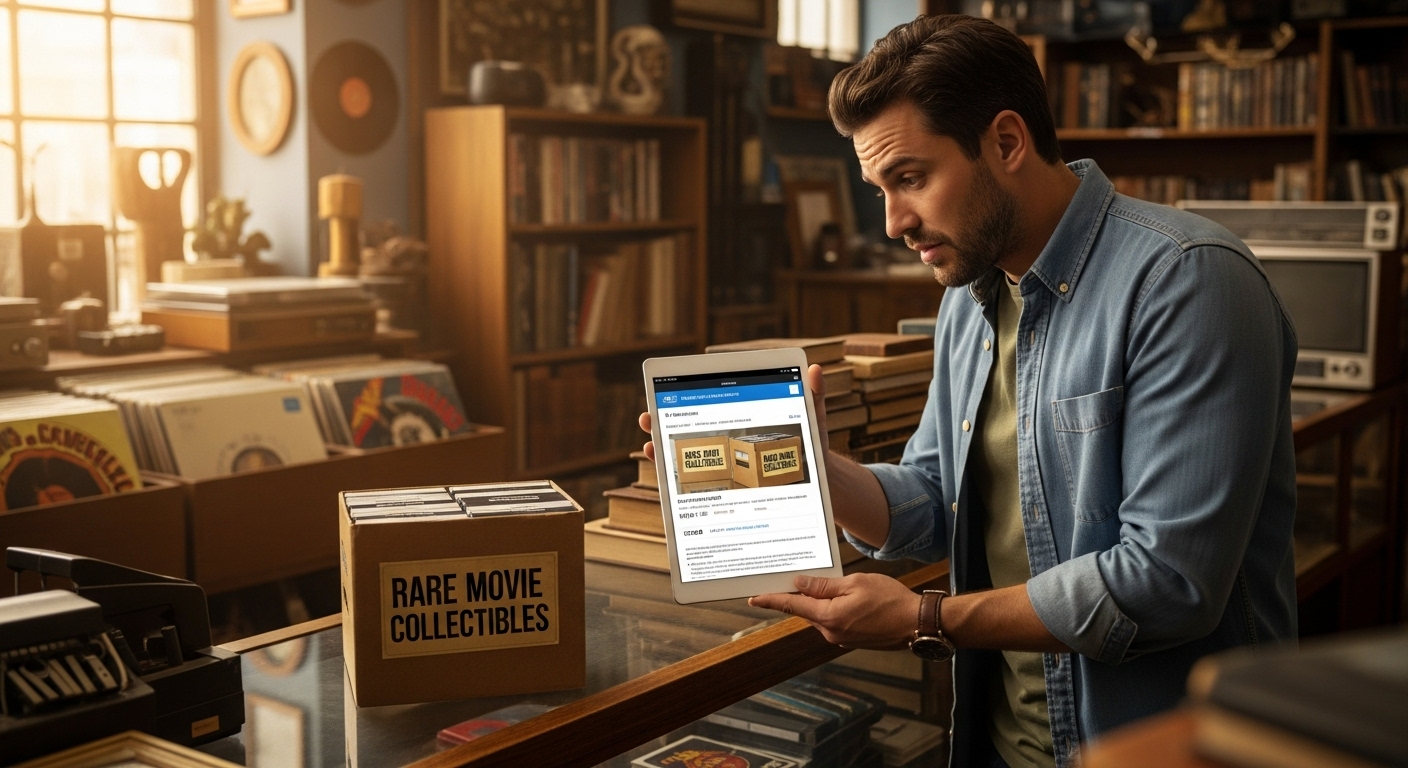
He Donated a Box of DVDs Then Found Them Resold as Valuable Collectibles
He thought the box of DVDs collecting dust in his living room was worth nothing. A few weeks after donating them to a local charity, he discovered those same discs were being auctioned online as rare and valuable collectibles — some fetching prices he never imagined possible.
The discovery left him with a complicated mix of feelings. Resentment, disbelief, and a reluctant admiration all hit at once, raising questions that went far deeper than a box of old movies.
The Box That Nobody Thought Was Special
For years, the DVDs had sat quietly in the corner of his living room. They were not a curated collection or a carefully assembled set. They were simply films he had enjoyed over a decade, picked up here and there without much thought.
When the time came to downsize and move into a smaller home, the box was an obvious candidate for the donation pile. It was not heavy, it did not seem sentimental, and he assumed nobody would pay serious money for second-hand discs in a streaming era. He dropped them off at his local charity without a second thought.
That casual, well-meaning decision was about to take a very unexpected turn.
The Algorithm That Spotted What He Could Not
A few weeks after the donation, the man was casually browsing an online auction platform. Then something stopped him mid-scroll. Listed among the items for sale were the exact DVDs he had donated, now described as rare, out-of-print collector’s items with bids already climbing.
He dug deeper and pieced together what had happened. A resale algorithm had scanned the donated items and automatically flagged several titles as high-value collectibles. The technology had done in seconds what would have taken an expert hours — identifying discontinued editions, limited releases, and titles that had quietly become sought after in collector communities worldwide.
The algorithm had bypassed his original intention entirely. He had wanted to give something away. The technology had turned that gift into a profit opportunity, with no input from him and no awareness of where those discs had come from.
The Strange Afterlife of the Things We Let Go
The experience forced the man to think about something most people rarely consider. What actually happens to our possessions after we release them into the world?
We attach stories to the objects we own. A film we watched on a difficult night. A disc we bought on a trip. A gift from someone we no longer see. When we donate those items, we assume the story ends there. But in reality, the object simply begins a new chapter, one we have no control over and may never know about.
In the man’s case, his DVDs had gone from a forgotten box to a listed product in a matter of weeks. The meaning he attached to them was irrelevant to the market. Their value was determined not by memory or sentiment but by data, demand, and an algorithm that never knew he existed.
Resentment, Admiration, and Everything In Between
The man’s reaction was not straightforward, and that is what made his story resonate with so many people. He did not feel simply cheated or simply impressed. He felt both at the same time, and that tension is worth sitting with.
On one side, there was a clear sense of being wronged. His personal belongings were being used to generate income for someone else. He had donated in good faith, and that goodwill had been quietly monetised without his knowledge, his consent, or any benefit to him.
But on the other side, he could not dismiss the ingenuity of what had happened. The algorithm had seen value where he had seen clutter. It had recognised something real that he had completely missed. That is not nothing. That is actually remarkable, even if the circumstances felt uncomfortable.
Ownership in the Digital Age Is More Complicated Than It Looks
This story is not really about DVDs. It is about what ownership means when technology can assess, price, and sell objects faster than humans can think about them.
We live in a world where second-hand marketplaces are powered by sophisticated scanning tools, price-tracking databases, and AI-driven valuation systems. A donated item can move from charity shelf to online auction listing within hours. The gap between giving something away and watching it sell for a profit has never been smaller.
For everyday people, this creates a new kind of responsibility. Before letting go of anything, it is worth spending a few minutes understanding what you actually have. A quick search of a title, a brand name, or a model number can reveal a resale market that most people have no idea exists.
The Collector’s Market Is Bigger Than Most People Realise
The DVD collector’s market is a real and active space, even in an age where streaming dominates. Certain titles, particularly those that never made it to digital platforms, limited edition releases, and films from discontinued studios, can command serious prices among dedicated collectors.
The same applies to vinyl records, vintage video games, old electronics, certain books, and branded merchandise from defunct companies. The items gathering dust in your spare room may be sitting in a category that collectors are actively hunting. Most people simply do not know to look.
Resellers who operate in this space have invested in tools and knowledge that give them a significant advantage. They know exactly what to look for, where to sell it, and what price the market will bear. The average donor does not have that information, and that gap is where the profit quietly lives.
What Happens to Donated Items After They Leave Your Hands
Once you hand something to a charity or donation centre, the legal ownership transfers immediately and completely. The receiving organisation can do whatever it chooses with the item, including selling it at full market value, passing it to a commercial partner, or listing it on a resale platform.
Most people assume donated goods go directly to people in need or are sold cheaply in op shops. That is sometimes true, but it is far from the whole picture. Many charitable organisations partner with resellers, use sorting algorithms, or operate their own commercial arms that actively pursue profit on high-value donations.
This is not necessarily wrong. Charities need revenue to fund their work, and maximising the value of donations is one legitimate way to generate it. But it is something donors deserve to understand before they hand anything over.
The Questions That Stay With You
After processing the initial shock, the man found himself thinking about every other item he had donated or thrown away over the years. Old gaming consoles. Vintage clothing. Books from out-of-print series. Branded merchandise from companies that no longer exist.
Had any of those quietly become valuable the moment they left his hands? Were there items sitting in someone else’s collection or listed on some auction platform right now, carrying a price tag he never thought to put on them?
These are questions with no easy answers. But they are worth asking. The act of letting go carries more complexity than it once did, and that complexity is only going to increase as technology becomes better at identifying value in the objects we discard.
Frequently Asked Questions
How did the DVDs end up listed for sale without his knowledge? A resale algorithm scanned the donated goods and automatically identified titles with significant collector’s market value. The process required no human review and happened quickly after the donation was received.
Did the man receive any share of the resale profit? No. Once an item is donated, legal ownership transfers fully to the receiving organisation. The original donor has no legal entitlement to any proceeds, regardless of the sale price.
Are donated items commonly resold for profit? More often than most donors realise. Charities and resellers increasingly use technology to assess the value of donated goods, and high-value items are frequently listed on commercial platforms rather than sold cheaply in store.
Can a donor place conditions on how their donation is used? In most cases, no. Once donated, the organisation has full legal discretion over how items are stored, used, or sold. Conditions can sometimes be negotiated in advance but are rarely enforceable after the fact.
What types of donated items are most likely to have hidden value? Out-of-print DVDs and Blu-rays, vintage video games, vinyl records, retro electronics, limited edition books, and branded merchandise from discontinued companies. These categories attract active collector communities willing to pay well above what most people would expect.
What should you do before donating items you are unsure about? Spend a few minutes searching the item name or model number on major resale platforms. Look at completed sales rather than listed prices to understand what items have actually sold for. That research could save you from giving away something genuinely valuable.
Is it wrong for charities to profit from donated goods? Not inherently. Charities rely on revenue to deliver their services, and selling donated goods at market value is one way to generate that income. The issue is transparency, and donors benefit from understanding this before they give.
What does this story say about our relationship with material possessions? It highlights how the meaning we attach to objects and their market value are entirely separate things. What holds sentimental weight for one person may hold financial value for another, and technology is making it easier than ever to identify that gap.
The Bottom Line
One man’s casual donation turned into a lesson that thousands of people quietly needed to hear. We are living in an era where algorithms can assess the value of your belongings faster and more accurately than you can, and that changes everything about how we think before letting things go.
The box of DVDs was never just a box of DVDs. It was a reminder that every object carries a story, and sometimes a price tag, that we never thought to read. Next time you reach for that donation box, it might be worth pausing for just a moment before you let it leave your hands.
Read more: https://wizemind.com.au/