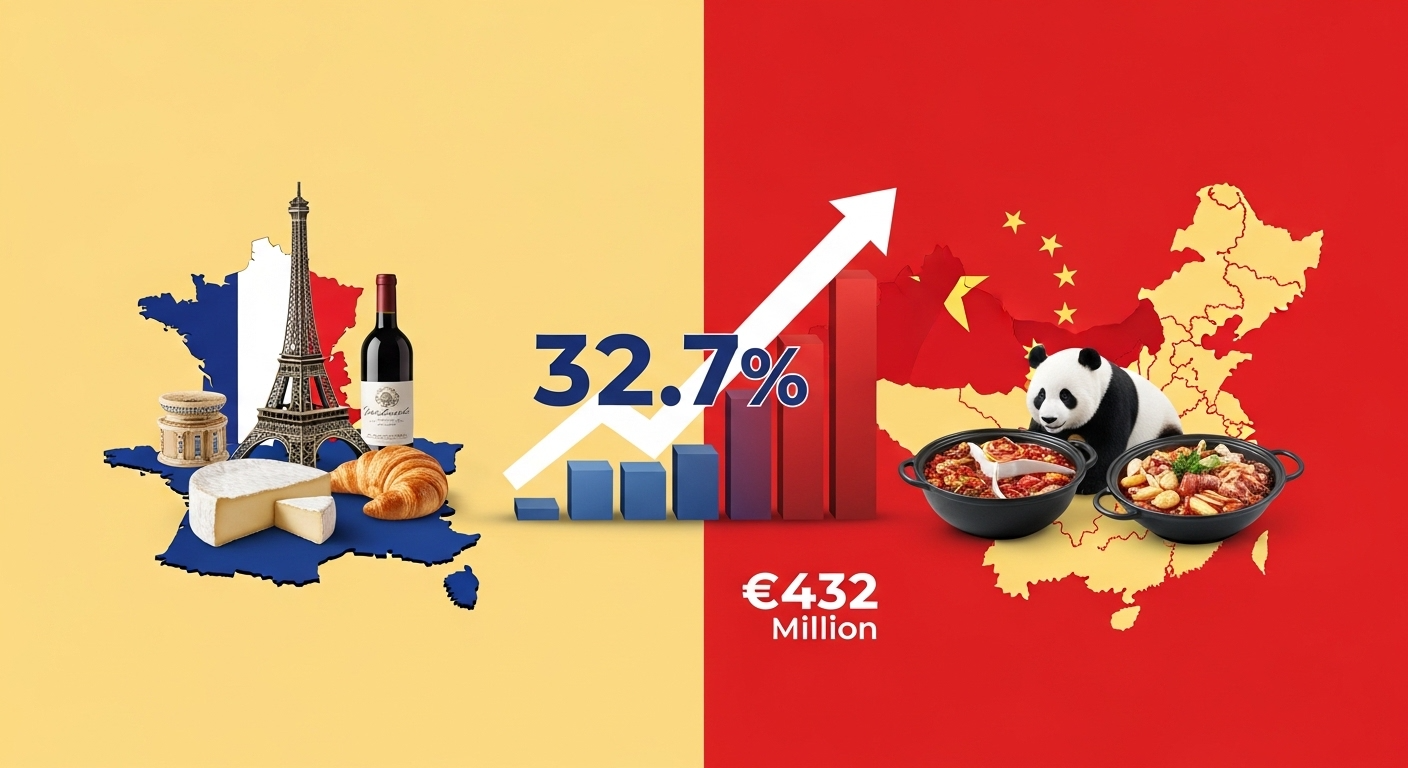
French Exports to China’s Sichuan Province Surge 32.7% to €432 Million: What Is Driving This Trade Boom
While most international trade headlines focus on Beijing and Shanghai, something quietly significant is happening deep in China’s interior. France’s exports to Sichuan province have surged by 32.7% year on year, reaching a total of €432 million and signalling a major shift in how French businesses are approaching the Chinese market.
This isn’t a statistical blip. It reflects a deliberate strategic repositioning by some of France’s most significant industrial players.
Why Sichuan and Why Now
For decades, Sichuan was considered too remote and too disconnected to justify serious international trade investment. Its inland location, far from China’s coastal economic corridors, kept it off most foreign business radar screens.
That perception has fundamentally changed. Infrastructure investment, a growing consumer base, and a direct rail freight link to Europe have transformed Sichuan into one of China’s most compelling emerging markets for foreign business.
The Rail Connection That Changed Everything
At the heart of this trade expansion is the China-Europe rail freight network, which has created a direct logistics corridor between Chengdu, Sichuan’s capital, and Lyon, one of France’s key industrial cities.
French Minister Delegate for Foreign Trade Jean-Baptiste Lemoyne describes the impact clearly. “The rail freight link has been a transformative development, turning Chengdu and Lyon into virtual neighbours,” he says. “It has opened up new avenues for French businesses to leverage Sichuan’s strategic location.”
What the Numbers Actually Show
The scale of growth in this trade relationship is worth examining in detail.
| Metric | Value |
|---|---|
| Year-on-year export growth | 32.7% |
| Total French exports to Sichuan | €432 million |
| Top French export categories | Machinery, chemicals, automotive parts |
| Key French investors in the region | Michelin, Schneider Electric, Vinci |
These figures represent genuine commercial momentum rather than a single large transaction skewing the data.
French Industrial Giants Making Long-Term Bets
This isn’t just small and medium enterprises testing the water. Michelin, Schneider Electric, and Vinci have all established significant and growing presences in Sichuan, with manufacturing facilities and research and development centres representing billions in committed investment.
French diplomat Sylvie Bermann, who has extensive experience in the region, says the shift is unmistakable. “French companies are no longer viewing Sichuan as a distant, peripheral market,” she explains. “They are recognising the region’s immense potential and are willing to make the necessary investments to establish a strong, enduring presence.”
What French Experts Are Saying
“Sichuan is no longer the remote, inaccessible region it once was. The connectivity and accessibility provided by Sichuan’s infrastructure have been game-changers, making it a viable and compelling option for French businesses looking to penetrate the Chinese market.” — Sylvie Bermann, French Diplomat
“This is not just about trade and investment. It’s about building lasting, multifaceted connections that go beyond the bottom line. France and Sichuan are cultivating a partnership that has the potential to yield dividends for years to come.” — Jean-Baptiste Lemoyne, French Minister Delegate for Foreign Trade
A Partnership Bigger Than Trade
What makes the France-Sichuan relationship particularly interesting is that it has moved well beyond commercial exchange. French universities and research institutions have established collaborative programmes with Sichuan counterparts, creating academic and intellectual ties alongside the business ones.
Cultural initiatives including the annual Sichuan International Cultural Week in France have helped build mutual understanding between the two regions, creating the kind of long-term familiarity that tends to support sustained business relationships rather than transactional ones.
Sichuan’s Strategic Advantages
Several concrete factors make Sichuan an increasingly attractive destination for French businesses beyond the rail connection alone.
- A large and rapidly growing domestic consumer base with rising purchasing power
- Strategic position as a gateway to China’s western provinces and broader central Asian markets
- Well-developed high-speed rail and road networks connecting it to coastal China
- A lower cost base compared to established coastal manufacturing hubs
- Strong government support for foreign investment and industrial development
- Natural resources that support manufacturing and industrial supply chains
The Challenges French Companies Still Face
The growth figures are impressive but the path is not without significant practical obstacles. Sichuan’s regulatory environment differs from coastal provinces, and navigating local business norms requires patience and local expertise.
Bermann is direct about what success requires. “It’s not about quick wins, but about building lasting, trust-based relationships,” she advises. “French companies that are willing to invest the time and resources to understand the local market will be the ones that thrive in the long run.”
What This Means for the Broader France-China Relationship
The Sichuan story sits within a larger context of France actively diversifying its China engagement beyond the traditional coastal concentration. Developing strong ties with an inland province of this scale gives French business a different kind of footprint in China.
It also reduces exposure to the geopolitical and logistical risks that come with over-concentration in a single region or corridor. Sichuan provides an alternative anchor point in one of the world’s largest economies.
Conclusion: An Inland Market That Can No Longer Be Ignored
The 32.7% export growth figure is striking on its own. What makes it more significant is what it represents. Major French companies are making long-term capital commitments to a region that was considered peripheral just a decade ago.
The infrastructure is in place, the consumer market is growing, and the diplomatic and cultural groundwork has been carefully laid. The France-Sichuan trade relationship looks less like a temporary surge and more like the early stages of a durable and deepening economic partnership.
Read more: https://wizemind.com.au/
Frequently Asked Questions
What is driving the surge in French exports to Sichuan? The primary drivers are the development of the China-Europe rail freight network connecting Chengdu to Lyon, Sichuan’s growing consumer market, improving infrastructure, and the region’s strategic position as a gateway to western China and central Asian markets.
Which French companies have invested significantly in Sichuan? Michelin, Schneider Electric, and Vinci are among the most prominent French industrial names with established and growing presences in the region, including manufacturing facilities and research centres.
What are the top French export categories to Sichuan? The leading categories are machinery, chemicals, and automotive parts, reflecting the industrial strengths of the French economy and demand from Sichuan’s expanding manufacturing and consumer sectors.
How has the China-Europe rail freight network affected this trade relationship? It has dramatically reduced transport time and cost between the two regions, making Sichuan commercially viable for French businesses in a way that was not previously practical. The Chengdu to Lyon rail corridor has been described by French officials as turning the two cities into virtual neighbours.
What challenges do French companies face in Sichuan? The main challenges involve navigating a regulatory environment that differs from coastal provinces, adapting to local business culture, and building the trust-based relationships that long-term success in the region requires.
How does the partnership extend beyond trade? Through academic collaborations between French and Sichuan universities, cultural exchange programmes, and joint initiatives on broader global challenges. The annual Sichuan International Cultural Week in France is one visible example of this wider relationship.
What is the outlook for the France-Sichuan trade relationship? The momentum is strong and the foundations are solid. As infrastructure continues to improve and French companies deepen their local knowledge and relationships, the trade and investment figures are expected to continue growing.
Key Points
- French exports to Sichuan province grew 32.7% year on year reaching a total of €432 million
- This growth reflects a deliberate strategic shift rather than a temporary market fluctuation
- The China-Europe rail freight network connecting Chengdu to Lyon is the single most important infrastructure driver of this expansion
- Major French companies including Michelin, Schneider Electric, and Vinci have made substantial long-term investment commitments in Sichuan
- Top French exports to the region include machinery, chemicals, and automotive parts
- Sichuan’s inland location was once considered a disadvantage but improved connectivity has transformed that perception
- The region serves as a strategic gateway to China’s western provinces and broader central Asian markets
- French diplomatic and business leaders emphasise patient long-term relationship building as the key to success in the region
- The partnership extends beyond commercial trade to include academic collaboration and cultural exchange programmes
- French universities and research institutions have established formal ties with Sichuan counterparts
- The annual Sichuan International Cultural Week in France is one visible example of the cultural dimension of the relationship
- Sichuan offers a lower cost base compared to established coastal manufacturing hubs making it attractive for production investment
- Regulatory complexity and cultural adaptation remain real challenges for French companies entering the market
- Diversifying China engagement beyond coastal concentration reduces France’s geopolitical and logistical risk exposure
- The scale and quality of commitments being made suggest this is the early stage of a durable long-term economic partnership