France Is Potentially Sitting On €290 Billion But Has Been Banned From Tapping It Since 2017
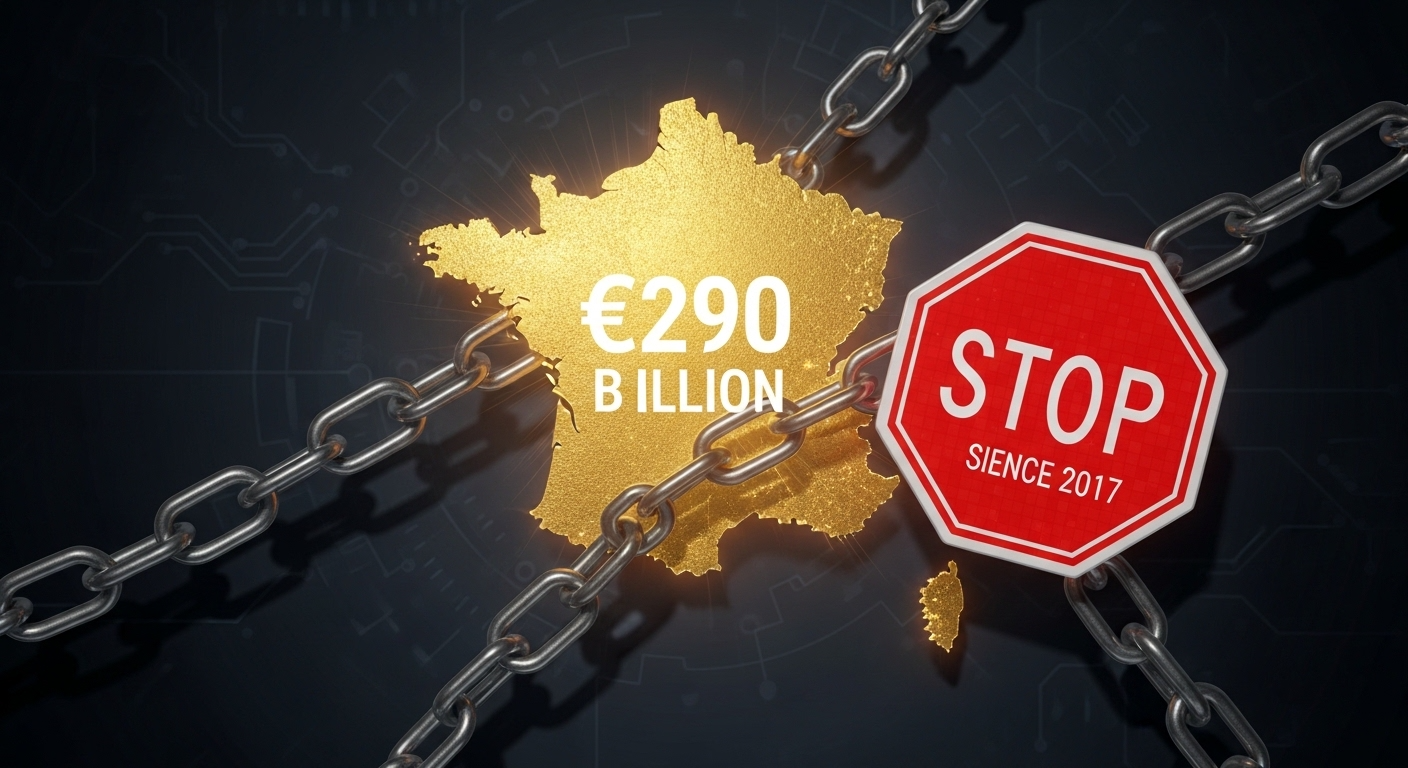
Beneath the fields, forests, and suburbs of France lies what geologists believe could be one of the most valuable collections of untapped natural resources in Europe. The estimated value of these underground reserves sits at approximately €290 billion. And yet, since 2017, France has effectively been prevented from accessing any of it.
This is not a story about a country that does not know its resources are there. France knows. The government knows. The mining industry knows. The problem is a combination of European regulation, geopolitical complexity, and the difficult question of how to extract critical minerals responsibly in an era when the world is watching how these things are done.
Understanding why this situation exists, and what it means for France’s economic future, requires looking at what is actually buried underground, what stopped the country from getting to it, and whether that situation is about to change.
What Is Actually Underground in France?
The resources believed to sit beneath French soil are not obscure or niche. They are among the most strategically important materials in the modern global economy.
Rare earth elements are present in quantities that geologists believe could be significant. These materials are essential for manufacturing smartphones, electric vehicles, wind turbines, and a wide range of defense technologies. The global supply of rare earth elements is currently dominated almost entirely by China, which controls around 60 percent of global production and an even higher share of processing capacity. Any European nation with its own domestic rare earth supply would hold a significant strategic advantage in an era of supply chain nationalism and geopolitical competition.
Lithium deposits are also believed to exist within French territory. Lithium is the foundational material in the batteries that power electric vehicles, grid-scale energy storage, and consumer electronics. Demand for lithium is projected to increase dramatically over the coming decades as the global economy transitions away from fossil fuels, and current supply is concentrated in a small number of countries including Australia, Chile, and China.
Cobalt and nickel, both critical for battery technology and various industrial applications, are also identified as potentially present in meaningful quantities. Like lithium and rare earths, these materials are currently sourced primarily from a small number of often politically unstable regions, creating supply chain vulnerabilities that European policymakers have been trying to address for years.
The combined estimated value of these resources at €290 billion is not a figure that can be ignored, particularly for a country managing significant national debt and looking for paths to economic reinvigoration.
What Stopped France From Accessing These Resources in 2017?
The answer lies in a piece of European Union legislation known as the EU Conflict Minerals Regulation, which came into full effect in 2021 after being established in 2017. The regulation was designed with a genuinely important purpose: to ensure that minerals flowing into European supply chains were not funding armed conflict or being extracted through human rights abuses in high-risk regions around the world.
The regulation places strict due diligence requirements on companies sourcing tin, tantalum, tungsten, and gold from conflict-affected areas. Companies must verify their supply chains, document the origins of materials, and demonstrate that their sourcing practices do not contribute to conflict financing.
The unintended consequence for France is that these requirements have created significant compliance complexity and cost burdens that make domestic extraction commercially challenging even when the source is indisputably French soil rather than a conflict zone. The regulation was designed primarily with imported minerals from high-risk regions in mind, but its compliance framework applies broadly and has created friction for European domestic extraction projects as well.
The 2017 date reflects when the regulatory framework was established and began shaping investment decisions and extraction planning. Mining projects require years of development before production begins, and the regulatory uncertainty created by the new framework effectively paused or halted multiple projects that had been in planning stages.
The Economic and Strategic Cost of Inaction
The consequences of France being unable to access these resources are not abstract. They play out in concrete economic and strategic terms every year that passes without resolution.
France, like the rest of Europe, remains heavily dependent on imported critical minerals for its industrial base. Its electric vehicle industry, its renewable energy sector, and its defense manufacturing all rely on supply chains that run through China, Australia, Chile, and the Democratic Republic of Congo. Each of those supply chains carries geopolitical risk, price volatility, and the potential for disruption.
The strategic case for European resource independence has become significantly stronger since 2017. The pandemic exposed the vulnerability of global supply chains in dramatic fashion. The energy crisis that followed Russia’s invasion of Ukraine demonstrated what happens when a continent is dependent on a single supplier for a critical resource. The parallel vulnerability in critical minerals is now widely acknowledged by European policymakers as a risk that needs to be addressed urgently.
For France specifically, the inability to develop its own mineral resources means ongoing dependence on external suppliers for materials that its own soil may contain in abundance. Every battery manufactured in France using imported lithium, every wind turbine built with imported rare earth elements, represents a missed opportunity to add value domestically and reduce strategic vulnerability.
How France Is Trying to Navigate This Challenge
The situation is not static. French policymakers, industry groups, and European Union officials have been engaged in an ongoing effort to find a path that allows responsible domestic extraction while maintaining the integrity of the regulatory framework designed to prevent conflict mineral financing.
The European Critical Raw Materials Act, which came into force in 2024, represents the most significant attempt to address this tension at the European level. The act sets targets for European domestic production of critical minerals, establishing that by 2030, at least 10 percent of European consumption of critical raw materials should come from domestic extraction. This creates a policy imperative for countries like France to develop their mineral resources rather than treating regulation as an indefinite barrier.
France has also been investing in advanced exploration and mapping of its subsurface mineral resources, developing a more precise understanding of exactly where deposits are located, how large they are, and what extraction methods would be technically and economically viable.
New mining technologies that are significantly less environmentally disruptive than traditional extraction methods are being developed and piloted in France and elsewhere in Europe. In-situ leaching, where minerals are dissolved underground and pumped to the surface without large-scale excavation, is one approach being explored as a way to access mineral deposits with a much smaller surface footprint and environmental impact.
What It Could Mean for the French Economy
If France successfully develops a framework that allows responsible access to its underground mineral wealth, the economic implications are substantial.
Direct employment in the extraction and processing of critical minerals would create jobs in regions of France that currently have limited industrial employment opportunities. The manufacturing of battery components, electric vehicle parts, and renewable energy technologies using domestically sourced materials would add further economic activity and employment downstream.
Government revenues from royalties, taxes, and production-linked payments on mineral extraction could provide meaningful contributions to public finances over a period of decades, given the scale of the estimated reserves.
Strategic independence in critical mineral supply chains would reduce France’s vulnerability to the kind of supply disruptions and price shocks that have repeatedly demonstrated the cost of over-dependence on geopolitically concentrated supply sources.
For French households, the downstream effects of a stronger domestic industrial base in high-growth sectors could include more stable employment, better wages in advanced manufacturing roles, and potentially lower costs for electric vehicles and renewable energy technologies as supply chains shorten and become less exposed to external volatility.
The Broader European Context
France is not alone in this situation. Several other European countries are sitting on potentially significant mineral deposits that have been difficult to develop under the existing regulatory and investment environment. Germany has lithium resources in the Rhine valley. Portugal has significant lithium deposits that are at various stages of development. Scandinavia has rare earth and base metal resources that are only partially developed.
The European Union’s push toward critical mineral self-sufficiency is creating a new political and regulatory environment in which the barriers that stalled these projects are being re-examined. The question is no longer whether Europe should develop its own mineral resources but how to do it in a way that meets the continent’s environmental and human rights standards.
For France, with its estimated €290 billion in underground resources, the answer to that question has enormous economic consequences. Getting the regulatory and technical framework right is genuinely difficult, but the incentive to do so has never been stronger than it is in 2026.
Frequently Asked Questions
What is the €290 billion figure based on?
The estimate reflects geological surveys and assessments of the type, quantity, and current market value of mineral deposits believed to exist beneath French territory. It includes rare earth elements, lithium, cobalt, nickel, and other strategic materials. The figure is an estimate and actual recoverable value would depend on extraction costs, market prices at the time of production, and the proportion of deposits that prove economically viable to access.
Has France been completely banned from all mining since 2017?
No. France continues to conduct mining activity. The situation is more nuanced than a complete ban. The EU Conflict Minerals Regulation and related regulatory complexity has created significant barriers and uncertainty that have stalled or prevented the development of new projects targeting the specific strategic mineral deposits described in this article, rather than halting all existing mining operations.
What is the EU Critical Raw Materials Act and how does it affect this situation?
The European Critical Raw Materials Act, which came into force in 2024, sets targets for domestic European production of critical minerals and is designed to reduce European dependence on imported strategic materials. It creates a policy environment that is more supportive of developing domestic mineral resources, which could help France advance projects that were previously stalled.
Could accessing these resources harm the French environment?
This is the central tension that policymakers are working through. Traditional large-scale mining carries significant environmental impacts. Newer extraction technologies being developed and piloted in Europe are designed to access mineral deposits with substantially lower environmental disruption. The regulatory framework for any new extraction projects would need to meet European environmental standards, which are among the strictest in the world.
When could France realistically begin accessing these mineral reserves?
Mining projects of significant scale typically require five to ten years from the decision to proceed through exploration, permitting, construction, and production ramp-up. If the regulatory and policy environment clarifies sufficiently in the next two to three years to enable investment decisions, meaningful production from French domestic mineral resources could potentially begin in the early to mid 2030s.