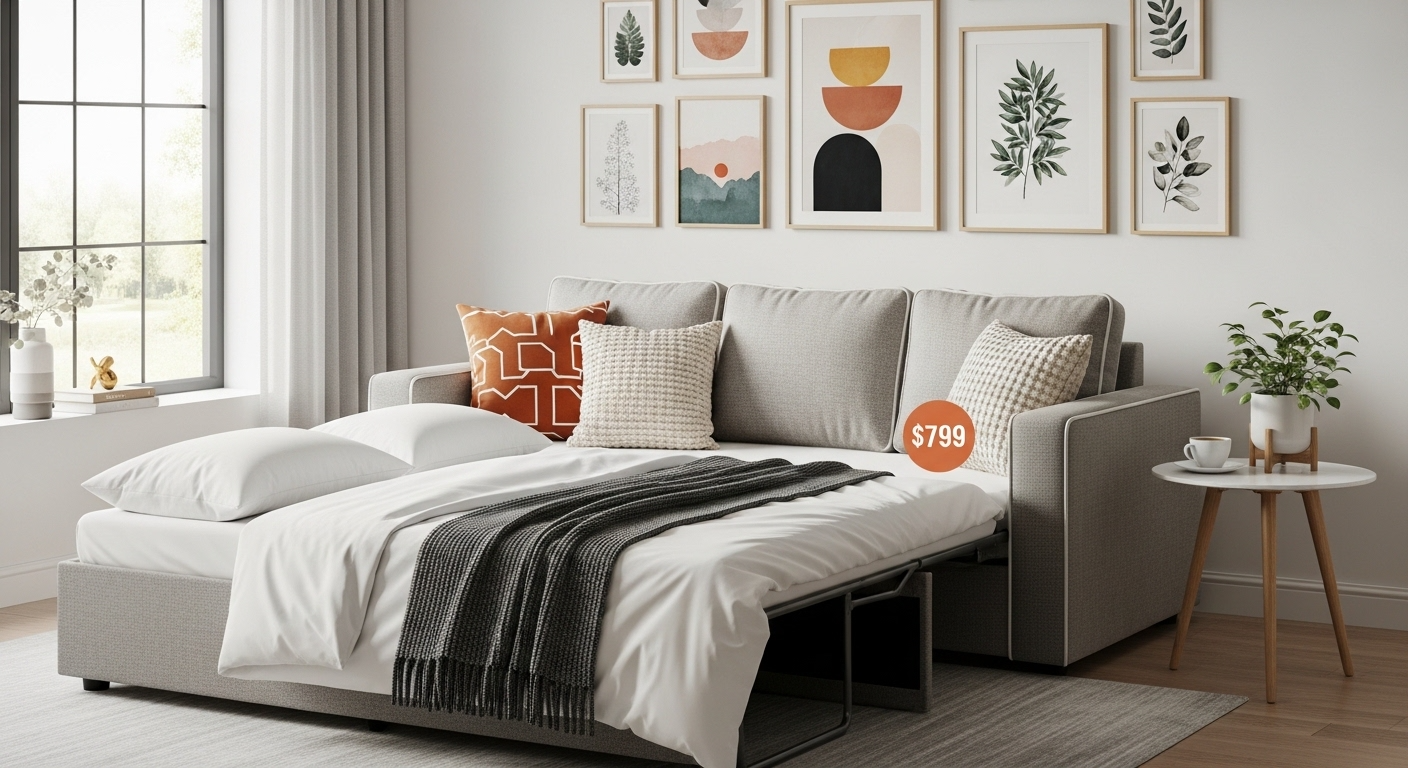
Forget the IKEA Sofa Bed: This On-Trend, Budget Sleeper Sofa Is Already Winning Over Design Fans
Something has quietly shifted in the world of home design, and it is happening right in the middle of your living room. The sleeper sofa — long dismissed as a clunky compromise between a real sofa and a barely tolerable guest bed — has had a complete reinvention, and the design community has taken notice in a very big way.
This is not about the IKEA sofa bed you reluctantly bought because nothing else fit the budget. This is about a new generation of affordable sleeper sofas that look genuinely beautiful, sleep genuinely well, and have become the centrepiece of some of the most considered interiors being shared online right now.
Why the Old Sleeper Sofa Had Such a Bad Reputation
To understand why this moment matters, it helps to understand what came before it. The traditional sleeper sofa was, for most of its commercial history, a piece of furniture that tried to be two things and succeeded poorly at both.
As a sofa, it tended to be stiff and slightly awkward, with seat cushions that never quite sat right because of the mechanism folded inside them. As a bed, it was worse — a thin, spring-loaded mattress that left overnight guests feeling like they had slept on a poorly upholstered trampoline. The visual design was an afterthought. It was functional furniture in the least flattering sense of that phrase.
For decades, consumers essentially accepted this as the deal. You bought a sleeper sofa because you needed the guest sleeping option, not because you wanted the sofa. It was a concession, and it looked like one.
What Changed and Why It Matters Now
The change did not happen overnight, but it accelerated sharply as smaller urban living spaces became the norm and the demand for furniture that could genuinely multitask reached a new kind of urgency.
Apartment sizes in Australian cities, like those in most major urban centres globally, have been trending smaller for years. The traditional model of a separate living room and a separate guest bedroom is a luxury that a growing proportion of the population simply does not have access to. The sleeper sofa stopped being an occasional convenience and started being a genuine solution to a real spatial problem.
Manufacturers responded. Investment in better mechanisms, higher-quality mattress inserts, and — critically — genuinely considered aesthetic design produced a product category that bears almost no resemblance to its predecessor. The sleeper sofa stopped being designed as a bed that could double as a sofa and started being designed as a sofa that could transform into a bed. That inversion of priority changed everything about the result.
The Design Shift That Has Everyone Talking
The most striking thing about the current generation of budget-friendly sleeper sofas is not their functionality — it is how good they look. Clean lines, elevated fabrics, thoughtful proportions, and a visual coherence that holds whether the piece is in sofa mode or fully extended as a bed have made these pieces genuinely desirable rather than merely acceptable.
Interior designers who previously would have steered clients away from sleeper sofas as a category are now specifying them as anchor pieces. The sofa is no longer something to work around — it is the piece the rest of the room is designed to complement. Rugs, lighting, artwork, and secondary seating are being chosen to frame the sleeper sofa rather than to distract from it.
The style range has expanded significantly as well. Mid-century modern silhouettes with tapered wooden legs and tight upholstery. Minimalist designs in natural linen tones that disappear into Scandinavian-influenced interiors. Deep, structured frames in velvet or boucle that anchor more dramatic room schemes. The assumption that budget sleeper sofas exist only in a generic middle ground of inoffensive beige is no longer accurate, and the breadth of what is available at accessible price points is one of the main drivers of the current enthusiasm.
The Comfort Revolution Inside the Frame
Visual appeal only goes so far. The reason design fans are not just photographing these sofas but actually buying them and recommending them to friends is that the sleeping experience has genuinely improved to a point where overnight guests are no longer quietly dreading the pull-out.
The mattress quality inside modern budget sleeper sofas has been one of the most significant areas of development. Memory foam and high-density foam inserts have replaced the thin, spring-mounted mattresses of previous generations, producing a sleeping surface that supports the body properly rather than forcing it to conform to whatever shape the springs happen to be in.
The mechanisms have improved as well. Opening and closing a sleeper sofa used to be a minor athletic event involving both hands and sometimes a foot. Contemporary designs use smoother, more counterbalanced mechanisms that can typically be operated by one person without difficulty, fold away more cleanly when not in use, and do not produce the visual awkwardness of an obviously mechanical object sitting inside what is supposed to be elegant furniture.
The transition from sofa to bed is now smooth enough that the same piece reads as genuinely attractive in both configurations — which is the functional definition of good design in a convertible piece of furniture.
Budget Does Not Mean Basic Anymore
The price point accessible to most consumers for a quality sleeper sofa has dropped substantially, and this is perhaps the single most democratising development in the whole story. Quality sleeper sofas that previously required a luxury furniture budget are now available at price points that put them within reach of first-apartment buyers, renters furnishing a long-term home, and anyone who has previously had to choose between style and function because they could not afford both.
Advancements in manufacturing efficiency, improvements in supply chain management, and the growth of direct-to-consumer furniture brands that cut out retail middlemen have all contributed to this price compression without the corresponding quality reduction that used to accompany it.
The result is a category where spending a reasonable amount of money — not a small amount, but a reasonable one — gets you a piece of furniture that looks considered, performs well as both seating and sleeping, and does not visually apologise for its existence in a well-designed room. That was not reliably true five years ago, and it is increasingly true now.
Who Is Buying These Sofas and Why
The audience for the new generation of budget sleeper sofas is broader and more diverse than the furniture industry expected. Millennials furnishing first homes and apartments are a significant segment, drawn by the combination of genuine style, practical dual function, and price points that fit within realistic budgets for people who may also be managing student debt or significant rental costs.
Empty nesters reconfiguring homes as children move out represent another strong buyer group. A home with a dedicated guest room that is used a handful of times a year is, in spatial terms, a significant inefficiency, and a well-designed sleeper sofa in a home office or second living area offers the guest-sleeping function without the dedicated room commitment.
Remote workers who need a home office that can convert to a guest room when needed are a third cohort driving demand — people who want a space that works hard every day of the year rather than sitting largely unused as a single-purpose room.
How to Choose the Right One for Your Space
With the category now offering genuine variety, the selection decision requires more thought than it once did when the options were limited and largely similar. Getting it right starts with measurement, which sounds obvious but is the step most commonly skipped in ways that create problems later.
Measure not just the space where the sofa will sit but the clearance needed in front of it when the bed is fully extended. Most sleeper sofas require between one and two metres of clear floor space in front of them to open fully, and in smaller rooms this determines what is possible before any aesthetic consideration enters the picture.
Consider the mattress thickness and type before anything else if sleeping comfort is a priority. Manufacturers are required to specify mattress dimensions and materials, and this information is worth seeking out rather than assuming. A sofa that looks perfect and sits beautifully is not a success if the sleeping experience disappoints the guests you bought it for.
Fabric choice carries more weight in a sleeper sofa than in a standard sofa because the piece will be used more intensively and cleaned more frequently. Performance fabrics that resist staining and wear are worth the slight premium over more delicate options, particularly in households with children or pets.
Styling the Sleeper Sofa as a Design Anchor
The contemporary approach to a room containing a sleeper sofa is to treat it as the most significant piece in the space rather than the most compromised one. This means selecting every other element — rug, coffee table, side tables, lighting, artwork — in conscious relationship to the sofa rather than independently.
For sofas with clean, minimal silhouettes, the surrounding elements can carry more visual weight without overwhelming the room. A large statement rug, a sculptural coffee table, and layered lighting all read well against a sofa that holds its ground without competing.
For sofas with more presence — deeper seats, more structured arms, bolder upholstery colours — the surrounding elements benefit from restraint. Simpler forms, quieter colours, and fewer competing focal points allow the sofa to do what it is clearly designed to do, which is anchor the room rather than share that role.
The cushions you add are one of the most powerful and cost-effective tools for adapting the sofa’s visual character across seasons or as your taste evolves. A neutral base sofa gains warmth, texture, and personality from cushions in a way that keeps the foundational investment relevant for years longer than a more boldly styled base piece would.
Frequently Asked Questions
What makes the new budget sleeper sofas genuinely different from what was available before? The combination of better aesthetic design, significantly improved mattress quality, and smoother mechanisms — all at accessible price points. This is not incremental improvement. It is a category that has been substantially redesigned in response to real consumer needs and improved manufacturing capability.
How do I know if the mattress will actually be comfortable for guests? Look for mattresses with a minimum thickness of ten centimetres, and check whether the material is foam, memory foam, or spring. Memory foam and high-density foam options consistently outperform spring inserts in sleeper sofas at this price point. Reading verified reviews from people who specifically comment on the sleeping experience is the most reliable guide.
Can a sleeper sofa be used as the primary sofa in a main living area? Absolutely, and this is increasingly the most common use case. Contemporary sleeper sofas are designed to function as primary seating without any visible compromise, and the best examples are indistinguishable from standard sofas when in sofa configuration.
What size should I buy for a small apartment? Measure the extended footprint before buying, not just the sofa dimensions. A sofa that is compact in sofa mode may still require significant floor clearance when opened, and confirming this fits your specific space is more important than the sofa’s stated dimensions alone.
How do I maintain a sleeper sofa to keep it performing well? Follow the fabric care instructions provided by the manufacturer, rotate and fluff cushions regularly, and operate the mechanism gently rather than forcing it. Periodically opening and closing the bed mechanism — even when not needed for guests — keeps it working smoothly and prevents stiffness from developing in components that are rarely used.
Are there customisation options at budget price points? Increasingly yes. Many contemporary budget sleeper sofa brands offer choices of fabric, colour, and sometimes leg style that allow meaningful personalisation without premium pricing. Direct-to-consumer brands in particular have invested in configurator tools that make this process accessible and clear.
What is the typical lifespan of a quality budget sleeper sofa? With proper care, a well-constructed sleeper sofa at the mid-budget level should comfortably last seven to ten years as a primary piece, with the mechanism and mattress typically outlasting cheaper options by several years. The fabric will often determine the practical lifespan more than the structure.
How does the IKEA FRIHETEN compare to the newer options on the market? The FRIHETEN remains a competent, practical option at a very low price point. But the newer generation of budget sleeper sofas has surpassed it on aesthetics, mattress quality, and mechanism smoothness — often without a dramatic price difference. For anyone prioritising how the piece looks in a considered interior, the newer options represent a meaningful upgrade.
Key Takeaways
- The sleeper sofa category has been fundamentally redesigned. The compromise aesthetic and poor sleeping experience that defined previous generations have been replaced by genuinely considered design and significantly better comfort.
- Budget no longer means basic. Manufacturing improvements and direct-to-consumer business models have brought quality sleeper sofas within reach of mainstream buyers without the quality reductions that used to accompany lower price points.
- Design fans are treating these sofas as anchor pieces, designing entire rooms around them rather than working around them — a complete reversal of the previous approach.
- Mattress quality is the most important functional factor to investigate before buying. Thickness, material, and verified sleeping experience reviews matter more than any aesthetic consideration.
- Measure the extended footprint, not just the sofa dimensions, before purchasing for any space where floor clearance might be limited.
- The audience has broadened significantly — from first-apartment millennials to empty nesters to remote workers — because the product has genuinely improved across the criteria that matter to each of those groups.
- Styling these sofas as centrepieces rather than compromises produces better-looking rooms and better value from the investment in the piece itself.
Read more: https://wizemind.com.au/