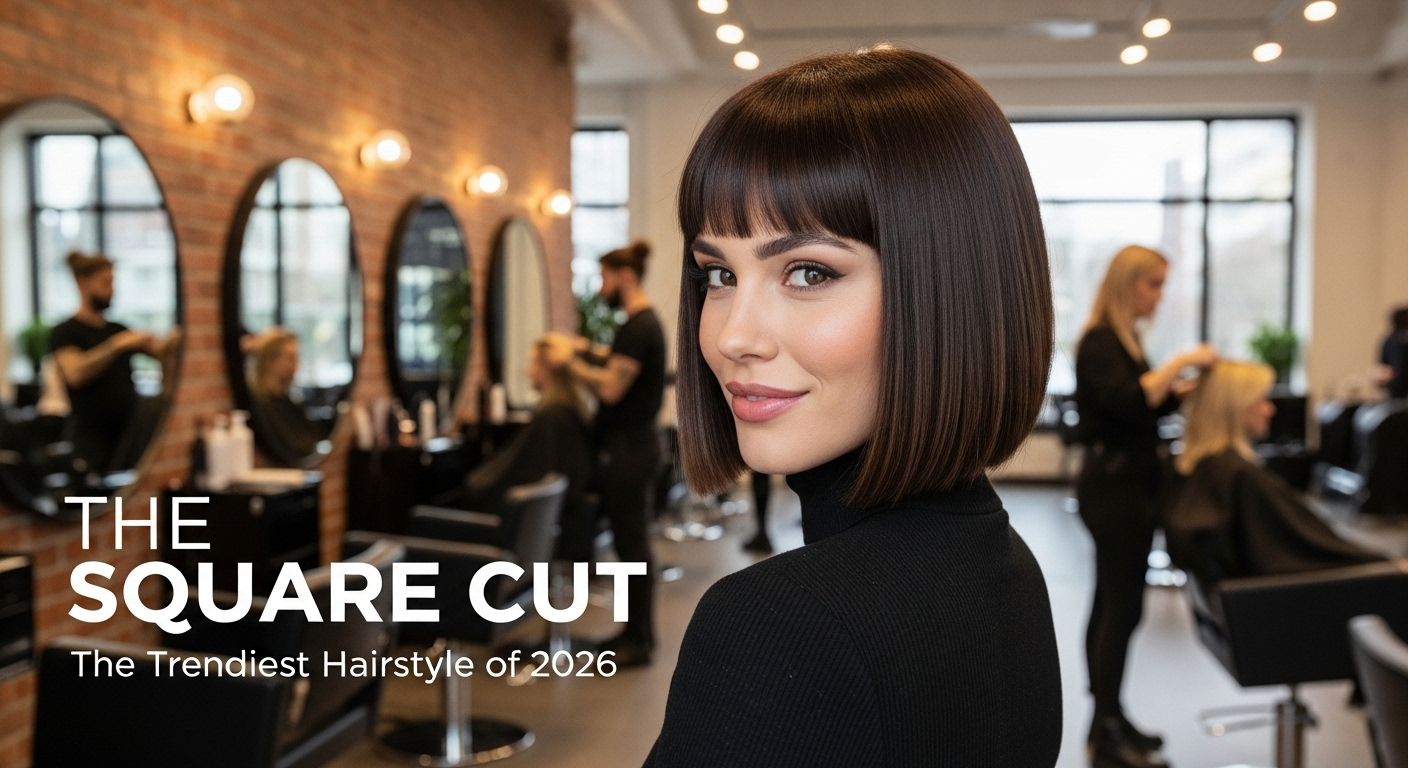
Forget the French Bob — The Square Cut Is the Trendiest Hairstyle of 2026, According to Experts
The first time I saw it, I almost missed it. It was not loud, or theatrical, or trying too hard. It was just sharp. A clean, right-angle outline skimming the jaw of a woman who walked past a café window, coffee in one hand, headphones tucked under a dark, square sheet of hair that swung like a well-cut blazer. Precise. Intentional. Slightly intimidating.
Not the softly tousled French bob we have been fed on social media for years. Something bolder. More architectural. I watched half the café track her as she crossed the street, and the thought arrived with the clarity of a good decision. This is what is coming next.
The Year We Got Bored of Effortless
For nearly a decade, every hair trend piece has praised the same quality. Effortless beauty. The French bob, chin-length and wispy and deliberately undone, became the poster child of that particular aesthetic. We have seen it on actresses arriving at red carpets claiming minimal styling, on fashion editors in oversized trench coats, on influencers performing the careful theatre of not having tried.
But a quiet shift is happening in the salons where trends are actually made before they reach anyone’s feed. People are tired of pretending they did not try. We have embraced twelve-step skincare routines, meticulous wellness habits, and thoughtfully constructed wardrobes. The idea that hair should still be performing accidental perfection is beginning to feel not relaxed but slightly dishonest.
This is where the new cut steps in. A precise, square silhouette that stylists around the world have been whispering about and are now saying out loud will be the defining haircut of 2026. It does not want to look like it rolled out of bed in a linen shirt. It wants to look like it knows exactly what it is doing.
Meet the Square Cut
Ask five stylists what to call it and you will get five different answers. Square bob. Box cut. Structured crop. Flat-line bob. Architectural bob. The name matters less than the feeling. Crisp corners, a strong baseline, and a shape that draws a clean frame around the face like a well-chosen piece hanging on a gallery wall.
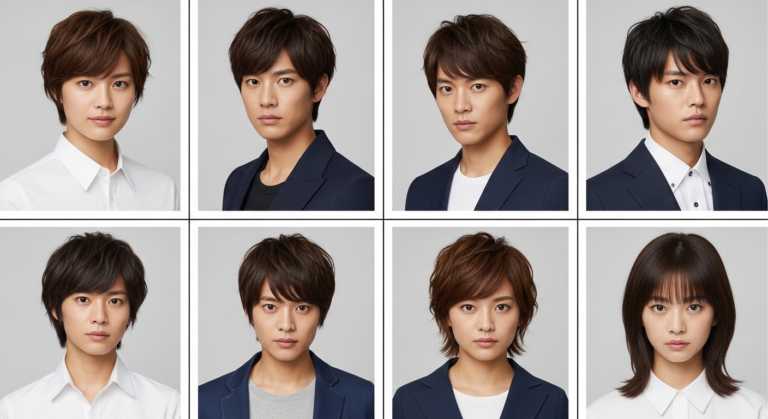
Imagine hair falling just at or slightly below the jaw. The ends are blunt, almost ruler-straight, with a subtle square build-up at the corners that refuses the apologetic wisps and shy layers that soften the French bob into vagueness. From the back it reads as a clean rectangle hovering above the shoulders. From the side the angle is almost graphic, especially when light catches the edge of the hair and throws a dark line against a pale collar or the soft loop of a scarf.
Where the French bob floats and melts into the neck with studied casualness, the square cut anchors. It sits with intention, like a piece of considered design. It does not happen to you. You choose it, and it reflects that choice back at everyone who sees you. That quiet certainty is exactly what is making stylists bet their reputations on it for 2026.
Why Experts Are Calling It Now
In conversations with trend forecasters and session stylists, the reasoning keeps returning to three ideas. Balance, control, and identity.
Balance, because the square cut creates a visual counterweight to the softer silhouettes dominating fashion right now. Draped knitwear, puddled trousers, curved tailoring. The hair cuts through the softness and gives the whole look somewhere to land.
Control, because it puts shape back into the hands of the wearer rather than surrendering it to humidity, air-dry luck, and whatever the weather decides to do. This cut holds itself. It is almost a built-in style, which makes it paradoxically less work than cuts that require constant coaxing.
Identity, because it creates a genuine signature. When you see someone wearing this cut they look distinct in a way that is difficult to explain but immediately felt. It is not a background haircut. One London stylist described it as the bob that grew up and got a backbone. Another called it the haircut that makes everyone look a little more like they run the meeting. There is real power in those lines, even when the rest of the outfit is just a good hoodie and clean sneakers.
How It Actually Looks in Real Life
Forget the glossy campaign images for a moment and imagine small, ordinary moments instead.
You are tying a scarf on a cold morning. The cloth brushes the ends of your hair and you feel that solid edge, a clean blunt line. You catch yourself in the hallway mirror and the haircut sits there like punctuation, finishing the sentence of your face.
You are on a crowded train, overhead lights harsh and unforgiving. Your hair, cut into this geometric frame, throws a subtle shadow along your jaw that sharpens its outline. Your cheekbones read a little higher. Your eyes look a little more deliberate. You have not contoured anything. The shape is doing it entirely on your behalf.
It is a humid summer dinner and the air is clinging to every surface. Where a softer bob might puff and fray into texture you did not choose, your square cut puffs but the line stays. It goes from razor-blunt to velvety and still feels intentional. You run your fingers along the ends and they press together like the edge of a well-cut page.
For many people who wear it, the cut becomes a kind of tactile ritual. The way the fingers find the edge when thinking. The way it brushes the collarbone when you turn your head. The way it swings all at once when you laugh. The geometry is not stiff. It moves. But every movement returns to that one strong outline.
Square Cut Versus French Bob Versus Classic Lob
To understand why experts are positioning the square cut as the dominant style of 2026, it helps to place it alongside the two cuts it is most directly responding to.
| Feature | Square Cut 2026 | French Bob | Classic Lob |
|---|---|---|---|
| Length | Jaw to just above shoulders | Cheekbone to chin | Shoulder-grazing to collarbone |
| Shape | Blunt, square, graphic baseline | Soft, airy, slightly curved | Gently tapered and elongated |
| Vibe | Architectural, confident, modern | Romantic, undone, retro-Parisian | Safe, versatile, transitional |
| Maintenance | Trims every 6 to 8 weeks to hold the line | Looser, depends on texture | Forgiving as it grows |
| Styling requirement | Holds itself with minimal product | Dependent on air-dry texture and humidity | Low to moderate |
| Best for | People craving definition and a clear signature | Those who love undone textured looks | Anyone wanting length without commitment |
The French bob served its era beautifully. The lob carried us through collective indecision, the honest compromise between long and short that admitted we were not quite ready to choose. The square cut walks in like the next chapter. A little braver. A little sharper. Considerably more certain of itself.
Will It Actually Suit You
One of the most persistent myths about structured, graphic cuts is that they are reserved for specific face shapes or hair types. Stylists experimenting with this trend quietly dismiss that idea entirely.
The square cut is less about forcing a face into a geometric mold and more about carving a bespoke frame around what already exists. The essence, strong corners and a clear baseline, remains consistent. The details shift to serve the individual.
Rounder faces benefit from a length that skims just under the jaw, creating the suggestion of angles, with front pieces left the smallest amount longer to prevent any sense of boxiness. Square faces might seem like obvious candidates for a square cut, but a softened baseline and internal texturising keep it from feeling like an echo that has gone too far. Oval faces can experiment with almost any variation, from micro-fringes to dramatic side parts, and carry each iteration easily. Heart-shaped faces find the square cut particularly useful for balancing a wider forehead, with the fullness of the baseline drawing attention toward the jaw in a way that brings the whole face into proportion.
On straight hair, the line reads with the sharpness of an ink stroke on white paper, particularly beautiful when finished with a gloss treatment that makes the edge almost reflective. On wavy hair the square cut becomes a fascinating conversation between structure and movement, the ends forming that boxy outline while the body of the hair sways. Many stylists consider this their favourite version. On curly hair the shape reads as a rounded cube, compact and sculptural, requiring a stylist who understands your specific curl shrinkage but producing results that are genuinely unforgettable.
If there is one condition that is not negotiable, it is precision. This is not a cut to leave to chance or to take to someone who approaches geometry with uncertainty. It belongs with a stylist who loves a clean line as much as they love hair.
How to Ask for It Without Confusing Your Stylist
By late 2026, many stylists will have a name for this cut pinned to their inspiration boards. But if you are arriving ahead of the conversation, specific language is your most useful tool.
Tell them you want a blunt, square-shaped bob with a really clean line at the bottom. That you want the hair to frame your face like a rectangle rather than tapering softly inward. That you are looking for something architectural and graphic that is still genuinely wearable across ordinary days. That you want the corners to feel intentional rather than apologetic, with no wispy or feathered ends softening what should be a clear edge.
Bring photographs and circle the specific qualities you are drawn to. The length. The way the front corners sit. The density of the baseline. And be honest about how you actually live rather than how a runway model lives. A good stylist can build the square cut to suit someone who never blow-dries as effectively as someone who treats it as a daily ritual.
Small adjustments change the entire character of the cut dramatically. A micro-fringe shifts it from minimalist cool to art-school icon. A soft undercut at the nape makes thick hair lighter and the square line more pronounced. Gentle bevelling at the ends keeps the outline boxy without feeling harsh on finer features. A strong middle part and a deep side part applied to the same cut produce two entirely different personalities. The result is a trend that functions as a template rather than a uniform, adaptable until it feels unmistakably personal.
Living With It Day to Day
Once the cut is done, the real relationship begins. The mornings, the rushed evenings, the lazy Sundays where your hair has to work with whatever is already in your hands.
Maintenance to hold that crisp baseline requires a trim every six to eight weeks. Let it grow much beyond that and the square softens gradually into something closer to a lob, which is not a disaster but is no longer the exacting frame that makes the cut distinctive. If the line is what you came for, protect it.
Styling time is where this cut quietly cheats the system. It looks demanding but is not. With a well-executed cut, most people can rough-dry with fingers and finish with a one or two minute pass of a flat brush at the ends. A single product, cream for thicker hair or light mousse for finer hair, keeps the line cohesive without requiring a full toolkit every morning. Sleeping on a silk pillowcase or tucking the ends under a soft scarf preserves the edge noticeably longer between washes.
On the days the cut does not behave perfectly, it still behaves. Slightly flipped-out ends become retro. A gentle bend from sleeping with it tied up becomes undone and graphic. The line is strong enough that even when the cut rebels, it does so within a recognisable shape. There are no genuinely bad hair days. There are just different personalities emerging from the same strong outline.
Why This Cut Belongs to 2026 Specifically
Look at any cultural moment carefully enough and hair becomes a kind of weather report for what people are feeling about the world they are living in. The French bob thrived in an era that wanted softness and nostalgic romance. It whispered that things could be dreamy and slightly blurred and pleasantly imprecise.
The square cut speaks a different language for a different moment. Not aggressive, not harsh. But clear. It steps into a world that has grown comfortable with sharp realities and says, here I am, outlined. It lives naturally alongside the boxy blazers, squared-off boots, and architectural bags that have been moving through fashion for the past two seasons. It belongs in the same visual world as bold typography and stripped-back interiors and the general cultural appetite for things that mean what they look like.
The mood in 2026 is not about hiding effort. It is about owning it. The square cut does not pretend to be accidental. It arrives as a decision, wears itself as a decision, and reflects back to everyone who sees it that the person wearing it showed up and meant to.
Key Points
- The square cut is defined by a blunt, ruler-straight baseline, intentional corners, and a geometric frame that sits at or just below the jaw. Unlike the French bob’s softness and the lob’s forgiving taper, this cut holds its shape with minimal styling and reads as a clear design decision rather than an aesthetic accident.
- The cultural shift driving this trend is a move away from performed effortlessness toward something more honest about intention. After years of aspirational undone styling, the square cut arrives as the visual expression of a broader appetite for definition, clarity, and the straightforward acknowledgement that looking good requires showing up deliberately.
- The cut is more versatile across face shapes and hair textures than its architectural reputation suggests. The baseline and corners are consistent, but length, internal texturising, fringe options, and parting choices allow the cut to be genuinely tailored to the individual rather than applied as a uniform. A skilled stylist works with your specific features rather than against them.
- Maintenance is more demanding than a lob but less demanding than its appearance suggests. Trims every six to eight weeks preserve the defining line. Daily styling can be as simple as a rough-dry and a single product pass, with the cut’s geometry doing the visual heavy lifting that softer cuts achieve only through more active styling effort.
- The square cut’s most significant quality is its consistency across difficult conditions. Humidity, air-drying, and the unpredictability of real mornings all reduce softer cuts to something less than their best. The square cut absorbs those conditions and remains legible, which is ultimately why experts are confident it will define the year.
For more beauty, style, and lifestyle coverage, visit wizemind.com.au