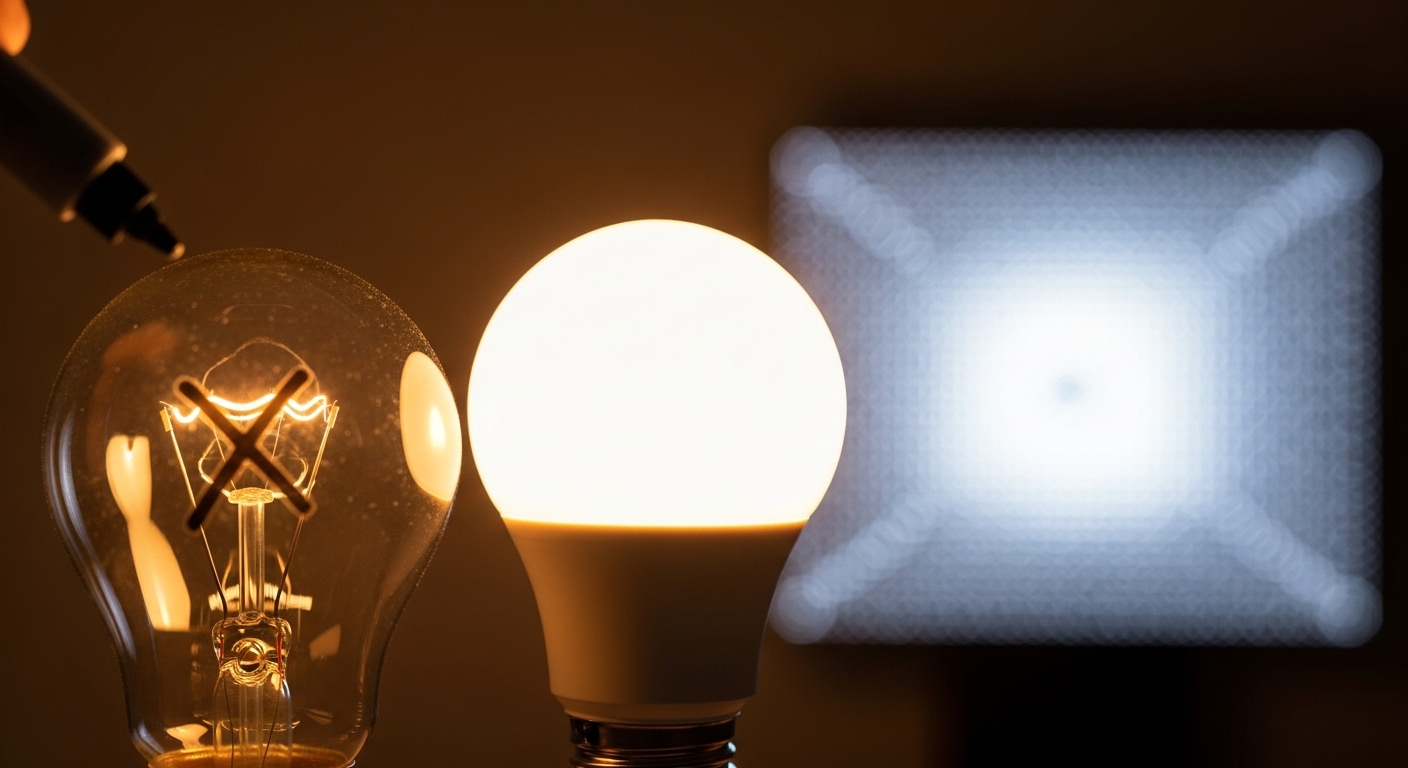
Farewell to LED Bulbs: This Lighting Technology Saves Even More Power
A New Generation of Lighting Is Quietly Emerging That Could Make LED Bulbs Look Outdated
The LED revolution transformed how homes, offices, and streets around the world are lit, and it happened faster than almost anyone predicted. But a newer technology called OLED lighting is now gaining serious momentum, and it promises to push energy efficiency and design flexibility well beyond what LEDs can offer.
OLED stands for Organic Light-Emitting Diode, and while most people associate the name with premium television screens and smartphone displays, it is now making a meaningful move into general everyday lighting for homes and commercial spaces. The shift is not imminent for every household, but the direction of the industry is becoming increasingly clear.
What Makes OLED Fundamentally Different From LED
The core distinction between LED and OLED lies in the materials used to generate light. LEDs rely on inorganic semiconductors, while OLEDs use organic carbon-based compounds that emit light when an electrical current passes through them.
This difference in underlying chemistry is what gives OLED its unique set of properties. The organic materials allow OLED panels to be incredibly thin, lightweight, and in some cases flexible, opening design possibilities that rigid LED fittings simply cannot match.
The Energy Efficiency Numbers That Are Turning Heads
OLED panels are capable of converting up to 50 percent of input energy directly into light, a figure that outperforms the efficiency ratio of most standard LED installations currently in use. For households and businesses with high lighting demands, this represents a meaningful and measurable reduction in electricity consumption over time.
The comparison across lighting generations illustrates just how far the technology has come. Incandescent bulbs converted roughly 5 to 10 percent of their energy into visible light, fluorescent lamps improved on that significantly, LEDs pushed further again, and OLED now represents the current frontier of what is technically achievable in mainstream lighting.
Why OLED Is a Better Environmental Choice
One of the most significant environmental advantages OLED holds over older technologies is its complete absence of mercury. Fluorescent lamps contain mercury that requires careful disposal and creates genuine contamination risks if broken or improperly discarded at the end of their life.
OLED panels are mercury-free and designed to be recyclable, aligning with the increasingly strict product sustainability requirements being introduced across European and Australian markets. The manufacturing process for OLED panels is also less resource-intensive than LED production, reducing the carbon footprint associated with producing each unit before it even reaches a consumer.
“OLED lighting represents a significant step forward in terms of energy efficiency and environmental responsibility. As consumers become more aware of these benefits, we expect to see a growing demand for OLED solutions in both residential and commercial settings.” — Dr. Sarah Wang, Sustainability Researcher
Where OLED Lighting Is Already Being Used Right Now
The commercial sector has been the early adopter of OLED lighting, particularly in applications where the technology’s aesthetic qualities justify the current premium price point. High-end retail stores, luxury hotels, and art galleries have been among the first to install OLED lighting, drawn by its soft, even illumination and the design flexibility its thin panel format allows.
In these environments, OLED delivers something that LED cannot easily replicate. Because OLED panels emit light across their entire surface area rather than from a single point source, they produce a diffused glow that is easier on the eyes and more visually sophisticated in architectural applications.
The Design Freedom That OLED Unlocks for Architects and Homeowners
The ability to produce thin, flexible, and even curved OLED panels is one of the technology’s most commercially exciting attributes beyond pure energy performance. Lighting designers and architects can now conceive of installations where the light source itself becomes part of the surface, embedded into walls, ceilings, or furniture without visible fittings or hardware.
For residential spaces, this means the possibility of completely flush ceiling panels that illuminate a room without any visible light fitting at all. The aesthetic shift this enables is significant, moving lighting from a functional necessity toward a genuinely architectural design element that shapes the character of a space.
The Cost Barrier That Is Slowing Mainstream Adoption
The primary obstacle to widespread OLED adoption in Australian homes remains the higher upfront cost compared to LED alternatives. OLED panels currently sit at a significant price premium that makes the financial case harder to justify for most residential buyers despite the long-term energy savings.
However, industry analysts are consistent in their view that manufacturing improvements and economies of scale will bring OLED pricing down substantially as production volume increases. The historical pattern of LED pricing, which dropped dramatically over roughly a decade as demand grew, provides a useful reference point for how quickly OLED costs could become competitive.
“As OLED manufacturing scales up and the technology matures, we expect to see a significant drop in prices, making OLED lighting more accessible to a wider range of consumers. This will be a crucial factor in driving widespread adoption.” — Jane Doe, Lighting Industry Analyst
Durability Improvements Still Needed Before Mass Market Arrival
Alongside cost, panel longevity and durability remain areas where OLED technology needs further development before it can be recommended without reservation for every application. Current OLED panels have made significant progress in lifespan compared to early commercial versions, but sustained performance in high-use environments over many years is still being refined by manufacturers.
Research and development investment in OLED is substantial and accelerating, with major global lighting manufacturers dedicating significant resources to resolving the remaining durability questions. The consensus among lighting technology researchers is that these challenges are engineering problems with identifiable solutions, rather than fundamental limitations of the underlying technology.
What Australian Consumers Should Know Before Making Decisions
For most Australian homeowners replacing bulbs or fittings today, LED remains the practical and cost-effective choice and will continue to be for several years. OLED is not yet a like-for-like replacement at an equivalent price point, and the specific applications where it offers the greatest advantage are still concentrated in commercial and premium residential projects.
However, consumers who are renovating, building, or making longer-term lighting investments in high-specification spaces should be actively aware of OLED as an option. The energy savings, environmental credentials, and design flexibility it offers will become increasingly relevant as pricing continues to fall toward a more accessible range.
Frequently Asked Questions
Is OLED lighting available to buy in Australia right now? Yes, OLED lighting products are available through specialist lighting retailers and architectural suppliers, though the product range and price point currently favour commercial rather than standard residential buyers.
How much more efficient is OLED compared to a standard LED bulb? OLED panels convert up to 50 percent of input energy into light, which represents a meaningful improvement over the typical efficiency range of standard residential LED products.
Does OLED lighting require special fittings or installation? OLED panels typically require purpose-designed fittings rather than standard lamp sockets, which is one of the practical factors currently limiting straightforward residential adoption.
How long do OLED lighting panels last compared to LED bulbs? Current OLED panels have improved significantly in lifespan but still trail the longest-rated LED products in some high-use applications. This is an active area of ongoing development.
Will OLED eventually replace LED completely? Industry analysts anticipate that OLED will become the dominant technology for premium and commercial applications while LED continues in standard residential use for many years during the transition period.
Key Points to Remember
- OLED lighting uses organic carbon-based materials rather than inorganic semiconductors, giving it distinct efficiency and design properties.
- OLED panels can convert up to 50 percent of input energy into light, outperforming current mainstream LED technology in efficiency terms.
- OLED is mercury-free and recyclable, making it a meaningfully more sustainable option than fluorescent and some LED technologies.
- Higher upfront cost and ongoing durability improvements are the two primary factors currently limiting mainstream residential adoption.
- As manufacturing scales and prices fall, OLED is expected to follow a similar adoption trajectory to LED, becoming progressively more accessible over the coming decade.
Conclusion
The LED bulb transformed lighting in a single generation, and now the next transformation is already beginning. OLED lighting offers a genuine and measurable step forward in energy efficiency, environmental responsibility, and design possibility.
The timing of when it becomes the practical choice for the average Australian household will depend on how quickly manufacturing costs fall and how aggressively the industry invests in durability improvements. But the direction of travel is clear, and staying informed now means being ready to make the right decision when the moment arrives.
Read more: https://wizemind.com.au