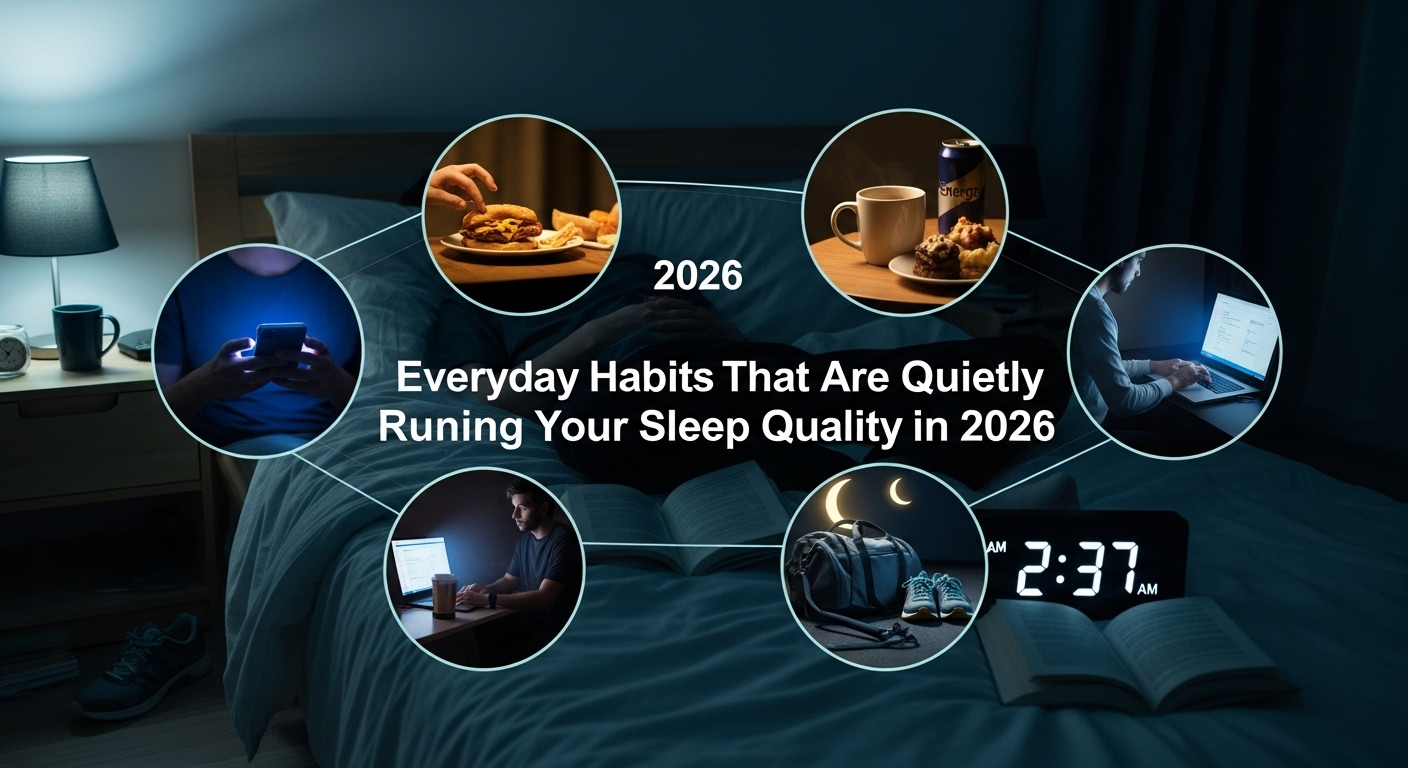
Everyday Habits That Are Quietly Ruining Your Sleep Quality in 2026
You spend eight hours in bed and still wake up exhausted. The problem usually isn’t how long you sleep. It’s what you do before, during, and after that determines whether your rest actually restores you.
These common daily habits are silently destroying your sleep quality, and most people have no idea they’re doing it.
The Caffeine Habit That Follows You Into the Night
Most people know caffeine keeps them awake. What they don’t know is how long it actually stays in your system.
Sleep expert Dr. Sarah Mednick warns that caffeine can linger in your body for up to 12 hours after consumption. That afternoon coffee at 2pm is still affecting your brain chemistry at midnight.
When Should You Stop Drinking Coffee
The simple answer is before noon. Cutting caffeine entirely after lunchtime gives your body enough time to process it before bed.
Even if you feel like you’ve built up a tolerance, the hormone disruption is still happening beneath the surface whether you feel it or not.
Sitting All Day Is Wrecking Your Sleep
A sedentary lifestyle doesn’t just affect your physical health. It directly undermines your ability to fall asleep at night by depriving your body of the natural tiredness that comes from movement.
Dr. Michael Grandner from the University of Arizona explains that exercise regulates circadian rhythms and encourages the release of melatonin, the hormone your body needs to initiate sleep.
How Much Exercise Is Actually Needed
You don’t need to run a marathon. 30 minutes of moderate movement each day, whether walking, cycling, or yoga, is enough to make a meaningful difference to your sleep.
The one rule is to avoid intense workouts within two hours of bedtime. Late exercise can be stimulating rather than calming and push your sleep onset back.
Your Phone Is the Biggest Sleep Thief in Your Bedroom
The blue light emitted by phones, tablets, and televisions suppresses melatonin production directly. Every scroll session before bed is chemically delaying your ability to fall asleep.
Beyond the light itself, the mental stimulation of social media and news keeps your brain in an alert state when it should be winding down for rest.
What to Do Instead of Scrolling Before Bed
Replace screen time with genuinely calming activities in the hour before sleep. Reading a physical book, taking a warm bath, or practicing light stretching all help transition your nervous system toward rest.
A consistent bedtime and wake time matters just as much. Your brain responds to routine, and irregular schedules confuse the internal clock that governs your sleep cycle.
Stress Is Keeping You Awake at 3am
Chronic stress triggers the release of cortisol, a hormone that signals alertness and danger to your nervous system. It’s the opposite of what you need when trying to sleep.
Dr. Rajkumar Dasgupta, a sleep medicine specialist at the University of Southern California, calls it a vicious cycle. Poor sleep worsens stress, and elevated stress makes sleep harder to achieve the following night.
Breaking the Stress and Sleep Cycle
The most effective tools for managing stress-related sleep disruption are consistent daily exercise, deep breathing techniques, and mindfulness practices like meditation.
These aren’t just relaxation tricks. They physically lower cortisol levels and give your nervous system the signal it needs to shift out of high-alert mode before bed.
Your Bedroom Environment Matters More Than You Think
Temperature, light, noise, and clutter all directly influence your ability to fall and stay asleep. Most people underestimate how much the physical space around them shapes their sleep quality.
Dr. Dasgupta describes the ideal bedroom as a sanctuary, cool, dark, quiet, and completely free of electronic devices that emit light or create mental stimulation. <p style=”text-align:center;”>Read more: <a href=”https://wizemind.com.au/”>https://wizemind.com.au/</a></p>
Simple Bedroom Fixes That Make a Real Difference
Blackout curtains are one of the highest-return investments you can make for sleep quality. Even small amounts of light can interrupt the deeper stages of your sleep cycle.
A white noise machine or fan can mask disruptive sounds without requiring a perfectly silent environment, which is especially useful in urban areas or shared households.
What You Do During the Day Affects Tonight’s Sleep
Daytime habits have a direct carry-over effect on nighttime rest that most people never consider. What happens between waking and sleeping shapes how well your body recovers overnight.
Dr. Mednick says that natural light exposure, social interaction, and physical movement during the day all play a crucial role in calibrating the body clock that governs sleep timing.
The Daytime Habits Worth Building Right Now
A lunchtime walk outside accomplishes three things at once. It gives you movement, natural light exposure, and a mental break from screen-based work, all of which support better sleep that night.
Even brief social interaction during the day has measurable effects on sleep quality. Isolation and disconnection are linked to disrupted circadian rhythms and lighter, less restorative rest.
Sleep Habit Comparison: What Helps vs What Hurts
| Habit | Impact on Sleep | Better Alternative |
|---|---|---|
| Caffeine after midday | Delays sleep onset by hours | Cut off caffeine before noon |
| Sedentary all day | Reduces natural tiredness | 30 min moderate exercise daily |
| Phone use before bed | Suppresses melatonin production | Read or stretch instead |
| High stress unmanaged | Elevates cortisol at night | Breathing, meditation, exercise |
| Bright or cluttered bedroom | Disrupts sleep cycle | Dark, cool, quiet environment |
| No natural light during day | Disrupts circadian rhythm | Walk outside during daylight |
Conclusion: Small Changes, Dramatically Better Sleep
Better sleep is not about willpower or trying harder at night. It’s about what you build into your day long before your head hits the pillow.
Caffeine timing, movement, screen habits, stress management, and your bedroom environment are all levers you can adjust starting today. No prescription required.
The nights you’ve been losing to restlessness aren’t inevitable. They’re the result of habits that can be changed, one at a time, at whatever pace works for you.
Frequently Asked Questions
How long does caffeine actually affect sleep? Caffeine can remain active in your system for up to 12 hours. A coffee consumed at 2pm can still be disrupting your sleep chemistry well past midnight, even if you don’t feel obviously wired.
Does exercise really improve sleep quality? Yes, consistently. Regular moderate exercise helps regulate circadian rhythms, lowers cortisol, and encourages melatonin production. Even 30 minutes of walking daily produces measurable improvements in sleep onset and depth.
Why does phone use before bed make sleep worse? The blue light from screens suppresses melatonin production and delays sleep onset. The mental stimulation from social media and news also keeps the brain in an alert state when it should be calming down.
What is the ideal bedroom temperature for sleep? Most sleep experts recommend a room temperature between 16 and 19 degrees Celsius. A cooler environment supports the natural drop in core body temperature that the body needs to enter deep sleep.
Can stress alone cause chronic insomnia? Yes. Elevated cortisol from chronic stress keeps the nervous system in a state of alertness that is biologically incompatible with restful sleep. Without addressing the stress directly, sleep problems tend to persist and worsen over time.
How important is a consistent sleep schedule? Extremely important. Your body’s internal clock responds to regularity. Going to bed and waking at the same time each day, including weekends, is one of the most effective non-medical interventions for improving sleep quality.
What is the fastest change someone can make tonight to sleep better? Put your phone in another room before bed. Removing the temptation and the light source in one step is the single highest-impact immediate change most people can make without any other preparation.
Key Points
- Caffeine stays active in your body for up to 12 hours after drinking it
- Cutting caffeine before noon significantly reduces its impact on nighttime sleep
- A sedentary lifestyle reduces the natural physical tiredness needed for easy sleep onset
- 30 minutes of moderate daily exercise is enough to improve sleep quality measurably
- Blue light from phones and screens directly suppresses melatonin production before bed
- Mental stimulation from social media keeps the brain alert when it needs to wind down
- Replacing screen time with reading or stretching before bed eases the transition to sleep
- Consistent sleep and wake times help calibrate the body’s internal clock
- Chronic stress elevates cortisol which biologically interferes with falling and staying asleep
- Deep breathing and meditation physically lower cortisol levels before sleep
- Bedroom temperature, light levels, and noise all directly affect sleep depth and quality
- Blackout curtains are among the highest-return investments for better sleep
- Natural light exposure during the day helps regulate the circadian rhythm for nighttime sleep
- Brief social interaction during the day is linked to better sleep quality that night
- A lunchtime walk outdoors addresses movement, light exposure, and mental reset simultaneously
- Cluttered or electronically active bedrooms create subconscious mental stimulation at night
- Poor sleep worsens stress, and worsened stress makes the next night’s sleep harder
- There is no single sleep solution that works for everyone, personal adjustment is necessary
- Small consistent habit changes compound into significantly better rest over time
- Better sleep begins with what you do during the day, not just at night
Read more: https://wizemind.com.au/