Eclipse of the Century: Nearly Six Full Minutes of Darkness in 2186 and the Best Places to Watch
On July 16, 2186, the world will witness one of the most extraordinary celestial events in recorded human history. A total solar eclipse lasting nearly six full minutes will sweep across a narrow path from the Pacific Ocean through Mexico and deep into Central America.
This is not just another eclipse. At five minutes and 54 seconds of totality, it will rank among the longest solar eclipses of the entire 22nd century, and planning for it is already underway.
When Exactly Will It Happen
The eclipse begins at approximately 2:30 PM UTC on July 16, 2186. The moment of full totality, when the moon completely blocks the sun, arrives around 2:36 PM UTC.
Five minutes and 54 seconds of complete darkness in the middle of the afternoon is a duration that most people alive today will find almost impossible to imagine. Typical total solar eclipses last between two and three minutes at best.
Where the Path of Totality Falls
The path of totality stretches from the Pacific Ocean, through Mexico, and into Central America. Only those positioned within this narrow corridor will experience the full effect of the moon completely blocking the sun.
Outside this path, observers will see only a partial eclipse where the moon covers a portion of the sun but never fully extinguishes its light. The difference between a partial and total eclipse is not gradual. It is the difference between an interesting event and a life-defining one.
Best Viewing Locations for the 2186 Eclipse
| Location | Country | Position in Path |
|---|---|---|
| Juchitán de Zaragoza | Mexico, Oaxaca | Centre of totality path |
| Oaxaca state generally | Mexico | Prime viewing zone |
| Chiapas state | Mexico | Within totality corridor |
| Tabasco state | Mexico | Within totality corridor |
| Parts of Guatemala | Guatemala | Within totality path |
| Parts of Honduras | Honduras | Within totality path |
| Parts of El Salvador | El Salvador | Within totality path |
Juchitán de Zaragoza in Oaxaca has been identified by astronomers as one of the single most promising viewing sites, positioned directly in the centre of the path of totality with historically favourable weather conditions for July.
How Wide Is the Path of Totality
The path of totality is a narrow ribbon of land spanning just 115 miles, or 185 kilometres, at its widest point. That sounds substantial on a map, but in practical terms it means that being even slightly outside the corridor means missing the full experience entirely.
Precise positioning matters enormously for eclipse viewing of this duration. Observers who travel to the region but settle outside the totality corridor will see a dramatic partial eclipse but will miss the corona, the sudden temperature drop, the appearance of stars in daylight, and the eerie silence that animals and humans alike experience during full totality.
What Makes This Eclipse Scientifically Significant
Solar eclipses provide scientists with a rare opportunity to study the sun’s corona, the outer atmosphere that is normally invisible against the brightness of the solar disc. A nearly six-minute window is extraordinarily generous by historical standards.
Researchers plan to use the 2186 eclipse to conduct studies impossible at any other time, from detailed corona mapping to experiments examining how human perception and cognition respond to sudden, total darkness in the middle of the day. The duration alone makes the scientific value of this event exceptional.
Read More: https://wizemind.com.au/
The Historical and Cultural Weight of This Event
Solar eclipses have held profound significance across every human civilisation that has ever recorded them. They have triggered religious ceremonies, shaped calendars, ended battles, and inspired art across thousands of years of human history.
The 2186 eclipse carries that same weight, amplified by its extraordinary duration. Communities along the path of totality are already beginning to position themselves as destinations for what will inevitably become one of the largest organised gatherings of eclipse chasers in history.
What the Experience of Totality Actually Feels Like
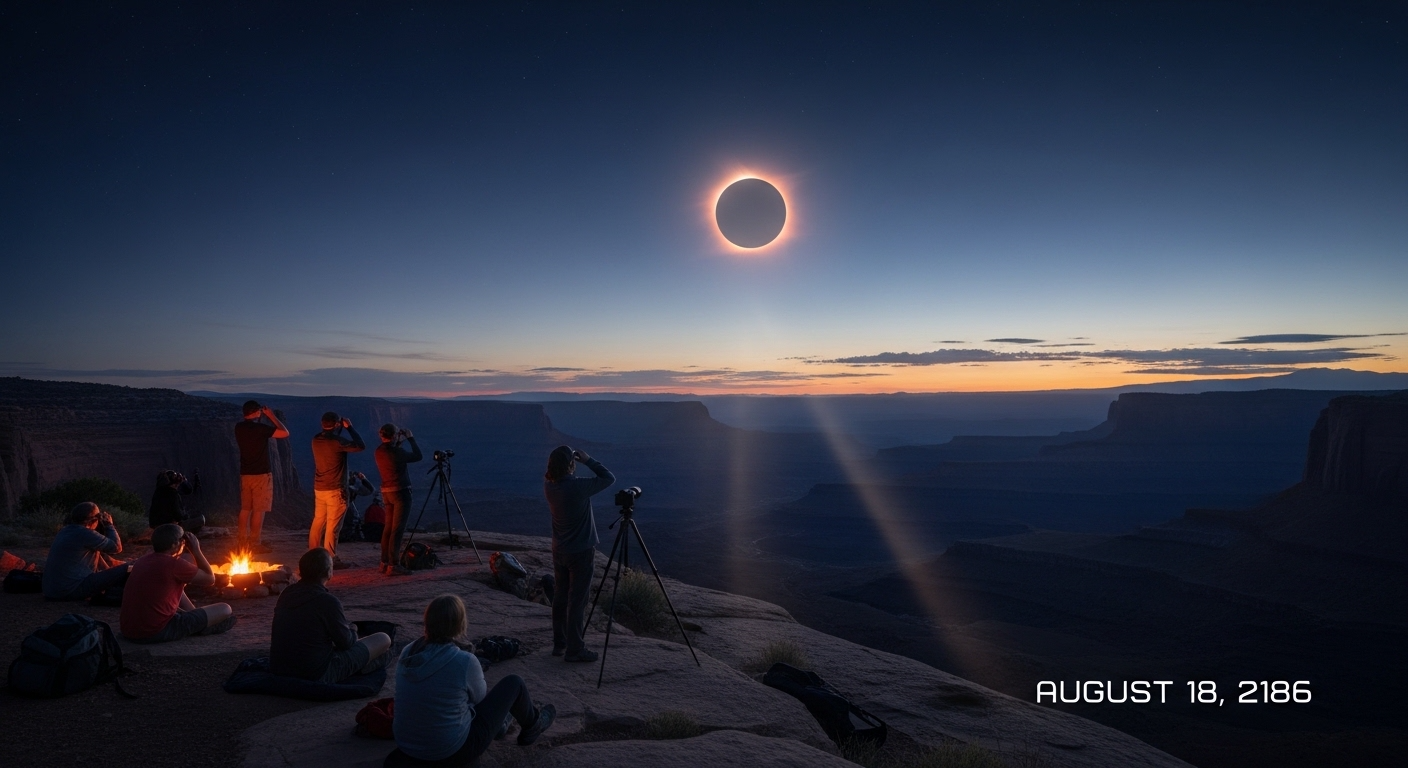
During full totality, the sky darkens to a deep twilight blue, stars and planets become visible, and the temperature drops noticeably within seconds. Animals behave as if night has suddenly fallen. Birds return to roost. Insects begin their evening sounds.
The solar corona appears around the blacked-out disc of the moon, a shimmering halo of plasma that is never visible under any other natural circumstance. For nearly six minutes in 2186, everyone within the path of totality will see something that no photograph or video has ever fully captured.
Planning and Infrastructure for Millions of Visitors
Local authorities and event organisers along the path of totality are already beginning long-range infrastructure planning to accommodate what will almost certainly be a massive influx of visitors. Accommodation, transport, viewing areas, and safety logistics all require years of preparation at this scale.
Booking travel and accommodation extremely early is the universal advice from experts who have studied crowd dynamics at major eclipse events. The 2024 North American eclipse drew millions of visitors and still left many without adequate access to the totality corridor. An eclipse of this duration will draw far more.
Eye Safety and Viewing Equipment
Looking directly at the sun during the partial phases of any eclipse without certified protection causes permanent eye damage. Specialised eclipse glasses meeting the ISO 12312-2 international safety standard are the minimum required equipment for safe viewing of any phase before and after totality.
During the brief window of full totality, it is safe to view the corona directly with the naked eye. But the moment any portion of the sun’s disc reappears, protection must be back in place immediately. For an eclipse lasting nearly six minutes, that direct viewing window is generous but still requires care at both edges.
Capturing the Eclipse on Camera and in Art
Professional astronomers and amateur astrophotographers will bring specialised equipment to the 2186 eclipse path in enormous numbers. The challenge is not just technical. It is capturing a duration and quality of light that has never been photographed under these exact conditions before.
Artists, poets, and storytellers will also be drawn to this event in ways that go beyond the scientific. An eclipse of this duration creates an experience that is genuinely spiritual for many observers, and the cultural output inspired by the 2186 event is likely to shape creative work for decades afterward.
The Legacy This Eclipse Will Leave
Communities along the path of totality will carry the memory of this event across generations. The towns that position themselves well, prepare adequately, and host observers effectively will become permanently associated with one of the most remarkable natural events of the 22nd century.
For the broader world, the 2186 eclipse will serve as a reminder of the scale and beauty of the cosmos and of how small and fortunate we are to be positioned on a planet where the sun and moon appear almost exactly the same size in the sky. That geometric coincidence, unique in our solar system, is what makes total solar eclipses possible at all.
Frequently Asked Questions
When exactly will the 2186 total solar eclipse occur? The eclipse takes place on July 16, 2186. The moment of full totality, when the moon completely covers the sun, is expected around 2:36 PM UTC.
How long will totality actually last? Five minutes and 54 seconds, making it one of the longest total solar eclipses of the 22nd century. Most total solar eclipses last between two and three minutes at maximum.
Where are the best places in the world to watch this eclipse? The best locations are within the path of totality, which runs from the Pacific Ocean through southern Mexican states including Oaxaca, Chiapas, and Tabasco, and into parts of Guatemala, Honduras, and El Salvador.
How wide is the path of totality for this eclipse? 115 miles, or 185 kilometres, at its widest point. Being outside this corridor means experiencing only a partial eclipse, which is a fundamentally different and far less dramatic event.
What is the single best viewing location identified so far? Juchitán de Zaragoza in the Mexican state of Oaxaca is positioned directly in the centre of the totality path and has been highlighted by astronomers as one of the prime viewing sites based on position and historical weather patterns.
What preparations are communities making for this event? Local authorities are planning accommodation, transport routes, dedicated viewing areas, and crowd safety logistics years in advance. The scale of visitor numbers expected makes this one of the most complex event-planning challenges any region along the path will face.
How do I safely view the eclipse? Certified eclipse glasses meeting ISO 12312-2 standards are essential for all partial phases. During full totality only, direct naked-eye viewing is safe. Protection must be back in place the moment totality ends.
What scientific research will be conducted during the eclipse? Scientists plan to study the solar corona, atmospheric changes during totality, and aspects of human perception and cognition under sudden darkness. The nearly six-minute window provides an exceptionally long period for data collection compared to most eclipses.
Why is this eclipse considered scientifically exceptional? Duration is the primary factor. Longer totality means more time to study the corona and collect atmospheric data. A nearly six-minute window is extremely rare and provides research opportunities that shorter eclipses simply cannot match.
How will the 2186 eclipse be remembered historically? It is expected to become a landmark in human history, inspiring scientific advances, major artistic works, and a generational memory for communities along the path. Events of this rarity and duration leave lasting cultural impressions that persist well beyond those who witnessed them directly.
Key Points to Remember
- The eclipse occurs on July 16, 2186, with full totality beginning around 2:36 PM UTC and lasting five minutes and 54 seconds.
- The path of totality runs from the Pacific Ocean through southern Mexico and into Central America, with Oaxaca state at the prime viewing centre.
- The totality corridor is only 115 miles wide at its broadest point, meaning precise positioning is essential to experience the full event.
- Juchitán de Zaragoza in Oaxaca has been identified as one of the single best viewing locations based on its central position in the path and historical weather conditions.
- Scientists will use the extended totality window to study the solar corona and conduct atmospheric and human perception research that shorter eclipses cannot support.
- Accommodation and travel along the path should be booked as early as possible. Demand for this event will be extraordinary given its historical rarity.
- Certified eclipse glasses are essential for all partial phases before and after totality. Direct naked-eye viewing is safe only during the full totality window itself.
- The 2186 eclipse is expected to become one of the most culturally and scientifically significant natural events of the 22nd century, leaving a legacy that shapes communities and creative work for decades.
Conclusion
The 2186 total solar eclipse is not an event to miss if geography and circumstance allow. Nearly six full minutes of totality is a duration that places this eclipse in a category almost entirely its own in the modern astronomical record.
Begin planning early, position yourself within the path of totality, and prepare for an experience that will be described and remembered long after every person present has gone. The cosmos does not offer opportunities like this often.
For those who make the journey to Oaxaca, Chiapas, or the Central American corridor on that July afternoon in 2186, the sky will go dark in the middle of the day, the stars will appear, and the sun’s corona will blaze in the silence. It will be worth every effort it took to get there.