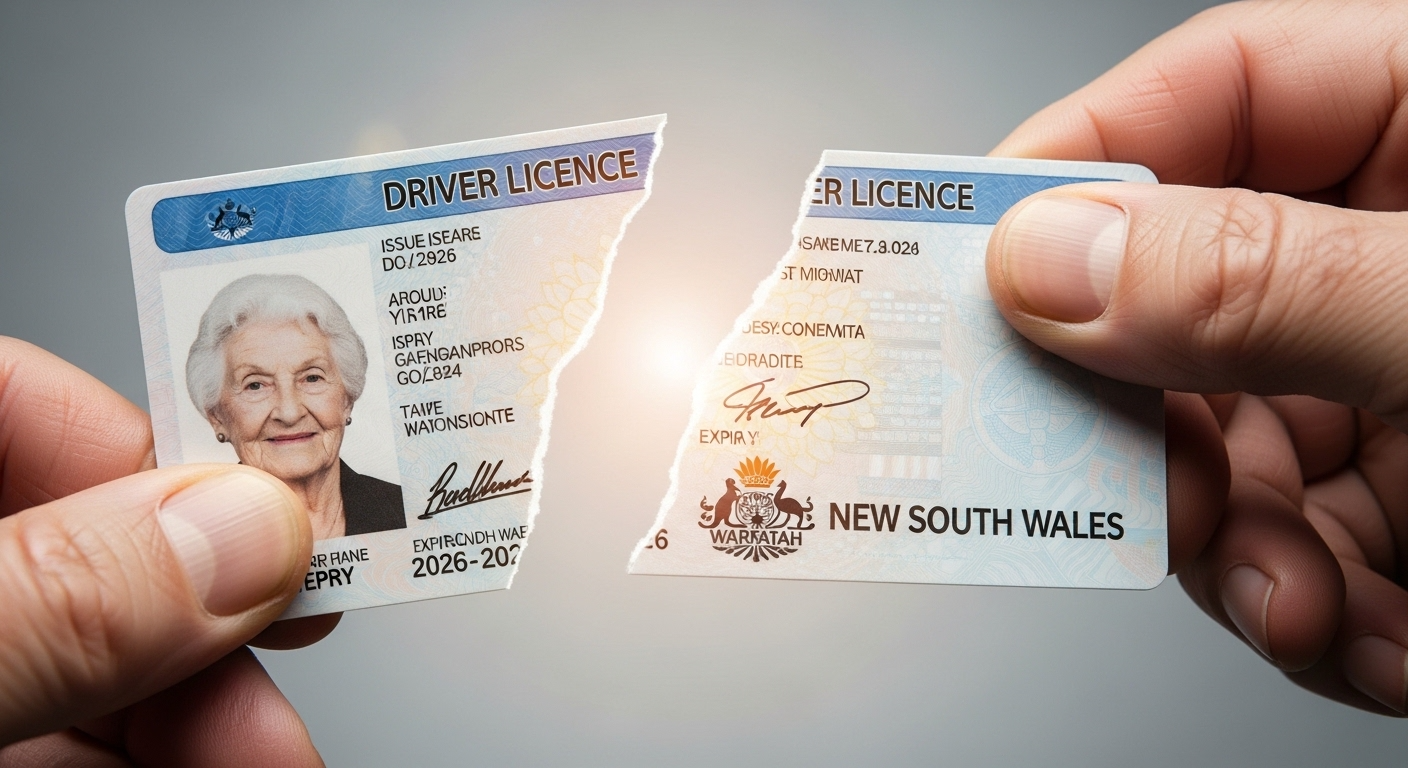
Driving Licence Withdrawal for Senior Motorists: What’s Coming, Who’s Affected, and What It Means for Older Australians in 2026
There is a moment that many adult children dread — sitting down with an ageing parent and having the conversation about the car keys. It is uncomfortable, emotional, and deeply personal. Now governments around the world are starting to have that same conversation at a national level, and the debate is getting louder by the month.
Across Europe, Asia, and increasingly in Australia, lawmakers are seriously discussing mandatory driving licence withdrawals for senior motorists once they reach a certain age. The trigger is not cruelty. It is data. Road safety statistics consistently show that drivers over 70 face a measurably higher risk of being involved in fatal crashes — not because they are reckless, but because the body simply changes. Vision narrows. Reaction times slow. Cognitive processing becomes less reliable under pressure.
But knowing something is statistically true and building a fair policy around it are two very different things. And that gap is where one of the most sensitive debates in modern road safety is now playing out.
Why Governments Are Finally Taking Senior Driving Seriously
For years, the issue of elderly drivers and road safety was handled carefully and quietly. Nobody wanted to be the politician seen taking car keys away from grandparents. The political cost felt too high, and the problem — while real — was easy to defer.
That is changing. The baby boomer generation is now firmly in its seventies and eighties, which means the sheer number of senior drivers on the road has grown substantially. Research has found that drivers over 70 are up to four times more likely to be involved in fatal crashes compared to middle-aged motorists. When those numbers are applied to a growing elderly population, the projected impact on road fatalities becomes impossible for governments to ignore.
There is also a broader context. As populations age in countries like Australia, Japan, Germany, and the United Kingdom, health systems and transport planners are being forced to think seriously about what mobility looks like for people in the final decades of their lives. The driving question is just one part of that, but it is one of the most visible and politically charged parts.
What the Research Actually Says About Older Drivers and Road Safety
Before diving into the policy debate, it is worth being clear about what the evidence does and does not say.
The research is consistent on one point: the risk of fatal crash involvement rises significantly after age 70, and rises more steeply after 80. The reasons include reduced peripheral vision, slower reaction times, decreased ability to judge speed and distance, and a higher likelihood of being on medication that impairs alertness.
However, the research also shows something important that often gets lost in the headlines: older drivers are generally aware of their limitations. Many self-regulate — avoiding driving at night, staying off motorways, not driving in heavy rain. This means the raw crash statistics do not fully capture the picture, because many seniors have already quietly adapted their behaviour before any formal restriction is imposed.
The problem is that self-regulation is inconsistent. Some seniors adjust well. Others, particularly those experiencing early cognitive decline, may not have the self-awareness to recognise when their driving has become genuinely dangerous. This is where the policy challenge becomes acute.
The Countries Already Moving Towards Mandatory Restrictions
Australia is not operating in a vacuum on this issue. Several countries have already moved ahead with formal policies targeting senior motorists, and their experiences offer both lessons and warnings.
Japan has perhaps the most structured approach in the world. Drivers over 75 are required to undergo biennial cognitive and physical assessments. Those who show signs of cognitive decline can have their licences suspended or cancelled. Japan introduced these measures in response to a series of high-profile accidents involving elderly drivers, and public support for the policy — while not universal — has been broadly maintained.
Germany requires seniors to renew their licences every three years after a certain age, with mandatory medical evaluations becoming compulsory after 75. The process is more administrative than punitive, but the underlying principle is the same: regular verification that a driver is still fit for the road.
The United Kingdom has introduced increased self-reporting requirements for older drivers and created a category of enhanced licences for those who pass additional assessments. It stops short of mandatory age-based withdrawal but is moving in that direction as the political pressure builds.
Australia currently handles senior driving at a state and territory level, with varying approaches across jurisdictions. Some states require annual medical checks from age 75 or 80, while others rely heavily on GP referrals and self-reporting. There is no national standard, and advocates on both sides are pushing for one.
The Human Cost of Getting This Wrong
The statistics matter. But so do the people behind them.
For an elderly person living alone in a regional town three hours from the nearest city, a driving licence is not a luxury. It is the difference between independence and complete dependence. It is the ability to get to a medical appointment, buy groceries, visit a friend, or simply feel like a functioning member of society rather than someone waiting to be looked after.
Research in gerontology — the study of ageing — has consistently shown that loss of driving ability is one of the most significant triggers for depression, social isolation, and accelerated physical decline in older adults. It is not simply an inconvenience. For many people, it marks the beginning of a profound loss of self.
This is why blanket age-based licence withdrawal policies are viewed by many experts as a blunt and ultimately counterproductive instrument. Taking the licence away from a perfectly capable 78-year-old who drives carefully in daylight hours to protect against the risk posed by a cognitively impaired 74-year-old achieves little except causing harm to the former.
The Equity Problem That Policymakers Are Ignoring
There is another dimension to this debate that does not get nearly enough attention: the question of who bears the burden when licences are withdrawn.
Wealthy seniors in major cities have options. They can afford rideshare services, hire help for errands, and access public transport systems that are actually functional. The loss of a licence, while unwelcome, is manageable.
For lower-income seniors — particularly those in rural and regional areas — the situation is categorically different. Public transport in many parts of regional Australia is either minimal or non-existent. Rideshare services do not operate in small towns. Taxis can cost more per month than some people’s entire discretionary budget.
Any mandatory licence withdrawal policy that does not simultaneously address this infrastructure gap risks creating a two-tiered system where the freedom to remain mobile in old age becomes a privilege of wealth rather than a universal right.
This is not a hypothetical concern. It is already happening informally, as elderly people in well-serviced urban areas manage the transition out of driving far more successfully than those in underserved communities.
What a Fair Policy Would Actually Look Like
The good news is that most serious policy thinkers are not arguing for simple age-based withdrawal. The direction the evidence points is towards individualised assessment — a system that evaluates each driver on their actual capabilities rather than their birth year.
Under a fair model, senior drivers above a certain age threshold would undergo regular assessments covering vision, reaction time, and cognitive function. These would be conducted by qualified health professionals, not just a GP ticking boxes. The outcomes would not be binary — licence or no licence — but graduated. A driver who is fine in familiar local conditions but struggles at night or on motorways might receive a restricted licence that reflects those specific limitations.
This kind of nuanced approach exists in parts of Australia already but is applied inconsistently and often depends more on whether someone has a GP who raises the issue than on any systematic process.
A national framework would bring consistency. It would protect road safety more effectively by catching the genuinely impaired drivers who currently fall through the cracks. And it would protect the independence of those who are still safe to drive but would otherwise be swept up in a blanket age-based restriction.
What Needs to Happen Before Any Restrictions Are Introduced
Introducing tougher driving restrictions for seniors without addressing the broader support infrastructure would be irresponsible. Before any mandatory policy is rolled out, several things need to be in place.
Alternative transport needs to actually exist. On-demand community transport services, subsidised rideshare schemes for seniors, and improved public transit in regional areas are not optional extras — they are prerequisites for any ethical restriction policy.
Assessment processes need to be funded and accessible. If every driver over 75 needs a cognitive and physical evaluation, there needs to be enough healthcare capacity to provide those evaluations without turning it into a bureaucratic nightmare that punishes seniors in areas with limited medical services.
Appeals and review mechanisms need to be robust. Licence withdrawal decisions must be subject to meaningful review, with proper processes for seniors who believe their assessment was inaccurate or unfair.
And crucially, the conversation needs to be had openly. Seniors are not a problem to be managed. They are citizens with rights and decades of community contribution behind them. Any policy that treats them as simply a road safety liability rather than a population deserving of genuine support will fail — politically, practically, and morally.
Where Australia Stands Right Now
Australia does not currently have a national mandatory retirement age for drivers. What it has is a patchwork of state-based systems that produce inconsistent outcomes depending on where someone happens to live.
The federal pressure for a unified approach is growing, driven both by road safety advocates and by an ageing population that deserves clarity about what rules will apply to them as they get older.
The debate is no longer whether to address senior driving safety. That question has been settled by the data. The debate now is how to do it in a way that is fair, evidence-based, properly resourced, and genuinely respectful of the people it affects.
That is a harder question. But it is the right one to be asking.
Quick Facts
| Age risk threshold | Crash risk rises significantly after 70 |
| Japan policy | Mandatory assessment every 2 years after age 75 |
| Germany policy | Licence renewal every 3 years, medical checks after 75 |
| UK approach | Enhanced self-reporting and voluntary assessments |
| Australia | State-based rules, no national standard currently |
Frequently Asked Questions
At what age could driving licences be withdrawn in Australia? There is no single national rule currently. Most states require medical checks from age 75 to 80, but a national framework is under discussion. No automatic withdrawal age has been legislated at a federal level.
Is it fair to take a licence away based purely on age? Most experts argue it is not. The preference among road safety and health professionals is for individual assessment based on actual capability rather than age alone.
What happens to seniors in rural areas who lose their licence? This is one of the biggest unresolved challenges. In areas with limited public transport, licence withdrawal can lead to severe isolation. Advocates are pushing for alternative transport infrastructure to be funded before any restrictions are introduced.
Can a senior driver appeal a licence withdrawal decision? In most Australian states, yes. There are formal review processes, though they vary in accessibility and fairness across jurisdictions.
Do older drivers actually cause more accidents? The data shows older drivers have higher rates of fatal crash involvement per kilometre driven. However, many seniors self-regulate their driving, which means the real-world impact is more complex than raw statistics suggest.
What is the most common reason older drivers lose their licence? Medical conditions — particularly those affecting vision and cognitive function — are the most common grounds for licence cancellation or restriction in Australian seniors.