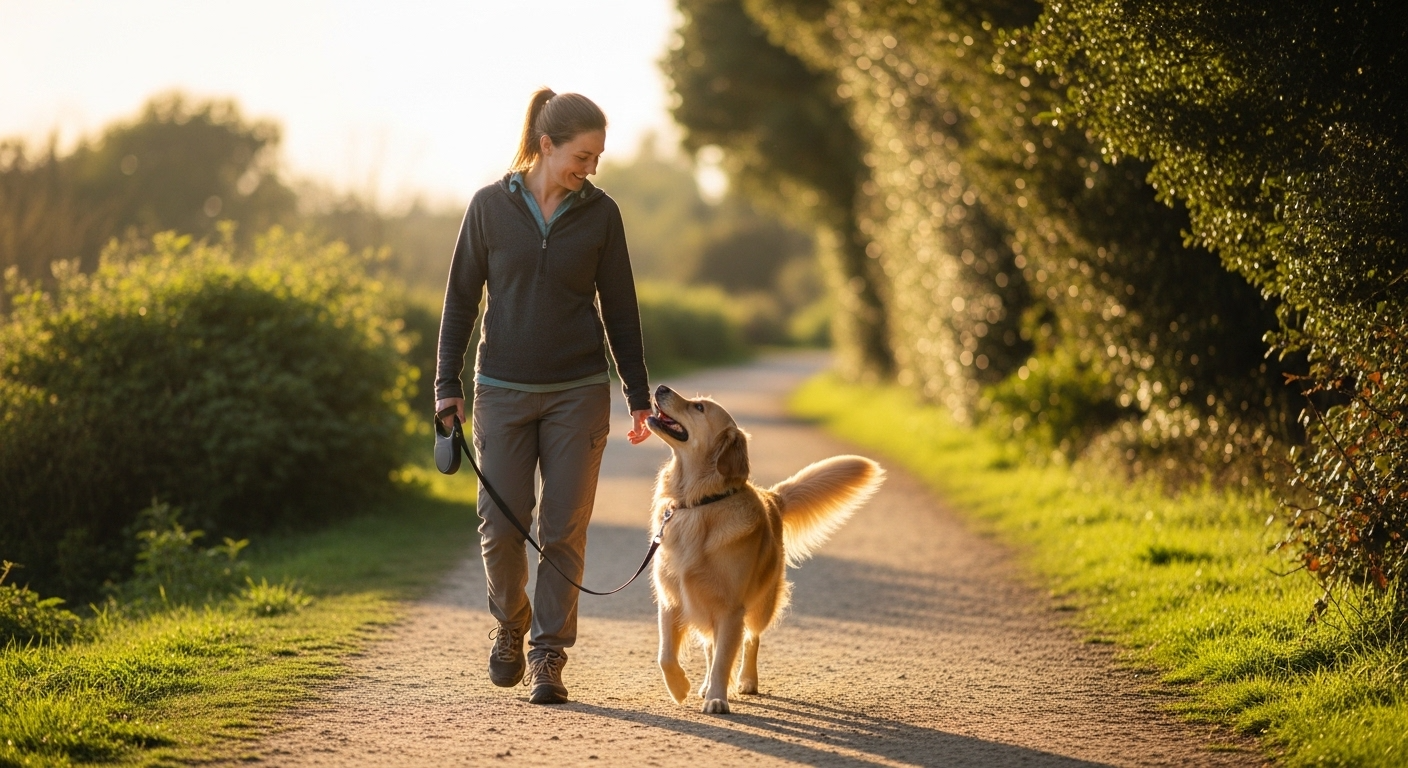
Dog Walks Are More Than Exercise: What Experts Want Every Owner to Know
Rushing Your Dog Through Walks Could Be Causing Hidden Stress
Many dog owners treat walks as a quick task to tick off the daily list. But behaviour experts are now warning that rushing through walks may be quietly harming your dog’s mental health.
A growing number of veterinary behaviourists and animal consultants are speaking out. They say the brisk, no-nonsense walk is one of the most overlooked sources of canine frustration today.
What the Experts Are Actually Saying
Dr. Sophia Yin, a respected veterinary behaviourist, puts it plainly. She says “walks are not just about exercise” but about mental stimulation, exploration, and letting a dog simply be a dog.
Animal behaviour consultant Theresa Fisher agrees with this view entirely. She explains that sniffing is how dogs gather information about their world and that limiting it creates real frustration.
“The power of the nose is immense for dogs. Sniffing is how they gather information about their environment and interact with the world. Limiting this can be incredibly frustrating for them.” — Theresa Fisher, Animal Behaviour Consultant
Why the Brisk Walk Falls Short
A fast-paced march may give your dog physical movement, but it leaves the mind completely unstimulated. Mental stimulation for dogs is just as important as the physical benefits of getting outside each day.
When dogs are denied the chance to sniff, explore, and make small choices, frustration builds. This frustration does not simply disappear once you get home, and it often spills into problem behaviour indoors.
“Dogs that are constantly rushed through walks and denied the opportunity to engage in natural behaviours like sniffing and exploration can become frustrated and understandably resentful.” — Dr. Sophia Yin, Veterinary Behaviourist
The Science Behind Sniffing and Dog Brain Health
Dogs process the world primarily through their sense of smell, not their eyesight. A dog’s nose is estimated to be up to 100,000 times more sensitive than a human’s, making sniffing a deeply cognitive activity.
When a dog stops to sniff a patch of grass, it is reading a full story about who passed by. Denying this experience repeatedly is similar to handing someone a book and never letting them open it.
Behaviour experts describe this as a form of sensory deprivation that accumulates over time. Dogs begin to feel what researchers call learned helplessness, a state where they stop expecting any control over their environment.
Anticipation and Autonomy Matter More Than Most Owners Realise
Theresa Fisher points to two words that every dog owner should understand: anticipation and autonomy. When dogs cannot predict moments of freedom or choice during a walk, anxiety tends to quietly build.
Autonomy means allowing your dog to occasionally choose the direction or the pace. These small acts of giving your dog a voice during walks can significantly reduce stress-related behaviour at home.
“Dogs thrive on the ability to make choices and engage with their environment. When we deny them this, we’re denying them the opportunity to experience the world in a way that is natural and fulfilling for them.” — Dr. Sophia Yin, Veterinary Behaviourist
Common Behavioural Problems Linked to Poor Walks
Owners often wonder why their dog barks excessively, pulls on the lead, or seems restless at night. In many cases, the answer traces directly back to unmet needs during daily walks.
Aggression towards other dogs and people can also develop when a dog feels constantly restricted. Experts say leash reactivity is frequently a symptom of a dog that has never been allowed to decompress properly.
Destructive behaviour at home, anxious pacing, and excessive whining are also common signs. These are not personality flaws but signals that the dog’s cognitive needs are going unmet on a daily basis.
What Better Walks Actually Look Like in Practice
The good news is that improving your dog’s walk does not require extra hours in your day. Small, deliberate changes in how you approach each outing can produce noticeable results within days.
Allow dedicated sniff time during at least one walk each day, even if just for five to ten minutes. Let your dog lead the pace for short stretches and resist the urge to pull them away from interesting scents.
Varying your route regularly also keeps the experience mentally engaging for your dog. New smells, new surfaces, and new sounds all contribute to a richer and more satisfying walk.
How to Adjust Walks Around a Busy Australian Lifestyle
Most Australians juggle work, family, and long commutes, and dog walks often get squeezed into whatever time is left. But experts suggest that even one quality walk per day can offset the stress caused by quicker outings.
A morning walk does not need to slow your entire routine if you plan it with purpose. Reserve ten minutes at the end of the walk for free sniffing time rather than rushing straight back inside.
Lunchtime or midday walks are actually ideal for slower, more exploratory outings. Dogs walked at midday in quieter neighbourhoods tend to show calmer evening behaviour according to behaviour specialists.
Incorporating Training Into Your Dog Walks
Walks are one of the most underused opportunities for reinforcing obedience and building trust. Short, reward-based training moments during a walk strengthen your bond without adding time to your schedule.
Practice a sit at intersections or a short heel command near distractions. Positive reinforcement during walks makes your dog more attentive and engaged throughout the entire outing.
Training during walks also gives your dog a mental workout that physical movement alone cannot provide. A dog that has been asked to think, respond, and be rewarded will arrive home genuinely satisfied and calm.
The Long-Term Payoff of Rethinking Your Walking Routine
Dogs that receive walks tailored to their emotional and cognitive needs show measurable improvements at home. Owners consistently report less barking, less destructiveness, and a calmer overall temperament when walks improve.
The bond between owner and dog also deepens when walks become a shared experience rather than a chore. Trust is built on a lead just as much as it is built through play or training at home.
Over weeks and months, the cumulative effect of better walks creates a fundamentally happier and more balanced dog. That calm, connected animal is exactly what most owners hoped for when they first brought a dog home.
Frequently Asked Questions
How long should a dog walk be each day? Most adult dogs need between 30 and 60 minutes of walking daily, though high-energy breeds may need up to two hours.
Why does my dog pull on the lead constantly? Lead pulling is often linked to frustration and under-stimulation rather than disobedience or lack of training.
Is sniffing during walks actually important? Yes. Sniffing provides critical mental stimulation and helps dogs decompress, reducing anxiety and stress levels.
Can short walks still be good walks? Absolutely. A focused 20-minute walk with sniff time and one training moment can be more beneficial than a rushed 45-minute march.
What signs show my dog is enjoying the walk? A relaxed tail, loose body posture, engaged sniffing, and a willingness to keep moving are all positive signs.
Key Points to Remember
- Sniffing is not a distraction during walks but a fundamental cognitive need for dogs.
- Denying autonomy and choice during walks can lead to anxiety, frustration, and behavioural problems.
- At least one walk per day should include dedicated free exploration time for your dog.
- Short training moments during walks build trust and provide essential mental stimulation.
- Better walks consistently lead to calmer, happier behaviour at home over time.
Conclusion
The daily dog walk is one of the most powerful tools an owner has for their pet’s wellbeing. Slowing down, allowing sniffing, and giving your dog some choice costs nothing but delivers enormous returns.
Experts are clear that the brisk march is not enough on its own. A dog that is mentally fulfilled on a walk is a dog that is easier to live with, more trusting, and genuinely content.
The shift does not need to be dramatic or time-consuming. It simply requires a small change in mindset every time you clip on that lead and head out the door.
Read more: https://wizemind.com.au