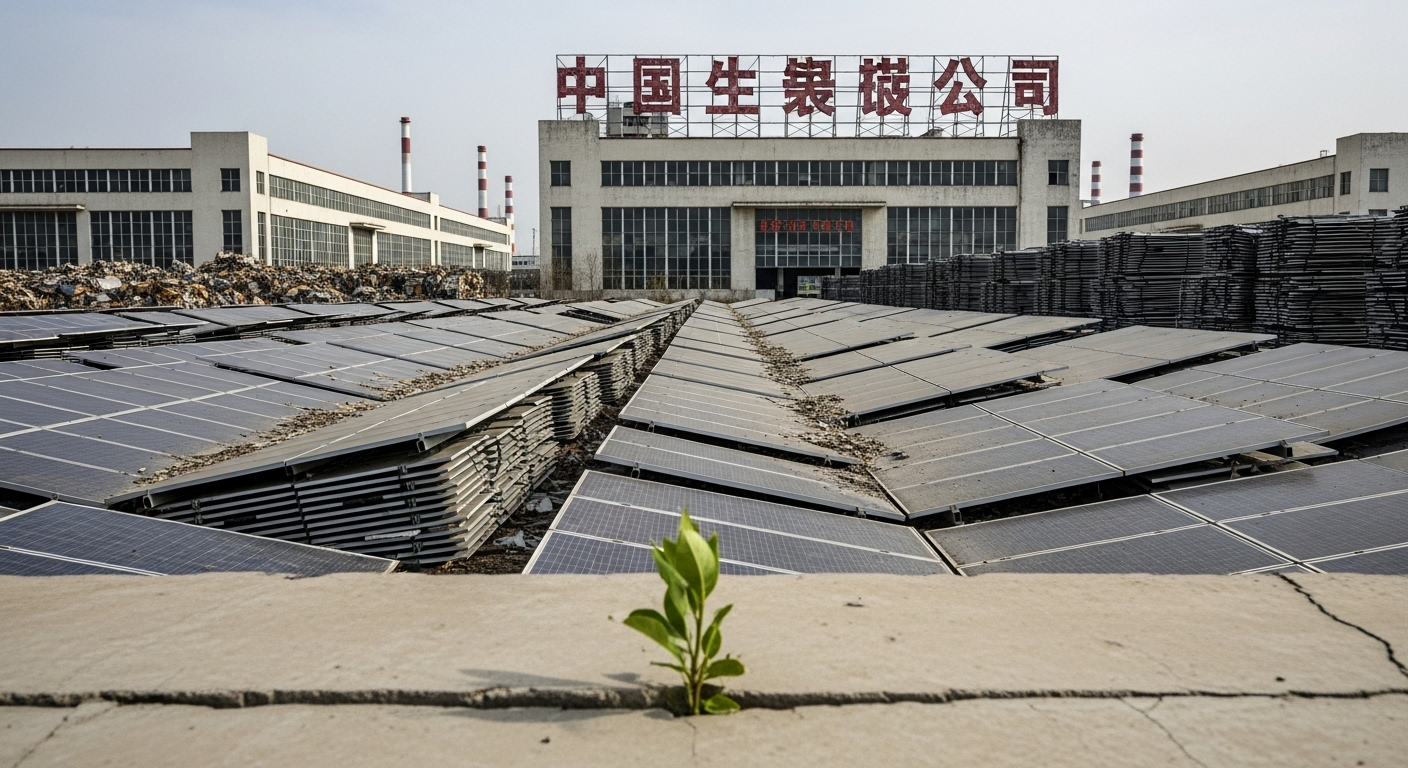
China Made Solar Panels So Cheap It Broke Its Own Industry — Now It Wants to Close Factories
China built the most dominant solar manufacturing industry the world has ever seen. It drove prices so low that solar power became one of the cheapest forms of electricity on the planet. And now, faced with the consequences of that very success, Beijing is considering something that would have seemed unthinkable just a few years ago: shutting down some of those factories to save the industry from itself.
It is a story of ambition, overcapacity, and unintended consequences that will shape the future of renewable energy for the entire world.
How China Became the Undisputed Solar Superpower
China’s rise in solar manufacturing did not happen by accident. It was the result of deliberate government strategy, massive subsidies, and a long-term commitment to dominating the renewable energy sector that began in earnest in the early 2000s.
Chinese manufacturers scaled up production at a pace the rest of the world simply could not match. They took full advantage of economies of scale, drove down production costs relentlessly, and rapidly captured the majority of global solar panel supply.
The results were staggering. The price of solar panels fell from around $4 per watt in 2008 to just 20 cents per watt by the mid-2020s. What was once an expensive technology accessible mainly to wealthy households and large corporations became affordable for almost anyone on the planet.
China’s Solar Dominance in Numbers
The scale of China’s manufacturing grip on the solar industry is difficult to fully appreciate without looking at the raw data.
| Year | China Production (GW) | Global Production (GW) | China’s Market Share |
|---|---|---|---|
| 2010 | 15.0 | 24.2 | 62% |
| 2015 | 43.5 | 59.0 | 74% |
| 2020 | 82.0 | 132.0 | 62% |
Even as China’s market share has fluctuated, the absolute volume of panels it produces has grown enormously. No other country comes close to matching this level of output, and that concentration of production capacity is precisely what has created the current crisis.
The Problem With Making Solar Too Cheap
Driving prices down to record lows was supposed to be a victory. In many ways it was. But it also created a serious and growing problem for the very industry that achieved it.
China’s massive production capacity led to a global oversupply of solar panels. With more panels available than the market could absorb at profitable prices, margins collapsed across the entire sector. Chinese manufacturers that had invested billions in expanding capacity suddenly found themselves unable to earn a return on those investments.
The consequences have been severe. Many solar companies in China have struggled to stay financially viable. Some have been forced into bankruptcy. The industry that was celebrated as a model of strategic industrial policy is now fighting for its own survival as a direct result of its own output.
Why China Is Now Considering Closing Factories
Faced with this situation, the Chinese government is evaluating a response that cuts against the instinct of any manufacturing-focused economy: deliberately reducing production capacity by closing some solar factories.
The logic is straightforward even if the decision is difficult. Oversupply is killing prices and destroying profitability. Removing capacity from the market could stabilize prices, restore margins, and give surviving manufacturers a path back to financial health.
The challenge is doing this without causing wider damage. A poorly managed reduction in Chinese solar output could disrupt global supply chains at a moment when the world is counting on affordable panels to accelerate the transition away from fossil fuels.
Read More: https://wizemind.com.au
What Global Experts Are Saying
The people who understand this industry most closely are not dismissing the seriousness of what China is facing. Their assessments reflect both the complexity of the problem and the scale of what is at stake.
Dr. Li Junfeng of China’s National Center for Climate Change Strategy described the situation as a critical juncture, noting that China must find a way to balance market dominance with long-term industry sustainability. Closing factories may be necessary, he argued, but will require careful planning to avoid disrupting the global supply chain.
Michael Liebreich, founder of Bloomberg New Energy Finance, framed it as a genuine balancing act between maintaining dominance and protecting domestic manufacturers from the consequences of the price war China itself started.
Dr. Fatih Birol, Executive Director of the International Energy Agency, captured the central tension clearly. China’s dominance has accelerated the global renewable transition while simultaneously creating economic and logistical challenges that now demand a coordinated response from policymakers worldwide.
What This Means for the Global Renewable Energy Transition
The rest of the world has built its renewable energy plans around the assumption that cheap Chinese solar panels will keep flowing. Utility-scale solar projects, rooftop installations, and national clean energy targets in dozens of countries all depend on affordable panel supply.
If China reduces production significantly, prices could rise and timelines for clean energy deployment could stretch out. Projects that were financially viable at current prices might no longer pencil out. The pace of the global shift away from coal and gas could slow at exactly the moment climate targets demand it accelerate.
On the other hand, a more financially stable Chinese solar industry could mean more reliable long-term supply, more investment in next-generation technology, and a sector capable of sustaining the production volumes the world will need over the coming decades.
The Wider Implications for Trade and Geopolitics
China’s solar dominance is not just an energy story. It is also a trade and geopolitical story that has been playing out in courtrooms, government ministries, and international negotiations for years.
The United States and European Union have both imposed tariffs on Chinese solar panels in an effort to protect their own domestic manufacturers from being undercut by Chinese prices. Those trade measures have had mixed results and have done little to change the fundamental reality of Chinese market dominance.
As China now contemplates reducing its own output, the dynamics of that trade dispute could shift. Countries that have been pushing back against Chinese solar imports may find themselves in the complicated position of hoping Chinese factories stay open to keep their own clean energy programs on track.
Can the Industry Find a Sustainable Balance?
The fundamental question facing the global solar industry is whether it can find a genuinely sustainable long-term structure rather than lurching between boom and bust cycles driven by the decisions of one dominant producer.
That will require more than China simply closing a few factories. It will need international coordination on supply chains, investment in manufacturing capacity in other regions, and policy frameworks that ensure the clean energy transition is not held hostage to the financial health of a single country’s industrial sector.
The solar industry has achieved something remarkable. It has made clean electricity cheaper than at any point in human history. The challenge now is to build on that achievement without allowing the structural weaknesses it has created to undermine the very transition it was supposed to enable.
Q&A: China Solar Industry Crisis 2026
1. What is the current state of China’s solar industry? China’s solar industry is experiencing severe financial pressure caused by global oversupply, collapsed profit margins, and intense competition. Many manufacturers are struggling to remain viable despite producing record volumes of panels.
2. Why is China considering closing some solar factories? The goal is to reduce the oversupply of panels in the global market, stabilize prices, and restore profitability for Chinese manufacturers who have been driven to the edge of financial collapse by the price war they helped start.
3. How did China come to dominate global solar manufacturing? Through deliberate government investment, generous subsidies, aggressive scaling of production capacity, and a long-term strategic commitment to leading the renewable energy sector that began in the early 2000s.
4. How much have solar panel prices fallen? Prices have dropped from around $4 per watt in 2008 to approximately 20 cents per watt today, a reduction of around 95 percent driven largely by Chinese manufacturing expansion.
5. What share of global solar panels does China produce? China has consistently produced between 60 and 74 percent of all solar panels manufactured globally over the past decade, giving it an outsized influence over global supply and pricing.
6. What are the risks of China closing factories? Factory closures could disrupt global supply chains, push panel prices higher, and slow the pace of clean energy deployment in countries that depend on affordable Chinese panels for their renewable energy programs.
7. Could solar panel prices rise if China cuts production? Yes. Reducing supply while demand continues to grow could push prices upward, potentially making some solar projects less financially viable and slowing deployment timelines.
8. How have other countries responded to China’s solar dominance? The United States and European Union have both imposed tariffs on Chinese solar panels to protect domestic manufacturers. These measures have had limited success in shifting the fundamental balance of production.
9. What does this mean for global climate targets? If affordable solar supply is disrupted, countries relying on cheap panels to meet clean energy targets could face delays. The timing is particularly difficult given the urgency of reducing global emissions.
10. Are Chinese solar companies going bankrupt? Yes. Some Chinese solar manufacturers have already filed for bankruptcy as a result of the price collapse and margin pressure caused by oversupply in the market.
11. Is this situation unique to solar panels? The pattern of aggressive Chinese manufacturing expansion leading to oversupply and price collapse has occurred in other industries as well, including steel and electric vehicles, making it a recurring feature of China’s industrial strategy.
12. What would a healthy global solar supply chain look like? Experts generally point to more geographically diversified manufacturing capacity, reduced dependence on a single dominant producer, and international policy coordination as key ingredients for a more resilient supply chain.
13. How does this affect consumers and households? In the short term, any reduction in Chinese production could mean higher prices for rooftop solar installations and slower payback periods. In the longer term, a more stable industry could mean more reliable supply.
14. What is China’s strategic interest in controlling solar manufacturing? Dominance in solar manufacturing gives China significant economic leverage, employment in a growing sector, technological leadership in clean energy, and geopolitical influence over countries dependent on Chinese panels for their energy transitions.
15. What happens next for the global solar industry? The industry is at a genuine crossroads. The decisions China makes about factory closures and production levels in 2026 will influence global panel prices, supply chain stability, and the pace of clean energy deployment for years to come.