British Warship Takes Down Drone Swarm Off UK Coast in Major Naval Exercise
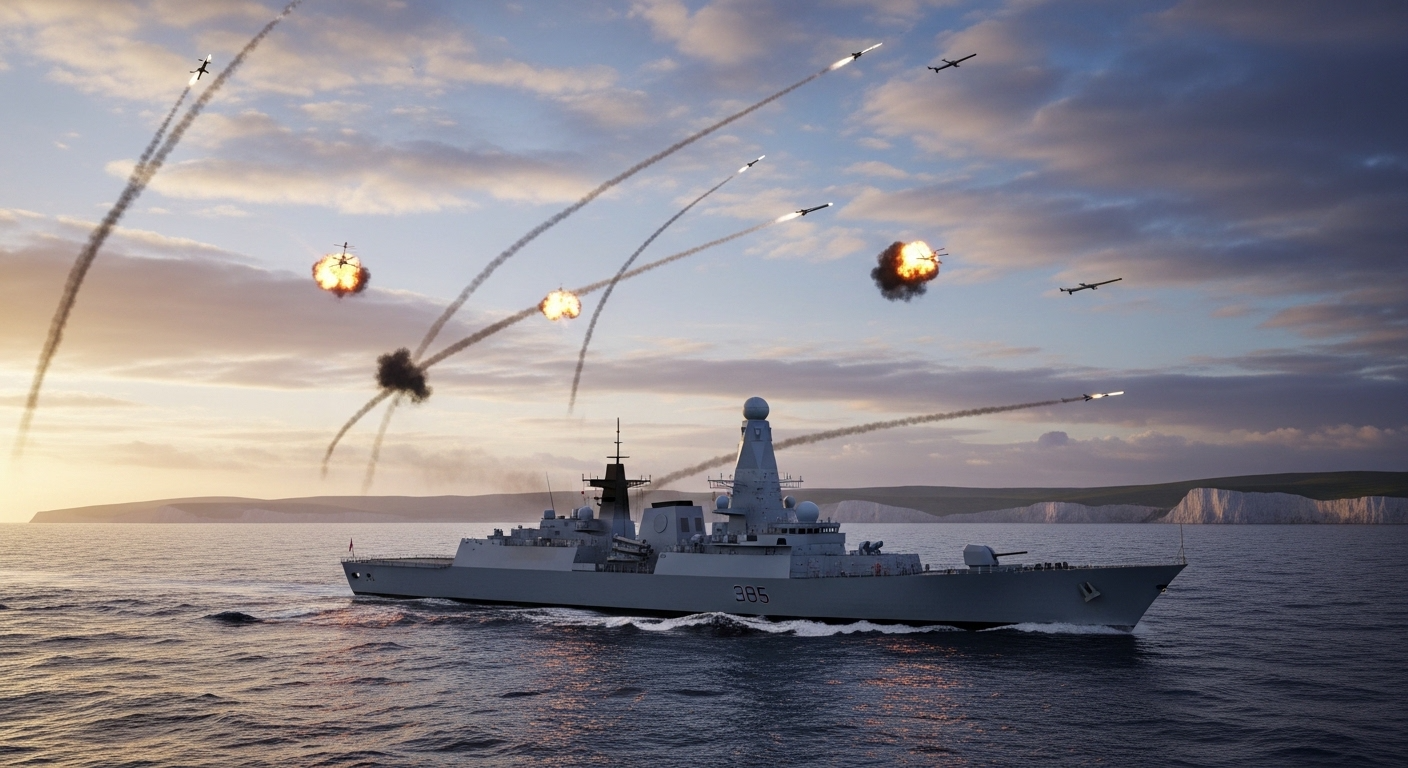
Somewhere off the Welsh coast, a Royal Navy destroyer faced down a swarm of attack drones travelling at over 200 miles per hour, simulated cruise missiles, and fast-moving uncrewed surface vessels, all at the same time. The crew of HMS Duncan did not just survive the scenario. They handled it.
The exercise, called Sharpshooter, was held at the Aberporth Range in Cardigan Bay and represents exactly the kind of high-pressure, multi-threat training that modern naval warfare increasingly demands. What happened during that week off the UK coast offers a revealing look at how military forces are preparing for a battlefield that looks very different from anything that came before.
Why Drone Swarms Are Now Central to Naval Defence Planning
The choice to build Exercise Sharpshooter around drone threats was not arbitrary. In 2024, Houthi forces in the Red Sea demonstrated in real time what it looks like when commercial and military drones are used at scale against naval vessels and merchant shipping. The lesson was absorbed quickly by defence planners across Western militaries: drones are no longer a supplementary threat. They are a primary one.
HMS Duncan encountered Banshee Whirlwind aerial drones supplied by defence technology company QinetiQ, as well as Hammerhead uncrewed surface vessels capable of reaching 50 mph on water. The scenarios were designed to arrive simultaneously and from multiple directions, replicating the chaos of a genuine swarm engagement rather than a tidy sequential test.
The Systems That Defended the Ship
To meet these threats, HMS Duncan drew on a layered stack of defensive capabilities. Martlet air-to-air missiles handled threats at range. The Phalanx close-in weapon system, an automated rapid-fire platform designed to engage anything that gets through earlier layers, covered the inner defensive perimeter. The ship’s 30mm gun and 4.5-inch naval gun were both used extensively, with the gunnery crew putting more than 200 rounds through the larger weapon over the course of the exercise week.
The Sea Viper air defence system was fired virtually throughout the exercise, allowing the crew to train on its operation without expending live missiles. The Wildcat helicopter embarked on the ship also played an active role, extending the ship’s ability to engage threats beyond its immediate defensive bubble.
Petty Officer James Ings, who oversees the 4.5-inch gun, described the week as productive even when things went wrong. The 30mm gun developed faults during the exercise, and the crew worked through them in real time. That kind of problem-solving under pressure, he noted, is exactly what the training is designed to build.
Running the Ship While Under Simulated Attack
What makes an exercise like Sharpshooter genuinely demanding is not just the external threats. HMS Duncan operated throughout the week in Defence Watches, a heightened state of readiness requiring the crew to manage incoming threat engagements while simultaneously running damage control drills, responding to simulated fires, and maintaining the internal systems of the ship.
Commanding Officer Dan Lee described the exercise as invaluable for exactly this reason. The crew was not just testing weapons systems in isolation. They were testing their ability to function as a complete fighting unit while multiple things went wrong at once, which is the only realistic way to assess genuine readiness.
Who Built the Threats
Exercise Sharpshooter was delivered in collaboration with QinetiQ, a defence technology company, and Inzpire, a provider of simulation and training services. Together they supplied both the live drone and surface threats and the synthetic simulations layered on top of them, creating a scenario environment that could be escalated, varied, and reset across the exercise period.
QinetiQ’s UK Defence chief executive Will Blamey described the company’s role as providing the dynamic, real-life scenarios that best prepare armed forces for the warfare challenges they will actually face. The ability to generate credible, evolving threats in a controlled environment is increasingly central to how Western militaries maintain readiness without the cost and risk of live-fire exercises at full operational scale.
What This Tells Us About Where Naval Warfare Is Heading
HMS Duncan is a Type 45 destroyer, one of the most capable air defence ships in the world. The fact that the Royal Navy is investing in exercises specifically designed to stress-test it against drone swarms signals how seriously the threat environment has shifted.
Uncrewed systems, whether aerial or surface-based, are cheap to produce relative to the weapons systems needed to defeat them, they can be deployed in numbers that overwhelm point defences, and they do not put the operator at risk. That combination makes them strategically attractive for any adversary looking to challenge a conventionally superior naval force.
The success of HMS Duncan’s crew in Exercise Sharpshooter is genuinely encouraging. But the more important takeaway is the underlying logic that made the exercise necessary in the first place. The nature of the threat has changed, the training has changed to match it, and the Royal Navy is moving quickly to ensure the gap between the two stays as narrow as possible.