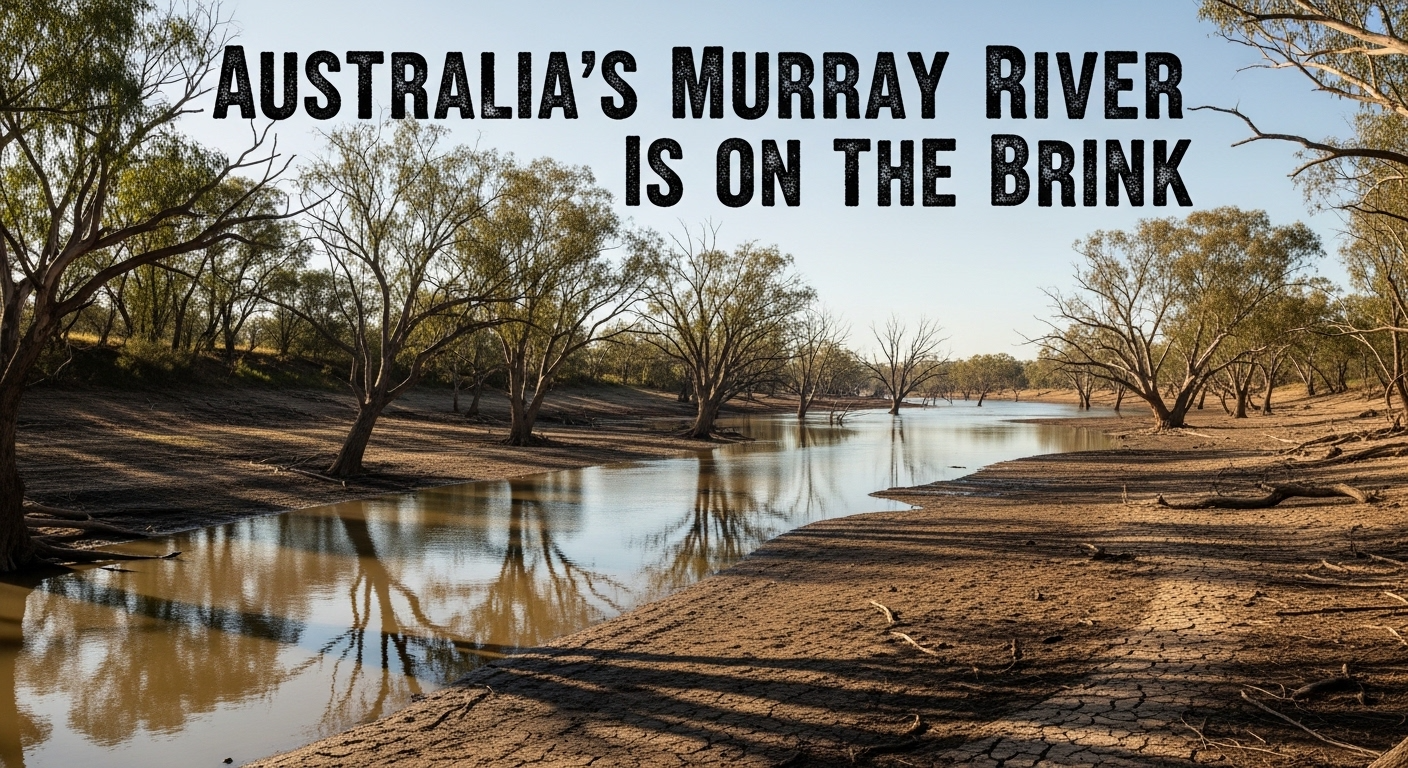
Australia’s Murray River Is on the Brink: Experts Sound the Alarm on Invasive Species
Australia’s most important river is in serious trouble. The Murray River, which supports millions of people and one of the country’s most productive agricultural regions, is facing what experts are describing as a systemic ecological collapse.
The cause is not drought or climate alone. It is a relentless invasion of introduced species that have quietly dismantled the river’s natural balance over decades.
Why the Murray River Matters So Much
The Murray stretches more than 2,500 kilometres across southeastern Australia, flowing through New South Wales, Victoria, and South Australia before reaching the sea. It is the backbone of the Murray-Darling Basin, which produces roughly 40 percent of Australia’s total agricultural output.
Communities, farmers, and native ecosystems across three states depend on this river. When it suffers, the consequences spread far beyond its banks.
The Invasive Species Driving the Crisis
The most destructive invader in the Murray is the European carp. Introduced decades ago, carp now make up an estimated 80 to 90 percent of fish biomass in parts of the river system.
These bottom-feeding fish disturb sediment, cloud the water, and destroy aquatic vegetation that native species depend on for food and shelter. The damage they cause is continuous and cumulative.
A River Under Attack From Multiple Directions
Carp are not the only problem. Invasive aquatic weeds including water hyacinth and Salvinia have spread rapidly across sections of the river, forming dense surface mats that block sunlight and strip oxygen from the water below.
At the same time, toxic algal blooms fed by agricultural runoff are creating dead zones where almost nothing survives. The river is effectively being squeezed from multiple directions at once.
Key Invasive Threats to the Murray River
| Invasive Species or Threat | Origin | Primary Damage Caused |
|---|---|---|
| European Carp | Europe, introduced as game fish | Sediment disturbance, destruction of native fish habitat |
| Water Hyacinth | South America | Dense surface mats block sunlight and oxygen |
| Salvinia | South America | Doubles in size rapidly, smothers aquatic ecosystems |
| Blue-Green Algae Blooms | Domestic nutrient runoff | Toxic to wildlife and livestock, depletes river oxygen |
| Redfin Perch | Europe | Predates on native fish and competes for food |
Each of these threats operates independently, but their combined impact is far greater than any single invader could achieve alone.
What the Experts Are Saying
Dr. Emily Gardiner, a freshwater ecologist at the University of Adelaide, has described the situation as a systemic collapse of the entire ecosystem. She is calling for urgent and coordinated intervention before the damage becomes irreversible.
Peter Goonan, a river ranger with more than three decades of experience on the Murray, has warned that the weeds, algal blooms, and loss of native fish are all interconnected and are accelerating at a pace the river has never experienced before.
The Cascade Effect on Native Wildlife
As invasive species multiply, native fish populations are collapsing. Species including Murray cod, golden perch, and silver perch are being outcompeted and displaced, with some populations at critically low levels.
The damage does not stop at the waterline. Migratory birds, platypuses, and water-dependent mammals are losing access to the healthy, oxygenated habitats they need to survive, and the ripple effects are being felt throughout connected wetland systems.
How Communities and Industries Are Affected
The Murray River supports irrigation for fruit, vegetable, dairy, and cotton industries worth billions of dollars annually. As water quality deteriorates and ecological systems weaken, the long-term viability of that agricultural base is under pressure.
The tourism and recreational fishing industries that draw visitors to the river are also feeling the strain. A degraded river is a less valuable river, economically as well as ecologically.
Intervention Strategies Currently Being Deployed
| Strategy | Method | Current Status |
|---|---|---|
| Carp netting programmes | Large-scale underwater barriers at choke points | Active in targeted sections of the river |
| Carp Herpesvirus biocontrol | Naturally occurring virus specific to carp | Under extended research and risk assessment |
| Weed removal operations | Manual, mechanical, and chemical removal | Ongoing across multiple river sections |
| Environmental water releases | Controlled water flows to restore habitat | Coordinated through Murray-Darling Basin Authority |
| Native fish restocking | Breeding and releasing native species | Active programme with state and federal funding |
The carp herpes virus option has attracted particular attention. Scientists believe it could dramatically reduce carp numbers without harming other aquatic life, but the programme requires extensive testing before any release is approved.
The Political and Policy Dimension
Managing the Murray River involves three state governments and the federal government, coordinated through the Murray-Darling Basin Plan. That complexity has historically slowed decision-making at precisely the moments when speed matters most.
Funding for invasive species management, environmental water purchases, and river health monitoring has been a persistent point of tension between jurisdictions, with community groups arguing that investment has not kept pace with the scale of the problem.
Can the Murray Still Recover?
Expert opinion is divided on the question of recovery. Some researchers believe that with sustained, well-funded intervention, the river’s native ecosystems can be substantially restored over time.
Others are more cautious, warning that carp have already altered the physical structure of the river in ways that may be difficult to reverse even if population numbers are reduced. The sediment, the vegetation loss, and the changed water chemistry all represent long-term legacies.
Frequently Asked Questions
What is the biggest single threat to the Murray River right now? European carp are widely considered the most damaging single species in the river system. Their feeding behaviour physically degrades the river environment in ways that affect every other species present, making them the priority target for most management programmes.
What is the carp herpes virus and is it safe? The Cyprinid Herpesvirus 3, commonly called carp herpesvirus, is a naturally occurring virus that is lethal to carp but does not affect other fish species, mammals, or birds. Australian scientists have been researching its potential for release as a biocontrol agent, but the programme remains under review pending further safety assessment.
How much of the Murray River’s fish population is now carp? In heavily affected sections of the river, carp account for up to 90 percent of all fish biomass. That figure represents a near-total displacement of the native fish species that previously dominated the ecosystem.
What is the Murray-Darling Basin Plan and what does it do? The Murray-Darling Basin Plan is a federal framework that governs water use and environmental management across the Basin. It sets limits on how much water can be extracted for agriculture and allocates environmental water to support river health, though its implementation has been contentious across multiple state governments.
What can ordinary Australians do to help? Practical steps include reporting carp sightings through the Feral Scan app, avoiding releasing bait fish or aquarium species into waterways, reducing fertiliser runoff from gardens and farms near waterways, and supporting organisations working on river restoration. Political advocacy for adequate funding also makes a direct difference.
Are native fish species in the Murray endangered? Several species are under serious pressure, including the trout cod and southern pygmy perch, which are listed as threatened. Murray cod, while not yet endangered, have experienced severe declines in many sections of the river and are the subject of active restocking programmes.
How does the Murray River crisis affect food production in Australia? The Murray-Darling Basin produces a significant share of Australia’s fruit, vegetables, nuts, dairy, and cotton. Degraded water quality, reduced ecological function, and long-term threats to water availability all carry direct implications for agricultural productivity and the communities whose livelihoods depend on the basin.
Conclusion
The Murray River is not just an environmental story. It is an economic, cultural, and national story about whether Australia can protect one of its most fundamental natural assets before the damage becomes permanent.
The invasive species crisis is real, measurable, and accelerating. The science is clear, the warnings from experts are urgent, and the window for effective action is narrowing with each passing season.
What happens next will depend on political will, funding decisions, and community engagement at a scale that has not yet been fully mobilised. The river that has defined southeastern Australia for millennia deserves nothing less than that full commitment.
Read more: https://wizemind.com.au/