Australia Retirement Travel Trends 2026 — The Most Popular Destinations for Senior Travellers
Retirement in 2026 looks different from what previous generations experienced. It is not staying close to home and managing carefully. For a growing number of Australians, it is booking a midweek flight in February, loading the caravan in April, or arranging a six-week stay in a coastal town while the rest of the country is at work and school. Retirees are travelling more, travelling smarter, and travelling on their own terms in ways that the tourism industry is only beginning to fully understand and cater for.
The flexibility that retirement provides, combined with the financial advantages of off-peak travel and the practical benefits of avoiding school holiday crowds, has made Australian retirees one of the most significant forces shaping domestic tourism. Tourism operators consistently report that weekday bookings and extended stays outside school holidays are increasingly dominated by older travellers who have both the time and the motivation to explore the country at the pace it deserves.
Why Retirees Are Travelling More in 2026
The growth in retiree travel is not simply a reflection of more people reaching retirement age, though demographics play a role. It reflects a shift in how retirement itself is understood and lived. The generation reaching retirement now grew up with more travel experience than their parents, holds higher expectations for what retirement should include, and benefits from better health outcomes that make longer trips more feasible into the mid and late seventies than they would have been in previous generations.
The practical advantages of retirement timing are also significant. Travelling in February rather than January, departing on a Tuesday rather than a Friday, and staying for four weeks rather than one week changes the cost profile of travel dramatically. Accommodation that is fully booked and expensive during school holidays is available and affordable a fortnight either side. These efficiencies compound across a retirement period that may span two decades of travel capacity.
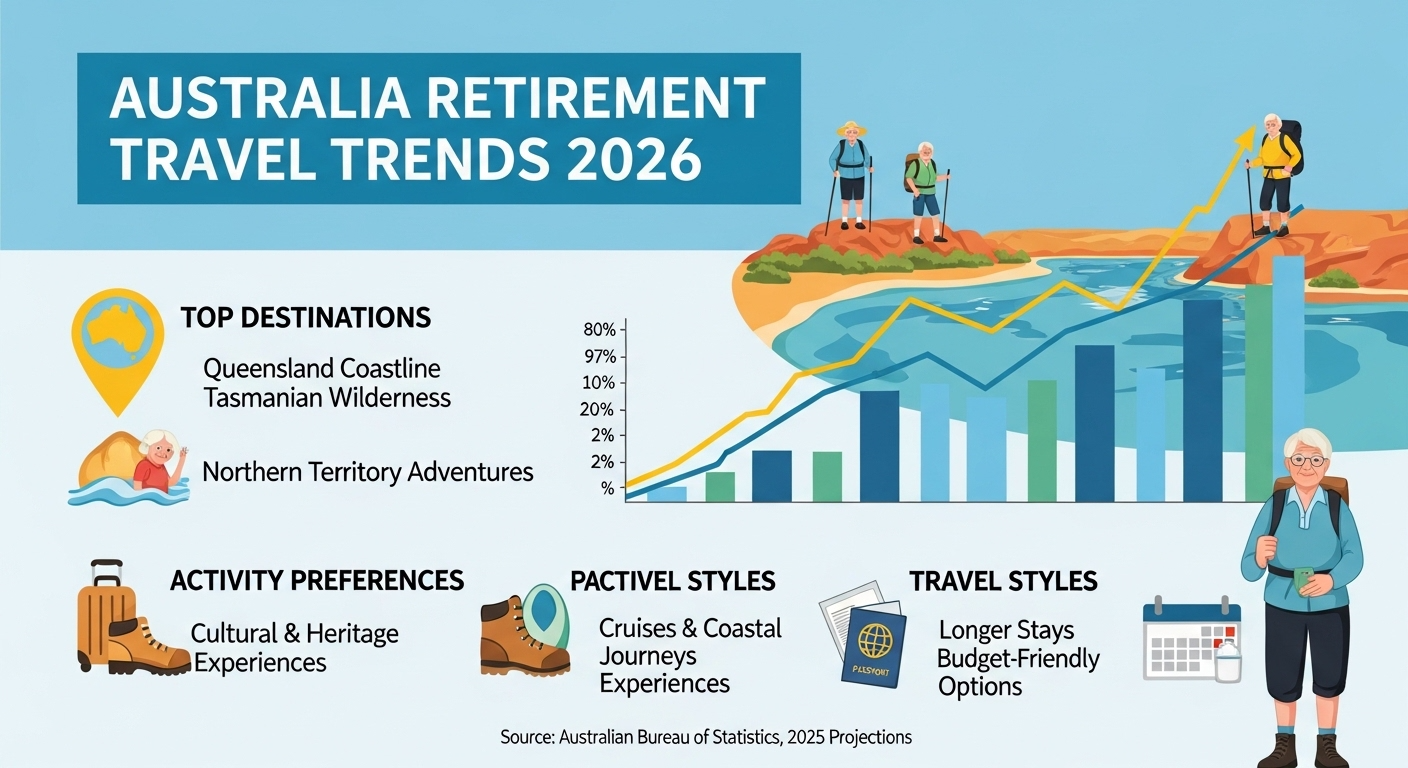
The travel styles that have emerged among Australian retirees reflect a consistent set of priorities. Comfort, flexibility, and access to healthcare rank higher than novelty or luxury. The grey nomad caravanning tradition continues to grow, with couples spending months at a time moving through regional Australia at a pace that allows genuine engagement with the places they visit. Long-stay rentals of four to eight weeks in a single location have become increasingly popular as an alternative to constant movement. Small-group guided tours provide structure and safety for destinations, particularly remote or outback areas, where independent travel carries more logistical complexity.
The Eight Destinations Drawing Retirees in 2026
Noosa Heads
Noosa remains one of the most consistently popular retirement travel destinations in Australia because it solves the core tension between beauty and practicality that shapes so many retirees’ destination choices. The flat walking paths along the coast, the accessible national park trails, the café culture concentrated in a compact town centre, and the genuinely mild year-round climate make it a destination where a retiree can be active, comfortable, and well-fed without any of those things requiring significant effort.
Access to quality healthcare through the Sunshine Coast health network is not incidental to Noosa’s popularity. For older travellers managing chronic conditions or simply wanting the reassurance that medical care is nearby, a destination with strong healthcare infrastructure carries real weight in the decision.
Tasmania
Tasmania has emerged as a long-stay destination that suits retirees in ways that faster-paced tourism itineraries miss entirely. The island rewards the kind of slow, attentive travel that retirees do better than any other demographic. Weeks spent moving between Hobart and Launceston, exploring historic sites, driving scenic coastal and mountain roads, and engaging with the food and wine culture produce an experience that a five-day trip simply cannot accommodate.
The cooler climate, which might deter some travellers, actively appeals to retirees from warmer Australian climates who find that lower temperatures suit their activity levels and comfort preferences better than the heat of northern destinations. The slower pace of the island, the absence of the crowds that characterise more mainstream tourism destinations, and the genuine cultural depth of the arts scene and culinary landscape make Tasmania a destination that retirees return to repeatedly.
Barossa Valley
The Barossa offers retirees something that few other Australian destinations quite match: genuine world-class food and wine in a setting that is entirely manageable physically. Seated tastings at cellar doors, guided vineyard tours designed for older visitors, boutique accommodation integrated into working farms and wineries, and day trips that require nothing more strenuous than moving between a car and a comfortable chair.
Proximity to Adelaide makes the logistics uncomplicated, with the valley accessible without the kind of extended driving or remote travel that requires more planning. For retirees who want a destination of genuine quality without the physical demands of more adventurous itineraries, the Barossa delivers consistently.
Broome
Broome solves a problem that many retired Australians face every winter. The southern states are cold, and international travel carries more complexity and cost than domestic alternatives. Broome offers genuine warmth, dramatic coastal beauty at Cable Beach, cultural depth through its pearling history and Indigenous heritage, and an increasingly mature tourism infrastructure that has developed specifically to serve older visitors.
The resort accommodation is accessible. The guided cultural tours are structured for comfort. The sunsets at Cable Beach have become one of those experiences that retirees specifically mention when describing why they returned. For the grey nomad community in particular, Broome represents the classic western destination of the overland trip across the top of Australia.
Byron Bay
Byron’s transformation from backpacker stronghold to retiree-friendly coastal town has been gradual but is now unmistakable in the 2026 visitor profile. The wellness culture that has grown around Byron, the quality of the markets, the early morning beach walks that suit retirement schedules, and the food and produce culture have made it appealing to a demographic that the town’s original identity would not have predicted.
Off-peak timing is essential for retirees visiting Byron. During school holidays the town is crowded and expensive. During February, May, or September, it is genuinely beautiful, manageable, and affordable. The retirees who know this return regularly.
Flinders Ranges
For retirees who want outback adventure without outback difficulty, the Flinders Ranges offer a solution. Guided tours through one of Australia’s most significant geological and wildlife landscapes, comfortable eco-lodge accommodation, and scenic drives that require nothing more adventurous than a reliable vehicle make the Ranges accessible to older travellers who would not attempt more remote outback destinations independently.
The cultural and historical significance of the landscape, combined with wildlife viewing and the distinctive colours of the rock formations, produces an experience that retirees consistently describe as among the most memorable of their travel lives. The guided structure means safety and logistics are managed, which is specifically what makes this destination viable for travellers who would otherwise avoid the outback entirely.
Port Douglas
Port Douglas offers access to two of Australia’s greatest natural attractions, the Great Barrier Reef and the Daintree Rainforest, in a setting that prioritises comfort and accessibility rather than the adventure-tourism framing that dominates younger visitor experiences.
The town is small and walkable. The accommodation is genuinely comfortable. Senior-friendly reef tour operators have developed experiences specifically calibrated for older visitors who want to see the reef without the physical demands of diving or extensive snorkelling. For retirees who have always wanted to see the Great Barrier Reef, Port Douglas in the dry season is the most comfortable way to do it.
Margaret River
Margaret River delivers what long-stay retirees specifically seek: a destination with enough variety to sustain weeks of engagement without requiring any single activity to be physically demanding. Wineries, beaches, forests, artisan food producers, and wildlife experiences spread across a region that remains genuinely uncrowded outside the summer peak.
The food and wine quality is exceptional by any standard, and the long-stay culture around Margaret River is well-established with accommodation providers experienced in hosting guests who are spending weeks rather than days.
What Retirees Consider Before Choosing a Destination
| Destination | Best For | Climate | Travel Pace |
|---|---|---|---|
| Noosa Heads | Coastal relaxation | Mild | Easy |
| Tasmania | Nature and food | Cool | Slow |
| Barossa Valley | Wine and dining | Mild | Easy |
| Broome | Winter warmth | Warm | Relaxed |
| Byron Bay | Wellness and beaches | Mild | Easy |
| Flinders Ranges | Scenic adventure | Mild | Guided |
| Port Douglas | Tropical escape | Warm | Relaxed |
| Margaret River | Wine and scenery | Mild | Easy |
The practical considerations that experienced retirees consistently prioritise go beyond the attractiveness of the destination itself. Access to medical services is the factor most likely to determine whether a destination is viable for older travellers managing ongoing health conditions. Walkability and local transport availability determine whether a destination is comfortable for extended stays. Climate suitability across the planned travel period matters more for older travellers whose comfort range may be narrower than it was in younger years.
Travel insurance and support service availability have become standard considerations rather than optional additions. Destinations that have developed specific infrastructure for senior visitors, from medical proximity to tour design to accommodation accessibility, see significantly higher rates of repeat visits from the retiree market than those that have not.
Frequently Asked Questions
Are retirees choosing domestic over international travel in 2026? Yes. Domestic travel dominates retiree travel plans, driven by the combination of cost efficiency, healthcare accessibility, and the flexibility that domestic itineraries allow. Many retirees who previously travelled internationally have shifted their focus to exploring Australia more deeply.
Is caravan travel still popular among retirees? Very much so. The grey nomad tradition continues to grow, particularly among couples who combine the flexibility of caravan travel with the ability to stay longer in locations they enjoy rather than moving on to a fixed schedule.
How do retirees manage travel costs on fixed incomes? Off-peak and shoulder season travel produces dramatically lower costs for accommodation, flights, and tour bookings. Long stays at a single location spread fixed travel costs across more days. Midweek travel typically offers better pricing than weekend alternatives. These strategies collectively make travel far more affordable than school-holiday and peak-season itineraries.
What makes a destination genuinely retiree-friendly? Accessible walking, proximity to quality healthcare, climate suitability, comfortable accommodation options, and the availability of guided experiences for physical activities that older travellers might not undertake independently are the consistent defining features of destinations that attract and retain the retiree market.