Australia Age Pension 2026 — Eligibility, Payment Rates and Key Updates Explained
For millions of older Australians, the Age Pension is not simply a government payment. It is the financial foundation that makes daily life manageable. Rent, groceries, power bills, medical appointments. The fortnightly deposit that covers these essentials is what stands between a retirement that feels secure and one that feels precarious, and in 2026, understanding exactly how it works has never been more important.
Cost of living pressures remain elevated across housing, energy, and healthcare. Payment rates have been updated through indexation. Income and asset thresholds have shifted. And the decisions retirees make about how they report their circumstances directly affect what they receive. This guide covers everything older Australians and near-retirees need to know about the Age Pension in 2026.
Who Qualifies for the Age Pension in 2026
Eligibility rests on four conditions that must all be satisfied simultaneously. Meeting three is not enough. Each requirement is assessed independently, and a change in any one of them can affect entitlement.
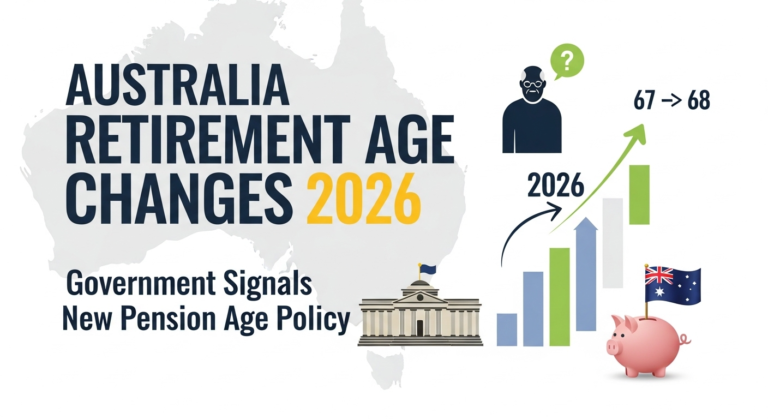
Age is the starting point. You must be at least 67 years old. This threshold applies to both men and women and has not changed for 2026. There are currently no confirmed plans to raise it beyond 67.
Residency requires that you are an Australian citizen or permanent resident currently living in Australia, with a minimum of ten years of Australian residency, at least five of which must be continuous rather than accumulated across separate periods. Some refugees and people covered by international social security agreements are subject to modified residency rules.
The income test assesses earnings from employment, investments, and most other sources against defined thresholds. Payments reduce gradually above the income free area rather than stopping abruptly, which creates a buffer for pensioners with modest additional income. The Work Bonus provides a specific allowance for employment income, allowing eligible pensioners to work part-time without their pension being reduced by the full dollar value of what they earn.
The asset test assesses the value of assets including savings, shares, investment properties, and superannuation balances, but excludes the primary home. Homeowners and non-homeowners are assessed against different thresholds, with non-homeowners permitted higher asset values before their pension is affected. Both tests are applied simultaneously, and your pension rate is determined by whichever produces the lower entitlement.
What the Age Pension Pays in 2026
Payments are indexed twice annually, in March and September, to keep pace with inflation and wage movements. The 2026 rates reflect the most recent indexation adjustment.
| Payment Category | Estimated Fortnightly Rate |
|---|---|
| Single pensioner | Approximately $1,100 to $1,150 |
| Couple combined | Approximately $1,650 to $1,720 |
| Pension supplement | Included in base payment |
| Energy supplement | Included automatically |
| Rent Assistance | Available to eligible recipients |
These figures include the base pension and standard supplements that are applied automatically without requiring a separate application. For most pensioners, the fortnightly deposit already incorporates the pension supplement and energy supplement alongside the base rate.
Rent Assistance is also available to pensioners paying private rent above the minimum threshold, with the amount determined by the rental cost relative to the threshold rather than a fixed payment. Pensioners renting privately who are not receiving Rent Assistance should confirm their rental details are on file with Services Australia, as this component requires rental information to be processed and is not applied solely on the basis of pension receipt.
A pension policy analyst summarised the indexation limitation that many retirees experience directly. “Indexation helps, but it does not always keep up with real living costs, especially rent.” The mechanism is designed to prevent purchasing power from eroding, but in markets where housing costs are rising faster than the indexes used for adjustment, the gap between the pension and actual expenses can still widen.
The Key Changes in 2026
The 2026 updates do not represent a structural overhaul of the Age Pension system. But several specific changes affect payment amounts and eligibility in ways that matter to individual recipients.
Income and asset thresholds have been indexed upward, which means some pensioners who were previously assessed as ineligible or at a reduced rate may now qualify for a higher payment under the revised limits. Reassessing your position against the updated thresholds is worthwhile even if you checked your eligibility recently, because the numbers have moved enough to change outcomes in some cases.
The Work Bonus has continued to evolve in ways that make part-time employment more financially viable alongside pension receipt. Pensioners who want to work a few hours per week without significantly reducing their pension have more flexibility in 2026 than in previous years.
Digital reporting systems have been improved, making it easier to update income and asset information online without visiting a service centre. This improvement carries an important implication for compliance. The same technology that makes reporting easier also makes verification more rigorous, and Services Australia is conducting more thorough checks to ensure payment accuracy. Pensioners with outdated records should treat this as a prompt to bring their information current.
Real Experiences From the Pension System
The way the pension system operates becomes most concrete through the experiences of people navigating it. Janet, 69, recently retired after years of part-time work. She was concerned that her superannuation balance would disqualify her from pension support, but after working through the income and asset tests, she qualified for a partial pension. “I was worried my super would cancel it out,” she said. “But the income test worked out for me.”
Brian and Helen, both 74, encountered the asset test in a direct and practical way when they sold an investment property. Their pension payment reduced as a result of the changed asset position. “It wasn’t a shock,” Brian said, “but it reminded us how important it is to report changes right away.” Their experience illustrates one of the most important aspects of the pension system. Changes in circumstances must be reported promptly to avoid both overpayments that create debt and underpayments that leave money uncollected.
Age Pension Versus Self-Funded Retirement
Understanding where the Age Pension sits relative to self-funded retirement helps retirees with mixed income sources plan more effectively.
| Factor | Age Pension | Self-Funded Retirement |
|---|---|---|
| Income stability | Government-backed, indexed payment | Market-dependent, variable |
| Means testing | Income and asset tests apply | No government testing |
| Healthcare concessions | Pension Concession Card included | Not automatically included |
| Indexation | Yes, twice annually | No |
| Government support | Direct payment and supplements | No ongoing payment |
Many retirees sit somewhere on the spectrum between these two categories rather than entirely in one. A retiree with moderate superannuation and modest investment income may qualify for a partial pension that, combined with their own funds, produces a more comfortable total than either source alone. Understanding the partial pension zone is one of the most valuable pieces of planning knowledge a near-retiree can develop.
What to Do if You Are Approaching Pension Age
The preparation period before applying for the Age Pension matters more than most near-retirees appreciate. Decisions made in the final years of working life can affect both eligibility and payment amounts, and some of those decisions become difficult to reverse once made.
Reviewing your income and assets against the current 2026 thresholds gives you a realistic picture of what to expect. Understanding how your superannuation will be assessed is particularly important, as the rules differ depending on whether you have reached preservation age and whether funds are in accumulation or pension phase.
Keeping organised financial records reduces processing time and the risk of errors delaying your first payment. Using the pension estimator tools available through the Services Australia website provides a personalised projection before you formally apply.
Consulting a financial adviser who specialises in retirement income is worth considering for anyone whose situation involves complexity. Personalised advice in this area frequently identifies options and strategies that generic guidance misses.
Frequently Asked Questions
Can I still receive the Age Pension if I work? Yes. The Work Bonus allows pensioners to earn a set amount from employment before that income affects their pension payment. This makes part-time work financially viable alongside pension receipt for many retirees.
Does owning a home affect eligibility? Your primary home is excluded from the asset test. However, other real estate, investment properties, and financial assets are included. Homeowners and non-homeowners are assessed against different asset thresholds.
Does superannuation count as an asset? Yes, once you reach Age Pension age, your superannuation balance is assessed under the asset test. The specific treatment depends on whether your super is in accumulation or pension phase.
Do pension payments increase automatically? Yes. Payments are indexed twice annually in March and September to reflect movements in wages and the cost of living. No action is required from recipients for the indexed increase to be applied.
What happens if my circumstances change? Changes in income, assets, living arrangements, or relationship status must be reported to Services Australia promptly. Failing to report changes can result in either overpayments that create a debt or underpayments that leave entitlements uncollected.
Can I receive the pension while living overseas? In some circumstances yes, but payment amounts may be reduced after a certain period abroad. The rules depend on the country you are living in and any relevant social security agreement between that country and Australia.