Adopt a German Shepherd Rescue Dog Lila: Loving Homes Needed Urgently
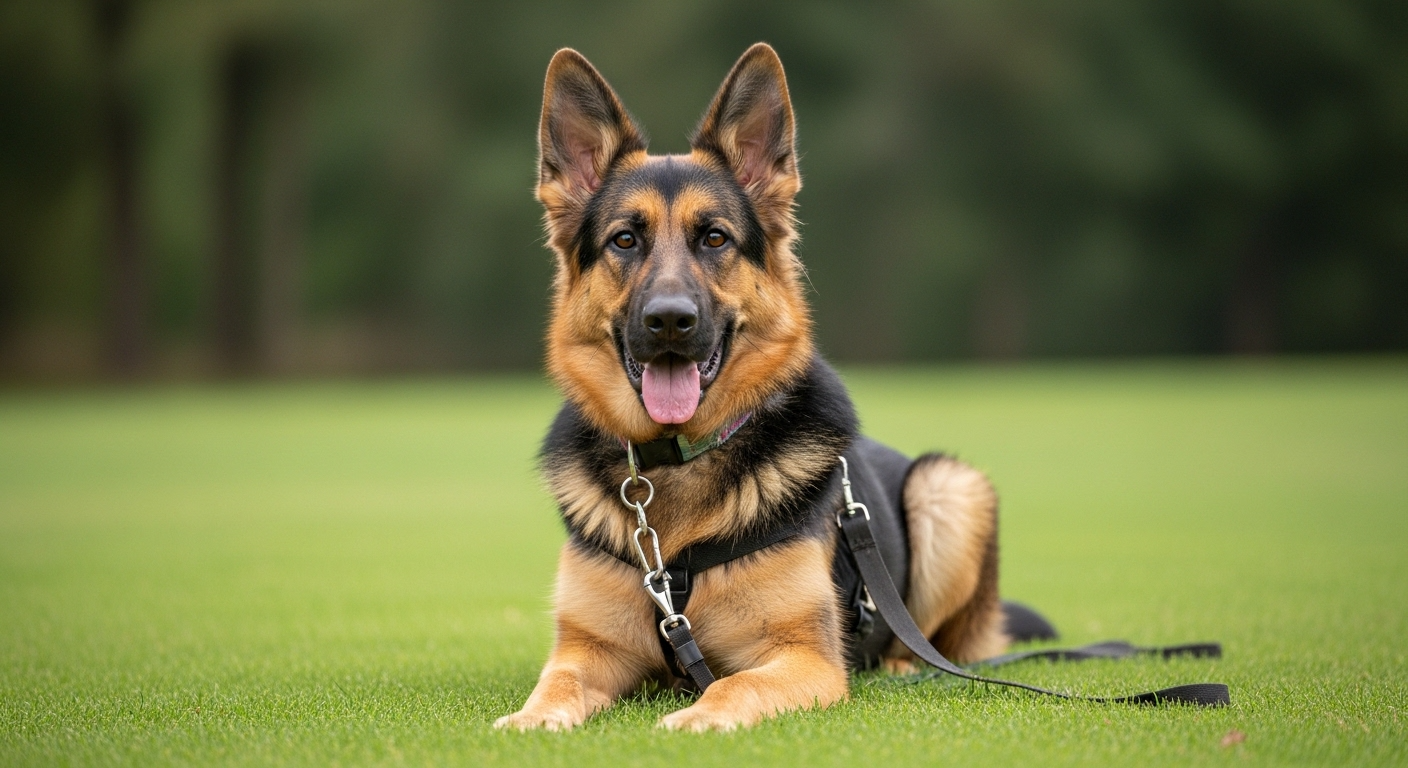
Lila’s paws made no sound on the shelter’s concrete floor, but somehow you felt her before you saw her. A quiet presence. A watchful stillness. The faint jingle of a metal tag as she turned her head in your direction. Among the chorus of excited barks and paws thudding against kennel doors and nervous whimpers from every direction, she was calm. Those amber eyes, ringed with black like careful brushstrokes, looked at you with a question that needed no translation at all.
Are you my person?
Lila’s Story: A Shepherd Between Worlds
When Lila arrived at the rescue, she came with nothing. No bed, no toys, no history recorded in a neat file. Just a collar that had rubbed her neck raw and a look in her eyes that spoke of too many nights spent outside with no explanation given and no comfort offered. She is a German Shepherd, tall and elegant with clean lines and fur the colour of autumn fields, but life had not treated her with the respect that such a breed deserves.
Nobody knows her full story with certainty. Some believe she was tied in a yard and left to pace the same worn circle day after day with little else to fill her hours. Others suggest she was surrendered when she grew bigger than expected, as though she were something that had simply outgrown its usefulness. What the shelter volunteers know for certain is what they saw when she arrived. She was thin and under-muscled and visibly confused. When someone tossed her a ball she flinched. When a hand moved too quickly over her head she ducked and froze and waited to see what would follow.
Yet underneath that tension, something else was present. A curious tilt of her head when someone laughed nearby. The way her tail twitched when another dog trotted past carrying a squeaky toy. The way she leaned in just slightly, almost imperceptibly, when a volunteer sat on the floor and simply waited without asking anything of her. Lila was wary. But she was listening. Watching. Deciding, with great care, whether the world might still be safe enough to trust.
Within a few weeks her ribs had disappeared beneath a healthier weight and the dullness in her coat had softened into something gentler. But her real transformation has been less visible and more meaningful than the physical one. Day by day, Lila is learning that a door closing does not always mean someone is leaving forever. That a hand reaching toward her can hold a treat rather than a threat. That she is, finally, genuinely wanted by someone.
The Quiet Intelligence of a German Shepherd
Spend five minutes with Lila and you will understand immediately why this breed is trusted with roles that demand the most from a dog. She does not simply look at you. She reads you. When you sigh her ears come forward. When you sit heavily on a bench she moves closer and rests her head on your knee with a gentleness that communicates more than most words can.
The volunteers at the shelter tell a story about a stormy afternoon when the sky darkened quickly and the old building rattled around them. A newly arrived dog, frightened and overwhelmed, began to panic in the kennel across from Lila’s. He barked and spun and scraped his paws on the metal floor with increasing desperation. Before any of the staff could reach him, Lila stood up, stepped to the front of her kennel, and pressed her nose gently through the bars in his direction. She did not bark. She made no sound at all. She simply stood there as a quiet and steady presence in the changing light. The frantic dog slowed. His breathing eased. He watched her and found something to anchor himself to.
German Shepherds were bred for exactly this kind of calm authority. Generations of herding, guiding, and guarding have produced dogs who understand instinctively how to stand between chaos and safety. They are thinkers and decision-makers. Partners rather than simply pets. Lila carries that heritage in every measured and deliberate step she takes.
She has already learned the basics of obedience at the rescue, not through endless repetitive drilling but because she genuinely wants to understand what is being asked of her. Point to a bed and give her a cue and she will walk over quietly, settle herself, and look back at you with soft expectation, ready for whatever comes next. When you praise her she does not bounce or spin. She gives a small and careful wag, as though each kind word is stitching something back together inside her.
Why Lila Needs a Home Now, Not Eventually
Rescue workers learn to carry difficult stories with them the way you carry stones in a coat pocket. Always present, but not heavy enough to stop you moving forward. When the staff at this shelter talk about Lila, though, there is an urgency underneath the words that is impossible to miss.
She is not at risk because she is aggressive. She is not. She is not at risk because she is unwell. She has passed her health assessments with only minor notes of the kind that come from hardship and resolve with consistent care. Lila is at risk because the shelter is full, and fullness in this context means making choices that nobody in rescue work wants to make. Each week more dogs arrive than there are kennels to hold them. Space is not an abstract concept here. It is concrete and chain link and finite.
Lila is also at a particularly vulnerable point in her emotional recovery. She is learning to anticipate footsteps with something closer to hope than anxiety. She is beginning to understand that the world might have something good in it for her. But a shelter, regardless of how devoted its staff and volunteers are, is a place of constant disruption. New faces, new dogs, new smells, new stresses arriving without warning. There is only so far an animal can heal in an environment where the lights go off each night and the building echoes with the restless sounds of other frightened lives.
What Lila needs is not simply any home. She needs a loving and stable one. A place where the ordinary rhythms of daily life, morning routines and afternoon walks and quiet evenings on a comfortable couch, can wrap around her like something warm and predictable. A place where she can practice being a member of a family rather than a case number waiting for resolution.
What a home would change for Lila specifically:
- Daily walks on grass and through parks rather than short circuits around concrete runs
- Consistent one-on-one attention and genuine bonding with her own people
- Quiet evenings with familiar sounds and predictable routines instead of echoing kennels
- Patient and ongoing training that builds her confidence and gives her purpose
- The experience of sleeping somewhere safe and waking up somewhere that is still safe
Every additional day in a kennel is a day Lila spends watching life happen through a barrier. Every day in a real home brings her one step closer to the dog she has the potential to fully become.
What Lila Is Really Like at Heart
It is easy to speak about breeds in general terms and never quite arrive at the individual. Lila is not a category. She is a specific and particular animal with her own quietly charming quirks that the people who spend time with her have come to know and appreciate.
She has a secret fondness for crinkly toys. Soft squeakers are acceptable, but give her something that rustles like dry leaves and she will carry it to a quiet corner and mouth it gently with her eyes half-closed, as though the sound triggers some private contentment she cannot quite explain. She is not a dog who destroys things for the satisfaction of destruction. She treats toys like objects worthy of consideration.
Outdoors she walks with a purposeful and dignified stride, head up, occasionally glancing back to check that you are still with her. When another dog passes at a distance she tenses briefly, assesses, and then relaxes if your voice stays calm and unhurried. She does not rush toward new dogs. She observes first, considers, and given time and a respectful introduction, she can warm genuinely to canine company, particularly dogs who are calm and give her the space she needs before expecting anything from her.
Inside, Lila shows the quieter side of the German Shepherd temperament. She likes to curl near someone’s feet, not sprawled out carelessly like a puppy but folded neatly with a readiness about her, prepared to stand if you do. She watches doors. She listens for footsteps. She appears most settled when she knows where everyone is, when her world is accounted for and mapped and nothing is hidden in uncertainty.
Despite everything she has lived through, there is no bitterness in her. Hesitation, yes. Questions she has not yet finished asking. But when you sit on the floor and angle your body slightly sideways and let the silence stretch into something comfortable, she will eventually take that small brave step forward. Then another. Her nose will touch your hand. And in that quiet, trembling moment you can feel the full weight of the courage it took her to get there.
What Kind of Home Lila Is Waiting For
Every dog has a version of life in which they do not merely survive but genuinely flourish. For Lila, that life is not one of constant visitors and unpredictable noise and schedules that change without warning. She has had enough uncertainty to last her entire lifetime. What she needs now is a home that moves with a gentle and consistent rhythm that she can learn to trust.
The ideal situation for Lila would be with a couple or an individual who has the time and genuine patience to continue the work already begun. Someone who understands that trust in a dog who has been let down is not given in a single moment but built slowly across hundreds of small and ordinary interactions. Older children, if they are part of the household, should be the kind who understand that respect is a form of love. That giving a nervous dog space when she retreats is not rejection but consideration. That letting her approach on her own terms rather than rushing toward her is the foundation everything else gets built on.
A securely fenced outdoor area would be a meaningful gift, not so she can be left alone in it but so she can explore grass and sunlight and the particular freedom of open space within safe boundaries. Regular mealtimes, daily walks, and consistent expectations will settle her considerably. German Shepherds understand structure as a form of care, and Lila is no exception. Clear and calm guidance does not constrain her. It reassures her.
Previous experience with German Shepherds or similar working breeds would be an advantage, but it is not an absolute requirement. What matters most is the willingness to pay attention to what her body language is telling you, to move slowly when she is uncertain, and to genuinely celebrate the quiet victories that will come in their own time. The first time she brings you a toy to share. The first time she falls asleep with her belly exposed. The first time she follows you from room to room not out of anxiety but because she has decided, after careful consideration, that you are her home base.
Walking With Lila Into a New Life
Imagine the first ordinary morning after Lila comes home with you. Not the shelter paperwork and the nervous drive and the tentative first hours. The morning after that. The sky just beginning to lighten at the edges. The house still and quiet. You hear the soft rustle as she shifts on the bed you set up for her and lifts her head and blinks in the early light.
For a half-breath you both carry the memory of where she came from. The cold floor, the echoing nights, the uncertainty that never quite lifted. And then the present settles in around you both. You swing your legs over the side of the bed and she hesitates for just a moment and then steps closer, stretching in that long and luxurious way that only a dog who feels almost safe can manage.
You open the back door and cool morning air meets both your faces. She pauses at the threshold, nose working quietly, mapping this new place into permanent memory. Then she steps out. Her paws press into dew-tipped grass. The world is larger now but not frightening. Birds begin in the hedges. Somewhere nearby a car door closes. Lila glances back at you, eyes bright, and for the first time her tail swings in a full and unhurried arc.
This is what adoption actually is. Not a single dramatic turning point but a long and luminous series of small ones. A dog like Lila learns, one unremarkable day at a time, that the love being offered today will still be present tomorrow. That the bed will still be soft. That the bowl will still be filled. That the hand on her fur will still be gentle.
In return she will give you the kind of loyalty you feel rather than see. She will watch the door when you rest on the couch. She will learn the specific sound of your car in the driveway and be waiting before you reach the step. She will appear quietly at your elbow on a difficult day and sit close enough that you understand, without either of you having to say anything, that she has noticed and that she is staying.
There are many good dogs waiting in shelters right now. But there is only one Lila. This particular and soulful German Shepherd with her carefully rebuilt hope and her storm-weathered courage and her amber eyes that have seen too much but have not, against all reasonable expectation, stopped looking for something worth trusting.
Right now she is in a kennel, watching footsteps come and go, wondering with great patience whether the next ones will be the ones that stop in front of her and stay.
Maybe those footsteps are yours.
Read More: For more animal welfare stories, adoption guides, and pet care advice written for Australian readers, visit wizemind.com.au