According to Psychologists, the Simple Act of Greeting Unfamiliar Dogs in the Street Is Strongly Linked to Surprising Personality Traits That Reveal More About You Than You Think
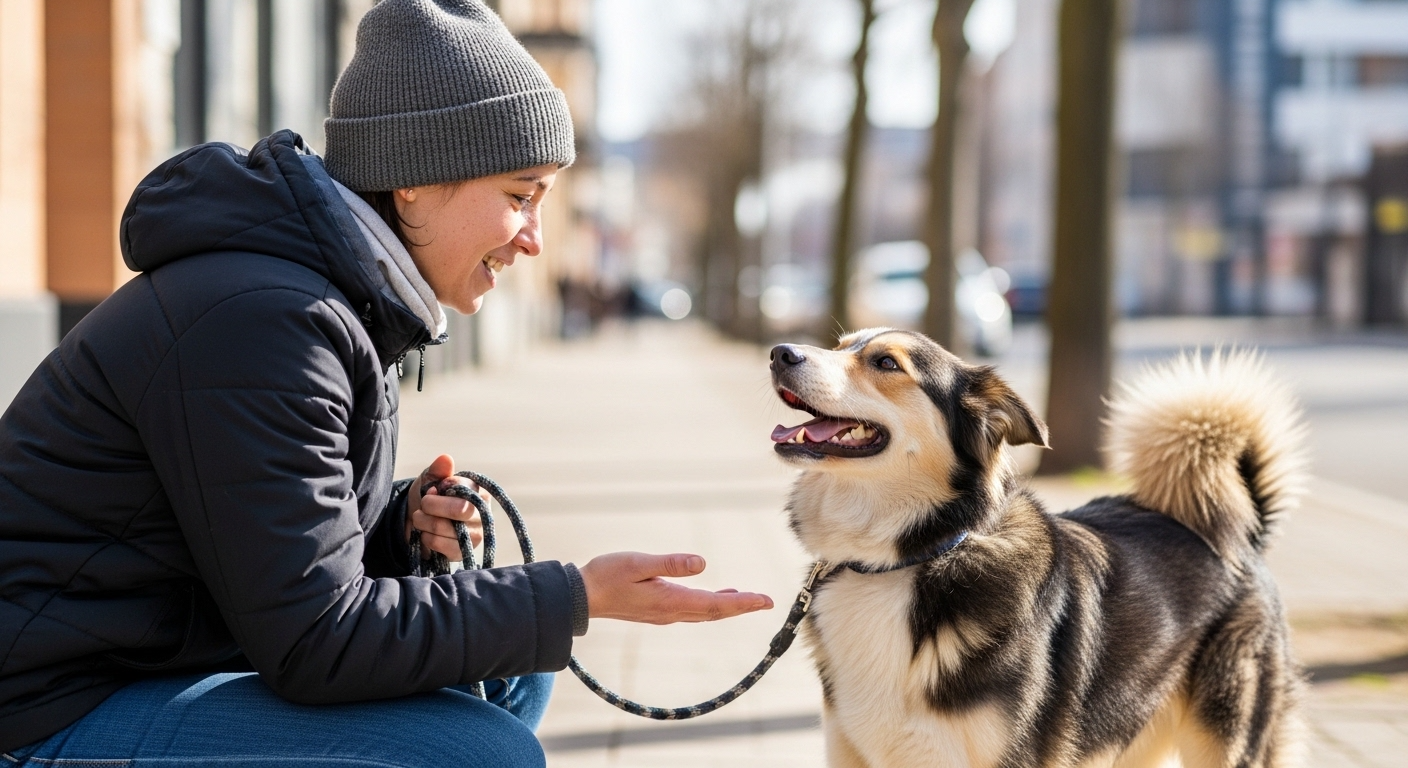
You have probably been in this situation more times than you can count. Walking down the street, minding your own business, when a dog appears on the footpath ahead, tail already moving, eyes already on you, the whole body language of the animal broadcasting a clear and uncomplicated invitation. In the space of a second or two, something in you makes a decision. You stop, crouch down, hold out a hand. Or you smile at the owner and keep walking. Or you cross slightly to the other side without quite acknowledging why.
It feels like nothing. A micro-moment in an ordinary day. But psychologists who study personality and social behaviour have been paying attention to exactly these kinds of small, apparently inconsequential choices, and what they have found is that how you handle the dog-greeting moment tends to reflect something genuine and specific about who you are. Not in a superficial way, but in ways that connect to well-documented personality traits, emotional patterns, and the underlying architecture of how you relate to the world and the people in it.
The Science of Small Decisions
Psychologists use the term micro-decisions to describe the constant stream of tiny choices that make up a day. Most of them happen so quickly and automatically that we do not experience them as decisions at all. Whether to make eye contact with a stranger. Whether to hold a door for someone a few steps behind you. Whether to acknowledge the dog.
These moments matter because they are largely unperformed. In situations where we know we are being evaluated or observed, most people adjust their behaviour consciously. But in the ordinary unscripted moments of daily life, the choices we make tend to reflect genuine underlying dispositions rather than managed impressions. The dog on the footpath is not a test anyone prepared you for. Your response to it is as close to an unguarded reading of your personality as most ordinary situations will ever provide.
Openness to Experience
The personality trait most consistently associated with stopping to greet unfamiliar dogs is what psychologists call openness to experience. This is one of the five major dimensions of personality that appears reliably across decades of research and across cultures, and it describes the degree to which a person is curious, imaginative, comfortable with novelty, and drawn to experiences that are uncertain or unpredictable in their outcome.
Greeting an unfamiliar dog is, by definition, a small act of stepping into the unknown. You do not know this animal. It might be exuberant and jump up at you. It might be indifferent and walk past. It might be nervous and back away. The interaction has no guaranteed outcome and no script. People who score high in openness to experience tend to find that uncertainty appealing rather than off-putting. They lean toward the unpredictable moment rather than away from it, treating it as something interesting rather than something to be avoided.
If you are the kind of person who regularly stops for dogs, who finds something genuinely enjoyable in the brief and unscripted exchange of a roadside dog greeting, there is a reasonable chance you also tend to embrace novelty elsewhere in your life. New places, unfamiliar people, ideas that do not fit neatly into existing categories. The dog is a small but reliable signal of that broader orientation.
A Gentler Kind of Extraversion
Extraversion is commonly described in its more obvious forms. The person who fills a room, who seeks out crowds, who finds energy in constant social interaction. But psychologists recognise that extraversion expresses itself along a wide spectrum, and the version connected to dog greeting behaviour tends to be quieter and more specific than the loud social variety.
People who initiate contact with unfamiliar dogs on the street are typically not seeking attention or social performance. They are seeking connection in its most low-stakes and uncomplicated form. The dog asks nothing complicated of them. There is no conversational navigation required, no social positioning, no risk of saying the wrong thing. There is just a brief and genuine exchange of goodwill between two creatures who will part ways in thirty seconds and never see each other again.
This pattern, initiating warm and friendly contact in public spaces without any particular social agenda attached to it, is characteristic of what researchers sometimes call affiliative extraversion. A disposition toward connection and warmth rather than toward stimulation and attention. People who exhibit it often also smile at strangers, make easy small talk in queues, and generally move through public spaces with a kind of social ease that does not depend on being the centre of anything.
Empathy Operating in Real Time
Greeting a dog well is not simply a matter of approaching it and reaching out a hand. It involves reading. Is this dog relaxed or tense? Is its tail wagging from the base or just at the tip, which means something quite different? Is it leaning toward you with curiosity or holding its weight back with uncertainty? Is the owner comfortable with the interaction or subtly signalling that now is not the best moment?
All of this happens very quickly and mostly unconsciously in people who are good at it, which is precisely what makes it psychologically interesting. The capacity to read these non-verbal signals accurately and respond to them appropriately is the same capacity that underlies emotional empathy in human relationships. People who are genuinely attentive to what a dog is communicating through its body tend also to be genuinely attentive to what people are communicating through theirs.
Research consistently finds that people who seek out and initiate interactions with animals score higher on measures of empathic concern, the ability to tune into and genuinely respond to the emotional states of others rather than simply projecting onto them or going through the social motions. If you find yourself naturally adjusting your approach based on how a dog seems to be feeling in that moment, slowing down when it seems uncertain, matching energy when it seems playful, that attunement is worth noticing. It almost certainly extends well beyond dogs.
Emotional Regulation and the Calming Effect of a Good Dog
There is a specific subset of dog-greeting behaviour that carries its own particular psychological signal. Stopping for a dog on a difficult day. Seeking out the brief contact of an animal when you are stressed, or anxious, or carrying something heavy, and finding that the interaction actually helps.
This is not simply a love of animals, though it may also be that. Research has shown that interaction with animals activates the parasympathetic nervous system, the branch of the autonomic nervous system responsible for calming the body after stress responses. Cortisol levels measurably decrease. Heart rate settles. The particular quality of attention that a dog demands, present, immediate, non-verbal, non-judgmental, appears to interrupt the loop of anxious or ruminative thinking in ways that are both real and rapid.
People who instinctively seek these moments during difficult times tend to have good self-awareness about their own emotional states, knowing when they need a reset and recognising it when they find one. They tend also to be people who manage stress through connection and sensory grounding rather than through withdrawal and avoidance. The dog on the footpath becomes, in these moments, something more specific than a pleasant encounter. It becomes a small and reliable tool for emotional regulation, and reaching for it reflects a practical intelligence about one’s own inner weather.
Comfort With Imperfection and Mess
Dogs are imperfect in the most direct and physical sense. They shed. They drool. They arrive with muddy paws and enthusiastic faces and absolutely no concern for what you are wearing. Engaging with an unfamiliar dog means accepting that some version of this will land on you, and doing so without visible reluctance.
The willingness to accept this is, psychologically speaking, connected to a broader comfort with the imperfect and uncontrolled aspects of life. People who can laugh at the muddy paw print on their trousers and enjoy the encounter anyway tend to be people who can extend similar tolerance to the imperfect and sometimes messy realities of close relationships, unexpected situations, and outcomes that do not match the plan. The dog is a small but surprisingly reliable proxy for this quality.
People who require a high degree of order and predictability in their environment often find uninvited physical contact from an unfamiliar animal uncomfortable in a way that goes beyond mere preference. The discomfort is real and is not a character flaw. But its absence, the genuine ease with which some people absorb the chaos of an enthusiastic dog and simply enjoy it, does tend to indicate a more relaxed relationship with imperfection across the board.
Trust and the Social Fabric of Ordinary Streets
There is a dimension to the dog greeting moment that operates at a level beyond individual personality. Every time you approach a stranger’s dog, hold out a hand, exchange a few words with the owner, and move on your way, you are participating in a small act of social trust. You are extending faith in a brief and anonymous connection. Trusting that the dog is safe to approach. Trusting that the owner is friendly. Trusting that the interaction will be net positive even though you have no prior evidence of any of these things.
These small exchanges are, cumulatively, part of what makes public spaces feel safe and connected rather than anonymous and guarded. They reinforce social trust at the most granular level, the level of individual strangers on an ordinary footpath on an ordinary afternoon. People who regularly participate in them tend to be people who value community in the broadest and most everyday sense. Not community as an abstract ideal but as a lived experience assembled from thousands of brief, genuine, low-stakes human moments.
If you are a dog-greeter, the trait this reflects most directly is a willingness to take small social risks for the possibility of connection. To open slightly toward a stranger, even momentarily, even knowing the connection will not last beyond the end of the block. That willingness, modest as it seems, is one of the building blocks of a life that feels genuinely connected rather than merely shared.
What Your Approach Style Says Specifically
Not everyone who stops for a dog does so in the same way, and the specific style of your approach carries its own information.
The enthusiastic greeter, who crouches immediately and makes full contact with an open hand and genuine delight, tends to be high in both openness and affiliative warmth, someone for whom connection is an instinct rather than a considered choice.
The cautious but willing approacher, who pauses first, checks the dog’s body language, asks the owner before extending a hand, typically displays high empathy combined with conscientious attention to others. They want the connection but they are also paying careful attention to whether it is welcome.
The quiet observer, who enjoys watching the dog from a slight distance, smiles at the owner, but does not initiate physical contact, often has genuine warmth and appreciation for the encounter without requiring direct participation in it. This pattern is frequently seen in people who are more introverted but no less empathic, people who connect through attention rather than through touch.
The person who keeps walking without acknowledgement is not necessarily cold or unfriendly. They may simply be somewhere else in their head, or having a day that has left them temporarily unavailable for even small social moments. One data point is never a personality profile.
What the Dog Already Knows
There is a reason dogs are so often used in therapeutic, educational, and social contexts. They respond to what is actually present in a person rather than to what that person is performing. They are not impressed by status, credentials, or confident body language that does not match the underlying emotional state. They read the real signal.
When a dog approaches you on the street with tail moving and eyes bright, it has already made its own assessment. Your response to that assessment, what you do with the invitation, how you engage or decline, how comfortable you are in the brief unscripted exchange, tells a small but genuine story about who you are in the unguarded moments of an ordinary day.
Psychology rarely gets to work with such clean and unperformed data. The dog on the footpath is, in its own way, one of the more honest personality tests available. And unlike most personality tests, it wags its tail while administering it.
Read More: For more psychology insights, personality science, and lifestyle stories written for Australian readers, visit wizemind.com.au