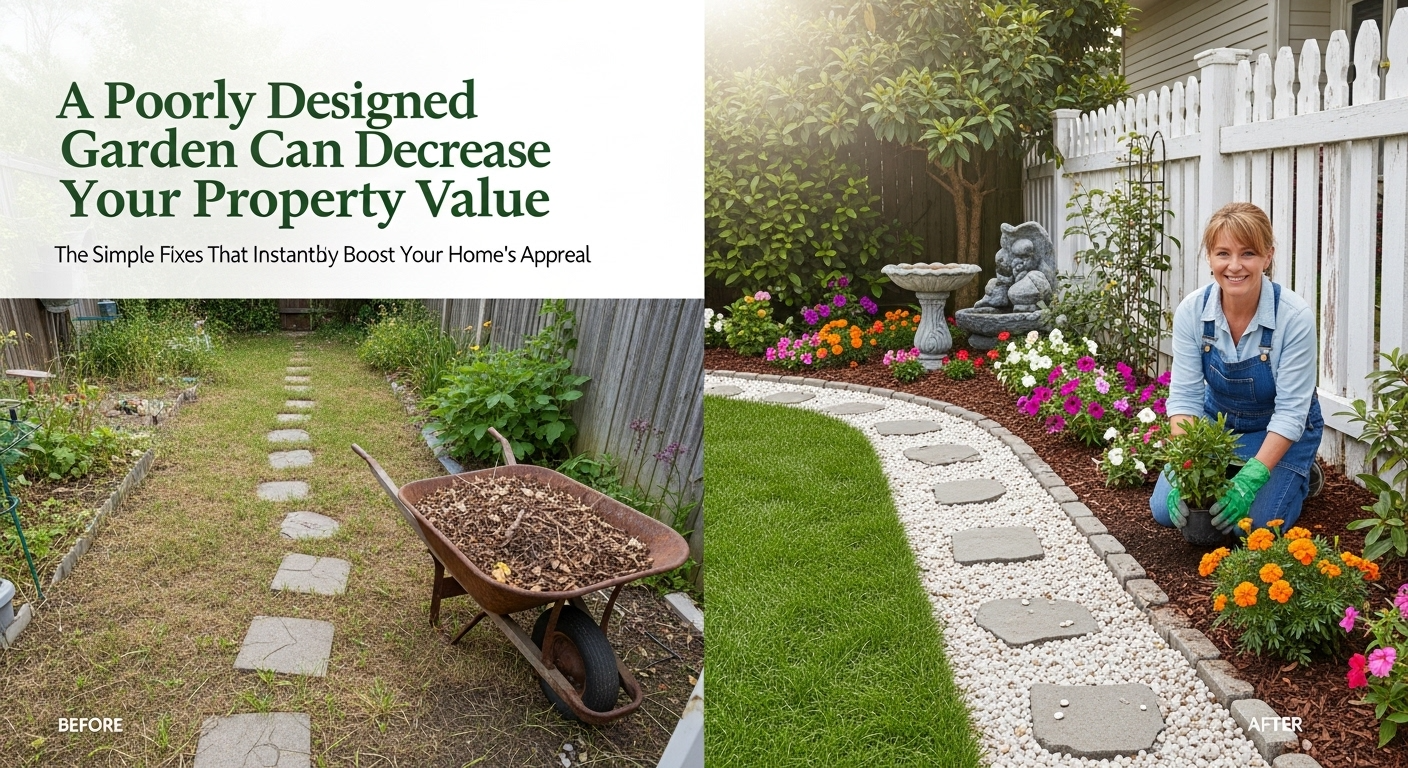
“A Poorly Designed Garden Can Decrease Your Property Value”: The Simple Fixes That Instantly Boost Your Home’s Appeal
The real estate agent didn’t even make it past the driveway.
She stood there, one hand shielding her eyes from the sun, the other holding her clipboard, and quietly let out a low whistle. You followed her gaze: the weedy lawn, the overgrown shrubs swallowing the windows, that patch of bare dirt where grass had simply given up.
You’d always meant to get to the garden one day. Now, standing beside someone whose job is to put a price tag on your home, you realised something you hadn’t wanted to admit.
Your garden wasn’t just neglected. It was costing you money.
When Curb Appeal Becomes Curb Repel
Most people think of their home’s value in terms of square footage, updated kitchens, or the age of the roof. The garden? That’s usually treated as a bonus — something to deal with later. But the truth is more blunt: a poorly designed or unkempt garden doesn’t just fail to impress. It actively drags your property value down.
Buyers begin making decisions the second they pull up to the kerb. Before they’ve seen the hardwood floors or the new bathroom tiles, they’re forming a story in their minds based entirely on what greets them outside. A tangled mass of shrubs, a patchy lawn, or a chaotic mix of plants whispers — or shouts — “this house has been neglected.” People don’t just see mess. They see work, money, and weekends lost to catch-up maintenance.
The good news hides in that same truth. If an untidy garden can quietly chip away at your home’s value, then small, smart changes can just as quickly boost it.
The Red Flags Buyers Notice Instantly
Buyers rarely use landscaping language. They don’t say “this foundation planting lacks structure.” Instead they say things like:
“It feels kind of crowded.”
“This looks like a lot of work.”
“We’d have to redo all of this.”
Those phrases almost always come from the same handful of design problems. Overgrown shrubs blocking windows darken rooms and suggest long-ignored maintenance. Patchy, yellowing lawn signals ongoing expense. Too many plant types in one bed makes a garden feel cluttered rather than lush. Faded ornaments, cracked pots, and plastic edging cheapen the overall feel. And a confusing or cramped path to the front door makes visitors uneasy before they’ve even knocked.
Each of these is a small thing on its own. Together, they tell a powerful story: this place will take a lot to fix. And that story often turns into a lower offer, or no offer at all.
Why Simplicity Is Your Biggest Asset
The fix doesn’t have to be expensive. In fact, one of the biggest mistakes homeowners make is thinking they need to go big — towering water features, elaborate rock gardens, high-maintenance flower beds. For most buyers, those things register as complicated and intimidating, not impressive.
What buyers respond to is clarity and calm. A garden that feels simple, tidy, and welcoming can be far more valuable than one that screams “you’ll need a gardening degree to keep this up.”
Think of your garden as the opening scene of a story about your home. You don’t need special effects. You need mood, pace, and clarity.
Start With a Ruthless Edit
Stand across the street and look at your property like a stranger would. What jumps out first? What feels fussy, cluttered, or tired?
Then be ruthless. Prune shrubs away from windows so natural light pours in and the house feels bigger from the inside. Remove dead or half-dead plants entirely — nothing drags down a space more than obvious decline. Pull out broken pots, faded ornaments, and anything plastic that has cracked or discoloured. Thin out plantings that are competing for space and give each one some breathing room.
This is about subtraction, not perfection. Like editing a good piece of writing, you are removing everything that confuses the message.
Define a Clear and Inviting Path
Every visitor, especially a potential buyer, should know exactly where to walk without thinking about it. Your entry path is a psychological bridge between the street and the promise of home.
Ask yourself whether the path is wide enough for two people to walk side by side without brushing against plants. Are the edges clean, or are plants spilling over the walkway? Is the route obvious, or does someone hesitate for a moment wondering where to go?
Simple fixes make a big difference. Trim plants back from the edges. Add a few low matching lights to outline the path gently. Use a single consistent edging material rather than a mix of bricks, stones, and plastic. That moment when someone walks to your front door is intimate. Make it feel easy and intentional.
Tackle the Lawn and Ground Cover
You don’t need a perfect lawn, but you do need something that reads as cared for. Buyers are surprisingly forgiving of size, but not of neglect.
Mow and edge just before showings — a clean sharp edge alone makes everything look more polished. Patch bare spots with fresh seed or quality sod well in advance, or cover them with mulch and a low-maintenance groundcover if grass struggles there. Add a fresh layer of bark or wood chip mulch to exposed soil in beds.
Mulch is one of the best value-for-money upgrades available. It unifies scattered plantings, improves soil over time, and makes the entire garden feel intentional and finished.
Use Color Simply and Deliberately
A riot of colour might delight a dedicated gardener, but most buyers respond best to a limited, repeated palette. Pick one or two key colours and echo them around the entrance.
Choose one or two main flower colours — white and soft purple, or deep red and cream — and repeat them in pots by the door, in a small bed near the walkway, and perhaps in a window box. Avoid scattering single plants of every colour across the garden. It reads as busy and disorganised, like mismatched fonts on a page.
White flowers work particularly well when selling. They glow in low light, photograph beautifully, and suggest freshness and simplicity.
Add Small Touches That Signal Quality
You don’t need an entire luxury landscape to suggest that a property has been cared for. A few well-chosen details do that work efficiently.
Think in terms of touchpoints — the spots people literally or visually interact with. A solid, clean front door mat that feels sturdy underfoot. One or two substantial matching pots flanking the entrance rather than a cluster of mismatched plastic ones. Fresh, clearly visible house numbers and a working doorbell. A simple well-maintained bench or chair that suggests the garden is actually enjoyed.
These are small investments that frame everything around them and make the whole property feel more considered.
What Buyers Really Want
There is a quiet tension at the heart of garden design for resale. People dream of relaxing in a lovely outdoor space. They also dread the upkeep. The most successful gardens resolve that tension by looking beautiful but feeling manageable.
Think of it as this equation: “I can imagine myself here” minus “this looks like a lot of work.” Your job is to tip the scales strongly toward the first feeling.
A poorly designed garden acts like a warning light on a dashboard. Even if the interior is beautiful, buyers wonder what else has been ignored. That question rarely leads to a generous offer. A well-edited garden, on the other hand, makes buyers more forgiving of everything they see inside. A slightly outdated bathroom is easier to overlook when the outside has already quietly said: someone has loved this place.
You are not just upgrading plants or paths. You are upgrading trust.
Frequently Asked Questions
Does landscaping really affect my home’s value that much? Yes. Well-maintained, attractive landscaping can significantly improve perceived value and reduce time on the market. Buyers often decide within minutes whether a home feels right, and the garden is a major part of that first impression.
Do I need to hire a professional landscaper? Not necessarily. Many high-impact improvements — pruning, mulching, decluttering, mowing, and adding a few well-chosen plants or pots — can be done yourself over a couple of weekends. A professional can help with larger design issues, but you can create a significant shift with simple DIY steps.
What is the most important area to focus on if I am short on time? Prioritise the front of the house and the path to the front door. Make sure the entry feels clean, clear, and welcoming. Trim plants away from windows, neaten the lawn, add fresh mulch, and place one or two attractive pots near the entrance.
Is a perfect lawn necessary to sell well? No. Buyers respond more to well cared for than to perfect. A reasonably healthy, freshly mown lawn with clean edges and no obvious bare patches is usually enough. In some climates, a low-maintenance mix of groundcovers, gravel, and planted beds can be just as appealing.
How much garden decor is too much? Less is more when selling. Keep one or two tasteful pieces — a bench, a single sculpture, or a birdbath — and remove the rest. Too many ornaments, mismatched pots, or faded decor makes the garden feel cluttered and lowers the perceived quality of the whole property.