A New Study Links the Gut Microbiome to Autism, Anorexia, and ADHD
Groundbreaking Research Suggests the Answers to Some Complex Disorders May Live in Your Gut
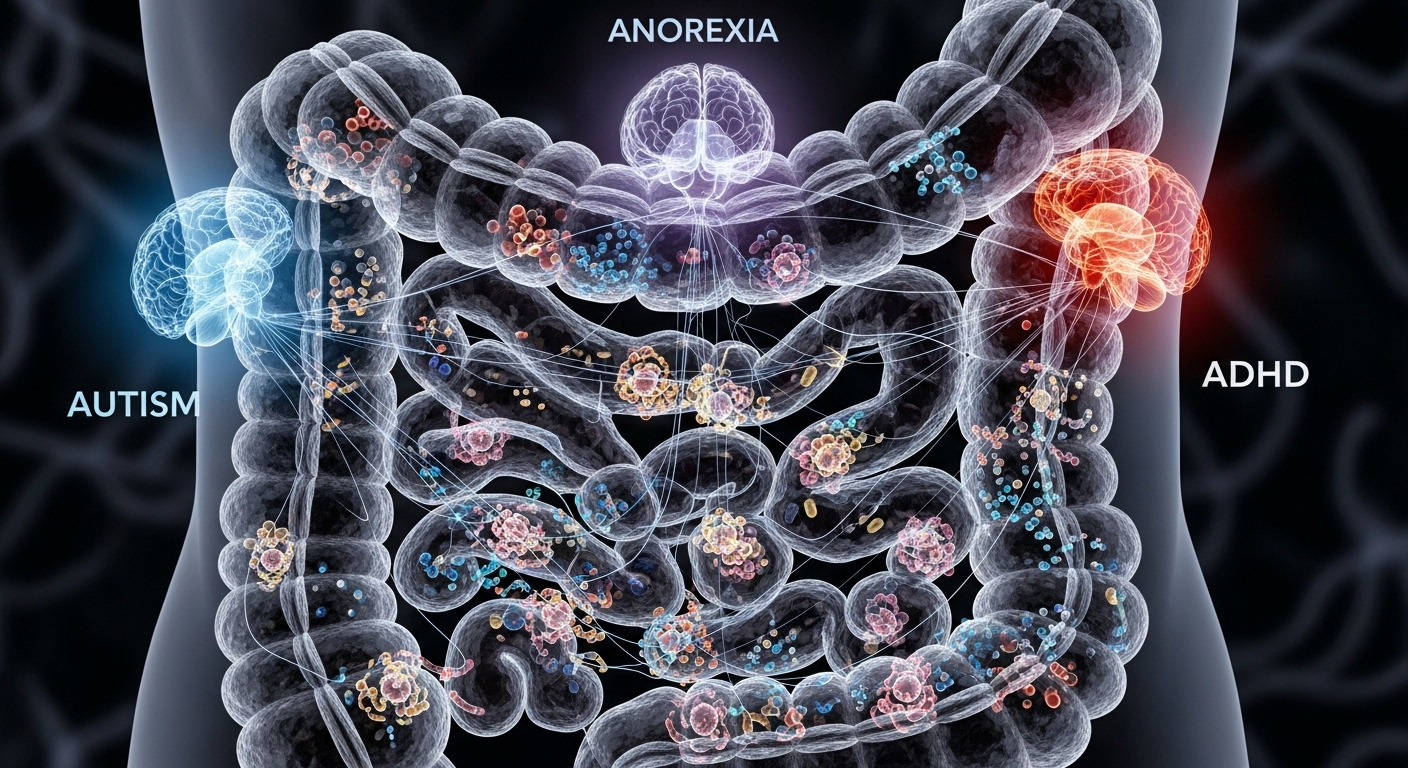
A major new study from Slovakia has found something that is reshaping how scientists think about mental and developmental health. The gut microbiome, the vast community of microbes living in the human digestive system, appears to share meaningful connections with autism, anorexia, and ADHD.
Published in the journal Nature Microbiology, the research identified distinct microbial patterns in individuals with each of these three conditions. The findings suggest these seemingly unrelated disorders may share a common biological foundation rooted in the gut, not solely in the brain.
What the Gut Microbiome Actually Is
The gut microbiome refers to the trillions of bacteria, viruses, and fungi that live within the human digestive tract. Far from being passive passengers, these microbes actively influence digestion, immune function, hormone regulation, and increasingly, brain chemistry and behaviour.
The communication pathway between the gut and the central nervous system is known as the gut-brain axis. This bidirectional channel allows conditions in the gut to directly affect neurological processes, and vice versa, in ways that researchers are only beginning to fully map.
The Autism Connection the Study Revealed
Researchers analysed the gut microbiomes of children with autism spectrum disorder and found consistent and measurable imbalances in microbial communities. Certain bacterial species were present in unusual concentrations, creating patterns that were clearly distinct from those found in neurotypical children.
These findings build on a growing body of international research pointing to the gut-brain axis as a factor in the development and progression of autism. Lead researcher Dr. Katarina Sucha described the gut microbiome as a gateway that influences neurological processes, not merely a digestive organ.
“The gut microbiome acts as a gateway, influencing not just digestion, but also neurological processes and brain function. Uncovering these links opens up new avenues for understanding and potentially even treating autism spectrum disorder.” — Dr. Katarina Sucha, Lead Researcher
How Anorexia Fits Into the Gut Microbiome Picture
Anorexia nervosa has long been classified primarily as a psychological and behavioural disorder, but this study complicates that picture significantly. Participants with anorexia showed a distinct microbial fingerprint, with specific bacterial species either significantly elevated or reduced compared to those without the condition.
This does not mean anorexia is caused solely by gut bacteria, but it does suggest that biological factors in the gut may reinforce or perpetuate the disorder alongside psychological drivers. Dr. Sucha noted that this connection opens the door to probiotic and dietary therapies that could support recovery by targeting the gut environment directly.
ADHD and the Microbial Signatures Found in Children
Children diagnosed with ADHD also showed measurable variations in gut microbial diversity and abundance compared to unaffected peers. The specific bacterial strains present differed in ways that researchers believe may influence neurotransmitter production and behavioural regulation through the gut-brain axis.
This is particularly significant because ADHD management currently relies heavily on stimulant medications and behavioural therapies, neither of which address any underlying gut-related biological factors. The study raises the possibility that gut-targeted interventions could one day complement or even reduce reliance on pharmaceutical approaches for some individuals.
“The gut microbiome is not just a passive player in these disorders. It actively influences brain function, neurotransmitter production, and even behavioural patterns. By understanding these complex interactions, we can explore novel therapeutic approaches that target the gut to potentially alleviate ADHD symptoms.” — Dr. Katarina Sucha
What a Common Biological Substrate Across Three Disorders Means
One of the most striking aspects of this research is the suggestion that autism, anorexia, and ADHD share overlapping biological ground in the gut. These three conditions have historically been treated as entirely separate categories with distinct causes, diagnostic criteria, and treatment pathways.
If the gut microbiome proves to be a shared contributing factor, it could reshape diagnostic approaches and open pathways for treatments that work across multiple conditions simultaneously. This would represent a significant shift in how psychiatry and neurology approach comorbid conditions, which are extremely common in clinical practice.
The Therapeutic Possibilities Now Being Explored
Researchers are actively investigating fecal microbiota transplants, a procedure that transfers the gut microbiome of a healthy donor to restore balance in a dysbiotic gut. Early studies have shown promising results in alleviating neurological and behavioural symptoms in some individuals with autism and ADHD through this approach.
Personalised probiotic and prebiotic supplements tailored to an individual’s specific microbial profile represent another avenue under serious investigation. Rather than generic probiotic products, these targeted formulations aim to address the precise bacterial imbalances identified in each patient’s gut profile.
How Healthcare Professionals Are Being Asked to Respond
The study’s authors and supporting researchers are calling for gut health assessments to become a standard component of mental health evaluations. This would mean screening patients for microbial imbalances alongside the psychological and neurological assessments that currently define the diagnostic process.
For Australian clinicians and families navigating autism, eating disorder, or ADHD diagnoses, this research points toward a more integrative model of care. A model where dietitians, gastroenterologists, and mental health practitioners work together rather than operating in entirely separate lanes.
What Individuals Can Do Right Now to Support Gut Health
While clinical therapies are still being developed and tested, there are evidence-supported dietary steps that individuals can take to support gut microbiome health in the interim. Increasing fibre intake through vegetables, legumes, and whole grains provides the prebiotic material that beneficial gut bacteria need to thrive and maintain diversity.
Fermented foods including yoghurt, kefir, kimchi, and sauerkraut introduce live bacterial cultures that contribute to microbial balance in the gut. Reducing ultra-processed food consumption, which has been consistently linked to reduced gut microbial diversity, is also among the most actionable steps available without clinical intervention.
Frequently Asked Questions
What is the gut-brain axis and why does it matter here? It is the bidirectional communication system between the gut and the central nervous system, allowing microbial activity in the gut to directly influence brain function and behaviour.
Does this mean gut bacteria cause autism, anorexia, or ADHD? Not definitively. The study identifies associations and patterns, not direct causation. Further research is needed to establish whether gut changes precede or follow the conditions.
What is a fecal microbiota transplant and is it available in Australia? It is a procedure transferring gut microbiome from a healthy donor to a recipient. It is currently approved in Australia for certain bowel conditions and is being studied for neurological applications.
Should people with ADHD or autism change their diet based on this research? Dietary changes that support gut health are broadly beneficial and low risk, but any significant changes should be discussed with a healthcare professional familiar with the individual’s full medical history.
How soon might gut-targeted mental health treatments become mainstream? Researchers describe this as an emerging field with significant promise, but widespread clinical adoption is likely still several years away pending larger human trials.
Key Points to Remember
- A Slovak study published in Nature Microbiology found distinct gut microbiome patterns in individuals with autism, anorexia, and ADHD.
- The gut-brain axis is a bidirectional communication pathway that allows gut conditions to influence neurological and behavioural outcomes.
- The findings suggest these three conditions may share a common biological foundation in the gut microbiome, challenging longstanding categorical distinctions.
- Fecal microbiota transplants and personalised probiotics are among the therapeutic approaches currently under investigation.
- Dietary changes that increase fibre and fermented food intake represent accessible steps individuals can take to support gut microbiome health today.
Conclusion
The idea that the gut holds clues to some of the most complex and challenging neurological conditions is no longer fringe science. It is published, peer-reviewed, and increasingly supported by research teams across multiple countries and disciplines.
For families, clinicians, and researchers dealing with autism, anorexia, or ADHD, this study offers something genuinely valuable. Not a cure, but a new direction and a compelling reason to look beyond the brain when trying to understand what is happening inside it.
Read more: https://wizemind.com.au