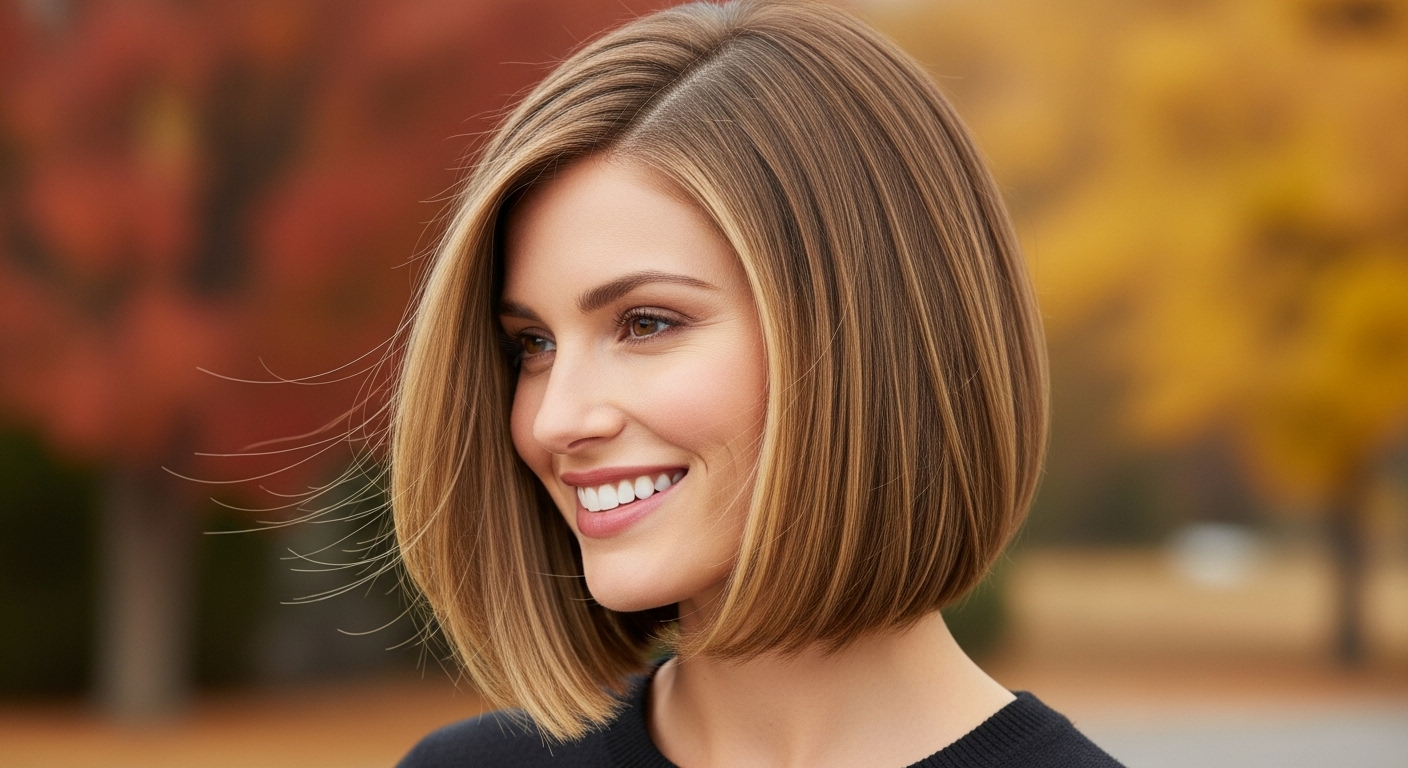
A-Line Bob Haircut: This Perfect Bob for Fine Hair Will Be Very Trendy This Fall
The first time you see an A-line bob done really, really well, it is almost disarming. It is that woman stepping out of the salon and into the late-afternoon light, hair swinging just a little longer toward her collarbone in the front, cleanly tucked and shorter at the nape. The shape looks effortless and intentional all at once. Sharp as a pressed white shirt, soft as a breeze through turning leaves. If you have fine hair, it is the kind of cut that makes you pause and think: oh, that could work on me. And this fall, that quiet little realization is about to become a full-blown trend.
Key Points
- The A-line bob is one of the most flattering haircuts for fine hair because it creates the illusion of density and lift
- The shorter stacked back and longer front angle give fine hair structure and volume it usually struggles to hold
- This fall the cut pairs naturally with coats, turtlenecks, and the clean edited aesthetic of the season
- The shape does most of the styling work for you, making morning routines faster and simpler
- A chin-length or just-below-chin version works best for very fine hair
- Curtain bangs or a soft side-swept fringe complement this cut better than heavy blunt bangs on fine hair
- Trims every six to eight weeks keep the shape sharp, but the cut grows out gracefully if you prefer a softer look
The Cut That Loves Fine Hair Back
Fine hair can feel like a riddle no one quite solves. Too many layers and it frays into wisps. Too blunt and it flattens into a curtain. You baby it with volumizing mousse and dry shampoo only to watch it slip back into place by lunchtime. It is not that your hair will not cooperate. It is that it needs the right architecture.
The A-line bob is architecture in motion. The back is softly stacked or gently graduated, rising to expose the neck, while the front drapes a little longer toward your jaw or collarbone. Nothing severe. Just a slight angle, like a hillside leading your eye from one point to the next. That angle is magic for fine hair. It condenses the bulk where you need it most, around the crown and nape, so hair appears denser, thicker, and more deliberate.
In a season where the light thins and shadows stretch, this cut is like a frame that holds your face just so. The hairline curves in the mirror. Your profile looks sharper, your jaw more defined, your neck suddenly a feature rather than an afterthought. Fine strands, once a source of frustration, fall into place as if this is what they were waiting for all along.
The Mood of Fall, Captured in a Haircut
There is something distinctly autumnal about an A-line bob on fine hair. Picture an early October morning. Air cool and bright, leaves edged with burnished gold and slow reds. You shrug on a blazer or a long wool coat, wrap your hands around a hot cup of coffee, and there it is: this clean elegant line of hair tracing the edge of your face, grazing the collar, catching soft light.
Fall is the season of editing. We put away the wildness of summer, the salt-stiffened beach hair, the ponytail worn for three months straight, and pare back to essentials. The A-line bob is that edit in haircut form. It is not choppy or chaotic. It does not try too hard. It is honest and intentional, a shape that says: I am here, clearly, without excess.
For fine hair, that clarity matters. Long heavy cuts drag it downward. Sharp one-length bobs can sometimes highlight the thinness rather than disguise it. But the A-line’s subtle graduation gives lift where fine hair tends to collapse: at the back of the head, the crown, and just behind the ears. That airy stack at the nape creates a small shelf of volume. Suddenly your silhouette is rounder, richer, and more three-dimensional, even if your actual density has not changed at all.
Walk down any city street this fall and you will spot it. That angled bob swinging under trench coats, paired with turtlenecks and chunky boots. It is a cut that looks as natural next to a forest trail as it does in a cafe window. There is movement when you turn your head, a subtle sweep when the wind picks up, fine hair freed from its usual limp obedience and given a new kind of backbone.
Why Fine Hair and an A-Line Bob Are a Perfect Match
On paper the A-line bob is simple. In reality it is a quiet technical achievement, especially for fine hair. The magic lives in the details your stylist will talk through with you, and you will appreciate every single one of them on the mornings when your reflection surprises you in the best possible way.
First, the angle. A gentle forward tilt gives the illusion of density at the front where fine hair often looks see-through. Hair that might feel sparse around your temples suddenly looks precise and intentional, with the front pieces framing your cheeks softly. The longer front also keeps you from feeling too short, which is a common fear for anyone used to longer lengths.
Then there is the stack or graduation at the back. With fine hair, this is where the real transformation happens. Tapering and stacking toward the nape creates a rounded shape instead of a flat pressed-down look. The hair layers over itself in a way that encourages natural lift. Even when it falls, it does not collapse against your head. It stands slightly away, like a well-tailored coat that hangs just right from the shoulders.
Finally there is the weight removal. Fine hair often does not need thinning so much as redirecting. An experienced stylist will avoid aggressive texturizing that can shred the ends. Instead they will carve soft internal layers or use slide cutting to help your hair bend and move without fraying. The result is that rare thing: a cut that looks full without feeling bulky, airy without feeling fragile.
Your Fall Bob Options at a Glance
To imagine how your A-line bob might live in your day-to-day life this fall, here is a simple look at the main variations for fine hair.
A chin-length A-line bob suits very fine straight hair and gives a sharp modern feel that works beautifully for city life and clean minimal styling.
A collarbone A-line bob suits fine hair that needs movement and creates a softer more romantic result that pairs perfectly with layered knitwear and long afternoon walks.
A soft A-line with curtain fringe suits fine hair with a hint of wave and brings a relaxed bohemian quality that feels right for book-in-a-coffee-shop kind of weekends.
A sleek A-line with no fringe suits fine straight hair that smooths easily and delivers a polished look that carries you from the office into the evening without any fuss.
A textured A-line bob suits fine hair that holds a curl and produces that lived-in wind-tousled result that feels effortless on weekend mornings.
None of these require thick hair. What they all require is shape, and that is exactly what an A-line bob provides.
Living With an A-Line Bob Day to Day
There is the first-day thrill of stepping out of the salon, running your fingers along the angle, watching the ends kick just slightly as you move. But the real test of a haircut is what happens on the third day, in dim bathroom light, when you are running late.
With an A-line bob on fine hair, mornings shift. You wake up and instead of coaxing life into heavy lank strands, you shake your head once or twice and the cut mostly falls where it should. You may need a quick pass of a round brush or a flat iron at the front, a small spritz of root spray at the crown. That is it. The architecture does the rest.
There is a kind of sensory pleasure in it. The nape feels lighter, the back of your neck slightly more exposed to the cool air of your kitchen. Your scarf brushes against the stacked layers. When you tuck one side behind your ear, the longer front pieces arc softly toward your cheek, creating shadows and highlights that were not there before.
Fine hair tends to reveal every awkward grow-out stage, but this cut ages gracefully. As the front lengthens the A-line softens into a more relaxed lob-like shape. You can maintain the sharpness with trims every six to eight weeks, or let it stretch out gently, the angle becoming softer and more undone like leaves curling at the edges as the season deepens.
Styling Rituals That Do Not Exhaust You
If your hair is fine, you probably know the fatigue of overcomplicated routines. Products that promise lift leave you with sticky roots. Heat styling that looks good at nine in the morning sinks by lunch. The point of this fall’s A-line bob trend is not to trap you in the bathroom with tools. It is to give you a cut that already understands your hair.
In practice that means a few simple steps.
Apply a light volumizing spray or mousse at the roots while hair is still damp, focusing mostly at the crown and back. Blow-dry with your head slightly tipped forward, then finish with a round brush at the front to bend the longer pieces under or away from your face. Add a touch of dry texture spray on the mid-lengths if you want that worn-in autumn-walk feel. On sleek days, work a small amount of smoothing serum through the ends only, keeping the roots free so they can lift naturally.
What you do not need is layers of heavy cream, constant teasing, or complicated styles to disguise how thin your hair feels. The cut does the heavy lifting. Your routine becomes less about fighting your texture and more about working with what is already there.
How to Talk to Your Stylist About It
Walking into a salon with screenshots and a vague request like this but not too short can feel nerve-racking, especially if you have had haircuts that looked stunning on thick glossy hair in a photo but fell completely flat on your own. For an A-line bob that genuinely works on fine hair, the conversation matters almost as much as the scissors.
Start with honesty. Tell your stylist how your hair actually behaves when you do nothing to it. Does it puff at the ends? Does it fall poker straight and limp? Does it hold a curl for an hour or ten minutes? Describe your real mornings, not your aspirational ones. Say that you are willing to blow-dry for five minutes but not twenty. Say that you never use hot tools. Say that you wash every three days. These details help them design a cut that fits your actual life, not someone else’s.
Then speak in feelings and shapes rather than just photos. Tell them you want the back to feel lighter and higher but you still want some length around your face. Tell them you want it to look full without being poufy. Tell them you like movement but do not want wispy ends. A good stylist will translate all of this into technical choices: how steep the angle, how much stacking, how soft or strong the perimeter line should be.
For fine hair specifically, ask about the degree of graduation in the back since too much can feel severe and too little may not give the lift you are hoping for. Ask whether they will use razors or thinning shears since both should be used lightly and carefully on fine hair. Ask how often you will need trims to keep the shape looking intentional.
Leave the salon with a clear plan: which products to use, how to blow-dry in five minutes, and when to come back before the cut loses its line. The goal is not perfection on day one. It is ease and confidence on day twenty, day sixty, and day ninety.
The Quiet Confidence of a Well-Cut Bob
There is a subtle shift that comes with a haircut that really suits you. It is not dramatic or cinematic. It is quieter than that. It is catching sight of yourself in a shop window and not immediately looking away. It is noticing that your profile looks balanced in a photo. It is that sense that your hair finally feels like an ally rather than a daily negotiation.
The A-line bob offers that to fine-haired people in a season that already invites a kind of gentle reinvention. It is the haircut of clean notebooks and fresh starts, of choosing what to keep and what to let go. You might find that releasing those extra inches of length, those long limp ends you were afraid to cut, feels like letting go of something else you no longer need.
As the air turns crisp and the world shifts into deeper richer colors, this cut stands as a kind of personal punctuation. Not an exclamation point, not a question mark. More like a pause and a breath before the next part of the story you are writing about yourself.
Frequently Asked Questions
Is an A-line bob really good for fine hair?
Yes. The slight angle and gentle stacking in the back create the illusion of density and lift, which helps fine hair look fuller and more structured. It is one of the most flattering bob shapes for hair that tends to fall flat.
How short should I go if my hair is very fine?
A chin-length or just-below-chin A-line bob usually works best for very fine hair. The shorter back adds volume while the slightly longer front keeps the look soft and approachable rather than severe.
Does an A-line bob work if my fine hair is slightly wavy?
Absolutely. A soft A-line bob can look beautiful on fine wavy hair. Your stylist may add very light internal layering so the waves can move without looking stringy. You can enhance the waves with a diffuser or smooth them out for a sleeker finish depending on your mood.
Will this haircut require a lot of styling time?
Generally no. One of the biggest advantages of an A-line bob on fine hair is that the shape does most of the work. With a good cut, a light root-lifting product and a few minutes with a blow-dryer are usually all you need.
How often should I trim an A-line bob to keep the shape?
Every six to eight weeks is ideal to maintain the angle and clean lines, especially at the nape. If you prefer a softer more grown-out look, you can stretch it to around ten weeks between visits.
Can I add bangs to an A-line bob if my hair is fine?
Yes, but choose thoughtfully. Curtain bangs or a soft side-swept fringe usually work better than heavy blunt bangs on fine hair. They add interest around the face without taking too much volume away from the rest of the cut.
Will an A-line bob make my hair look thinner at the ends?
Not if it is cut correctly. A well-executed A-line bob maintains a solid clean perimeter at the bottom so the ends look deliberate rather than wispy. Make sure your stylist avoids over-thinning the tips, which can make fine hair appear see-through.
Is this style still going to be trendy after this fall?
The A-line bob comes in and out of the spotlight but it never truly goes out of style. This fall it is especially on trend, but its simplicity and flattering shape mean it will still feel current and wearable many seasons from now.
Read more health and wellness articles at wizemind.com.au