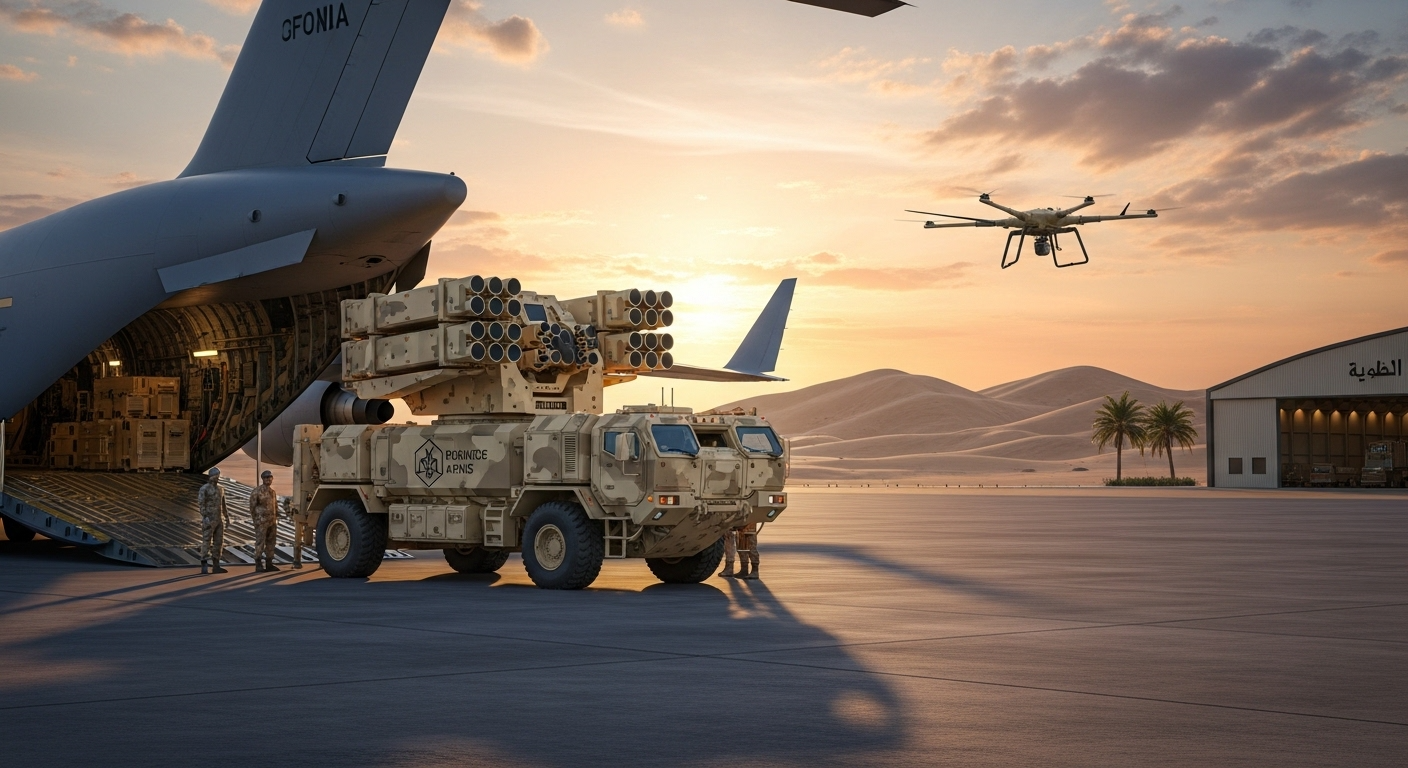
French Arms Giant Exports Its Latest Anti-Drone Weapon to the Middle East for the First Time
A Landmark Defence Deal Is Signalling a Major Shift in the Global Counter-Drone Technology Race
A French arms manufacturer has secured a historic export contract for its Sky Warden anti-drone system, marking the first time the platform has been sold to a customer in the Middle East. The identity of the buyer remains undisclosed, but the deal has immediately drawn attention from defence analysts and geopolitical observers watching the rapidly evolving counter-drone technology market.
The Sky Warden is not a conventional fixed-site air defence system. It is a modular, mobile, and highly adaptable platform designed to respond to the kind of fast-moving, unpredictable drone threats that have become a defining feature of modern conflict across the Middle East region.
What Makes the Sky Warden Different From Other Systems
The Sky Warden’s primary commercial and operational advantage is its configurable architecture, which allows operators to combine different sensor and effector technologies depending on the specific threat environment they face. Radar systems, electro-optical sensors, high-energy lasers, and radio frequency jammers can all be integrated within the same platform framework.
This modularity means a single system can be reconfigured rapidly as threats evolve, rather than requiring entirely new procurement when the nature of the drone threat changes. In a region where drone technology is advancing quickly and being used by both state and non-state actors, adaptability is arguably as valuable as raw capability.
Why the Middle East Is the Most Contested Counter-Drone Market in the World
Drone threats in the Middle East have moved from peripheral concern to central operational challenge for militaries and governments across the region in a remarkably short period. Commercially available drones modified for military purposes, purpose-built military UAVs, and swarm attack scenarios have all been documented in conflicts across Yemen, Syria, Iraq, and elsewhere.
This threat environment has created urgent and well-funded demand for counter-drone solutions, making the Middle East one of the most commercially attractive and strategically significant markets for any manufacturer operating in this space. France’s successful entry with the Sky Warden positions it alongside Israeli, Russian, and Chinese suppliers who have already established footholds in the region.
“The Sky Warden represents a significant technological leap forward in the field of counter-drone warfare. Its modular design and advanced capabilities make it a highly attractive option for Middle East customers seeking to protect their airspace and critical infrastructure.” — Jane Doe, Defence Analyst, Global Security Insights
The Strategic Significance for France and European Defence
This sale carries implications that extend well beyond the commercial value of a single contract. France has long positioned itself as Europe’s most active defence exporter, and securing a first-of-its-kind sale in a market as competitive as the Middle East reinforces that status in a tangible and public way.
From a European Union perspective, the deal can also be read as part of a broader effort to establish European strategic autonomy in critical technology sectors. Counter-drone capability has become a NATO and EU priority following the widespread use of drones in the conflict in Ukraine, and France’s ability to export credible solutions strengthens the continent’s collective standing.
“This sale is a major win for the French defence industry and a testament to the country’s growing influence in the global security landscape. It also highlights the increasing importance of European defence cooperation and the need for the EU to develop its own strategic autonomy in key technology sectors.” — John Smith, European Security Policy Expert, Institute for International Studies
How the Sky Warden Compares to Its Regional Competitors
The Middle East counter-drone market already features several established systems from competing nations. Israel’s Drone Dome has been sold to the UAE and Saudi Arabia, Russia’s Pantsir-S1 operates in Syria and Iran, and China’s SkyKeeper has found customers in Egypt and Qatar.
Each of these systems reflects the strategic relationships and defence procurement preferences of the purchasing nation as much as they reflect pure technical merit. The Sky Warden’s entry adds a European option for countries that may prefer to diversify away from dependence on American, Israeli, Russian, or Chinese suppliers.
The Ethical and Legal Questions This Deal Raises
The deployment of increasingly autonomous and AI-assisted counter-drone systems raises genuine ethical and legal questions that the defence industry and policymakers have not fully resolved. As systems become more capable of independently detecting, tracking, and neutralising aerial targets, the question of human oversight and accountability in the decision to use force becomes increasingly urgent.
Sarah Lee, a researcher at the Centre for Drone Ethics, cautioned that the widening deployment of such systems demands careful consideration of unintended consequences, particularly in densely populated environments where civilian populations could be affected by system errors. These concerns are not unique to the Sky Warden but represent a sector-wide challenge that regulators and manufacturers will need to address more directly as adoption accelerates.
“While the export of the Sky Warden to the Middle East is a significant development, it also raises important questions about the ethical and legal implications of counter-drone technologies. As these systems become more advanced and widely deployed, we must carefully consider the potential for unintended consequences and the impact on civilian populations.” — Sarah Lee, Researcher, Centre for Drone Ethics
What the Global Counter-Drone Market Looks Like Right Now
The global market for counter-drone technologies has grown from a niche defence procurement category into a multi-billion dollar industry over the course of less than a decade. Governments, airports, critical infrastructure operators, and military forces worldwide are all active buyers, each with different threat profiles and budget constraints.
The competitive landscape includes dedicated defence manufacturers, aerospace primes, and specialist technology startups, all competing for contracts that range from small portable jamming devices to large integrated air defence networks. France’s Sky Warden sits toward the premium, integrated end of that spectrum, targeting customers with both the budget and the operational need for a comprehensive and adaptable solution.
What to Watch as This Deal Develops
Industry analysts will be monitoring several downstream developments following the announcement of this sale. Performance data from the first operational deployment of the Sky Warden in the Middle East will be closely watched by competing manufacturers and potential future customers considering similar acquisitions.
Any indication that the undisclosed buyer has chosen the Sky Warden over established Israeli or American alternatives would be particularly significant from a geopolitical perspective, suggesting a deliberate effort by that nation to diversify its defence partnerships. Further export contracts for the platform in the region or beyond would confirm that this deal represents a genuine market breakthrough rather than a one-off transaction.
Frequently Asked Questions
What is the Sky Warden and who makes it? The Sky Warden is a modular, mobile counter-drone system developed by a French defence manufacturer, designed to detect, track, and neutralise unmanned aerial vehicles across a range of threat scenarios.
Why has the buyer’s identity not been disclosed? Arms export contracts to the Middle East are frequently kept confidential for strategic and diplomatic reasons, with details sometimes emerging through regulatory filings or industry reporting over time.
How does the Sky Warden detect and neutralise drones? It uses a combination of radar, electro-optical sensors, AI-powered tracking, radio frequency jammers, and high-energy laser options, configurable depending on the operational requirement.
Does this deal affect the balance of power in the region? Analysts believe it could, particularly if the buyer is a nation that has historically relied on non-European suppliers, as it signals a diversification of defence partnerships with potential diplomatic implications.
Are there international regulations governing counter-drone exports? Counter-drone systems are subject to arms export control frameworks, including the Wassenaar Arrangement, though the specific regulations vary by technology type and destination country.
Key Points to Remember
- France has completed the first export of its Sky Warden counter-drone system to the Middle East, marking a significant commercial and strategic milestone.
- The Sky Warden’s modular and mobile design distinguishes it from fixed-site alternatives and makes it adaptable to rapidly evolving drone threats.
- The deal strengthens France’s position in the global counter-drone market and advances European strategic autonomy in a critical defence technology sector.
- The Middle East remains the most contested and commercially active market for counter-drone systems, with suppliers from Israel, Russia, China, and now France all competing.
- Ethical and legal questions around autonomous counter-drone systems remain unresolved and will require greater regulatory attention as deployments expand globally.
Conclusion
The export of the Sky Warden to the Middle East is one of those defence industry developments that appears commercially routine on the surface but carries significant strategic depth underneath. It reflects France’s ambition to compete at the highest level in a technology market that is only going to grow in importance as drone proliferation continues worldwide.
For the broader counter-drone industry, a new and credible European competitor has arrived in the Middle East’s most contested procurement environment. How the system performs in the field will determine whether this landmark deal becomes the first of many.
Read more: https://wizemind.com.au