In China, Skyscrapers Are So Tall a Brand New Job Has Appeared
When Buildings Reach 100 Floors and Beyond, Getting Lunch Becomes a Logistical Operation
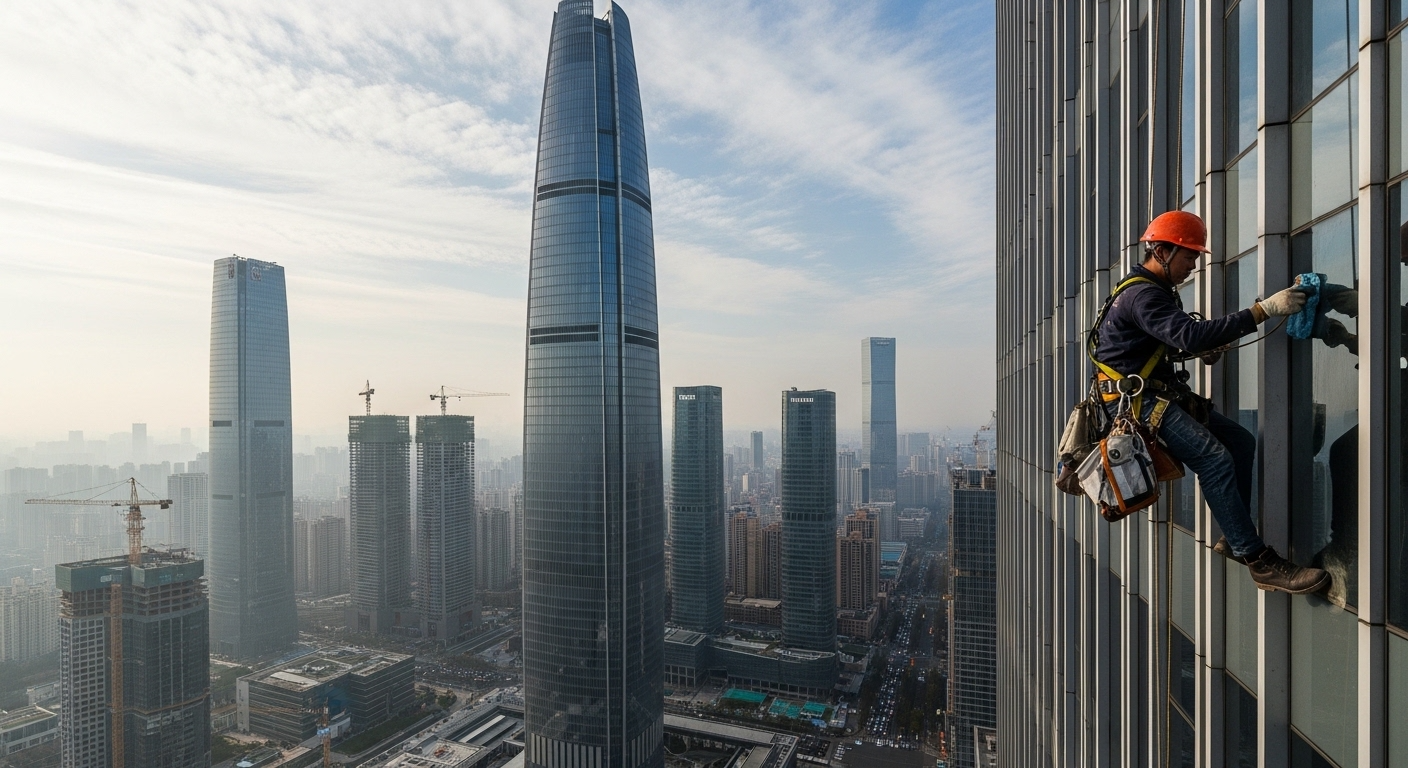
China’s skyscrapers have grown so tall that an entirely new category of urban worker has emerged to serve the people inside them. In cities like Shenzhen, couriers now specialise exclusively in delivering meals and essential items to offices above the 80th floor.
These workers are not standard delivery riders navigating city streets. They are vertical logistics specialists who spend their working days moving between elevator banks, stairwells, and security checkpoints inside some of the world’s tallest buildings.
The Building That Made This Job Necessary
The Ping An Finance Center in Shenzhen stands at 115 stories, making it one of the tallest buildings on the planet. For workers stationed near the top, something as simple as ordering lunch from a ground-floor restaurant becomes a genuinely complex exercise in time management.
Standard delivery platforms were not designed with vertical transit times in mind. A courier arriving at the lobby still faces a journey that can take ten to fifteen minutes of elevator navigation before reaching the correct floor.
What a Skyscraper Courier Actually Does Each Day
The role requires a level of spatial intelligence and building-specific knowledge that takes time to develop. Each courier must learn the traffic patterns of multiple elevator banks, the timing of peak congestion, and the fastest combination of lifts and stairs for each delivery window.
They also navigate security protocols, access codes, and floor-specific reception procedures that vary across different tenants within the same tower. A single building can house dozens of companies with entirely different entry requirements, all of which the courier must memorise and manage simultaneously.
The Physical Demands of Working in the Vertical City
This is not a desk job, and it is not a standard delivery role either. Physical endurance is a baseline requirement, as couriers regularly cover the equivalent of multiple building climbs throughout a single shift.
On days when elevator congestion is high, couriers resort to stairwells for portions of their route. Carrying insulated food containers up twenty or thirty flights of stairs under time pressure is a routine part of the job during peak lunch and dinner hours.
How These Workers Fit Into China’s Gig Economy
Most skyscraper couriers operate as independent contractors or through specialised vertical delivery platforms rather than as salaried employees. The gig model appeals to many workers in this space because it offers schedule flexibility in a city where the cost of living demands adaptable income strategies.
A tight-knit professional community has developed among these couriers, with experienced workers sharing knowledge about building layouts, elevator timing strategies, and client preferences. This informal knowledge network is one of the most valuable assets a new skyscraper courier can access when starting out.
The Coordination Required Behind Every Delivery
What looks like a single courier carrying a bag of food is actually the visible end of a well-coordinated supply chain. Restaurants and suppliers must have orders ready to precise timings because even a two-minute delay at ground level can cascade into a significantly late delivery by the time the courier reaches floor 90.
Couriers liaise simultaneously with kitchen staff, building security, reception teams, and clients across multiple active deliveries at any given time. Strong communication skills are not optional in this role but are as operationally important as physical fitness and route knowledge.
Technology Plays a Supporting Role but Cannot Replace the Human Element
Delivery apps and digital coordination tools have been adapted to include vertical transit time estimates for skyscraper zones in major Chinese cities. These tools help dispatch teams assign deliveries more realistically and give clients more accurate arrival windows for their orders.
However, the unpredictability of elevator systems, building access delays, and real-time congestion means that human judgement remains the most reliable variable in the system. No algorithm has yet replaced the experienced courier who knows that the south elevator bank runs faster on weekday mornings or that a particular floor’s security desk adds three minutes to every delivery.
What This Phenomenon Reveals About the Future of Cities
China currently has more skyscrapers over 200 metres tall than any other country on Earth, and construction continues at a pace that shows no sign of slowing. As more workers spend their days in buildings that dwarf anything built a generation ago, the service economy surrounding those buildings must evolve to match.
The skyscraper courier is one of the clearest examples of how urban infrastructure creates entirely new forms of work that did not exist before. Future cities will likely see further specialisation of this kind as buildings continue to grow taller and the logistical gap between street level and office floor widens.
Frequently Asked Questions
What makes skyscraper courier work different from regular food delivery? The entire challenge is vertical rather than horizontal, requiring building-specific knowledge, elevator navigation skills, and coordination with internal security systems.
How long does a typical delivery to a high floor actually take? In a building like Ping An Finance Center, transit time from lobby to upper floors can take ten to twenty minutes depending on elevator congestion and security procedures.
Are these couriers employees or independent contractors? Most operate as independent contractors through specialised platforms or informal networks, reflecting the broader gig economy structure dominant in Chinese urban centres.
Could drones or robots eventually replace skyscraper couriers? Some buildings are trialling automated internal delivery systems, but the complexity of multi-tenant security protocols and variable building layouts makes full automation a distant prospect.
Is this job emerging in other countries besides China? Similar roles are developing in other cities with extreme vertical density including Hong Kong, Singapore, and parts of the Middle East, wherever tower heights make standard delivery impractical.
Key Points to Remember
- China’s tallest skyscrapers have created a specialised courier profession dedicated entirely to vertical delivery within single buildings.
- Couriers must master elevator timing, security protocols, and building-specific routes that take significant experience to learn.
- The role operates primarily within the gig economy, offering flexibility but requiring strong self-management and physical endurance.
- Human judgement and building knowledge remain more reliable than technology in managing the unpredictability of vertical delivery environments.
- As cities grow taller worldwide, vertical logistics roles like this one are likely to expand significantly in the coming decade.
Conclusion
The skyscraper courier is a product of a very specific moment in urban history, when buildings grew faster than the systems designed to serve them. A new job appeared not because someone planned it, but because a practical need emerged at heights no one had fully planned for.
It is a reminder that cities are living systems and that human ingenuity fills the gaps that infrastructure leaves behind. As long as buildings keep climbing, someone will be needed to carry the lunch up.
Read more: https://wizemind.com.au