Most People Store Cleaning Products Incorrectly and It Is Making Them Less Effective
The Way You Store Your Cleaning Supplies Could Be Quietly Costing You Money
Most households have a cupboard somewhere dedicated to cleaning products, often packed tightly and rarely thought about. But how and where you store those products has a direct and measurable impact on how well they actually work.
Heat, moisture, and sunlight are the three biggest enemies of cleaning product formulas. Exposure to any of these conditions breaks down the active ingredients that make a cleaner effective in the first place.
Why Your Cleaning Products May Be Underperforming
If your bathroom spray is leaving streaks or your floor cleaner no longer cuts through grime, the problem may not be the product. It may be that degraded storage conditions have already compromised the formula long before you applied it.
Chemical compounds in cleaning solutions are designed to be stable within specific temperature and humidity ranges. Once those conditions are violated repeatedly, the cleaning power diminishes progressively and often without any obvious visual sign.
“When it comes to storage, the golden rule is to keep cleaning products away from heat, moisture, and direct sunlight. This helps maintain the integrity of the formulas and ensures your products deliver optimal results.” — John Smith, Chemical Safety Consultant
The Most Common Storage Mistakes Australian Households Make
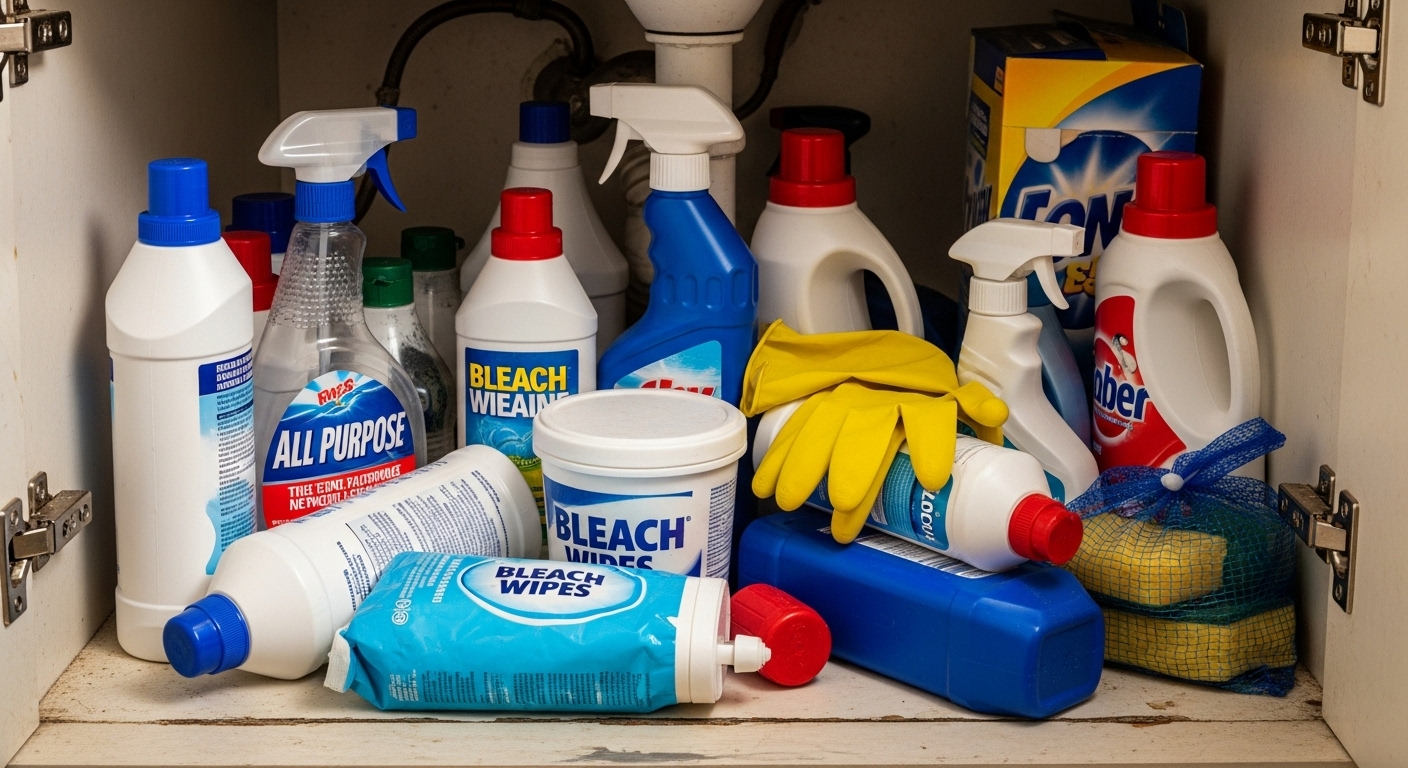
The most frequently cited mistake is storing cleaning products under the kitchen or bathroom sink. These spaces are prone to moisture from pipe condensation, temperature fluctuations from hot water usage, and often receive no ventilation.
Garages and garden sheds are another problematic storage location that many households default to out of convenience. Extreme summer heat in Australian conditions can reach temperatures well above the safe storage range for most cleaning formulas.
What the Ideal Storage Conditions Actually Look Like
Cleaning product manufacturers and chemical safety experts consistently recommend cool, dry, and well-ventilated storage areas. The ideal temperature range sits between roughly 10 and 27 degrees Celsius, which rules out most uninsulated outdoor storage spaces.
A dedicated shelf in a laundry room or internal storage cupboard is generally the most suitable location in a typical Australian home. The space should be away from direct sunlight, free from moisture sources, and temperature-stable across seasons.
“Proper storage is the key to getting the most out of your cleaning products. By following simple guidelines, you can extend the life and effectiveness of your household cleaners, ultimately saving you time and money.” — Jane Doe, Certified Cleaning Specialist
The Expiration Date Problem Most People Ignore
Cleaning products carry expiration dates for a specific reason, but most people never check them before reaching for the bottle. Over time, active ingredients break down and the product gradually loses the ability to perform the function it was designed for.
Experts recommend replacing most cleaning products every six to twelve months, or sooner if the appearance, smell, or consistency changes noticeably. A product that smells different or looks cloudy compared to when you first opened it is a reliable sign that degradation has already occurred.
The Hidden Safety Risk of Poor Storage Organisation
Beyond performance issues, disorganised cleaning product storage creates genuine safety hazards that are worth taking seriously. Certain chemicals should never be stored close together because accidental mixing or leakage can trigger dangerous reactions.
Bleach and ammonia-based cleaners are the most commonly cited example of products that must be stored separately at all times. When these two chemicals combine, even in small quantities, they release toxic fumes that can cause serious respiratory harm.
“Expiration dates are not just a suggestion. They are there for a reason. Paying attention to these dates can help you avoid using ineffective or potentially hazardous cleaning products in your home.” — Dr. Emily Johnson, Environmental Health Researcher
How Improper Storage Is Quietly Inflating Your Household Budget
Degraded cleaning products that no longer work effectively lead to a predictable chain of wasted spending. You use more product per application, repeat the cleaning task more often, and replace bottles sooner than necessary.
Multiply this across an entire year and the financial cost of poor storage habits becomes genuinely significant for the average household. Investing a few minutes into organising your cleaning supplies correctly is one of the simplest and most overlooked cost-saving habits in home management.
Practical Steps to Store Cleaning Products Correctly From Today
Start by clearing out your current storage area and checking every product for its expiration date and current condition. Anything that has expired, changed in smell or appearance, or been stored in poor conditions for more than a year should be disposed of responsibly.
Group remaining products by type and keep each one in its original container, which is specifically designed for that formula. Transferring products into unlabelled or alternative containers removes critical safety information and increases the risk of misuse or dangerous mixing.
How to Dispose of Cleaning Products Safely in Australia
Pouring expired or unwanted cleaning products down the drain or into general waste is not the responsible approach. Many cleaning formulas contain chemicals classified as hazardous waste that can harm waterways and waste processing systems.
Most Australian local councils operate household chemical drop-off programs or participate in dedicated hazardous waste collection days throughout the year. Checking with your local council website before disposing of any cleaning product is the safest and most environmentally responsible first step.
Frequently Asked Questions
Where is the worst place to store cleaning products at home? Under the sink and in garages or sheds are the most problematic locations due to moisture, temperature extremes, and poor ventilation.
How can I tell if a cleaning product has already degraded? Look for changes in colour, consistency, or smell. If the product looks cloudier or smells different than when first opened, it is likely past its useful life.
Is it safe to store cleaning products near food? No. Cleaning chemicals should always be kept well away from food storage areas to eliminate any risk of contamination or accidental ingestion.
Can I mix two cleaning products to make them stronger? Never. Mixing cleaning products can create dangerous chemical reactions, including the release of toxic fumes, even when both products seem mild individually.
How often should I audit my cleaning supply storage? A full check every three to six months is a reasonable routine, covering expiration dates, product condition, and storage location suitability.
Key Points to Remember
- Heat, moisture, and direct sunlight degrade cleaning product formulas and reduce their effectiveness over time.
- Under-sink and garage storage are two of the most commonly used but least suitable locations for cleaning supplies.
- Expiration dates matter and products should generally be replaced every six to twelve months regardless of appearance.
- Certain products like bleach and ammonia-based cleaners must always be stored separately to avoid dangerous chemical reactions.
- Proper storage is a direct financial investment, reducing how often products need to be replaced and how much is used per application.
Conclusion
Cleaning products are a routine household expense that most people buy, store, and use without much consideration. But where and how they are stored determines whether they actually do the job you are paying for them to do.
A few small changes to your storage habits can extend the life of every product in your cleaning arsenal. Cooler conditions, better organisation, and regular expiration checks are the three simplest steps toward a cleaner home and a leaner household budget.
Read more: https://wizemind.com.au