I Eat Dinner Alone Every Night by Choice — My Neighbour Thinks It Is Sad, But It Is the First Honest Decision I Have Made in Decades
Solitude at the dinner table feels like failure to almost everyone who witnesses it.
That reaction reveals something far more interesting than anything about the person eating alone. It reveals how deeply we have absorbed the idea that togetherness is virtue and aloneness is pathology — that a plate of food consumed in silence must be a symptom rather than a choice.
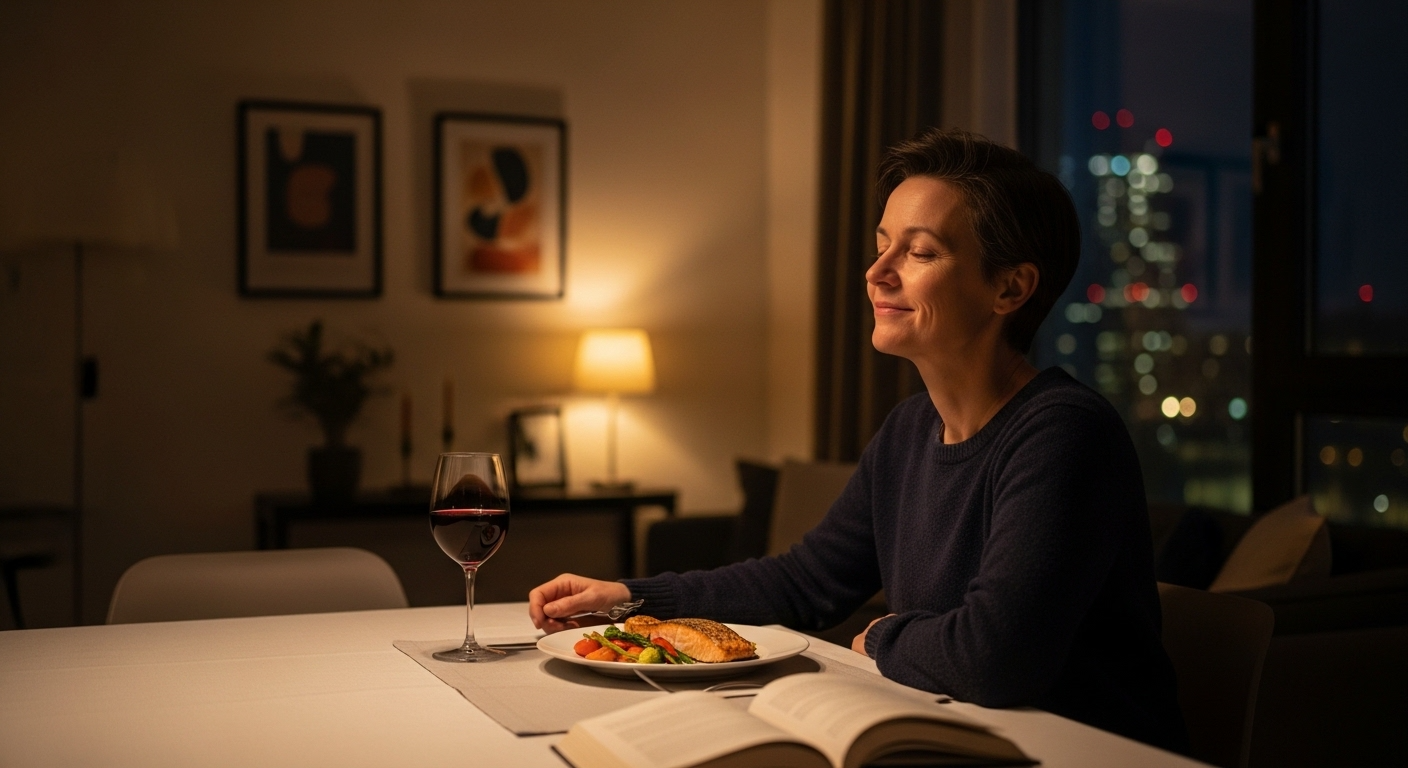
I eat dinner alone every night by deliberate decision. My neighbour Margaret treats this information the way someone might treat news of a difficult diagnosis. Gentle eyes. A hand on the forearm. You know you can always come over, right?
The concern is genuine. I do not resent it. But the assumption underneath it — that my solitude must be compensating for something missing, that anyone eating alone must be waiting for the day they no longer have to — is the assumption I want to examine. Because it is the assumption I lived inside for years, and stepping outside it has been one of the most clarifying experiences of my adult life.
The Ritual That Was Never Actually Mine
For years, my husband ate at his desk most evenings. His work runs on deadlines that spike without warning, and his relationship with food has always been functional rather than ceremonial. For years I would wait for him anyway. I would prepare something, set two places, and sit with my phone until he emerged from his office, already half-distracted, eating without tasting.
We would exchange fragments of conversation. Neither of us was fully present. We were performing a ritual we had inherited without ever asking whether it served us — the unspoken assumption that a good marriage involves two people at the same table each evening, making eye contact, asking about each other’s day, regardless of whether either person has the energy or presence for that exchange.
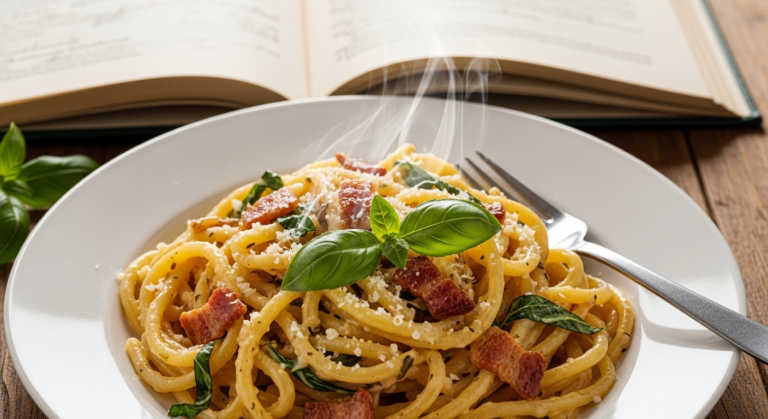
The shift happened about a year ago. He was deep in a project, and I made myself a bowl of lentil soup and sat at the kitchen table alone. No phone. No background noise. Just the soup and the particular quality of evening light in our apartment in late winter.
I ate slowly. I noticed the cumin. I noticed my own breathing. Something loosened in my chest that I had not known was tight.
That was the first night. Every night since has confirmed what that first bowl of soup suggested: I had been treating meals as obligations rather than experiences, and I had been doing it for so long the distinction had become invisible.
The Difference Between Loneliness and Solitude
Some psychologists consider solitude a basic human need — as fundamental as connection itself, not its opposite. The distinction that matters is between loneliness and solitude. Loneliness is the ache of unwanted disconnection. Solitude is the relief of not having to perform.
For highly sensitive people, this distinction is particularly significant. Shared meals involve constant reading of the other person’s mood, calibration of energy, monitoring of whether the silence is comfortable or loaded. This monitoring happens automatically, below conscious awareness, and it is exhausting in a way that is difficult to explain to people for whom it does not happen.
Eating alone is the context where that machinery powers down. Not because connection is unwanted or relationships are avoided. Because the specific kind of attention that shared meals require — the social attunement, the management of the interpersonal temperature of the room — is genuinely costly and genuinely optional.
The book club dinners that require three hours of recovery time afterwards are not evidence of antisocial tendencies. They are evidence of a person who processes social experience at depth, and who needs genuine rest rather than more performance in order to recover.
What the Table in My Childhood Was Actually Teaching Me
I grew up watching my mother prepare elaborate dinners for a family that consumed them in a state of performed contentment. My father held court at the table. My mother served. The food was beautiful. The conversation was carefully choreographed. And nobody ever said what they actually felt.
Meals in my childhood home were theatre. The table was a stage. The skill being practiced was not connection — it was performance of connection, which is a different activity entirely and one that produces a different kind of exhaustion.
Children absorb these templates before they have language to examine them. The lesson I absorbed was not stated explicitly: it was simply demonstrated, evening after evening, until it felt like truth. The dinner table is where you perform your role. It is not where you rest.
Choosing to eat alone now is not a rejection of my husband or of genuine connection. It is a rejection of that inherited script. The one that says a good partner sits across from the other person every evening and performs presence whether either person genuinely has it available or not.
The performance never produced the connection it was supposed to produce. What it produced was two people in the same room, both slightly depleted by the effort of performing naturalness, eating food that neither person was tasting.
What People Who React Most Strongly Are Actually Responding To
There is a pattern worth noticing among people who react with the most concern or discomfort to the idea of deliberately eating alone.
They tend to be people who learned very early that being alone with their own thoughts is not peaceful but threatening. People for whom togetherness was safety — not because it was joyful but because the alternative felt dangerous or meant something had gone wrong. People who cannot quite imagine choosing solitude because solitude, in their own experience, has always arrived uninvited rather than selected.
The discomfort they project onto the person eating alone is their own discomfort with silence, displaced onto someone else’s dinner arrangement. It is not unkindness. It is the nervous system recognising something it associates with loss and responding with the appropriate concern, even when the context is entirely different.
Margaret’s sadness on my behalf is actually a reflection of her own grief, displaced onto my kitchen window that she can see from hers. She lost her husband three years ago. For her, a solo dinner is the absence of someone who should be there. I understand that completely. Her concern for me comes from a real place, shaped by a real loss.
But her experience and mine are not the same. Context is everything. The person choosing solitude and the person for whom solitude was chosen by circumstance are having entirely different experiences, even if they look identical from outside.
Why My Marriage Is Better for This Arrangement
When I stopped hovering in the kitchen waiting for my husband to surface from work, something changed between us that neither of us expected.
He told me it had always made him feel guilty — knowing I was out there performing patience while he was trying to meet a deadline. The knowledge that someone was waiting, that his absorption in work was costing another person something, was a low-grade pressure that sat underneath the work itself. Removing that pressure removed something that had been quietly wearing on both of us.
We still connect, genuinely and consistently. We talk in the mornings when we are both more open and more present. We take walks at the weekend. We read beside each other in the evenings. The intimacy in our relationship does not depend on a shared dinner table. Realising that was like setting down a bag of rocks I had been carrying since childhood without knowing it was optional.
The shared meals we do have — at restaurants, at gatherings, when we both genuinely feel like cooking and eating together — feel different now. They feel like occasions rather than obligations. Like choices rather than defaults. The act of choosing them gives them a quality that compulsory daily performance of the same ritual never could.
What Eating Alone Actually Changes About Eating
There is something worth saying about food itself, separate from the social and psychological dimensions.
When I eat alone, I eat differently. Better, in most respects. I eat what my body wants rather than what makes sense for two people with different preferences and rhythms. I eat at the pace my own body sets rather than matching someone else’s. I notice what I am eating. I taste the cumin. I notice when I am satisfied and stop there rather than finishing because the other person is still going.
Research on social eating and behaviour consistently shows that people in group settings routinely override their own hunger signals — eating more, eating faster, reaching for things they would not otherwise choose. The social context changes not just the experience but the actual choices made. When no one is watching, nothing needs to be impressive. The meal can simply be what it is.
This is not a minor thing. For people who grew up at tables where food was performance — where the meal was a production and the enjoyment of it was partly about being seen to enjoy it — eating alone can be the first context where food is genuinely just food. Where the act of eating serves the person eating rather than a social narrative.
The Habits That Were Never Actually Chosen
I am only beginning to understand how many daily habits were never genuinely mine.
They were inherited postures, adopted so early they felt like personality. The sense that a good evening involves a certain kind of shared activity. The assumption that connection looks a specific way. The belief that choosing differently is a sign of failure or isolation or some underlying problem that concerned people should address with gentle eyes and cookies left at the door.
Peeling these back is slow work. It requires sitting with the discomfort of recognising how long you lived according to someone else’s script. It requires tolerating other people’s concern when your choices do not look the way they expect choices to look.
But the soup is good. The quiet is good. And for the first time in a long time, the evening is mine — not a performance of what an evening is supposed to look like, but an actual experience of what one can be.
There is a version of this that would not be right for everyone. For someone sitting in a quiet house wishing for company, deliberately eating alone would feel like exactly the kind of cruelty it looks like from outside. Context matters. What you are choosing toward matters as much as what you are choosing away from.
I am choosing toward honesty. Toward the recognition that many of the things I did because they were expected were not actually nourishing me. Toward a version of daily life where the choices made are ones I would make again if I were asked — not ones I inherited and never examined.
The first honest decision in decades looked, from my neighbour’s window, like sadness.
From inside the kitchen, watching the light change over the rooftops and eating soup slowly enough to taste the cumin, it looked like something entirely different.
It looked like finally being home.
At a Glance
| What It Looks Like From Outside | What It Actually Is |
|---|---|
| Eating alone as absence | Eating alone as deliberate choice |
| Solitude as loneliness | Solitude as relief from performance |
| Solo dinner as something to compensate for | Solo dinner as something to choose |
| Concern for someone eating alone | Projection of the observer’s own discomfort |
| Less connection | Different, more honest connection |
Frequently Asked Questions
Is eating alone every night a sign of relationship problems? Not necessarily. It depends entirely on why it is happening and how both people in the relationship experience it. A deliberate choice made with mutual understanding and genuine connection elsewhere in the relationship is very different from a default pattern produced by distance or conflict.
How do you respond to people who express concern about solo dining? With honesty and without defensiveness. The concern is usually genuine and comes from a place of care. Explaining the reasoning — that it is a deliberate choice rooted in self-knowledge rather than isolation — tends to satisfy most people, even if they do not personally understand the appeal.
Does this arrangement work for all personality types? No. For people who are naturally energised by social meals and who find eating alone genuinely lonely rather than restorative, the arrangement described here would feel like deprivation. The key is honest self-knowledge about what actually nourishes you rather than what you have been taught is supposed to nourish you.
What is the difference between healthy solitude and unhealthy isolation? Healthy solitude is chosen, restoring, and coexists with genuine connection in other contexts. Unhealthy isolation tends to be a retreat from connection rather than a supplement to it — driven by avoidance, fear, or disconnection rather than by genuine preference and self-knowledge.
How do you maintain genuine connection with a partner when you do not eat together regularly? By being genuinely present in the connection contexts you do share, and by making those contexts ones you have genuinely chosen rather than defaulted into. Connection does not require a specific ritual — it requires genuine presence and honest engagement, which can happen in many different forms.
What would you say to someone who has never questioned their daily routines? Only that it is worth occasionally holding each habit up and asking honestly — is this mine? Did I choose this, or did I find myself doing it because it was expected and the alternative was never really visible? The answer may be that the habit is genuinely yours and genuinely serves you. But the question is always worth asking.