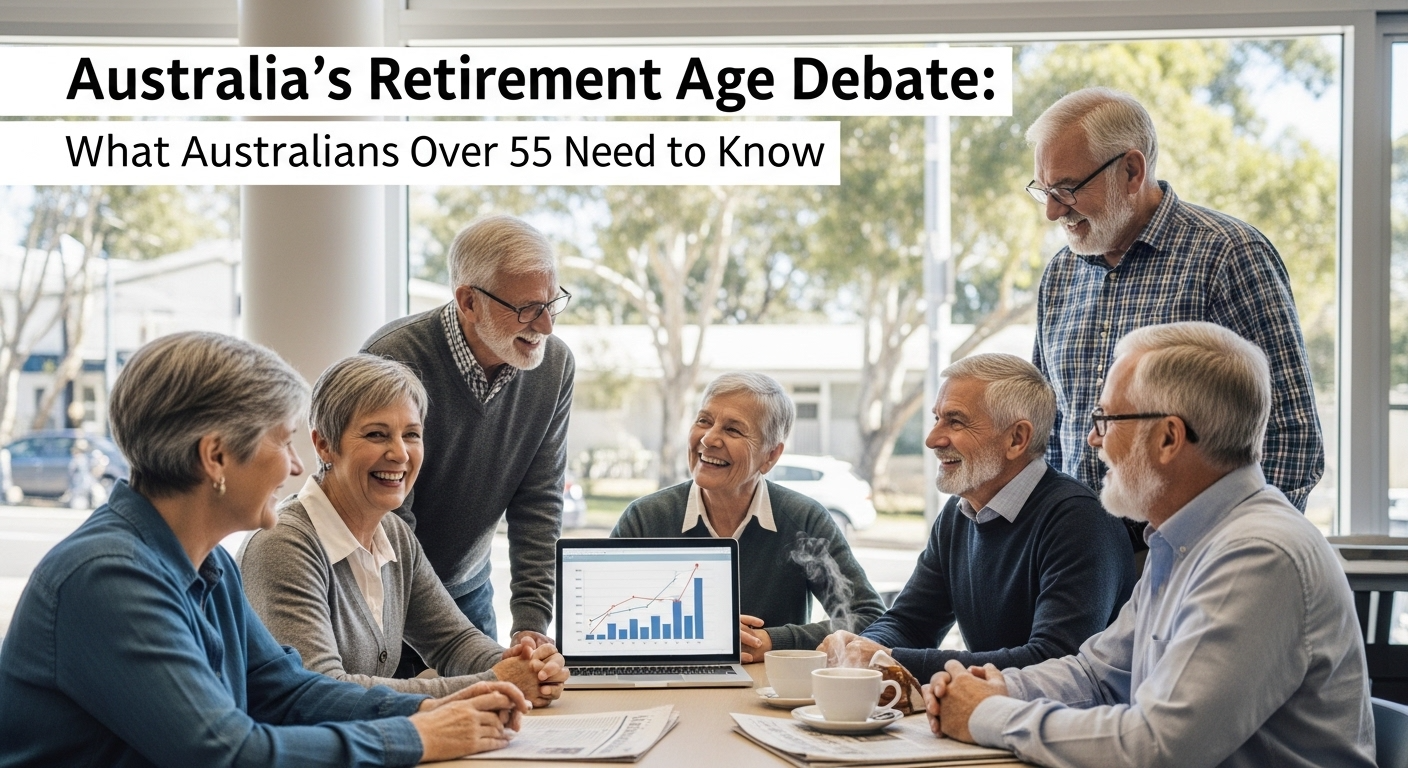
Australia’s Retirement Age Debate: What Australians Over 55 Need to Know
No law has been passed — but the conversation about raising the pension age is back, and for many older workers, the uncertainty alone is unsettling.
For Australians in their mid-50s and early 60s, retirement planning has always required a degree of patience. Many have already lived through one round of changes — watching the Age Pension eligibility age climb gradually from 65 to 67 over several years. Now, renewed policy discussions about whether that age could rise again have stirred fresh anxiety among workers who thought the goalposts were finally fixed.
Where Things Stand Right Now
To be clear: there is no legislation before parliament to raise the pension age. For anyone born on or after 1 January 1957, the Age Pension eligibility age remains 67, and government officials have confirmed there are no immediate plans to change that. Any future shift would require new legislation and, based on historical precedent, a lengthy transition period giving people time to adjust their plans.
That said, the conversation has not gone away — and for good reason.
Why the Debate Has Resurfaced
Australia’s fiscal position makes the pension age question almost inevitable. Australians are living longer than ever, the proportion of retirees relative to working-age Australians continues to grow, and the Age Pension remains one of the federal government’s largest spending commitments. Budget sustainability reviews regularly examine whether the current settings are viable over the long term, and policy analysts periodically raise the question of whether further changes will eventually be necessary.
None of this means a change is imminent. But it does mean the debate is legitimate, and dismissing it entirely would be unwise for anyone with decades of retirement planning still ahead of them.
Why Australians Over 55 Are Paying Attention
For those already in their late 50s or early 60s, the concern is more personal than theoretical. Many in this age group built their retirement plans around the current threshold of 67. They have calculated how long their super needs to last, when to wind back work commitments, and when government support will begin. A shift in eligibility age — even one phased in over years — could force a fundamental rethink of all of it.
Graham, 58, from Melbourne, put it plainly: he has structured everything around finishing work at 67. If that changes, he says, it changes everything. That sentiment is widely shared among older workers, particularly those in physically demanding jobs where working into the late 60s is genuinely difficult, not just inconvenient.
What a Future Change Could Mean in Practice
If eligibility were eventually raised — say, to 68 or 70 — the practical consequences would vary significantly depending on a person’s circumstances. Those with healthy super balances and flexible work arrangements would have more room to absorb the change. Those in manual or physically demanding roles, or with limited savings, would face a harder adjustment. There would also be knock-on effects for superannuation drawdown strategies, with savings needing to stretch further before pension income begins.
Estate planning and aged care considerations could also shift, as the timing of government support affects broader financial decisions made in the years leading up to retirement.
What You Should Actually Do
The most important thing right now is to avoid making major financial decisions based on speculation. Rumours and policy discussions are not policy. Acting prematurely — cashing out super early, abruptly changing work arrangements, or locking in financial strategies based on an unconfirmed change — could do more harm than the change itself.
What is worth doing is reviewing your current retirement projections with the 67 threshold in mind, stress-testing what a later eligibility age might mean for your super balance, and staying across official announcements from the Department of Social Services and Treasury. If your retirement timeline is within the next decade, a conversation with a financial adviser about building flexibility into your plan is time well spent.
The pension age debate is likely to surface periodically for years to come. For Australians over 55, the steadiest response is informed vigilance — keeping an eye on what is actually happening while not letting uncertainty about what might happen derail a carefully built plan.