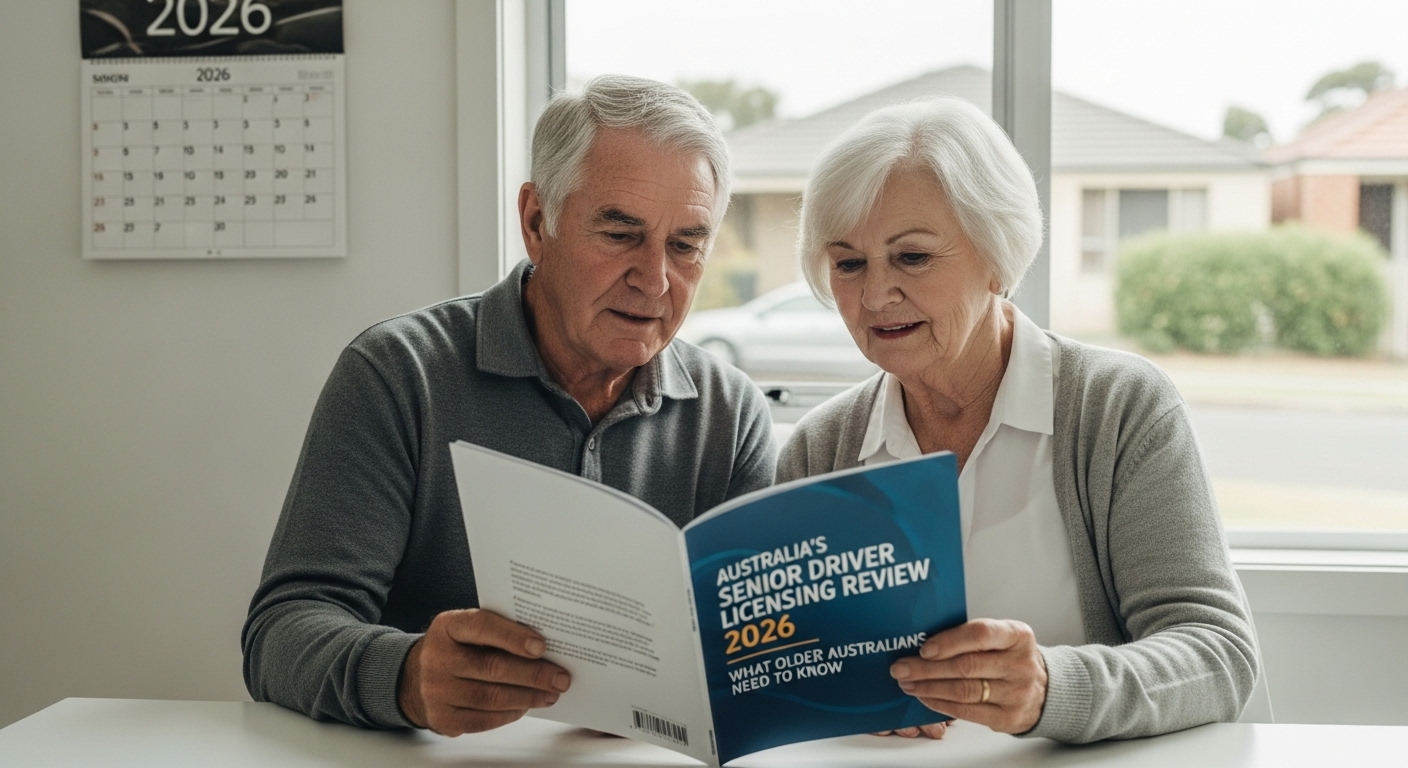
Australia’s Senior Driver Licensing Review 2026: What Older Australians Need to Know
As the government proposes sweeping changes to how drivers aged 70 and over keep their licences, many older Australians face an uncertain road ahead.
For millions of older Australians, a driver’s licence is more than a card in a wallet. It represents independence — the ability to reach a doctor’s appointment, visit family, or simply pick up groceries without depending on others. Now, proposed changes under the Senior Driver Licensing Review 2026 could reshape that independence, raising important questions about safety, fairness, and what it truly means to age on Australian roads.
What Is the Senior Driver Licensing Review 2026?
The Australian government is undertaking a comprehensive review of licensing requirements for drivers aged 70 and above. The review aims to modernise an ageing framework and address growing concerns about road safety among older motorists — while trying not to strip away the mobility that so many seniors depend on.
The proposals under discussion include mandatory medical assessments covering vision, reaction time, and general health, more frequent on-road driving tests to evaluate real-world ability, shorter licence renewal periods for senior drivers, conditional restrictions such as limits on night driving or highway travel, and support programs offering alternative transport options and safety training. No final rules have been confirmed, and some measures may vary by state, reflecting the different needs of urban and regional communities across the country.
Why Now?
Australia’s population is ageing rapidly. With more older Australians on the road than ever before, authorities argue that the current licensing system — largely unchanged for decades — is no longer adequate. Proponents of the review point to research linking certain age-related conditions, such as reduced vision, slower reaction times, and cognitive decline, to increased accident risk. From that perspective, more structured assessments are not a punishment but a practical safeguard.
However, critics push back on broad age-based testing, arguing that health and driving ability vary enormously from person to person. A fit and sharp 75-year-old, they contend, should not face the same scrutiny as someone with a diagnosed medical condition affecting their driving — regardless of age.
What It Could Mean for Seniors Day to Day
The practical impact of these changes would be felt most acutely in regional and rural Australia, where public transport is limited or non-existent. For many seniors living outside major cities, losing a licence doesn’t just mean inconvenience — it can mean genuine isolation. Access to healthcare, social connection, and basic errands all become harder without the ability to drive.
Even in cities, the psychological weight of increased testing should not be underestimated. Many older drivers already self-regulate — avoiding peak-hour traffic, unfamiliar routes, or driving after dark. Introducing formal restrictions on top of that could feel unnecessarily punitive to people who are already making responsible choices.
A Balancing Act for Policymakers
The central challenge for the government is designing a system that is genuinely evidence-based rather than simply age-based. Medical assessments and driving evaluations, if implemented well, could catch genuine risks early and keep roads safer for everyone. But if the process is poorly designed, inconsistently applied, or lacks proper appeals mechanisms, it risks becoming a bureaucratic barrier that disproportionately affects older Australians who pose no real danger on the road.
Policymakers have acknowledged this tension. Alongside the proposed testing changes, discussions are underway about expanding community transport services, subsidising ride-sharing for seniors, and developing driver retraining programs to help older motorists adapt to modern road conditions. Whether these support measures keep pace with any new restrictions will be a key test of the review’s fairness.
What Happens Next?
The Senior Driver Licensing Review 2026 is still in its consultation phase. Public feedback is being gathered, and final policy decisions are expected to be shaped by input from medical professionals, road safety experts, senior advocacy groups, and ordinary Australians. State governments will likely retain some flexibility in how national guidelines are applied locally.
For older drivers and their families, the most important step right now is staying informed. Engaging with public consultations, understanding what assessments may involve, and knowing what support is available will all matter as the review moves forward. The outcome of this process will affect not just how seniors drive — but how they live.