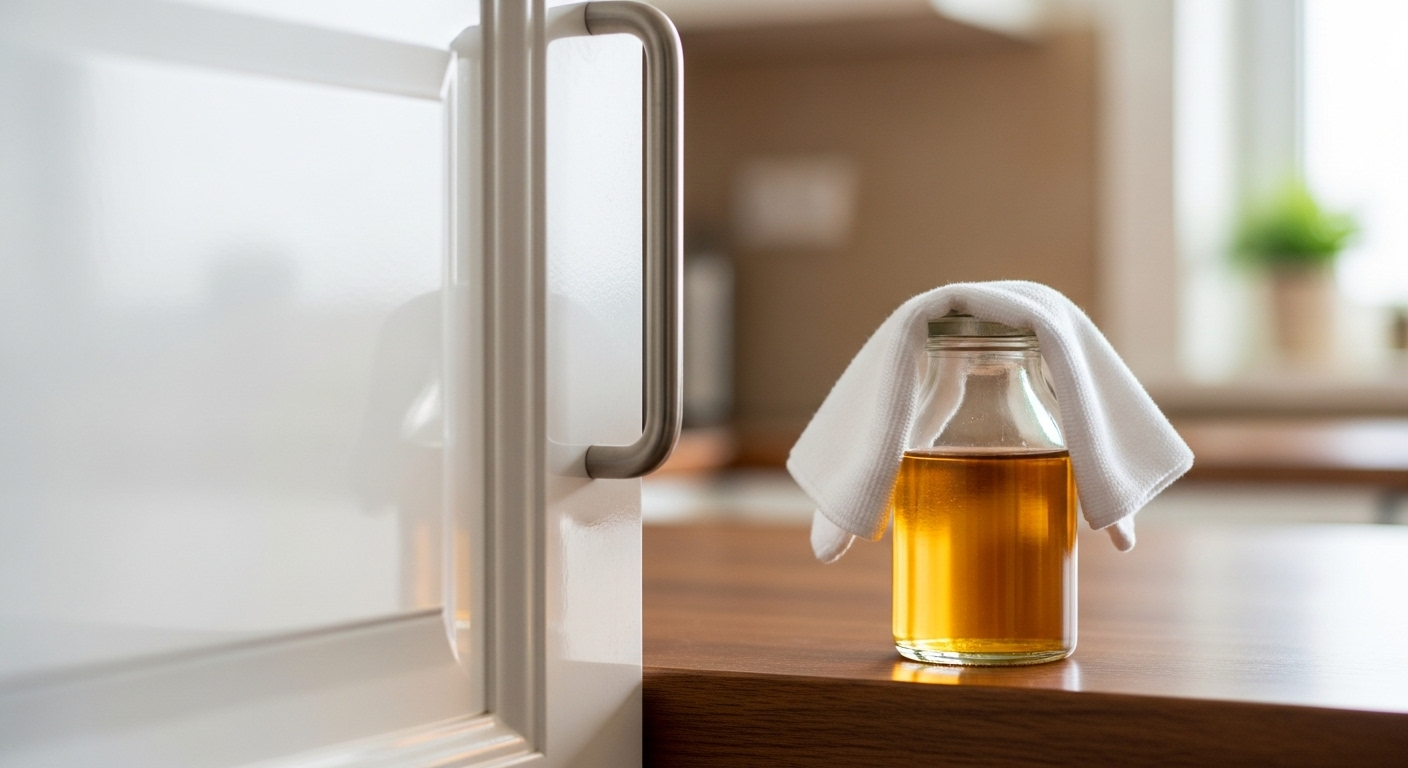
The Forgotten Kitchen Liquid That Cleans Grimy Cabinets Better Than Any Store-Bought Product — And It Costs Almost Nothing
If you have ever stood in front of your kitchen cabinets and wondered how they managed to get so dull, sticky, and streaky despite regular cleaning — you are not alone. It happens slowly, almost invisibly. Every time you cook, tiny particles of grease float through the air and settle on every surface within reach. Dust sticks to the grease. More grease settles on top of the dust. Over weeks and months, what was once a clean, smooth cabinet door becomes something that feels unpleasant to touch and looks worse every time the light hits it at the wrong angle.
Most people reach for a commercial spray cleaner at this point. Some work reasonably well. Many leave behind a filmy residue that makes things look clean for about twenty minutes before the dullness returns. And almost all of them cost more than they should for what they actually do.
The solution most people walk right past every single day is sitting on a shelf in their own kitchen. It costs almost nothing. It has been used as a cleaning agent for centuries. And for greasy cabinet surfaces, it works better than products that cost ten times as much.
The answer is white vinegar. And if you have never used it properly on kitchen cabinets, what happens next will genuinely surprise you.
Why White Vinegar Works So Well on Kitchen Grease and Grime
Understanding why vinegar works so well starts with understanding what you are actually trying to remove from your cabinets.
Kitchen grease is not just fat. It is a combination of cooking oils, moisture, airborne food particles, and dust that has polymerised over time into a sticky, semi-solid layer that bonds stubbornly to surfaces. Standard water-based cleaners struggle with this because grease and water do not mix. You can wipe and wipe and still feel that tacky residue under your cloth because you are not actually dissolving what you are trying to remove.
White vinegar contains acetic acid, and acetic acid cuts through grease in a way that plain water simply cannot. It breaks down the chemical bonds in that sticky layer and loosens it from the surface so that when you wipe, you are actually removing the grime rather than just smearing it around.
It also does something that most commercial cleaners do not — it leaves no residue of its own. Once it evaporates, it is completely gone. No film, no chemical smell, no surface coating that will attract more dust. Just clean.
What You Will Need Before You Start
The preparation for this is genuinely simple, which is part of why it is so easy to actually follow through on.
You need a spray bottle, white vinegar, water, and a couple of clean microfibre cloths. That is the core setup. If your cabinets are particularly grimy or you want to leave things smelling fresh rather than faintly vinegary, a few drops of lemon or tea tree essential oil added to the spray bottle works well. The lemon oil also adds a small amount of additional degreasing power, which is a bonus on heavily soiled surfaces.
The standard mixing ratio is equal parts white vinegar and water. If your cabinets have not been deep cleaned in a long time and there is significant grease buildup, you can increase the vinegar proportion — up to two parts vinegar to one part water — for more cleaning power. For regular maintenance once the cabinets are clean, the 50/50 ratio is more than sufficient.
The Step-by-Step Process That Actually Works
The method matters as much as the product. A lot of people spray and immediately wipe, which does not give the acetic acid time to do its job. Here is the process that gets the best results.
Start by doing a dry wipe with a clean microfibre cloth. You want to remove any loose dust or surface debris before you introduce any liquid. Spraying over the top of dust just turns it into a paste that is harder to shift.
Once you have done the dry wipe, spray the vinegar solution generously onto the cabinet surface. Do not be shy about coverage — you want a good even coat across the door, the edges, and especially the area around the handles where hands touch most often and grease accumulates fastest.
Now leave it. This is the step most people skip, and it makes a significant difference. Give the solution two to four minutes to sit on the surface and work on the grease layer. You will sometimes see it starting to dissolve and run slightly — that is exactly what you want.
After the dwell time, take a clean damp cloth and wipe the surface down using gentle but firm strokes. On a lightly soiled surface you will see the cloth picking up a faint yellow or grey residue — that is the dissolved grease coming off. On a heavily soiled surface, the cloth may need to be rinsed and the process repeated.
Finish by buffing with a dry microfibre cloth. This is what gives you the streak-free, slightly shiny result that makes the cabinets look genuinely clean rather than just wet. The buffing step takes thirty seconds and the difference it makes to the final appearance is significant.
Dealing With Stubborn Built-Up Grease That Will Not Shift
For cabinets that have not been deep cleaned in a long time, the standard spray-and-wipe approach may need some extra help on particularly stubborn areas — typically around the handles, along the top edges of doors, and in any spot that gets regular hand contact.
For these areas, pour a small amount of undiluted white vinegar directly onto a folded microfibre cloth and press it against the surface for thirty to sixty seconds before wiping. The extended contact time dramatically increases how much of the buildup it dissolves.
Alternatively, a paste made from bicarbonate of soda and a small amount of white vinegar can be applied to stubborn spots, left for a few minutes, and then wiped away. The mild abrasive action of the bicarbonate combined with the acidity of the vinegar tackles the kind of baked-on residue that has been sitting on a surface for months or years. Use this approach sparingly and with a soft cloth — you want to lift the grime, not scratch the surface.
Which Cabinet Surfaces Work Best With Vinegar
Vinegar is effective on the majority of kitchen cabinet finishes you are likely to encounter in an Australian home, but there are a few important distinctions worth knowing before you start.
Laminate and thermofoil cabinets — the most common type in modern Australian kitchens — handle vinegar extremely well. The non-porous surface means the acid cannot penetrate and the results are consistently excellent.
Painted timber cabinets also respond well to vinegar cleaning, provided you use the diluted solution rather than undiluted vinegar. The paint provides a protective barrier that handles the mild acidity without issue.
Solid timber cabinets with an oil or wax finish require more caution. Vinegar’s acidity can gradually strip natural wood finishes if used too frequently or in too strong a concentration. For these surfaces, use a more diluted solution — around one part vinegar to three parts water — and do not use it as a weekly routine. Once a month or less is appropriate, and spot testing on an inconspicuous area first is always a good idea.
Cabinets with a natural timber veneer or raw wood finish should not be cleaned with vinegar. For these surfaces, a dedicated timber-safe cleaner is the better option.
How to Keep Cabinets Clean Once You Have Done the Hard Work
The first deep clean is always the most work. Once you have removed the accumulated grease and grime, maintaining that result takes very little effort — provided you stay on top of it consistently.
A quick wipe with the diluted vinegar spray once a month is usually enough to prevent grease from re-establishing itself in significant quantities. Between those monthly wipes, a dry microfibre cloth run over the cabinet surfaces once a week takes about two minutes and removes the loose dust and particles that would otherwise contribute to the next cycle of buildup.
The area around the stovetop and the cabinets directly above or adjacent to it will always accumulate grease faster than the rest of the kitchen. These spots benefit from being wiped down more frequently — every two weeks is reasonable if you cook regularly.
Paying attention to handles and pull knobs is also worth making a habit. Every time someone opens a cabinet door with cooking residue on their hands, they deposit a small amount of grease on the handle. Over time this transfers to the surrounding cabinet face. A quick wipe of the handle areas whenever you do a general kitchen clean takes seconds and prevents a lot of slow accumulation.
Why This Works Out to Virtually Nothing Per Clean
The cost calculation for this approach versus commercial cabinet cleaners is striking.
A litre of white vinegar from any Australian supermarket costs between one and two dollars. Diluted to a 50/50 solution, that litre becomes two litres of cleaning solution — enough to clean a large kitchen full of cabinets multiple times over. A quality microfibre cloth, rinsed after use and washed regularly, lasts years.
Compare that to a branded kitchen degreaser or cabinet cleaner at eight to fifteen dollars per bottle, often with a strong chemical smell, a list of precautions on the label, and results that are honestly no better than what the vinegar solution delivers.
For a product that costs more, performs no better, leaves chemical residue, and requires more ventilation to use safely — it is genuinely difficult to make the argument for the commercial option over the vinegar approach.
The reason most people have not switched is simply that nobody told them it worked this well. Now you know.
Quick Reference Guide
| Main ingredient | White vinegar |
| Mixing ratio | 50/50 vinegar and water |
| Dwell time | 2 to 4 minutes before wiping |
| Cleaning frequency | Monthly deep clean, weekly dust wipe |
| Cost per clean | Under 50 cents |
| Safe for | Laminate, thermofoil, painted timber |
| Use with caution on | Oiled or waxed solid timber |
| Avoid on | Raw or unsealed timber veneer |
Frequently Asked Questions
Does vinegar leave a smell on cabinets? The vinegar smell dissipates completely as it dries, usually within a few minutes. Adding a few drops of lemon essential oil to the spray bottle masks the smell during application if you find it unpleasant.
How often should I clean kitchen cabinets with vinegar? A thorough clean once a month is ideal for most kitchens. Cabinets close to the stovetop may benefit from a fortnightly wipe given their higher grease exposure.
Will vinegar damage my cabinet finish? On laminate and painted surfaces, no. On oiled, waxed, or natural timber finishes, use a more diluted solution and clean less frequently. Always spot test an inconspicuous area first if you are uncertain about your cabinet material.
Can I use vinegar on cabinet hardware like handles and hinges? Yes. The vinegar solution works well on metal hardware, breaking down tarnish and grease buildup and restoring shine. Wipe dry afterwards to prevent any moisture sitting on metal surfaces.
What if the grease buildup is very thick and old? Use undiluted vinegar held against the surface for a minute before wiping, or apply a paste of bicarbonate of soda and vinegar to particularly stubborn spots. You may need two or three applications on very heavily soiled areas.
Is vinegar safe to use around children and pets? Yes. White vinegar is non-toxic, food-safe, and leaves no harmful residue. It is one of the safest cleaning agents you can use in a kitchen environment.