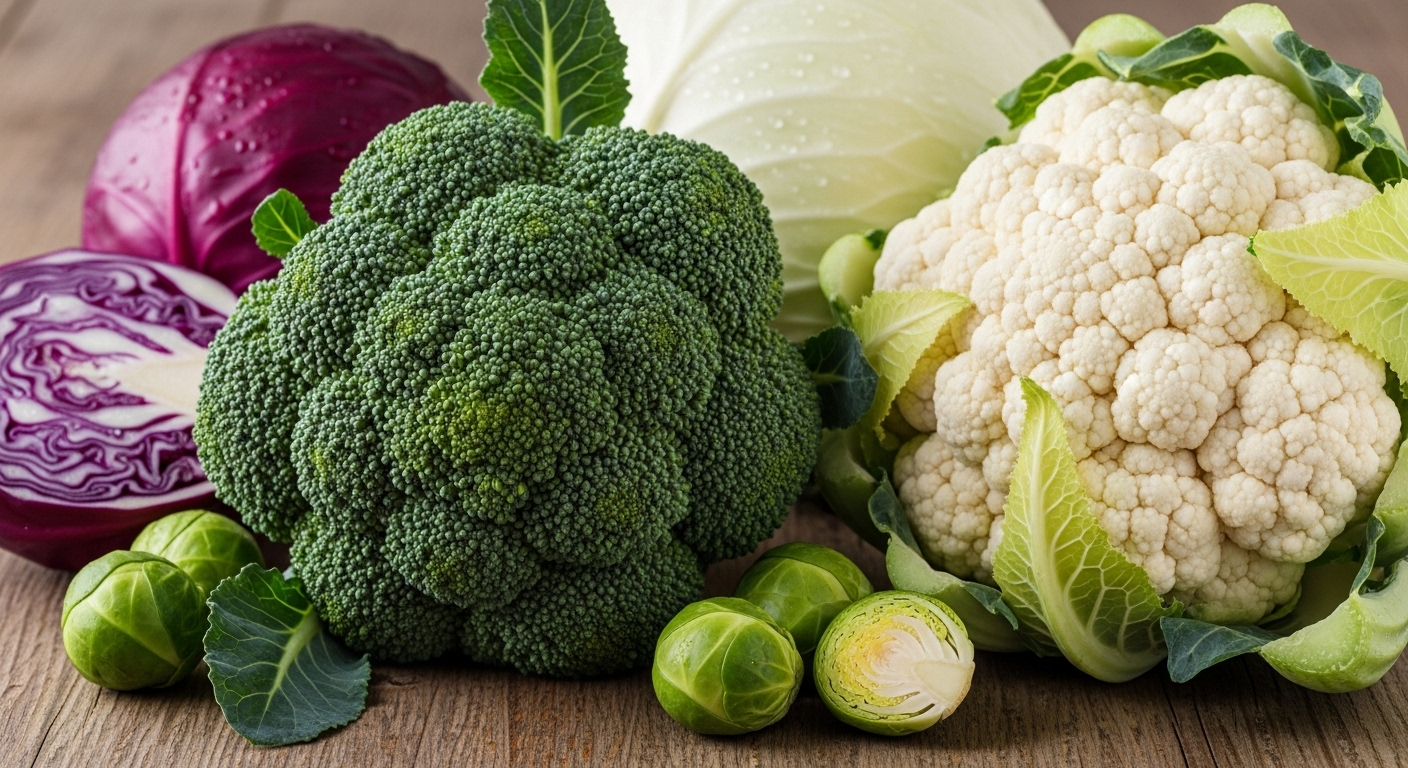
Brassica Vegetables 2026: The Complete Guide to Broccoli, Cauliflower, and Cabbage
Walk through any produce section and one plant family quietly dominates the shelves — deep purple cabbage, bright green broccoli, and creamy white cauliflower all sitting side by side. They look different, taste different, and cook differently. But they all belong to the same remarkable botanical family: Brassica, and science keeps finding new reasons to eat more of them.
What Makes Something a Brassica?
The Brassica family — also called cruciferous vegetables — traces its origins to wild cabbage plants native to Europe and Asia. Over centuries of cultivation, that single ancestor branched into an extraordinary range of vegetables including broccoli, cauliflower, cabbage, kale, Brussels sprouts, kohlrabi, and more.
What unites every member of this family is not just shared ancestry but a shared nutritional signature. All Brassicas are rich in vitamins, minerals, fibre, and a unique group of plant compounds called glucosinolates — the same compounds responsible for their slightly bitter, peppery edge and much of their health value.
Broccoli: Dense Nutrition in Every Floret
Broccoli is arguably the most studied vegetable on the planet, and the research consistently supports its reputation. A single raw cup delivers 135% of your daily vitamin C and 116% of your daily vitamin K — both essential for immune function and bone health respectively.
What makes broccoli particularly interesting to researchers is its concentration of sulforaphane, an antioxidant compound formed when glucosinolates break down during chewing or cooking. Studies have linked sulforaphane to reduced inflammation, improved cardiovascular markers, and potential protective effects against certain cancers.
In the kitchen, broccoli handles almost any cooking method well. Roasting at high heat brings out a slightly nutty sweetness. Steaming preserves the most nutrients. Stir-frying keeps texture and colour. Raw in salads or with dips, it delivers the highest sulforaphane content of all.
Cauliflower: The Most Versatile Vegetable in the Kitchen
Cauliflower spent decades as a modest side dish. In the past ten years it has become one of the most creatively used vegetables in modern cooking — and for good reason.
Its mild flavour and dense, starchy texture allow it to substitute convincingly for rice, mashed potato, pizza bases, and even chicken wings when prepared correctly. For anyone reducing carbohydrates or increasing vegetable intake, cauliflower has become an essential tool.
Nutritionally it delivers solid amounts of vitamin C, folate, and B vitamins, along with meaningful fibre in a very low-calorie package — just 25 calories per raw cup. It also contains choline, a nutrient important for brain function that most people do not get enough of.
Roasting cauliflower with olive oil and a little salt is perhaps the simplest way to unlock its best flavour — the edges caramelise and the bitterness softens into something almost sweet.
Cabbage: The Most Underrated Vegetable on the Shelf
Cabbage is cheap, stores for weeks in the refrigerator, and is available year-round in most parts of the world. It is also deeply underappreciated given what it actually delivers nutritionally.
A cup of raw cabbage provides 51% of daily vitamin C and 62% of vitamin K, along with meaningful fibre and a range of phytochemicals. Red and purple cabbage go further still, containing anthocyanins — the same antioxidant compounds found in blueberries — which have been linked to heart health and reduced inflammation.
Cabbage has been used medicinally since ancient Greece and has been a dietary staple across European, Asian, and Latin American cuisines for thousands of years. Fermented cabbage — whether German sauerkraut or Korean kimchi — adds the additional benefit of live probiotic cultures that support gut health.
Raw in coleslaw, braised slowly with apple and spices, or shredded into stir-fries, cabbage adapts to almost any cuisine and cooking style.
Nutritional Comparison at a Glance
| Nutrient | Broccoli (1 cup raw) | Cauliflower (1 cup raw) | Cabbage (1 cup raw) |
|---|---|---|---|
| Calories | 31 | 25 | 22 |
| Carbohydrates | 6g | 5g | 5g |
| Fibre | 2.4g | 2.1g | 2.2g |
| Vitamin C | 135% DV | 77% DV | 51% DV |
| Vitamin K | 116% DV | 14% DV | 62% DV |
| Folate | 14% DV | 14% DV | 10% DV |
All three are low in calories, low in carbohydrates, and high in fibre — making the entire family naturally suited to weight management, blood sugar control, and digestive health.
The Science Behind the Health Benefits
The glucosinolates present in all Brassica vegetables are among the most researched plant compounds in nutritional science. When these compounds are broken down — by chewing, chopping, or cooking — they convert into biologically active molecules that have demonstrated genuine health effects in research settings.
Key findings from the research include:
- Anti-inflammatory effects that may benefit people with arthritis, cardiovascular disease, and metabolic conditions
- Potential cancer-protective properties — particularly for colorectal, lung, and breast cancers — though research is ongoing
- Support for liver detoxification pathways
- Improved gut microbiome diversity particularly when fermented or eaten raw
Dr. Emily Hu, a researcher in nutritional epidemiology, has noted that glucosinolates have the potential to modulate inflammatory pathways and reduce oxidative stress — both of which are central to the development of most chronic diseases.
The practical takeaway is straightforward: eating a variety of Brassica vegetables regularly appears to be genuinely protective, and the diversity matters — different Brassicas deliver different compounds.
How to Cook Them at Their Best
Each vegetable has cooking methods that bring out its best qualities:
Broccoli is best roasted at high heat or lightly steamed. Avoid boiling — it leaches vitamins into the water and turns the texture soft and bland.
Cauliflower shines when roasted whole or in florets until golden, blended into soups, or riced and used as a grain substitute. It absorbs flavours exceptionally well, making it ideal for spiced dishes.
Cabbage rewards slow braising with acidic ingredients like vinegar or citrus. Raw cabbage holds up well in slaws dressed ahead of time. Fermented cabbage is a worthwhile addition to any diet focused on gut health.
One general rule applies to all three: do not overcook them. Excessive heat destroys glucosinolates and most heat-sensitive vitamins. A little resistance in the texture usually means more nutrition on the plate.
Growing Brassicas at Home
All three vegetables are well-suited to home gardens and perform best in cool weather — making them ideal for spring and autumn planting in most climates.
They prefer well-drained soil, consistent moisture, and full sun. The main challenge is pest management — cabbage white butterflies and aphids are attracted to Brassica plants and need to be monitored.
The reward for growing them at home is significant. Freshly harvested Brassicas contain notably higher levels of glucosinolates and vitamins than produce that has spent days in transit and refrigerated storage. If you have outdoor space or even a large container, broccoli and cabbage in particular are highly productive and relatively straightforward to grow.
FAQs
Q: Are Brassica vegetables suitable for a keto or low-carb diet? A: Yes — all three are low in net carbohydrates and high in fibre, making them among the best vegetables for ketogenic and low-carb eating patterns.
Q: Can eating too many Brassicas cause problems? A: In very large quantities, Brassicas contain goitrogens that can interfere with thyroid function in people with existing thyroid conditions. For healthy individuals eating normal amounts, this is not a concern.
Q: Does cooking destroy the nutritional value of Brassicas? A: Some nutrients are reduced by heat, particularly vitamin C and glucosinolates. Light steaming or roasting preserves more than boiling. Eating some raw is a good way to maximise nutritional benefit.
Q: Which Brassica is the healthiest? A: All three offer excellent and slightly different nutritional profiles — eating a variety regularly is more beneficial than focusing on just one.
Q: Can I eat Brassicas every day? A: Yes — daily consumption of Brassica vegetables is associated with positive health outcomes in most research. Varying which ones you eat adds both nutritional and culinary variety.
Q: Are purple and green cabbage nutritionally different? A: Yes — red and purple cabbage contain anthocyanins that green cabbage does not, adding an additional layer of antioxidant benefit.