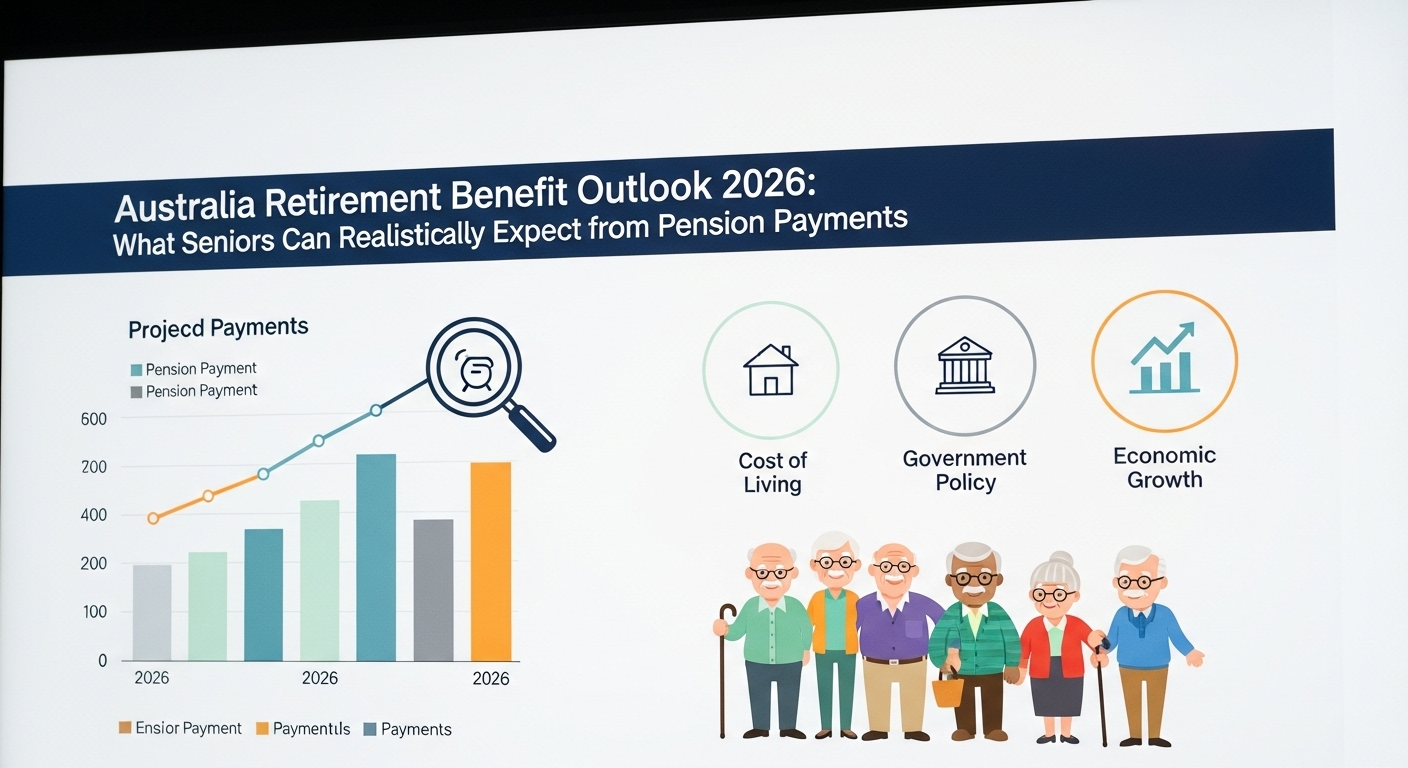
Australia Retirement Benefit Outlook 2026: What Seniors Can Realistically Expect from Pension Payments
Retirement should bring peace of mind, but for many Australians it also brings a set of financial questions that are not always easy to answer. With the cost of living continuing to rise across groceries, utilities, and housing, understanding exactly what retirement support is available and how much you can actually expect to receive has never been more important.
The challenge is that headline pension figures can be misleading. What the government pays at the maximum rate and what most retirees actually receive are often two very different numbers. Your personal payment depends on a detailed assessment of your income, assets, living situation, and savings. This guide breaks down how the system works and what you can do to make the most of your entitlements.
How Retirement Benefits Are Calculated
The Australian retirement benefit system is means-tested, which means your payment is not simply a flat amount paid to everyone of retirement age. Instead, Centrelink assesses your financial situation through two separate tests: the income test and the assets test. Your actual payment is determined by whichever test produces the lower result.
The income test looks at money coming in, including superannuation drawdowns, part-time work, investment returns, and overseas pensions. The assets test looks at what you own, including savings, shares, managed funds, and investment properties.
The family home is generally excluded from the assets test, which is a significant protection for homeowners. However, everything else of financial value is typically counted, and as your total assets or income increase beyond certain thresholds, your pension payment reduces progressively until it phases out entirely.
This structure is designed to direct the most support toward those with the fewest resources, while still providing partial support to a wide range of retirees in the middle.
Base Payments and Why Most Retirees Receive Less Than the Maximum
Full-rate pension payments provide a reliable fortnightly income to cover essential living expenses. However, a significant proportion of Australian retirees receive only a partial payment rather than the full rate. This is not unusual and does not indicate anything has gone wrong. It simply reflects how the means testing system operates.
Common reasons a retiree may receive a reduced payment include:
- Owning property beyond the family home
- Receiving regular superannuation income
- Holding savings, shares, or managed funds above the lower assets threshold
- Earning income from part-time or casual work
- Receiving an overseas pension from a previous country of residence
Because two retirees of the same age can have very different financial situations, two people who appear similar on the surface can receive substantially different payment amounts. Centrelink conducts regular reviews to ensure payments reflect any changes in your circumstances, which means your payment can go up or down over time as your financial situation evolves.
Income and Assets That Directly Affect Your Payment
Understanding which types of income and assets affect your pension helps you plan more effectively and avoid unexpected reductions.
Income that counts toward the income test includes superannuation pension payments, wages or salary from any employment, returns from investments and bank interest, income from rental properties, and most overseas pensions. Some income is partially exempt under what is called the Work Bonus, which allows retirees to earn a limited amount from employment each fortnight before it begins affecting their pension.
Assets counted in the assets test include bank savings and term deposits, shares and managed funds, investment properties, caravans and boats, and certain other financial products. The threshold at which assets begin reducing your payment depends on whether you are single or partnered and whether you own your home.
Renters generally receive additional support through Rent Assistance, which helps offset the higher housing costs faced by retirees who do not own their home. This can meaningfully improve the overall support package for retirees in the private rental market.
A simplified overview of how different factors affect payments:
| Factor | Impact on Payments |
|---|---|
| Home ownership | Family home excluded from assets test |
| Superannuation income | Counted toward income test |
| Savings and investments | Assessed under assets test |
| Part-time earnings | Can reduce payment above threshold |
| Renting | May qualify for additional Rent Assistance |
| Overseas pension | Generally counted as assessable income |
Why Payments Differ So Much Between Seniors
If you compare notes with friends or family members also on the pension and notice significant differences in payment amounts, this is entirely normal and reflects the individualised nature of the system.
Relationship status plays a significant role. Couples are assessed jointly and their combined financial resources are considered together, which often results in a lower individual payment compared to a single retiree with similar total assets. A single retiree also qualifies for a higher individual rate than each member of a couple, recognising the higher per-person cost of living alone.
Housing situation is one of the most influential factors. A homeowner and a renter with identical savings can receive very different total support packages because of how the assets test treats property and how Rent Assistance applies.
The level of superannuation accumulated over a working life has an increasing influence on pension payments as the superannuation system matures and retirees carry larger balances into retirement. Those with substantial super balances may receive only a partial pension or none at all, while those with modest balances may be entitled to close to the full rate.
What Seniors Should Do to Maximise Their Entitlements
The pension system rewards those who stay engaged with their entitlements. Passive recipients who never review their payment details frequently leave money on the table or, conversely, receive payments that are higher than they should be and later face repayment demands.
Several steps can meaningfully improve your outcome:
Report changes in your circumstances promptly. Any change in income, assets, living arrangements, or relationship status should be reported to Centrelink. Failing to report a change that reduces your assessed resources could mean you are receiving less than you are entitled to. Failing to report an increase could lead to an overpayment that must be repaid.
Check your eligibility for additional supplements. Beyond the base pension payment, eligible retirees may qualify for the Pension Supplement, the Energy Supplement, and Rent Assistance. These additions can add meaningfully to your fortnightly income and are worth confirming you are receiving if eligible.
Review your assets assessment regularly. The value of shares, managed funds, and other financial assets changes over time. Centrelink uses deeming rates and declared values to assess these, and outdated information can affect your payment in either direction.
Consider financial advice before making significant decisions. Decisions about drawing down superannuation, selling assets, or changing living arrangements can all have flow-on effects for pension entitlements. A financial adviser familiar with the aged pension system can help you understand the implications before you act rather than after.
Do not assume your payment will stay constant. Indexation adjustments to pension rates occur periodically, and changes in your own circumstances can also shift your payment. Checking your payment details every six months is a reasonable habit.
The Bigger Picture for 2026
Rising living costs have put genuine pressure on retirement budgets across the country, making it more important than ever to ensure you are receiving every dollar of support you are entitled to. The pension system is complex but navigable, and the effort invested in understanding your entitlements and keeping your information up to date pays dividends in financial security and peace of mind.
For those approaching retirement age, getting familiar with how the income and assets tests work before you retire gives you the opportunity to make decisions while you still have choices. For those already in retirement, regular engagement with your Centrelink record ensures your payments accurately reflect your situation.
The goal of the system is to provide genuine support to the people who need it most, while ensuring that support is proportionate and accurate. Working with that system rather than around it is the most reliable path to financial stability in retirement.
Frequently Asked Questions
What is the maximum Age Pension payment in Australia in 2026? Payment rates are indexed and updated periodically. Check the Services Australia website for current maximum fortnightly rates for singles and couples.
Does owning my home affect my pension? The family home is excluded from the assets test, so owning your primary residence does not directly reduce your pension payment.
Can I work part-time and still receive the pension? Yes, but income from work is assessed under the income test. The Work Bonus allows eligible retirees to earn a set amount before it affects their payment.
How does superannuation affect my pension? Superannuation balances count toward the assets test, and income drawn from super counts toward the income test. The impact depends on how much you hold and how you draw it down.
Why is my pension different from my neighbour’s? Payment amounts depend on individual income, assets, housing, and relationship status. Two people of the same age can receive very different payments based on their personal circumstances.
What is Rent Assistance and who qualifies? Rent Assistance is an additional payment for pension recipients who rent their home and pay above a minimum threshold. Eligibility and amounts depend on your rent level and circumstances.
How often does Centrelink review my pension payment? Centrelink conducts periodic reviews, but you are also obligated to report any changes in your circumstances as they occur rather than waiting for a scheduled review.
What happens if I do not report a change in my assets? Failing to report a relevant change can result in either underpayment or overpayment. Overpayments must typically be repaid, so prompt reporting protects both your entitlements and your obligations.
Read More: For more Australian retirement, superannuation, and financial wellbeing advice written for Australian readers, visit wizemind.com.au