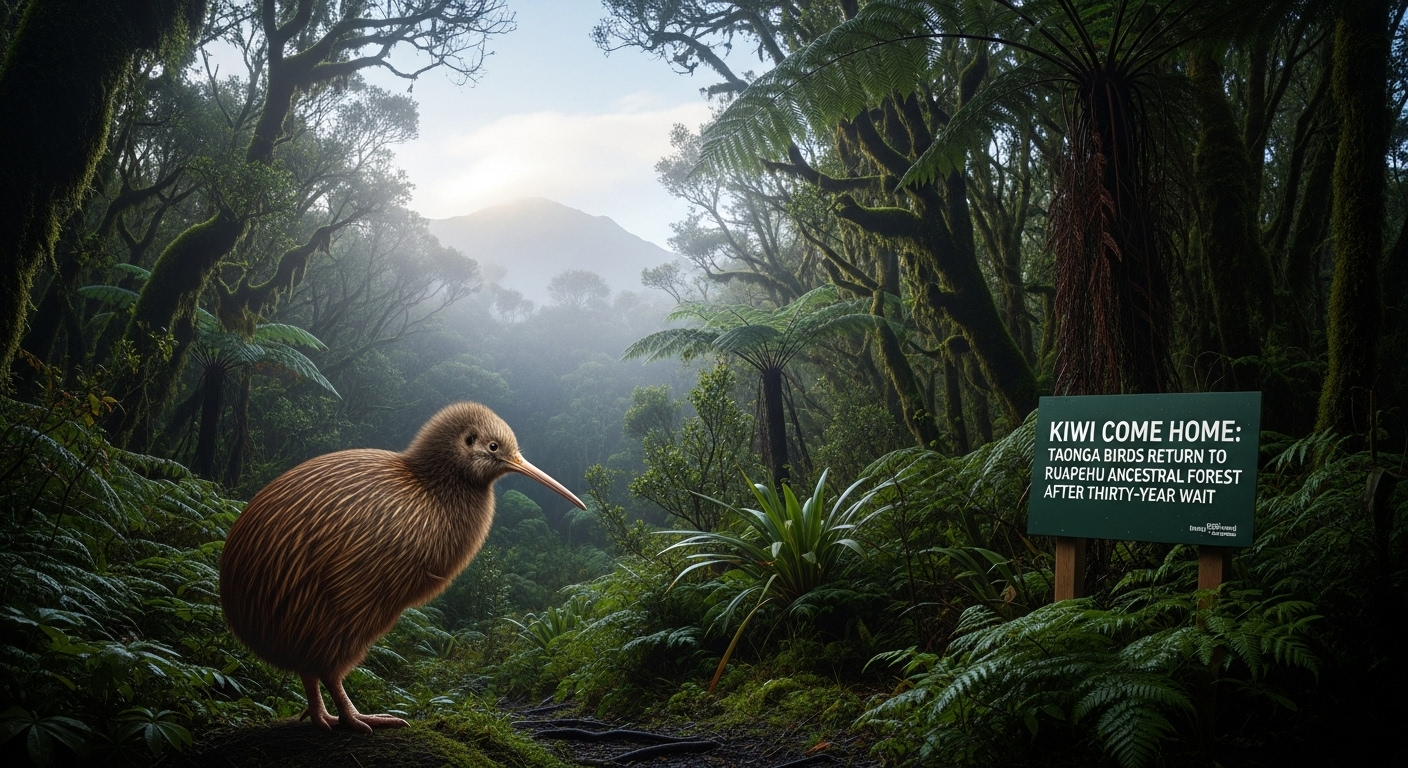
Kiwi Come Home: Taonga Birds Return to Ruapehu Ancestral Forest After Thirty-Year Wait
Thirty years is a long time to wait. But for Ngāti Rangi, the return of kiwi to their ancestral whenua in the Ruapehu district has been worth every year of effort, every predator trap set, and every planning hui held in community halls across the rohe.
The first ten of an eventual forty western brown kiwi were quietly released into the forest last week, in what conservationists and iwi leaders described as one of the most emotionally significant moments in the region’s environmental history. The birds had been absent from this particular forest for three decades, driven out by stoats, possums, and rats before large-scale predator control began.
"When you hear that call again in the dark — that sharp, piercing kiwi call — it feels like the land is waking back up."
Department of Conservation rangers worked alongside iwi members to select the release sites, choosing areas where the predator suppression work had been most thorough. Transmitters fitted to each bird will allow the team to track their movements and survival rates over the coming months.
For elders of Ngāti Rangi, the occasion was deeply spiritual. Kiwi hold the status of taonga — treasured species — and their absence had long been felt as a gap in the health and identity of the land itself. “This is not just about birds,” one kuia said at the release ceremony. “It’s about who we are as a people, and our relationship with this place.” The full forty birds are expected to be released by mid-year.