The One Mistake That Makes Home Workouts Far Less Effective Over Time
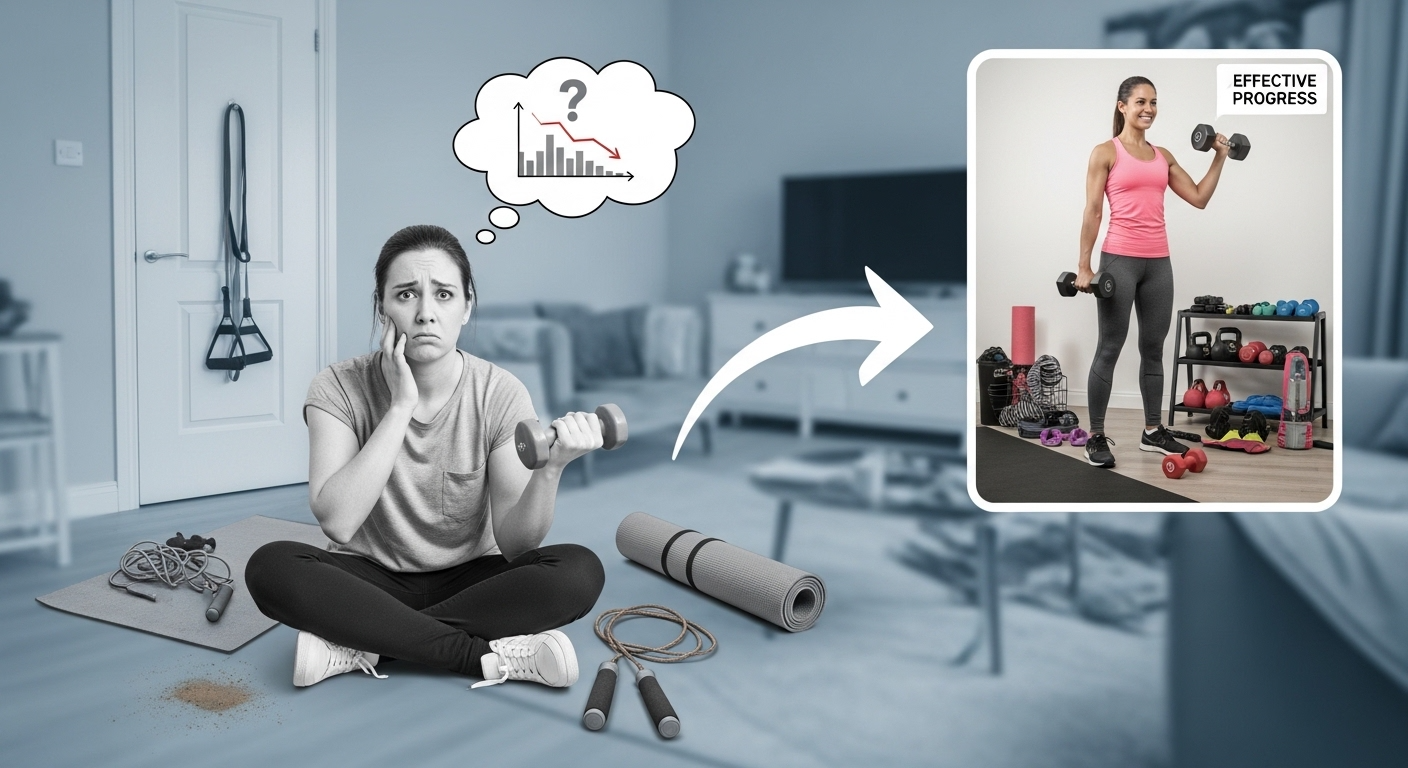
You’ve been showing up every day. You’re sweating, you’re consistent, and you’re putting in the effort. But somehow, the results have quietly stopped coming.
The problem isn’t your dedication. It’s that you’re doing the exact same workout, in the exact same way, week after week.
Why the Same Routine Eventually Stops Working
When you first start a home workout routine, your body has never seen these movements before. It responds fast. Strength improves, endurance builds, and progress feels almost effortless.
But your body is remarkably good at adapting. Once it figures out what’s being asked of it, it stops working as hard to complete those same movements.
The Science Behind the Plateau
This isn’t a motivation problem. It’s biology. The principle of diminishing returns means that the same stimulus, repeated indefinitely, produces less and less adaptation over time.
Your muscles, your cardiovascular system, and even your nervous system all get used to familiar exercises. Once they do, those exercises simply stop producing the same results.
What Workout Stagnation Actually Feels Like
You’ll recognize it immediately. You’re putting in the same time and effort, but nothing seems to be changing anymore. The workouts feel easier, but your fitness isn’t improving.
That frustrating feeling of spinning your wheels is your body telling you it has nothing new to adapt to. It’s comfortable. And comfort is the enemy of progress.
The One Thing That Fixes Everything: Progression
The solution isn’t to completely reinvent your routine every week. It’s to introduce gradual, intentional progression that gives your body a reason to keep adapting.
Progression means making your workouts slightly more demanding over time. More weight, more reps, more sets, or a more challenging variation of an exercise you already know.
What the Experts Say
“Progression is the key to unlocking continued progress with any fitness routine. Without constantly challenging your body with new stimuli, you’re simply not going to see the same level of improvement over time.” — Jessica Thompson, certified personal trainer and fitness coach
“Doing the same workout over and over is a surefire way to hit a plateau. Your body is incredibly adaptable and will quickly get used to the demands you’re placing on it. To keep seeing results, you need to constantly mix things up.” — Dr. Emily Saunders, exercise physiologist and researcher
How to Add Progression Without Overhauling Everything
You don’t need new equipment or a completely different program. Small, strategic changes to what you’re already doing are enough to restart the adaptation process.
Start by adding one extra set to your most familiar exercise. The following week, increase the reps slightly. The week after that, try a harder variation of the same movement.
Practical Ways to Progress at Home
| Progression Method | Simple Example |
|---|---|
| Increase weight or resistance | Move from 5kg to 8kg dumbbells over several weeks |
| Add more reps or sets | Go from 3 sets of 10 to 4 sets of 12 gradually |
| Try harder exercise variations | Progress from regular push-ups to decline push-ups |
| Introduce new movements | Add lunges, burpees, or mountain climbers to your routine |
| Reduce rest time between sets | Shorten rest periods to increase cardiovascular demand |
Why Small Changes Compound Into Big Results
The temptation is to make dramatic changes when progress stalls. That approach usually leads to burnout or injury. Small, consistent changes are far more sustainable.
Adding one extra set of push-ups this week seems minor. But over 12 weeks of incremental adjustments, the total volume and intensity of your training will look completely different.
Keeping Your Mind Engaged Alongside Your Body
Progression isn’t purely physical. Certified strength specialist John Baxter points out that constantly pushing toward new milestones keeps you mentally invested in your training.
When every week feels exactly the same, motivation quietly erodes. When you have a small target to hit, showing up stays purposeful and rewarding.
You Can Progress With Zero Equipment
No dumbbells, no resistance bands, no problem. Bodyweight exercises have almost unlimited progression potential when approached strategically.
A regular squat becomes a single-leg squat. A standard push-up becomes a diamond push-up or an archer push-up. Every bodyweight exercise has a harder version waiting when you’re ready for it.
How Often Should You Change Things Up
You don’t need to overhaul your routine constantly. Introducing one new element every two to four weeks is enough to keep your body adapting without overwhelming you.
The goal is consistent forward movement, not constant reinvention. Steady and intentional beats dramatic and unsustainable every single time.
Conclusion: Your Living Room Can Be a Progression Machine
The biggest mistake home exercisers make isn’t laziness. It’s sticking with what’s comfortable long after their body has stopped responding to it.
Progression is the ingredient that separates people who plateau from people who keep improving month after month. It doesn’t require a gym, a trainer, or expensive equipment. It just requires the intention to make each week slightly harder than the last.
Read more: https://wizemind.com.au/
Frequently Asked Questions
How often should I change my home workout routine? You don’t need to change everything at once. Introducing at least one new challenge every two to four weeks, whether that’s extra reps, more weight, or a new exercise variation, is enough to keep your body adapting consistently.
What is the best way to track my progression? Keep a simple written workout log noting the weight, reps, and sets you complete each session. Seeing your numbers improve over time is one of the most effective ways to stay motivated and plan your next steps.
How do I know when to increase the difficulty? If you’re completing your full rep and set range comfortably without much struggle, that’s a clear sign your body has adapted and it’s time to increase the challenge. Trust what your body is telling you.
Can I still do my favourite exercises while focusing on progression? Absolutely. You don’t need to abandon exercises you enjoy. Simply find ways to make them progressively harder over time through added weight, extra reps, or a more advanced variation of the same movement.
Is progression possible with only bodyweight exercises? Yes, completely. Bodyweight exercises have nearly unlimited progression potential. Increasing reps, reducing rest time, or advancing to harder variations like single-leg movements or plyometric versions keeps the challenge growing without any equipment.
What are the signs I’m overdoing progression too fast? Excessive fatigue, persistent muscle soreness that doesn’t resolve, and declining performance are all warning signs. Progression should be gradual and paired with adequate rest and recovery to avoid injury or burnout.
What if I have very limited time for workouts? Even short sessions can incorporate progression. Focus on compound bodyweight movements, reduce rest periods, or increase intensity rather than duration. Quality and intentional challenge matter more than total workout length.
Key Points
- Doing the same home workout repeatedly causes your body to stop adapting and progress to stall
- The principle of diminishing returns means familiar exercises produce less results over time
- Workout stagnation is a biological response, not a motivation or effort problem
- Progression means gradually increasing difficulty through weight, reps, sets, or harder variations
- Small and consistent changes compound into significant improvements over weeks and months
- You do not need to overhaul your entire routine, one new challenge every few weeks is enough
- Bodyweight exercises have nearly unlimited progression potential through advanced variations
- Keeping a simple workout log helps you track progress and plan your next steps clearly
- Mental engagement improves when you have small weekly targets to work toward
- Progression prevents the frustration of putting in effort without seeing any meaningful results
- Reducing rest time between sets is a simple way to increase intensity without new equipment
- Dramatic routine changes often lead to burnout while gradual changes build sustainable progress
- Your body adapts to comfort, so discomfort applied gradually is what drives continued improvement
- Certified experts agree that progression is the single most important variable in long-term fitness results
- Better home workout results are available to anyone willing to make each week slightly harder than the last