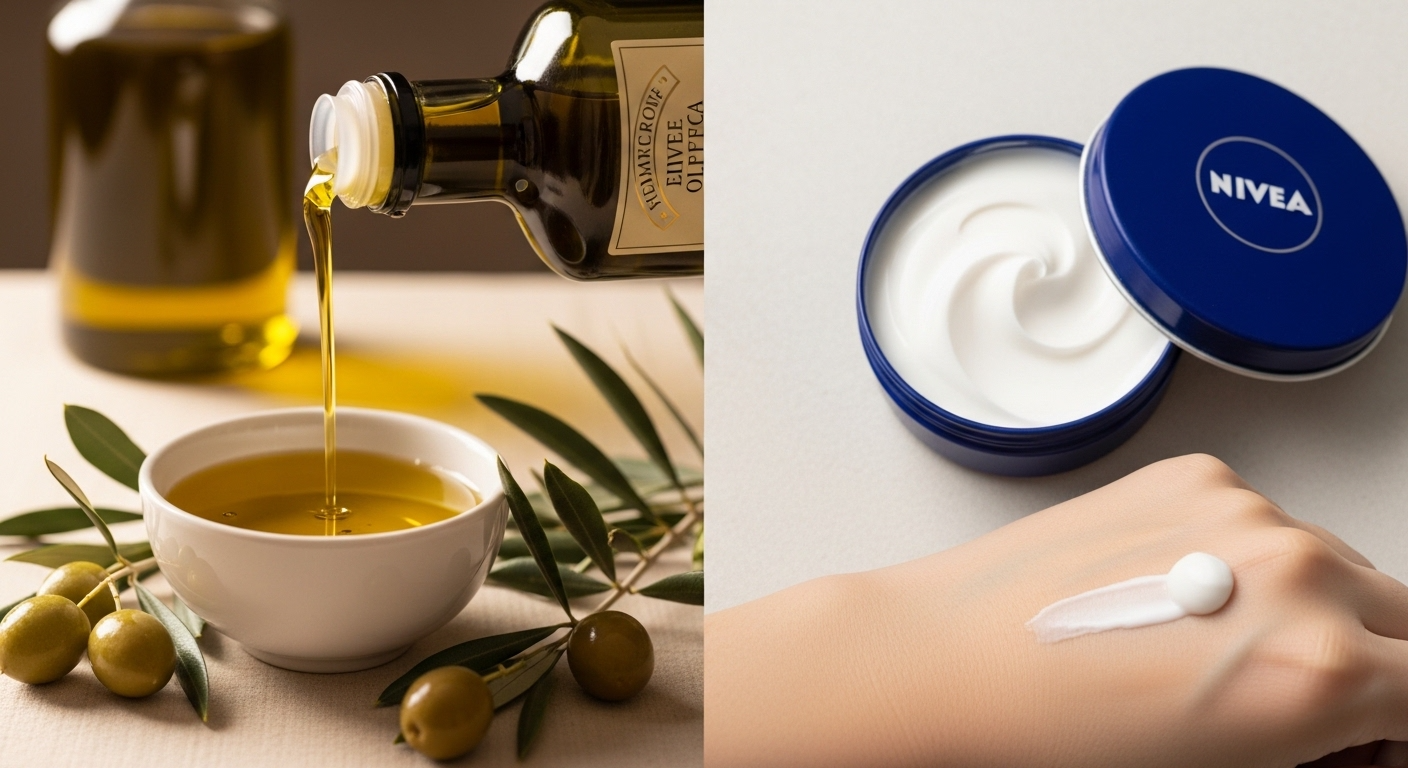
Olive Oil and Nivea Cream: The “Magic” Hack More and More People Are Adopting
In a world filled with beauty trends that arrive and disappear within weeks, one simple combination has built up an unusually steady following. Olive oil mixed with Nivea cream has been circulating through beauty forums and social media communities with a persistence that suggests it is delivering results rather than simply riding a wave of novelty. The appeal is easy to understand. Both ingredients are affordable, widely available, and have decades of trusted use behind them. What is less obvious until you try it is why combining the two seems to produce something more effective than either ingredient achieves alone.
The Science Behind the Combination
Olive oil has been used on skin across Mediterranean cultures for thousands of years, and modern dermatological research has given some substance to that long tradition. It is rich in oleic acid and linoleic acid, two fatty acids that closely resemble those found in the skin’s natural lipid barrier. It also contains vitamin E, vitamin K, and polyphenol antioxidants including squalene, which help protect skin cells from oxidative damage. When applied topically, olive oil works primarily as an emollient, softening the skin by filling gaps in the outermost layer, and as a mild occlusive, helping to slow moisture loss.
Nivea cream, the original blue-tin formulation that has been on shelves since 1911, achieves its effects through a different mechanism. Its key active ingredients include glycerin, which draws moisture from the environment into the skin through a process called humectancy, and Eucerit, a water-in-oil emulsifier derived from lanolin that forms a protective layer over the skin surface. The cream is specifically engineered to deliver sustained hydration by both attracting and retaining water in the skin.
When the two are combined, you get all three primary hydration mechanisms working together in a single application. The glycerin in Nivea draws moisture in, the olive oil softens and conditions, and the combined occlusive properties of both ingredients help prevent that moisture from evaporating. For dry, mature, or dehydrated skin in particular, this is a genuinely useful combination rather than simple marketing language.
A 2016 study in the Journal of Cosmetic Dermatology confirmed anti-inflammatory and wound-healing properties in olive oil applied topically, while a 2019 review in the journal Antioxidants highlighted its potential to neutralise free radicals associated with premature skin ageing. Nivea’s core formulation has its own extensive research base accumulated across more than a century of commercial use.
What the Experts Actually Say
The dermatological response to this trend has been mixed, and it is worth engaging with that honestly rather than presenting the hack as universally beneficial.
Dermatologists who are cautiously positive about it point to the genuine moisturising credentials of both ingredients and note that for people with dry or mature skin, the combination is likely to provide real benefit. The ingredients are well-understood, the side effect profile of both is low for most skin types, and the cost is negligible compared to speciality products targeting the same outcomes.
The caution, and it is worth taking seriously, centres on skin type. Olive oil has a relatively high oleic acid content, which makes it deeply conditioning but potentially problematic for acne-prone or oily skin. Some research suggests oleic acid can disrupt the skin barrier in those predisposed to breakouts, potentially clogging pores and contributing to congestion. For anyone whose skin tends toward oiliness or breakouts, this particular combination warrants caution and ideally a conversation with a dermatologist before adopting it as a regular practice.
For dry, dehydrated, or mature skin, particularly in the cooler and drier months that many parts of Australia experience, the evidence is more consistently favourable.
How to Make and Use the Blend
The preparation is as simple as it gets. Dispense a small amount of Nivea cream into your palm and add an equal amount of olive oil. Mix them together with your fingertip until they combine into a smooth, slightly thicker consistency than either ingredient alone. The ratio can be adjusted based on your skin’s needs. Those with very dry skin often favour a slightly higher proportion of olive oil. Those with normal skin tend to find the equal blend sufficient.
Apply the mixture to clean skin using gentle upward strokes, focusing on areas that feel particularly dry or tight. The blend absorbs relatively well and should not leave a significantly greasy finish when used in appropriate quantities. A small amount goes further than you might expect.
The most popular ways people are using this combination include applying it as the final step of an evening skincare routine, allowing the ingredients to work overnight when the skin’s natural repair processes are most active. Some use it as a richer alternative to their usual daytime moisturiser during colder months. Others apply it as an occasional intensive mask, leaving a slightly more generous application on for twenty to thirty minutes before wiping away the excess. For very dry areas such as elbows, knees, heels, and cuticles, it works as a targeted treatment applied as needed.
If you make a larger batch in advance and store it in a clean airtight container, it will keep well for up to a week at room temperature or slightly longer in the refrigerator.
Who Is Most Likely to Benefit
Dry and mature skin types stand to gain the most from this combination. The fatty acid profile of olive oil is particularly suited to skin that has lost some of its natural oil production with age, and the glycerin in Nivea provides the active hydration that olive oil alone does not deliver as effectively. People who live in dry climates or who spend extended time in air-conditioned environments also tend to respond well to richer, more occlusive moisturising approaches.
Those with eczema-prone or sensitised skin may find the combination soothing, though as always with a new product, beginning with a patch test on the inner forearm and allowing 24 hours to assess any reaction is the sensible approach.
For oily, combination, or acne-prone skin, this is not the ideal combination. The occlusive heaviness of olive oil combined with Nivea’s own occlusive base is more than these skin types typically need and may cause congestion or contribute to breakouts. There are lighter alternatives worth exploring instead, such as jojoba oil, which has a different fatty acid profile and is less likely to cause pore-related issues.
Personalising the Blend
One of the reasons this hack has maintained interest rather than fading quickly is that it adapts well. Users have shared various modifications that work for their particular needs.
A few drops of rosehip oil added to the mixture introduces additional vitamin A derivatives and linoleic acid, which can benefit skin showing signs of hyperpigmentation or uneven texture. Lavender essential oil, used sparingly at one or two drops per application, adds a calming scent and brings its own mild anti-inflammatory properties. Some people substitute the Nivea cream with shea butter for an even richer result suited to very dry or chapped skin, or with aloe vera gel for a lighter, more soothing version that suits sensitive skin more comfortably in warmer weather.
The core principle behind all variations remains the same. Combining an oil-phase ingredient that conditions and protects with a water-phase moisturiser that actively hydrates and retains moisture produces a more complete result than either achieves in isolation.
The Cost Equation
A 200ml bottle of standard olive oil from the supermarket costs a few dollars and will last months when used in skincare quantities. A 150ml tin of original Nivea cream is similarly inexpensive and widely available across Australian supermarkets, chemists, and discount stores. The combined cost of maintaining this routine daily is genuinely minimal, which makes it accessible in a way that positions it differently from most products making comparable claims about skin hydration and radiance.
For anyone who has felt priced out of the premium skincare market or who is simply interested in simplifying their routine without sacrificing results, the olive oil and Nivea cream combination offers a real and testable alternative that costs almost nothing to try.
The verdict from the people using it most consistently is that it works for them. The science of why it works is straightforward enough to be credible. The cautions around skin type are real and worth respecting. Within those boundaries, this is a hack that has earned its growing reputation more honestly than most.
Read More: For more beauty, skincare, and wellness tips written for Australian readers, visit wizemind.com.au