Australia Road Safety Enforcement 2026 — Mobile Phone Fines Rise to $1,078 With Expanded Camera Coverage
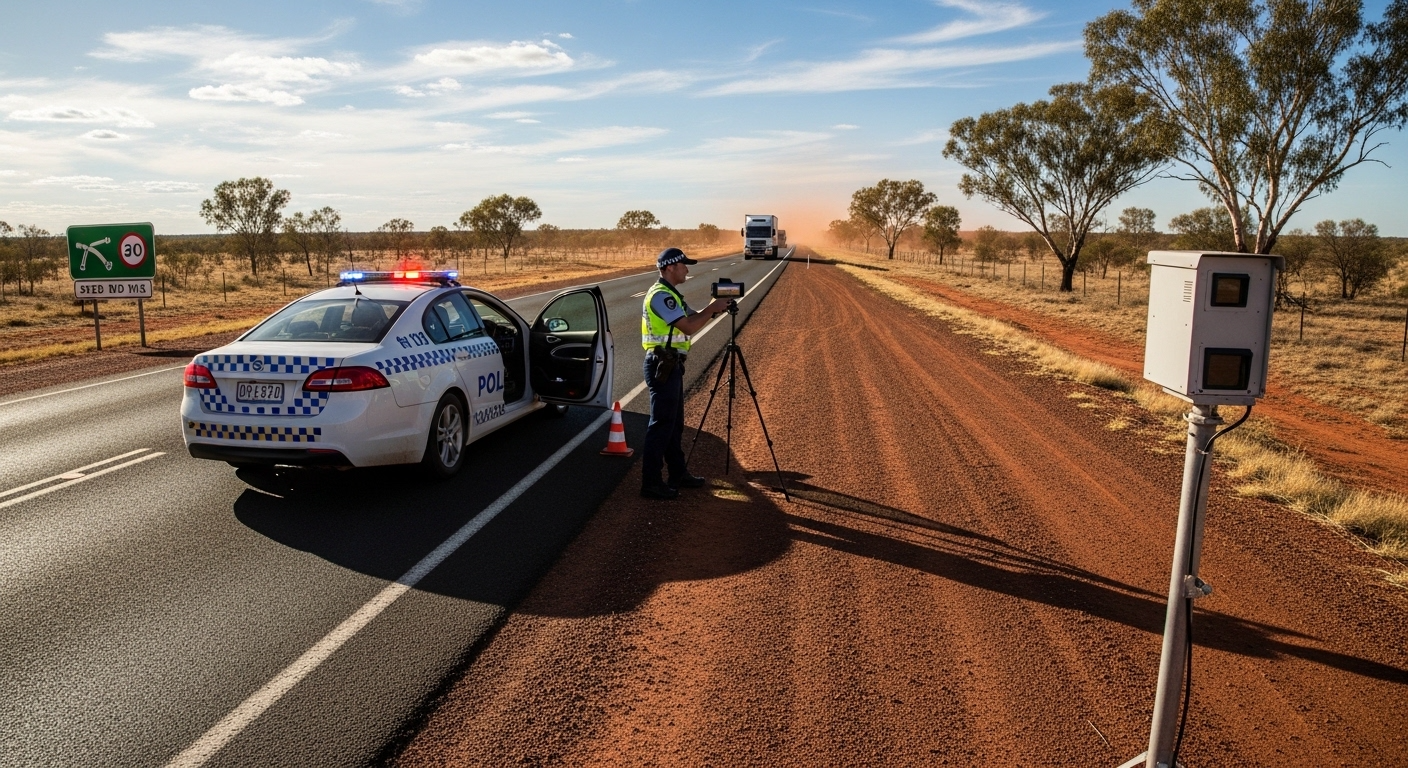
Australian drivers are facing a significantly higher financial risk from mobile phone use behind the wheel in 2026, with fines now reaching up to $1,078 and enforcement expanding through AI-powered camera systems that operate continuously around the clock. The combination of higher penalties and broader detection coverage means that the calculation many drivers have historically made about the risk of being caught has fundamentally changed.
For years, enforcement depended heavily on police officers being present and in a position to observe the offence. That dependency is gone. The cameras now doing much of the enforcement work do not have shifts, do not take breaks, and operate in conditions that would limit human observation. Every journey now takes place under potential surveillance regardless of the time or location.
Why Penalties Have Been Raised
Road safety agencies have been consistent in their explanation for the increase. Distracted driving remains one of the leading causes of serious accidents on Australian roads, and previous penalty levels were not producing the behaviour change that the data showed was necessary.
The updated enforcement approach reflects a deliberate shift in strategy. Higher financial consequences combined with a substantially higher probability of detection are the two levers that road safety research consistently identifies as most effective in changing driver behaviour. Raising the fine while detection remained low would not produce the same result as raising both simultaneously.
Officials have been clear that the goal is prevention rather than punishment. A fine of $1,078 that prevents a serious crash delivers a return that no amount of post-incident enforcement can replicate. The enforcement expansion is framed as a road safety investment rather than a revenue measure, though the financial consequences for individual drivers are real regardless of the policy intent behind them.
| Factor | Details |
|---|---|
| Maximum fine | Up to $1,078 |
| Enforcement method | AI camera surveillance |
| Operation hours | 24/7 continuous monitoring |
| Primary purpose | Reduce distracted driving accidents |
| Additional penalty | Demerit points with potential licence risk |
How the AI Detection Cameras Work
The technology behind the expanded enforcement network represents a significant capability leap from traditional speed cameras. Modern mobile phone detection cameras use artificial intelligence to identify illegal phone use from images captured of vehicle occupants as they pass through monitored locations or travel along monitored corridors.
The systems are capable of detecting phones held in a driver’s hand at any position, devices resting on laps or in cupholders that are being interacted with, phone use at intersections and in stationary traffic, and brief interactions that would be invisible to a nearby observer. The cameras operate in daylight and darkness, with image quality sufficient for the detection system to identify the presence and use of a device.
An important feature of the process is that images flagged by the AI system are reviewed by human operators before fines are issued. This review step is designed to reduce false positives and ensure that fines are not generated by the automated system alone. However, the practical implication for drivers is that an interaction with their phone that the AI flags will receive human review, and the quality of the images is typically sufficient to confirm the offence.
Fines are then issued by mail, often days or weeks after the incident. This delay is one of the most disorienting aspects of the system for drivers, who may have no recollection of the specific moment in question by the time the notice arrives.
What Counts as Illegal Phone Use
The legal standard is stricter than most drivers appreciate, and the gap between what drivers believe is permitted and what the law actually allows is where most fines originate.
Illegal phone use includes holding a phone in any hand position while driving or while stationary in traffic, texting, browsing, or using any app regardless of how briefly, resting the device on a leg or in a cupholder while looking at or interacting with it, using a phone for navigation without it being secured in an approved mount, and touching the phone for any purpose while the vehicle is in traffic, including at red lights.
The legal standard for permitted phone use requires the device to be secured in an approved cradle or mount fixed to the vehicle, the driver to have no physical contact with the phone, and any interaction to occur through voice controls or the vehicle’s integrated system without touching the device. Learner and provisional drivers face the strictest standard and in many states cannot use phones even through hands-free systems while on restricted licences.
Who Is Most at Risk of Being Fined
While the expanded camera network increases detection risk for all drivers, certain groups carry significantly higher exposure based on their typical driving patterns and habits.
Commuters in high-traffic urban corridors travel through the camera-monitored locations most frequently and for the longest cumulative time, meaning their overall exposure to detection is higher than occasional drivers. A habit that produces no fine in low-traffic conditions becomes a regular risk on a monitored commuter route.
Learner and provisional licence holders face not only the same fines as full licence holders but the additional consequence that demerit points accumulate against a lower threshold before licence suspension is triggered. A single mobile phone offence can place a provisional driver within striking distance of losing their licence, and the immediate financial and practical consequences of licence loss for a young driver are often more severe than the fine itself.
Drivers who check their phones at red lights are among the most commonly caught, largely because they believe being stationary provides some protection. It does not. The cameras monitor intersections specifically, and stopped drivers who reach for their phones in the belief that they are not visible to enforcement are precisely the behaviour the camera placement is designed to detect.
Drivers using their phone for navigation without a proper mount often believe that brief glances at a device held in hand are acceptable given the safety function of the navigation. They are not. The navigation purpose does not change the legal status of holding the device. An approved mount resolves this entirely and costs a fraction of a single fine.
What Drivers Must Do to Stay Compliant
The standard required for full compliance is straightforward, and meeting it requires a small number of one-time setup decisions rather than ongoing vigilance.
Install an approved phone mount before your next drive. A properly secured phone that you do not touch while driving is fully compliant, regardless of what you are using it for, including navigation. The mount investment is measured in dollars. The fine it prevents is measured in hundreds.
Set navigation, music, and any required settings before moving. A phone that is configured before the vehicle moves does not require any interaction while driving. This single habit eliminates the most common cause of mid-trip phone interaction among drivers who use their phone legitimately for navigation.
Connect your phone to the vehicle’s Bluetooth system for call management if you need to make or receive calls while driving. Hands-free calling through a properly configured system is legal. Picking up a ringing phone is not, regardless of how briefly you hold it.
Remove the phone from easy reach entirely if you find habitual interaction difficult to resist. Placing the phone in a bag, in the back seat, or in the glovebox before starting the vehicle eliminates the temptation and the risk simultaneously. If the phone cannot be easily reached, the impulse to check it is less likely to translate into action.
Never touch your phone at red lights or in stationary traffic. There is no legal protection for stopped vehicles, and the camera placement at intersections specifically targets this behaviour. The fact that you are stopped is not a relevant legal consideration.
Frequently Asked Questions
What is the maximum fine for mobile phone use while driving in 2026? The maximum fine has increased to $1,078 for mobile phone offences, with demerit points also applied in most cases. The exact fine may vary slightly between states and territories, but all jurisdictions have moved toward the higher penalty range supported by the expanded camera enforcement.
Can the cameras detect phone use at night? Yes. The AI detection cameras operate 24 hours a day, seven days a week, and are designed to capture clear images in conditions that would limit human observation including low light and night-time driving. Operation time is not a relevant factor in detection risk.
Is it legal to hold a phone at a red light? No. Being stopped in traffic does not change the legal status of holding or touching a phone. The offence is committed regardless of whether the vehicle is moving or stationary, and cameras specifically monitor intersections where this behaviour is common.
What happens after a camera captures a potential offence? Images flagged by the AI system are reviewed by human operators before a fine is issued. If the review confirms the offence, the registered owner of the vehicle receives a fine notice by mail. The delay between the incident and the notice is typically several days to several weeks.
Do provisional drivers face the same penalties as full licence holders? Provisional drivers receive the same fine but face a lower demerit point threshold before licence suspension is triggered. A single mobile phone offence can place a provisional driver very close to or at the threshold for licence suspension depending on their current point balance, making the consequences potentially more severe than for a full licence holder.
For more Australian road safety news, traffic penalty updates, and driving regulation guidance, visit wizemind.com.au