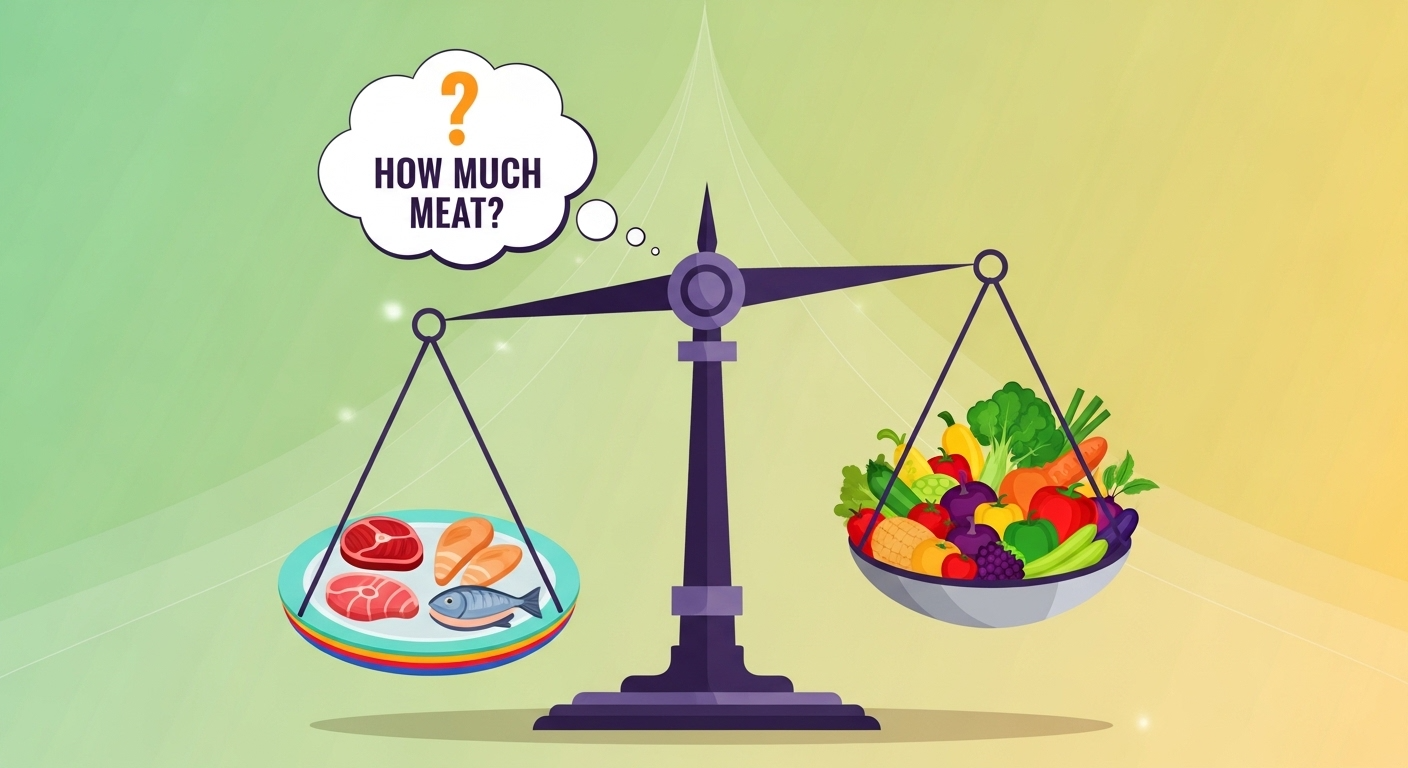
How Much Meat Should You Actually Eat? New Study Reveals the Sustainable Consumption Threshold
A major new study has done what few researchers have attempted before: put a precise, data-driven number on how much meat the planet can actually support. The findings challenge both the all-you-can-eat camp and the eliminate-meat-entirely camp with equal force.
The research, drawn from analysis of land use, greenhouse gas emissions, and global resource depletion, offers a practical middle path that most people have not been presented with before.
The Core Finding: Moderation, Not Elimination
The study identifies a sustainable meat consumption threshold rather than calling for a complete ban. Researchers found that a measured reduction in meat intake, rather than total abstinence, is both achievable and sufficient to meaningfully reduce environmental damage.
Red meat should be limited to a few servings per week, with the balance of protein coming from plant-based sources, poultry, and seafood. The exact threshold varies by region, but the principle holds globally.
Why the All-or-Nothing Approach Has Been Failing
Public debates about meat and sustainability have been dominated by extremes. Vegan advocates push for complete elimination while the meat industry resists any reduction. Neither position has produced meaningful change at scale.
The study argues that this polarisation is itself a barrier to progress. A moderate, evidence-based target is far more likely to gain broad adoption than a complete dietary overhaul that most people will simply ignore.
The Environmental Numbers Behind the Recommendation
Meat production is responsible for significant greenhouse gas emissions, land clearing, and water consumption across the global food system. Beef is the single most resource-intensive common protein source by a substantial margin.
Greenhouse gas equivalents are the metric researchers use to compare the climate impact of different foods on a standardised basis. Beef produces roughly 20 times the greenhouse gas equivalents of most plant proteins per gram of nutrition delivered.
Regional Differences Change the Recommendation
Meat consumption patterns vary enormously between countries and the study acknowledges this directly. France and the United States consume meat at rates far above the global average, while large parts of Asia and Africa consume well below it.
A one-size-fits-all global recommendation is unrealistic and the researchers do not attempt one. Instead, the study calls for region-specific targets that account for cultural preferences, economic conditions, and local resource availability.
Key Findings at a Glance
| Finding | What It Means |
|---|---|
| Sustainable threshold identified | Moderate reduction is sufficient, not elimination |
| Regional disparities matter | Targets must be tailored by country and culture |
| Environmental impact quantified | Clear data on land, water, and emissions per meat type |
| Mindset shift required | From abstinence to moderation as the policy goal |
| Health benefits confirmed | Reduced meat intake improves cardiovascular outcomes |
Each of these findings has direct policy implications for governments, food companies, and individuals navigating the increasingly complex relationship between diet and environmental responsibility.
The Health Dividend That Comes With Eating Less Meat
Reducing meat consumption, particularly red and processed meat, delivers measurable health benefits alongside the environmental ones. Improved cardiovascular health, reduced risk of type 2 diabetes, and lower rates of certain cancers are all associated with diets lower in animal protein.
The study describes this as a double dividend: the same dietary shift that helps the planet also helps the individual making it. That alignment of personal and planetary benefit is a powerful argument for moderate reduction that the elimination camp often underutilises.
What a Sustainable Weekly Menu Actually Looks Like
The researchers provide a practical sample menu to demonstrate that sustainable eating is neither restrictive nor unappetising. The weekly framework prioritises plant-based meals while retaining meat in a reduced but meaningful role.
A few meat-based meals per week within a predominantly plant-rich diet is the model. This is not a dramatic transformation for most people in high-consumption countries. It is a moderate adjustment that, if adopted at scale, would deliver substantial environmental benefits.
The Policy Dimension Cannot Be Ignored
Individual dietary choices alone will not solve the sustainability challenge of global meat production. The study is clear that systemic and policy-driven changes are equally necessary alongside personal behaviour shifts.
Subsidies, labelling requirements, procurement policies, and food education are all identified as levers that governments can use to nudge consumption patterns toward the sustainable threshold without mandating specific diets. The researchers argue that both individual and systemic action must move simultaneously.
Shifting the Conversation From Guilt to Guidance
The framing of meat consumption as a moral failing has alienated many people who might otherwise be receptive to moderate changes. The study deliberately reframes the conversation around practical guidance rather than judgment.
Acknowledging cultural and personal attachments to meat is presented as essential to achieving meaningful change. Policies and communications that ignore those attachments are unlikely to produce the broad adoption that the environmental situation requires.
Frequently Asked Questions
How much meat does the study say is sustainable to eat? The recommendation varies by region and meat type, but the general guidance is to limit red meat to a few servings per week and shift the balance of protein toward plant-based sources, poultry, and seafood. The study does not advocate elimination but rather a targeted and measurable reduction.
Which type of meat has the highest environmental impact? Beef has by far the highest environmental cost per unit of nutrition among commonly consumed meats. It produces roughly 20 times the greenhouse gas equivalents of most plant proteins and requires substantially more land and water than poultry, pork, or fish.
Does reducing meat consumption actually make a meaningful difference? Yes, at scale the difference is substantial. If high-consumption countries reduced average meat intake to the sustainable threshold identified in the study, the reduction in greenhouse gas emissions, land use, and water consumption would be significant and measurable within years rather than decades.
What are greenhouse gas equivalents and why do they matter? Greenhouse gas equivalents are a standardised unit that allows researchers to compare the climate impact of different activities on a consistent basis. They convert all relevant gases including methane and nitrous oxide into a carbon dioxide equivalent figure, making comparisons between food types meaningful and actionable.
Can people in low meat-consuming countries ignore this study? Not entirely. While the most urgent reductions are needed in high-consumption countries, the study notes that rising incomes in developing economies are driving rapid increases in meat demand. Addressing that trajectory early is part of the long-term sustainability picture.
What health benefits come from reducing meat intake? Improved cardiovascular health, reduced risk of type 2 diabetes, lower rates of certain cancers, and better weight management are all associated with diets lower in red and processed meat. The study describes this alignment of personal health and environmental benefit as a double dividend.
Why has eliminating meat entirely not worked as a policy goal? Because most people will not do it, and policies that demand behaviour changes most people resist tend to produce backlash rather than adoption. The study argues that a moderate and achievable target is far more likely to generate the broad behavioural shift needed than an elimination mandate that alienates the majority.
What role should governments play in shifting meat consumption? A significant one. The study identifies subsidies, food labelling, public procurement standards, school meal programmes, and consumer education as the primary policy levers available to governments. Individual choice and systemic policy must work together for the transition to succeed at the scale required.
Is plant-based meat a solution the study endorses? The study focuses primarily on the consumption threshold for conventional meat rather than evaluating specific alternatives in depth. However, the general direction toward plant-based protein sources is consistent with the study’s recommendations regardless of the specific form that reduction takes.
How quickly would environmental benefits appear if the threshold were adopted? Some benefits would appear within years rather than decades. Reduced land clearing and lower methane emissions from livestock would show measurable effects relatively quickly. Full benefit realisation across the food system would take longer as agricultural infrastructure adjusts to changed demand patterns.
Conclusion
This study offers something the meat sustainability debate has badly needed: a practical, evidence-based middle ground. Neither demanding total elimination nor dismissing environmental concerns, it charts a course that is both achievable and genuinely effective.
Limiting red meat to a few servings per week while shifting toward plant-rich eating is a change that most people in high-consumption countries can make without dramatic lifestyle disruption. At scale, it would deliver meaningful environmental and health benefits simultaneously.
The conversation is shifting from abstinence to moderation, and that shift may prove more consequential than a decade of elimination campaigns that failed to move consumption patterns in any sustained direction.