Bat Wings After 50: The Best 15-Minute Circuit to Reshape Your Arms
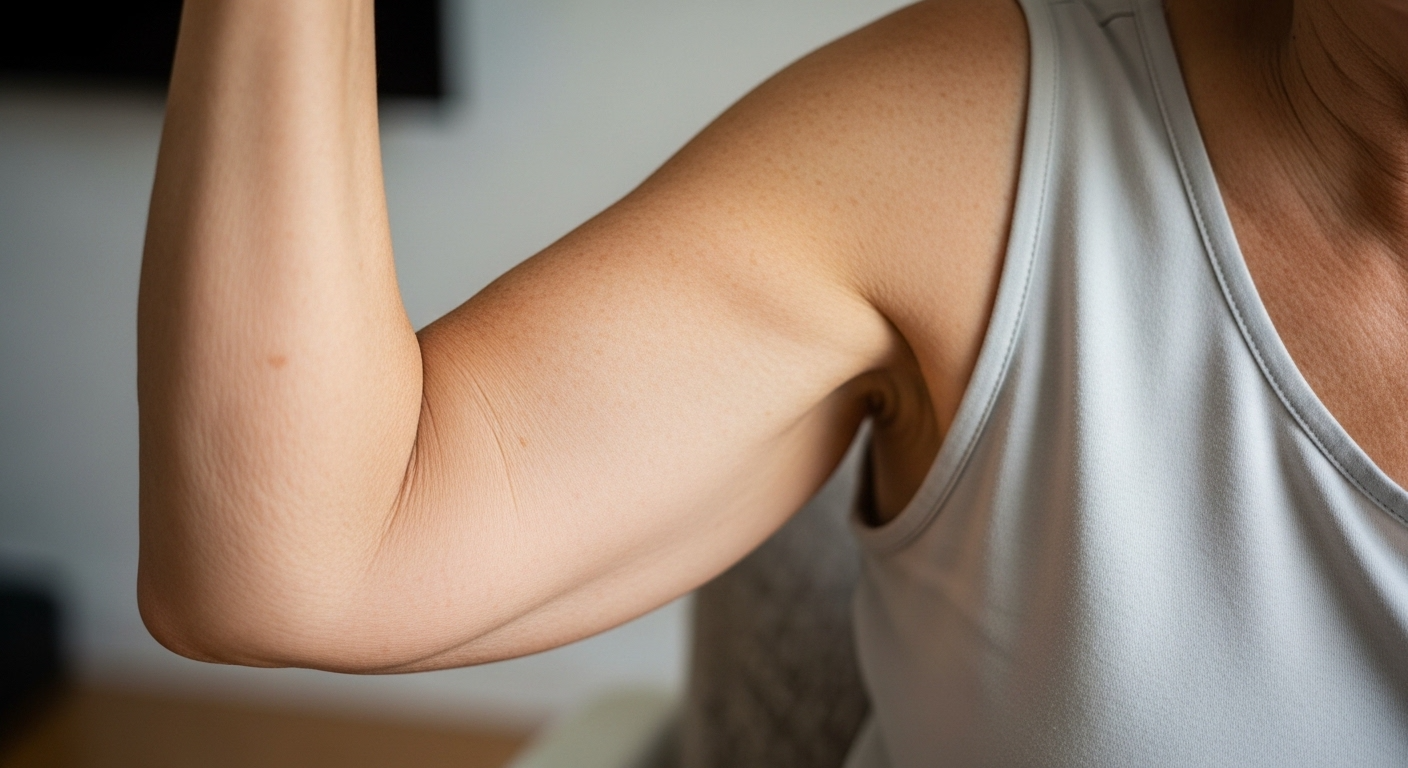
It’s one of the most common frustrations that comes with getting older. You look in the mirror or glance at a photo and notice that loose skin hanging from the upper arms — what people often call bat wings. No amount of moisturiser or compression sleeves seems to make a dent, and the fitness industry is happy to sell you gadgets and creams that promise results they rarely deliver.
But there’s a simpler, more effective approach that trainers and exercise physiologists keep coming back to: a short, targeted circuit built around the jump rope.
Why Bat Wings Develop After 50
The upper arm changes that happen after 50 aren’t caused by laziness or poor habits. They’re the result of several converging biological processes. Muscle mass naturally declines with age, a condition called sarcopenia. Collagen production slows down, reducing the skin’s elasticity and its ability to stay firm against the underlying tissue. Metabolism shifts, and the body distributes fat differently.
The area behind the upper arm — the tricep zone — is particularly affected because it’s a region that most people don’t regularly challenge through everyday movement. Unlike the chest, legs, or core, the backs of the arms rarely get much activity in daily life. Without deliberate exercise, the muscle there quietly diminishes while the overlying skin gradually loosens.
The good news is that this area responds well to targeted training, and you don’t need an expensive gym membership or complicated equipment to address it.
Why the Jump Rope Works So Well
The jump rope is easy to dismiss as a childhood toy. It’s also one of the most efficient upper-body conditioning tools available.
Unlike isolated exercises such as bicep curls or tricep kickbacks, jump rope work requires constant engagement across the arms, shoulders, wrists, and core throughout every repetition. That sustained, dynamic effort burns significantly more calories per minute than most isolation exercises while simultaneously building the lean muscle that firms up the arms.
For people over 50, the combined effect is particularly valuable: cardiovascular fitness, upper body toning, and overall fat reduction in a single activity. Certified personal trainer Sarah Johnson describes it as “a game-changer for anyone looking to reshape their upper body,” noting that the combination of cardio, strength, and core engagement in a brief session is difficult to replicate with any other single piece of equipment.
The 15-Minute Circuit
The circuit below is designed to target the arms while keeping the heart rate elevated, which maximises both fat burning and muscle conditioning. Move between exercises with minimal rest to maintain intensity.
Start with three minutes of jump rope to warm up the arms and elevate your heart rate. Follow that with 12 to 15 push-ups, which target the triceps and chest simultaneously. Then do 45 seconds of plank jacks to engage the core and shoulders. Move into 12 to 15 bicep curls with dumbbells or resistance bands, then 12 to 15 tricep dips using a sturdy chair. Finish with another three minutes of jump rope to push through the final cardiovascular effort.
The whole circuit takes around 15 minutes. The key is to keep transitions short so your heart rate stays elevated throughout.
How to Start Safely After 50
Any new exercise programme should begin more conservatively than you think necessary. This is particularly true for jump rope, which places demands on the ankles, knees, and wrists that people who haven’t trained regularly may not be accustomed to.
In the first week, start with just one to two minutes of jumping rather than the full three-minute intervals. Focus on landing softly with slightly bent knees, keeping your elbows close to your body, and letting your wrists do the work rather than your whole arms. These technique details prevent injury and make the movement more sustainable.
Exercise physiologist Dr. Emily Rodriguez emphasises the importance of a holistic approach: “As we age, it’s crucial to adopt a fitness approach that addresses multiple systems and muscle groups. The jump rope is an excellent example of an exercise that delivers a full-body workout, helping to preserve muscle mass and boost metabolism.”
If you have joint pain, mobility limitations, or haven’t been active for some time, speak with your doctor or a physiotherapist before starting. The circuit can be adapted — push-ups can be performed against a wall or elevated surface, and resistance bands can replace dumbbells for anyone with wrist sensitivity.
Adapting the Circuit to Your Situation
Not everyone starts from the same place, and the circuit is designed to flex around your circumstances.
If you’re completely new to exercise, begin with just one minute of jumping and ten repetitions of each strength exercise. Build from there over two to three weeks before attempting the full circuit. If you have limited space or no jump rope, substitute high knees, jogging in place, or standing arm circles for the cardio intervals. If you’re short on time, reduce the jump rope segments to two minutes each and complete eight to ten repetitions of the strength exercises.
The most important variable isn’t the exact number of repetitions or the precise duration of each interval. It’s consistency. Two or three sessions per week, maintained over four to eight weeks, will produce visible changes in arm tone and overall body composition for most people.
Signs That It’s Working
Progress after 50 can feel slower than it did in younger years, but it is happening even when it isn’t immediately visible. Signs that the circuit is working include being able to jump rope continuously for longer before needing a break, completing more repetitions of the strength exercises with the same weight, arms feeling more solid and less soft to the touch, and improved posture as the shoulder and upper back muscles strengthen.
Fitness coach Lisa Stevenson notes: “With consistency and patience, you’ll be amazed at the results you can achieve. The key is to start slowly, focus on proper form, and gradually build up your endurance over time.”
Most people begin noticing meaningful changes in arm tone within four to eight weeks of regular training, with more significant reshaping visible at the three-month mark.
Frequently Asked Questions
How often should I do this circuit? Two to three times per week with at least one rest day between sessions. This gives your muscles time to recover and rebuild, which is where the actual strengthening happens.
Can I substitute other exercises for the jump rope? Yes. High knees, burpees, jogging in place, or any cardio exercise that engages the arms and elevates the heart rate will work. The goal is to keep intensity high and challenge the upper body dynamically.
What if I get bored with the jump rope? Introduce variations over time — high knees while jumping, side-to-side movements, or alternating foot patterns. You can also rotate in other cardio exercises to keep things fresh.
How can I make the circuit more challenging as I improve? Increase the weight used for bicep curls, elevate your feet for push-ups, or extend the jump rope intervals to four minutes each. Add a second round of the full circuit once the first becomes manageable.
What if I have limited equipment or space? The circuit works in a small area and can be done with minimal equipment. Resistance bands replace dumbbells effectively. For the jump rope, any clear space roughly two metres by two metres is sufficient.
How long before I see results? Most people notice improved arm tone and reduced upper arm softness within four to eight weeks of doing the circuit two to three times per week. More substantial reshaping typically becomes visible around the three-month mark with consistent training.