Every Garden Bird Bath Owner Is Being Asked to Drop In a Single Penny
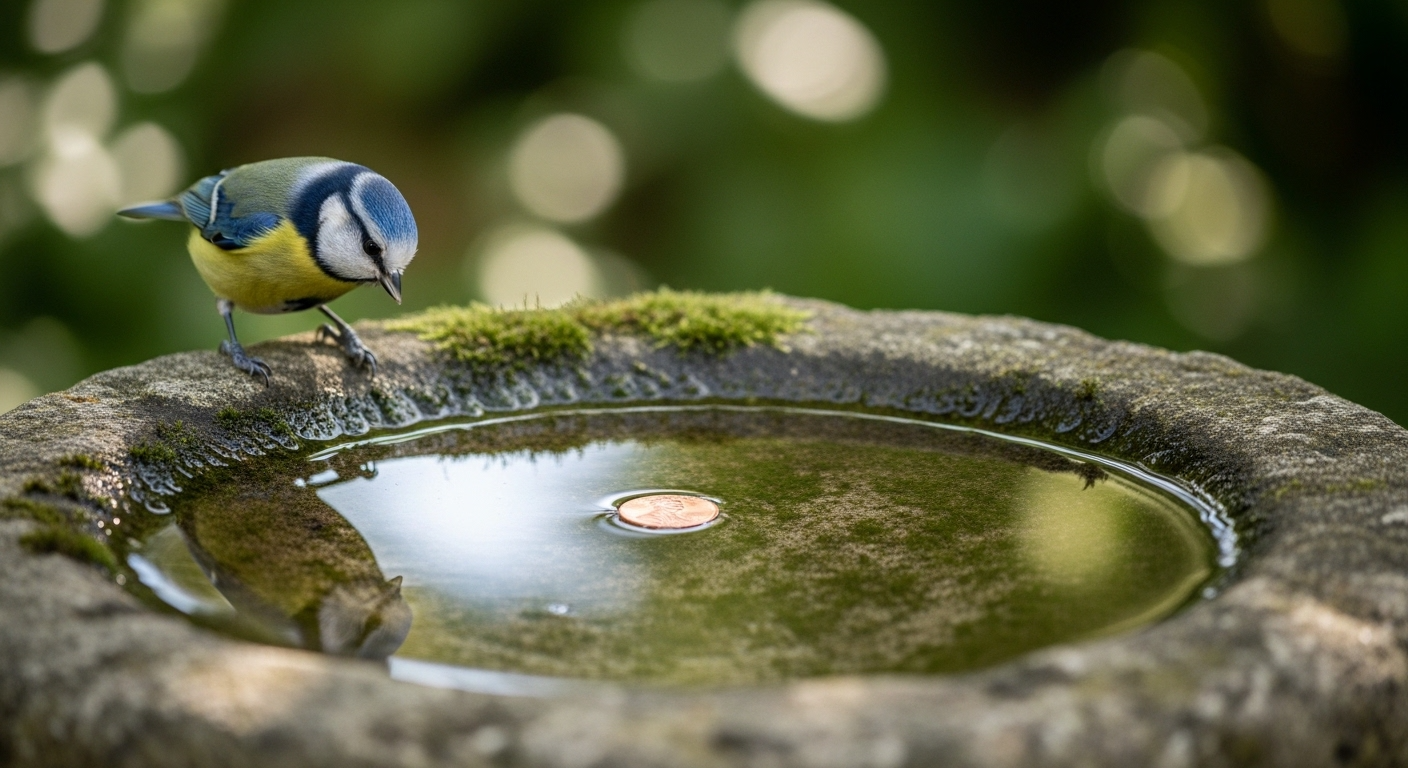
It sounds almost too simple to be real. Drop a single penny into your garden bird bath and watch the water stay cleaner for longer. No chemicals, no scrubbing products, no expensive gadgets. Just one small coin sitting quietly at the bottom of the basin, doing its job while the birds splash around above it.
This idea has been spreading rapidly among garden bird enthusiasts, and the reason it keeps gaining attention is straightforward: it actually works. The science behind it is real, the results are visible, and the cost is essentially zero. If you have a bird bath in your garden and you are tired of fighting a losing battle against green, slimy algae, this is worth understanding.
The Science Behind Why a Penny Works
The effectiveness of this trick comes down to one word: copper. Pennies contain copper, and copper has well-documented natural antimicrobial properties that have been understood by scientists for decades. When a copper penny sits in water, it slowly releases copper ions into the surrounding liquid. Those ions interfere with the cell membranes of algae and other microorganisms, effectively disrupting their ability to grow and reproduce.
The result is water that resists the green film and slippery buildup that bird bath owners typically spend their weekends scrubbing away. The copper does not kill every organism instantly but it creates an environment that is significantly less hospitable to algae growth than plain water alone.
The amount of copper released by a single penny is carefully balanced by nature itself. Enough to inhibit algae. Not enough to harm the birds. This is why the recommendation is one penny, not several. Too much copper in the water can become genuinely toxic to birds, so the single penny guideline exists for a reason and should be followed precisely.
What Happens When You Try It
The transformation that bird bath owners are reporting is not subtle. Within a few days of dropping a penny into a freshly cleaned bird bath, the water that would ordinarily start turning murky and green stays noticeably clearer. The slippery algae coating that normally builds up on the basin walls develops far more slowly.
Bird bath owners who have adopted this approach describe getting significantly more time between deep cleans than they did before. Instead of scrubbing every week or two, many report that their bird bath stays acceptably clean for three to four weeks with just a quick fresh water top-up in between.
For anyone who has ever gone out to fill a bird bath and found themselves staring at an unpleasant green soup that needs to be emptied and scrubbed before it can be refilled, the appeal of this simple solution is immediately obvious. Less time cleaning means more time watching the birds, which was the point of having a bird bath in the first place.
How to Do It Correctly
The process could not be simpler. Clean your bird bath thoroughly first to remove any existing algae buildup. Rinse it well and refill it with fresh water. Then take a single penny and drop it into the water, giving it a gentle swish to help the copper ions begin dispersing through the water.
That is the entire process. From that point, the copper penny continues working passively as long as it stays in the water.
A few important points to keep in mind. Use a genuine copper penny rather than a coin that is primarily zinc or another metal. The antimicrobial effect comes specifically from copper. Keep it to one penny. The effectiveness of this approach depends on the right concentration of copper ions, and more coins do not mean better results. They can mean harmful results for the birds visiting your garden.
Continue doing regular water changes and cleaning even with the penny in place. The penny slows algae growth significantly but it does not eliminate the need for maintenance entirely. Think of it as extending the time between cleans rather than ending the need for cleaning altogether. Topping up the water every few days with fresh water and doing a full scrub every few weeks remains good practice.
What Conservation Experts and Bird Watchers Say
Bird conservation organizations and wildlife experts who have commented on this trend have been broadly supportive. The underlying principle of keeping bird baths clean and providing reliable fresh water for garden birds is something experts have always advocated, and a low-cost, chemical-free method of achieving that is welcomed.
The importance of clean water sources for birds in urban and suburban areas is consistently highlighted by wildlife ecologists. Natural water sources are often scarce in built-up areas, making garden bird baths a genuinely valuable resource for local bird populations. When those bird baths are kept clean and inviting, birds use them more frequently, which supports their health and wellbeing and gives garden owners the pleasure of more regular bird visits.
The penny trick aligns with a broader interest in simple, natural solutions to garden maintenance challenges. It requires no packaging, produces no waste, and introduces no synthetic chemicals into an environment that birds, insects, and other wildlife share.
Alternatives If You Do Not Have a Copper Penny
For those who want similar results through other means, several alternatives draw on the same copper-based principle.
Copper bird bath accessories including small copper ornaments, copper chains, or purpose-made copper discs designed for bird baths provide the same antimicrobial effect in a more permanent form. These products are available from garden centers and wildlife retailers and do not require replacing the way a coin might over time.
White vinegar added in small quantities to the bird bath water can help disrupt algae growth through its acidic properties. It is safe for birds in diluted amounts and is another chemical-free option for those who prefer not to use coins. The trade-off is that vinegar needs to be added more regularly than a copper penny and some bird watchers report that birds are less attracted to water with a vinegar scent.
Regular partial water changes, even without any additive, reduce the nutrient levels in the water that algae depend on. Combining regular top-ups with a copper penny provides the best results of any approach.
Why This Trend Has Resonated So Widely
Part of the reason this simple idea has spread so quickly is that it addresses a frustration that almost every garden bird bath owner shares. Algae in bird baths is a near-universal problem, the solutions typically available involve either significant regular effort or chemical products that feel at odds with the natural purpose of providing a wildlife-friendly water source.
A one-penny solution that requires no special products and no particular skill or effort is exactly the kind of practical tip that resonates with people who love their gardens and their local wildlife but are not looking to add complicated maintenance routines to their lives.
The social sharing of before-and-after results has also helped the trend grow. When people can see the visual difference between a bird bath maintained with the penny trick and one maintained without it, the evidence is compelling enough to prompt action.
Frequently Asked Questions
Why does a penny keep bird bath water cleaner?
The copper in the penny releases copper ions into the water that disrupt the cell membranes of algae and other microorganisms, inhibiting their ability to grow. This is the same antimicrobial property of copper that has been studied and used in various applications for decades.
How often do I need to replace the penny?
A single penny can continue releasing copper ions for several weeks to months. You do not need to replace it frequently but checking periodically that it has not corroded excessively or become coated in deposits is worthwhile. A gentle wipe when you clean the bath is sufficient maintenance for the penny itself.
Is one penny really enough or should I use more?
One penny is the right amount. The recommendation is deliberate. Too much copper in the water can become harmful to the birds you are trying to help. Stick to a single penny for the right balance between effective algae control and bird safety.
Can I use any copper coin or does it need to be a specific type?
The key is that the coin contains a meaningful proportion of copper. Different countries mint their coins with different metal compositions so checking that your coin is predominantly copper rather than zinc or other metals is worthwhile. If you are unsure, purpose-made copper bird bath discs available from garden centers are a reliable alternative.
Do I still need to clean the bird bath regularly if I use the penny trick?
Yes. The penny significantly slows algae growth but does not eliminate it entirely. Regular water changes and periodic scrubbing remain important for maintaining a genuinely clean and healthy water source for the birds in your garden. The penny gives you more time between cleans, not a permanent reprieve from cleaning.
Can I use this trick in other water features like a garden pond or fountain?
The copper ion principle applies to other water features but the appropriate amount of copper relative to the volume of water matters more in larger features. For a small bird bath, one penny is well calibrated. For larger features, consulting guidance specific to that type of water feature is recommended before adding copper.